
Air plants are not toxic to cats, making them safe for homes with feline friends. While safe for nibbling in moderation, it's best to keep them out of reach to prevent any mishaps. Cats' curiosity may lead to interactions, so supervision is key. Offering cat-friendly plant alternatives like bamboo is a wise choice. Deterrents can discourage nibbling, promoting harmony. Training cats with positive reinforcement is effective. Placing air plants strategically protects both plants and pets. They enhance home decor and air quality, fostering a peaceful environment. Safeguarding pets through informed choices is crucial for a cat-friendly atmosphere.
Air Plants and Cat Safety
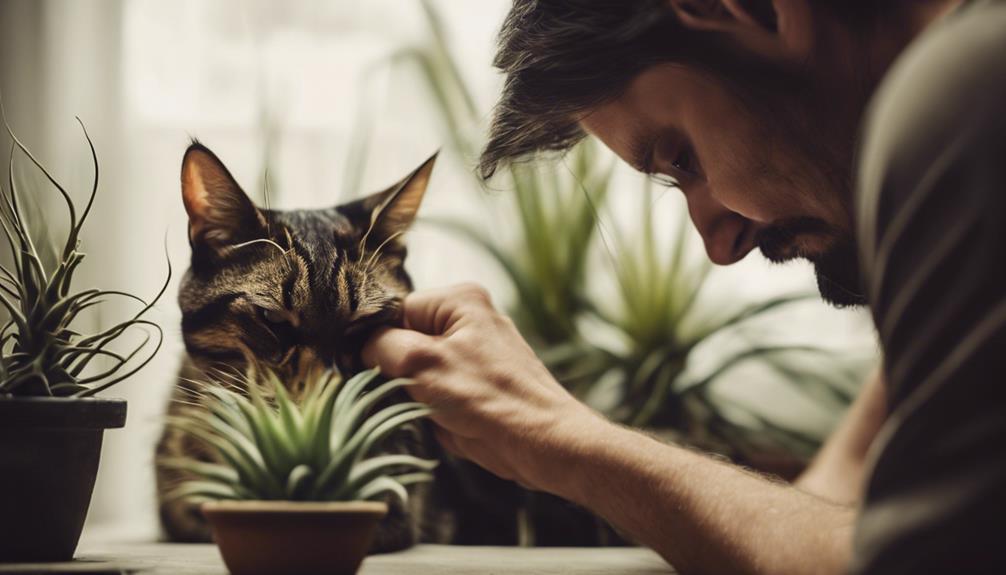
Safeguarding the well-being of feline companions, it is vital to comprehend the safety aspects of incorporating air plants into a cat-friendly environment. Thankfully, air plants are non-toxic to cats, making them a secure option for homes with pets. While cats may show interest in these plants by nibbling on them, they are not harmful if ingested in small amounts. This fact provides peace of mind for pet owners worried about potential toxicity risks.
However, to prevent any damage or choking hazards, it is advisable to keep air plants out of cats' reach. Although non-toxic, it's best to discourage cats from playing with or eating air plants to ensure their overall well-being and safety within the household.
Potential Risks to Cats
Amid the non-toxic nature of air plants, vigilance is crucial when considering the potential risks these plants may pose to cats.
While air plants themselves are not toxic to cats, they can present a potential choking hazard if ingested in large quantities.
It's crucial to mention that although safe for cats, air plants can be harmful to dogs and may be poisonous to cats if consumed in excess.
Cats, known for their curiosity, might nibble on air plants out of interest, but it's best to prevent ingestion to avoid any potential issues.
Keeping air plants out of reach of cats is a simple yet effective way to guarantee their safety and well-being around these unique plants.
Monitoring Cat-Plant Interactions
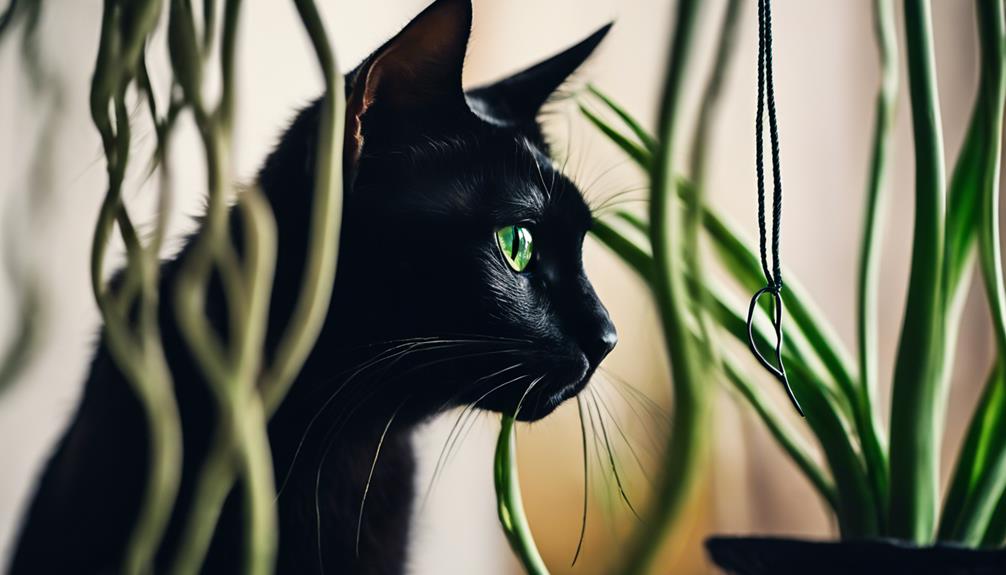
Cats' curiosity towards air plants can lead to interactions like nibbling or playing, raising concerns about potential ingestion. Monitoring these interactions is vital to prevent harm and guarantee the safety of feline companions.
Educating cat owners on cat behavior around plants and providing pet-safe alternatives can help mitigate risks and promote a healthy environment for both cats and plants.
Cat Behavior Around Plants
Observing the dynamic interplay between felines and plants can provide valuable insights into pet behavior and environmental stimuli. Cats may exhibit various behaviors around plants, from curiosity to indifference. While some cats may show interest in air plants by eating or moving them, others may simply ignore them.
It's crucial to verify that plants in your home are safe for cats, as some plants can be toxic to pets if ingested. Large collections of air plants near pets may spark their curiosity, leading to playful interactions and exploration. The unique appearance of air plants may attract cats, making them a focal point for observation when studying cat behavior around plants.
Preventing Plant Ingestion
When considering the safety of cats around air plants, monitoring their interactions to prevent plant ingestion becomes a critical aspect of responsible pet ownership. Cats may be curious and playful with air plants, potentially leading to ingestion if not supervised. Training cats to avoid consuming air plants and placing them out of reach are essential steps to keep air plants safe for feline companions. Creating a pet-friendly environment with safe plant alternatives is advisable to minimize the risk of toxicity. To illustrate further, the table below highlights effective strategies for preventing cat-plant interactions:
| Strategies to Prevent Plant Ingestion |
|---|
| Monitor cat interactions |
| Train cats to avoid plants |
| Place plants out of reach |
| Provide safe plant alternatives |
| Supervise cat's access to plants |
Placing Air Plants Out of Reach
How can strategically placing air plants guarantee the safety of both felines and flora in your home?
Keeping air plants out of reach of your furry friends is essential to prevent accidental ingestion. Cats, known for their curiosity, may nibble on air plants if they are easily accessible. By placing air plants in elevated shelves or hanging displays, you can create a barrier that deters cat interaction. Enclosed terrariums also provide a safe environment for air plants, ensuring they are out of reach from curious cats.
Implementing these measures not only safeguards your plants but also maintains a secure space for your feline companions, promoting harmony between pets and greenery in your home.
Providing Pet-Friendly Alternatives
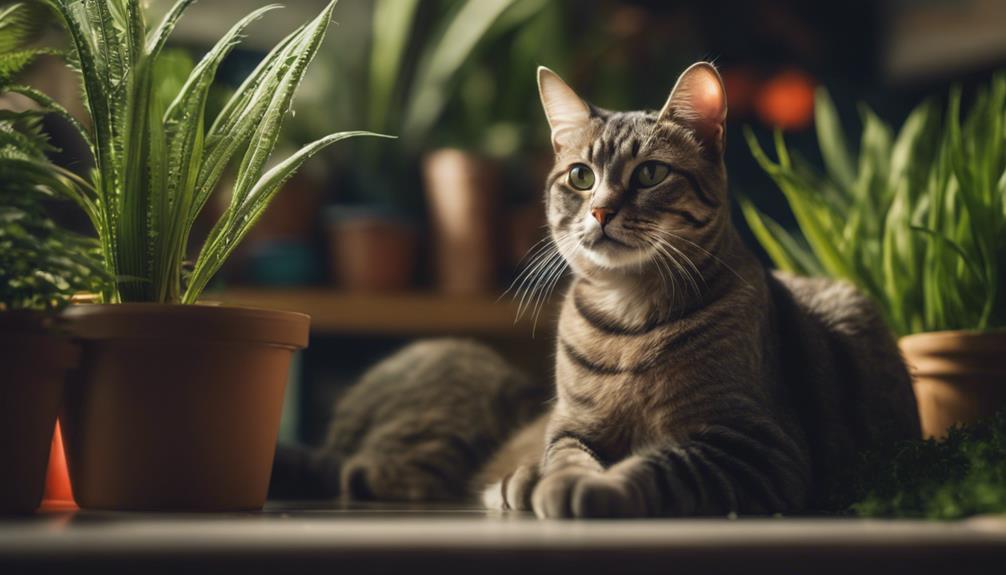
To guarantee a harmonious coexistence between your feline companions and household greenery, exploring pet-friendly alternatives to air plants can be a vital step towards creating a safe environment for both pets and plants.
Opting for non-toxic plants such as bamboo, Boston fern, spider plant, pothos, rubber tree, or zebra plant provides a pet-friendly environment. Researching safe plant options assures the well-being of pets, while avoiding toxic plants like lilies, aloe vera, and begonias is essential for cat safety.
Responding to Cat Nibbling
When cats exhibit interest in nibbling air plants, it is crucial to provide cat-safe plant alternatives to redirect their behavior. Deterrent measures, such as using bitter sprays or placing plants out of reach, can help discourage cats from chewing on air plants.
Cat-Safe Plant Alternatives
Cat owners can provide a safe environment for their feline companions by opting for cat-friendly plant alternatives such as bamboo, Boston fern, spider plant, pothos, and rubber tree. These non-toxic plants offer a safe option for indoor greenery, reducing the risk of plant toxicity if cats nibble on them.
By choosing cat-safe plants, owners can create a pet-friendly space where cats can explore without the worry of potential health concerns. Researching the toxicity levels of plants before bringing them into the home is essential to prevent accidental poisoning.
Providing a variety of cat-safe plant options not only enhances the living environment but also promotes the well-being of both cats and their owners.
Deterrent Measures for Cats
In selecting appropriate deterrent measures, cat owners can effectively address the issue of cats nibbling on air plants to uphold a safe environment for their feline companions.
To deter cats from damaging air plants, consider providing alternative chewing options or redirecting their attention with interactive toys or catnip. Using cat deterrent sprays or citrus scents near air plants can help discourage cats from approaching them.
Placing double-sided tape or aluminum foil around the plants is another effective way to prevent cats from accessing them. Additionally, motion-activated deterrent devices can startle cats away from the plants.
Tips for Keeping Air Plants Safe
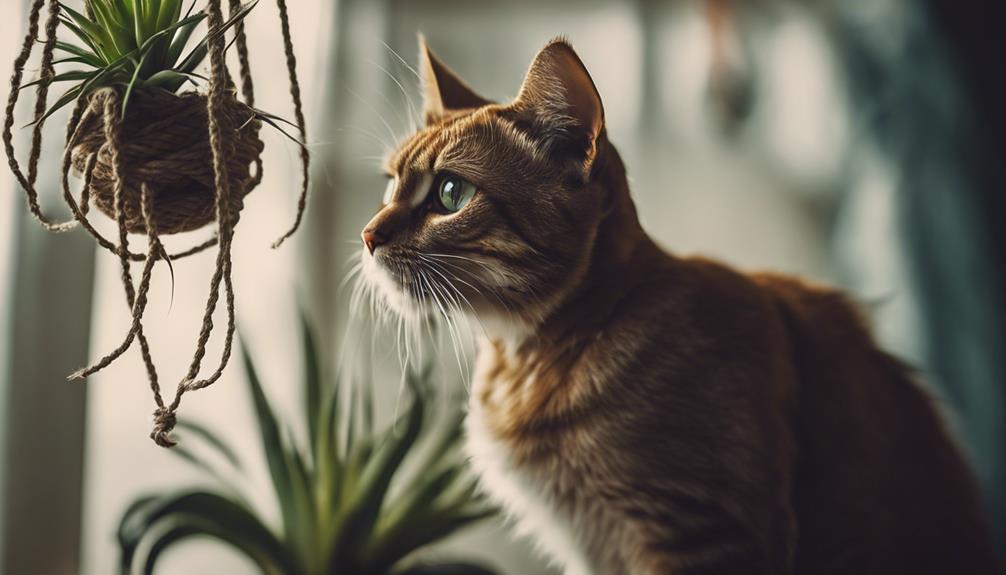
To maintain the safety of air plants around pets, strategic placement in high glass terrariums, hanging out of reach using nylon string or wire, or mounting on wreaths or driftwood can be effective measures. By displaying air plants in high glass terrariums, you can protect them from curious pets.
Hanging air plants with nylon string or wire guarantees they are placed safely beyond the reach of pets. Mounting air plants on wreaths or driftwood not only adds aesthetic appeal but also keeps them away from potential pet interference.
It's important to maintain good air circulation around the plants while keeping them inaccessible to pets. These creative solutions help showcase air plants while minimizing the risk of exposure to pets.
Importance of Pet Supervision
Supervising pets around air plants is essential for ensuring their safety and preventing potential harm. To emphasize the importance of pet supervision in a safe living space:
- Supervision: Regularly monitor pets to prevent access to air plants.
- Behavior Monitoring: Watch for any signs of interest or interaction with air plants.
- Training: Teach pets to avoid consuming air plants through positive reinforcement.
- Environment: Keep air plants out of reach to create a pet-friendly space.
Should I be Concerned About Bringing Air Plants into My Home if I Have Cats?
If you have cats at home, it’s important to consider the bonsai trees and cats relationship before bringing in air plants. Some air plants can be toxic to cats if ingested, so it’s important to research which varieties are safe to have in your home to ensure the safety of your pets.
Final Thoughts on Air Plants
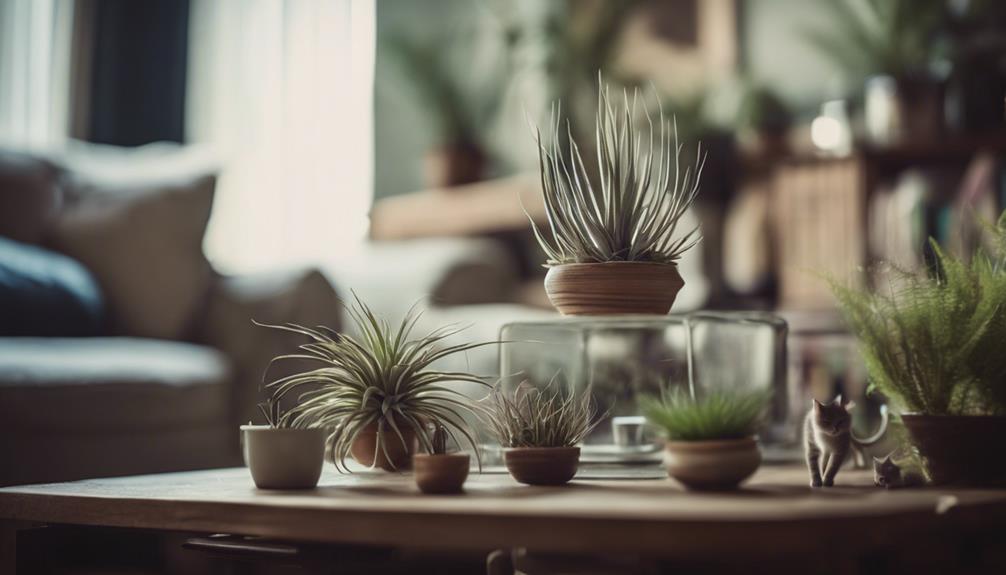
Considering the safety of feline companions, it is important to understand the overall benefits of incorporating air plants into your home decor. Air plants like Tillandsia have been confirmed as non-toxic to cats by the ASPCA's Animal Poison Control Center. Cats can nibble on air plants without experiencing any harm, making them a safe plant option for homes with feline companions.
There have been no reported incidents of toxicity or harm to cats from ingesting air plants, as these plants do not contain any components that could pose a threat to cats' health. By providing air plants in a safe environment, you can enhance the beauty of your home decor without compromising your cat's well-being.