
To reduce cat dander, groom your cat regularly to minimize shedding. Bathing with cat shampoo decreases dander levels and promotes cleanliness. Trimming fur helps control shedding and dander production, especially in long-haired cats. Employ a HEPA air filter to trap dander particles for improved air quality and fewer allergic reactions. Clean surfaces and use air purifiers to eliminate dander from your home. These practices can create a healthier environment for both you and your feline friend. Further details on managing cat dander and creating an allergen-free home are available within the topic.
Understanding Cat Dander

Understanding Cat Dander is essential for managing allergies and maintaining a healthy environment for both pets and individuals. Cat dander consists of tiny skin cells shed by cats, not fur. It settles on surfaces like furniture and carpet, contributing to allergies.
To reduce dander, regular cleaning is vital. Using an air filter can help trap dander particles, improving air quality and reducing allergic reactions in sensitive individuals.
Importance of Regular Cat Grooming
Regular cat grooming is essential for maintaining your cat's health and cleanliness. Brushing helps promote healthy fur, bathing reduces dander levels, and trimming can minimize shedding.
These grooming practices not only benefit your cat's well-being but also contribute to creating a more comfortable environment for both you and your pet.
Brushing for Fur Health
Brushing and grooming your cat regularly is essential for maintaining the health and condition of their fur.
- Regular grooming helps distribute natural oils, promoting a healthier coat.
- Brushing prevents matting and reduces shedding, decreasing dander in your home.
- Grooming sessions allow checking for skin issues that may contribute to dander production.
- Brushing stimulates circulation, removing loose fur and allergens from your cat's coat.
Bathing for Cleanliness
To maintain your cat's hygiene and reduce dander, regular bathing is an essential aspect of feline grooming. Bathing helps remove excess dander, saliva, and dead hair from your cat's coat, promoting cleanliness.
Using a natural cat shampoo with soothing ingredients can aid in this grooming process. Starting bathing routines early, when cats are kittens, helps them get accustomed to the process.
For cats that dislike water, consider alternative grooming methods like wipes or waterless shampoos.
Trimming for Less Shedding
Trimming your cat's fur regularly plays an essential role in minimizing shedding and controlling dander production in your home.
- Regularly grooming can reduce dander spreading.
- Trimming helps prevent matting and loose hair.
- Long-haired cats benefit from trimming to avoid tangles.
- Consistent sessions greatly decrease overall dander production.
Utilizing Dander-Reducing Products
Incorporating dander-reducing products into your cat's grooming routine can greatly diminish the presence of cat dander in your living space. Products like Allerpets Cat Dander Remover and Burts Bees spray, containing ingredients such as oat flour and aloe vera, can reduce dander by up to 50%.
Using Earthbath's Shed Control shampoo while bathing your cat helps remove saliva build-up and dead hairs, effectively reducing dander levels.
Cleaning Strategies for Cat Dander

A thorough cleaning regimen targeting surfaces prone to cat dander accumulation is essential for maintaining an allergen-free environment in your home.
- Regularly vacuum carpets and upholstery
- Wash bedding and curtains frequently
- Use a damp cloth to wipe down surfaces
- Consider steam cleaning for deep dander removal
HEPA Filters and Air Purifiers
To enhance the effectiveness of your cleaning strategies for cat dander, incorporating HEPA filters and air purifiers can greatly improve indoor air quality by efficiently capturing airborne allergens.
HEPA filters are highly efficient in removing cat dander, with air purifiers capable of capturing particles as small as 0.3 microns. Using HEPA filters in your HVAC system can help reduce dander levels, benefiting individuals with allergies and asthma.
Regular filter replacements are essential for best performance.
Grooming Tips for Cat Allergies
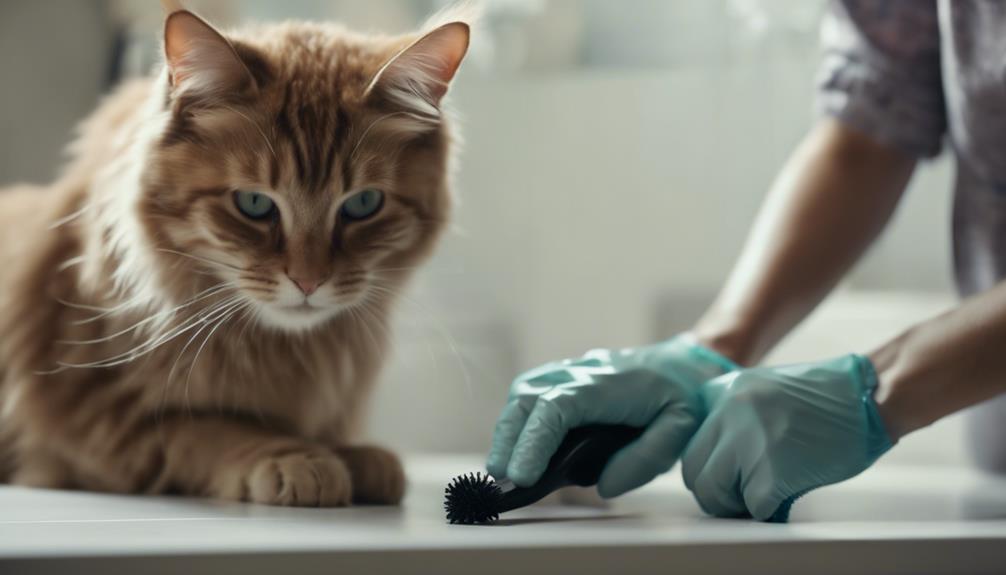
Regular grooming practices play an essential role in managing cat allergies by reducing the spread of dander in your home environment. To effectively reduce shedding and allergen exposure, follow these grooming tips:
- Bathe your cat monthly with a gentle shampoo
- Start grooming your cat from a young age
- Use grooming tools like combs and brushes
- Choose grooming products that reduce dander and soothe your cat's skin
Cleaning Cat Items and Bedding
Managing cat allergies requires thorough cleanliness beyond grooming practices. To reduce dander buildup, wash cat bedding weekly in hot water using hypoallergenic detergent. Clean cat items like blankets and toys regularly to minimize dander particles. Consider using allergen-proof covers on bedding to prevent dander from settling. Below is a table summarizing key cleaning practices for cat items and bedding:
| Cleaning Practice | Frequency | Effectiveness |
|---|---|---|
| Wash cat bedding in hot water | Weekly | High |
| Use hypoallergenic detergent | Every wash | Effective |
| Clean cat items regularly | As needed | Minimizes dander |
Benefits of Air Purifiers

Air purifiers play an important role in reducing airborne allergens like cat dander, ultimately improving the quality of indoor air.
With HEPA filters capable of capturing tiny particles as small as 0.3 microns, air purifiers are effective in combating pet-related allergens.
Air Purifiers for Allergies
What key advantages do air purifiers offer in combating allergies, particularly in reducing cat dander-related reactions?
- HEPA filters in air purifiers capture up to 99.97% of airborne particles, including cat dander.
- Air purifiers effectively reduce allergens like cat dander, dust, and pollen.
- Improving indoor air quality by removing microscopic dander particles.
- Allergists recommend HEPA filters in air purifiers to reduce allergic reactions to cat dander.
Improved Indoor Air Quality
Enhancing the quality of indoor air through the use of air purifiers offers numerous benefits for individuals seeking to reduce allergens and improve overall respiratory health.
Air purifiers equipped with HEPA filters can capture up to 99.97% of airborne particles, including cat dander, thereby helping to decrease asthma symptoms triggered by pet dander.
These devices can effectively circulate and clean indoor air multiple times per hour, reducing allergens and improving indoor air quality.
Managing Airborne Allergens
To effectively manage airborne allergens, incorporating high-quality HEPA filters is essential for reducing cat dander in indoor environments.
- HEPA filters effectively remove cat dander allergens.
- Use CERTIFIED asthma & allergy-friendly HVAC filters.
- Regular maintenance and replacement of filters are vital.
- It may take up to 6 months to eliminate all cat dander allergens from the air.
Is the Method to Get Rid of Raccoons Safe for Indoor Cats?
Keeping indoor cats safe while getting rid of raccoons is a top priority for pet owners. Fortunately, there are safe methods to keep both raccoons and indoor cats out of harm’s way. Using natural deterrents or securing outdoor pet areas can help protect your furry friends from potential conflicts with getting rid of raccoons.
Creating an Allergen-Free Home
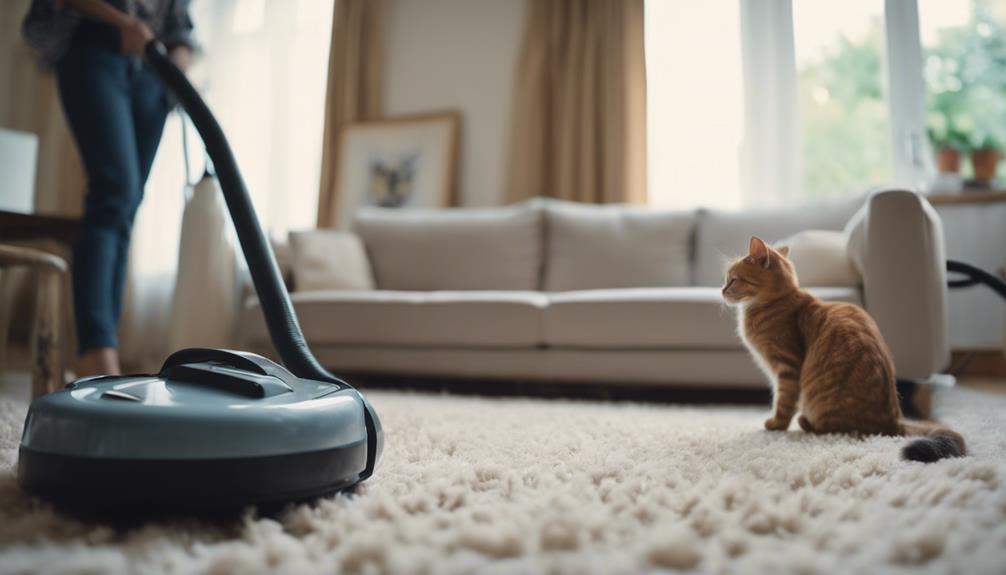
In the quest for an allergen-free home, implementing thorough cleaning routines and investing in appropriate filtration systems are key strategies. Regularly clean surfaces, furniture, and bedding to reduce cat dander accumulation. Use a high-quality HEPA air purifier to filter out airborne allergens.
Designate dander-free zones in your home to minimize exposure. Consider switching to hard flooring and wash soft surfaces like curtains and upholstery frequently to combat cat allergies.