
To remove cat pee smell effectively, start by locating the source using your sense of smell or UV light. Use enzymatic cleaners to target and eliminate the odor. Blot the area with cold water for absorption. Neutralize the smell using enzymatic cleaner, vinegar, or natural solutions like baking soda. Treat soft furnishings with a mix of cold water, baking soda, and enzyme cleaners. Repeat the cleaning process if necessary for thorough removal. For more insights on natural and professional solutions, preventive measures, and health risks associated with cat pee odor, follow the helpful guidelines to guarantee successful elimination.
Locate the Source of the Odor
To effectively address and eliminate the unpleasant cat pee smell, the initial step is to accurately locate the source of the odor within your living space. Cat pee odor can emanate from urine stains on carpets, furniture, mattresses, or clothes. Use your sense of smell or a UV light to pinpoint the exact source of the smell.
Identifying the source is vital for treating it effectively with enzymatic cleaner to eliminate the odor.
Blot the Area With Cold Water
Blotting the affected area with cold water is an important initial step in effectively removing the lingering cat pee smell. Cold water helps absorb the urine without spreading the odor further.
It prevents the urine from setting into fabrics, making it easier to clean. Using cold water is gentle and prevents the odor from lingering, making it an essential first step in eliminating cat pee smell.
Neutralize With Enzymatic Cleaner or Vinegar
Using an enzymatic cleaner or vinegar is an effective method to neutralize the lingering cat pee smell. Enzymatic cleaners contain specific enzymes that break down the uric acid in cat pee, eliminating the odor at its source. Vinegar, when diluted with water, can also help neutralize the ammonia in cat urine. These products are safe for various surfaces and fabrics, ensuring complete eradication of the cat pee smell.
| Enzyme Cleaner | Vinegar |
|---|---|
| Breaks down uric acid crystals | Neutralizes ammonia |
| Converts crystals into gases and water | Safe for various surfaces |
| Eliminates odor at its source | Helps eradicate smell completely |
| Effective on cat pee odor | Dilute with water for best results |
| Safe to use on fabrics | – |
Treat Soft Furnishings for Cat Urine
Soft furnishings such as carpets, rugs, and upholstery can be effectively treated for cat urine odor using enzyme cleaners.
- Blot the area with cold water
- Sprinkle baking soda
- Avoid steam cleaners
- Repeat cleaning process
Repeat Cleaning Process if Needed
If the cat pee smell lingers despite initial cleaning efforts, it is important to assess for any missed spots.
Utilizing enzyme cleaners can aid in breaking down the urine compounds effectively.
Additionally, proper ventilation of the area can help in dissipating the odors and promoting faster drying of the treated surfaces.
Check for Missed Spots
Examining the cleaned area under different lighting conditions is crucial to guarantee that no spots are missed in the process of eliminating the cat pee smell. To guarantee thoroughness, follow these steps:
- Utilize a black light to detect hidden urine stains.
- Check corners, edges, and crevices where urine may linger.
- Repeat the cleaning process with vinegar or enzymatic cleaners if the smell persists.
- Thoroughly inspect the entire area to eliminate all overlooked spots.
Use Enzyme Cleaner
To effectively tackle lingering cat pee smells, employing an enzyme cleaner is a reliable solution that targets and eliminates the source of the odor at a molecular level. Enzyme cleaners break down uric acid in cat urine, neutralizing the scent and preventing re-marking.
These cleaners are safe for various surfaces like carpets and furniture. Repeat the cleaning process if necessary to guarantee complete removal of the odor.
Ventilate the Area
Ventilating the area after cleaning is essential for dispersing lingering odors and ensuring thorough drying of the spot.
- Open windows and doors to allow fresh air circulation.
- Use fans to enhance airflow and speed up drying.
- Consider running air purifiers to help eliminate any remaining odors.
- If the smell persists, repeat the cleaning process and focus on improving ventilation to remove cat urine smell effectively.
Remove Old Cat Urine Odors
Old cat urine odors can be stubborn and persistent due to the presence of uric acid.
Using traditional cleaning methods like vinegar or baking soda may not fully eliminate the smell.
Opting for enzyme cleaners is essential as they break down uric acid effectively, ensuring complete removal of the odor.
Odor Neutralizing Techniques
When combatting old cat urine odors, utilizing enzyme cleaners is a highly effective method for breaking down uric acid stains. To effectively neutralize old cat urine odors, consider the following tips:
- Use enzyme cleaners to break down uric acid.
- Neutralize alkaline salts with vinegar and baking soda.
- Avoid ammonia-based cleaners to prevent cats from re-marking.
- Make sure the area is completely dry to deter pets from revisiting the spot.
Deep Cleaning Methods
To effectively eliminate persistent cat urine odors from various surfaces, thorough deep cleaning methods must be employed. Enzyme cleaners are essential for breaking down uric acid in old cat urine stains. Uric acid can linger in carpets, fabrics, and wood, causing persistent smells.
Using professional cleaning services may be necessary for complete removal of deep-seated cat urine odors. Other solutions like baking soda, vinegar, and hydrogen peroxide may only temporarily mask old cat urine odors.
Recommended Products for Odor Removal
For effective odor removal from cat pee stains, utilizing enzyme-based cleaners such as Natures Miracle® is recommended. When dealing with cat pee smell, consider the following options:
- White Vinegar: Helps neutralize alkaline salts in dried stains.
- Enzyme-based Cleaners: Break down urine acids effectively.
- Avoid Using Ammonia: Prevents re-marking of the same spot.
- Test a Small Area: Confirm compatibility and effectiveness before full application.
Manage Litter Box Smell Effectively
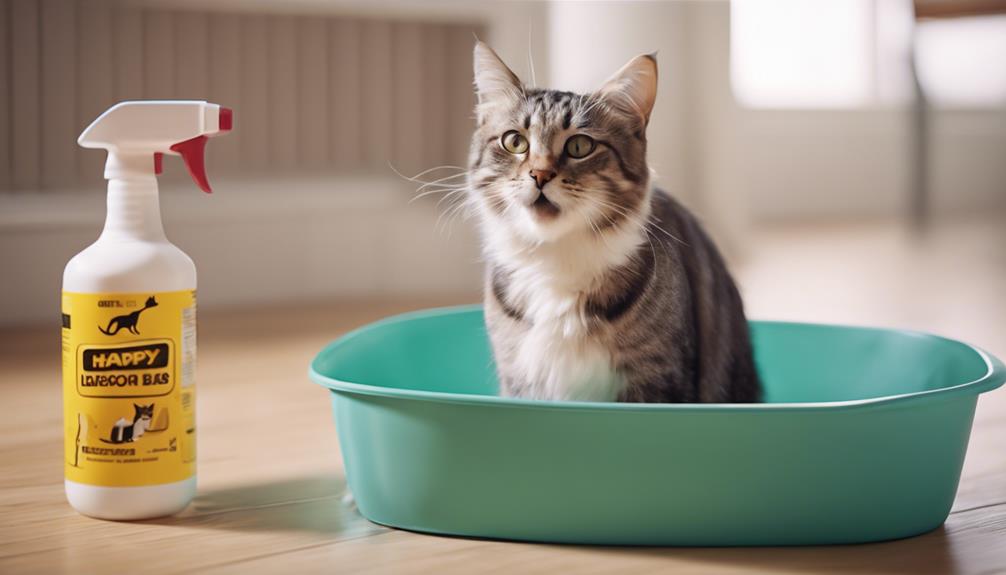
To effectively manage litter box smell, it is crucial to adopt odor control methods such as using clumping litter and placing the box in a well-ventilated area.
Maintaining a regular cleaning schedule by scooping waste daily and replacing the litter box when needed can greatly reduce odors.
Consider incorporating deodorizers or baking soda to absorb lingering smells and guarantee a fresh environment for your cat.
Odor Control Methods
Regular maintenance of the litter box and the use of odor-absorbing litter are key strategies for effectively managing and reducing cat pee smell in your living space.
- Adding baking soda to the litter helps neutralize odors.
- Opt for odor-neutralizing litter to control cat urine smells.
- Place the litter box in a well-ventilated area to minimize odors.
- Changing litter box liners frequently aids in odor control.
Cleaning Schedule Tips
Maintaining a consistent cleaning schedule for your cat's litter box is fundamental in effectively managing and minimizing unpleasant odors in your home.
Clean the litter box daily, use clumping litter for easier waste removal, and replace all litter every 2-3 weeks.
Wash the litter box with mild soap and water regularly. Keep the litter box in a well-ventilated area to reduce odor buildup.
Prevent Future Accidents
Implementing strategies to prevent future accidents is essential in maintaining a clean and odor-free environment for your cat.
- Keep the litter box clean and odor-free.
- Consider using multiple litter boxes in multi-cat households.
- Provide a stress-free environment to prevent litter box aversion.
- Monitor your cat's health regularly and promptly address any urinary issues to avoid accidents.
Can a Kitten’s Pee and Poop Smell be Easily Eliminated?
Yes, a kitten needs to pee and poop regularly, and sometimes their waste can have a strong odor. To eliminate the smell, it’s important to clean the litter box daily and use odor-neutralizing litter. Additionally, consider incorporating an air purifier or odor-eliminating spray into your home.
Ensure Thorough Removal of Cat Pee Smell
Thoroughly eliminating cat pee smell is crucial for maintaining a fresh and clean living environment for both you and your feline companion.
Enzyme cleaners, like white vinegar, apple cider vinegar, and hydrogen peroxide, are effective in breaking down uric acid to remove odors.
Taking prompt action, such as using these solutions or seeking professional help, can guarantee the complete removal of cat pee smell from your home.