
To eliminate cat smell in your house, focus on meticulous litter box upkeep, regular pet bedding washing, and consistent cat grooming. Vacuum frequently to manage odors and use vinegar to neutralize bacteria. Baking soda is effective for absorbing and neutralizing odors. Consider hydrogen peroxide to break down uric acid. Enzymatic cleaners are designed for pet stains. Seeking veterinary advice is essential for overall odor removal. By following these steps diligently, you can effectively combat cat smells in your home. Additional strategies and tips are available to enhance your efforts and guarantee a fresh-smelling environment.
Litter Box Maintenance
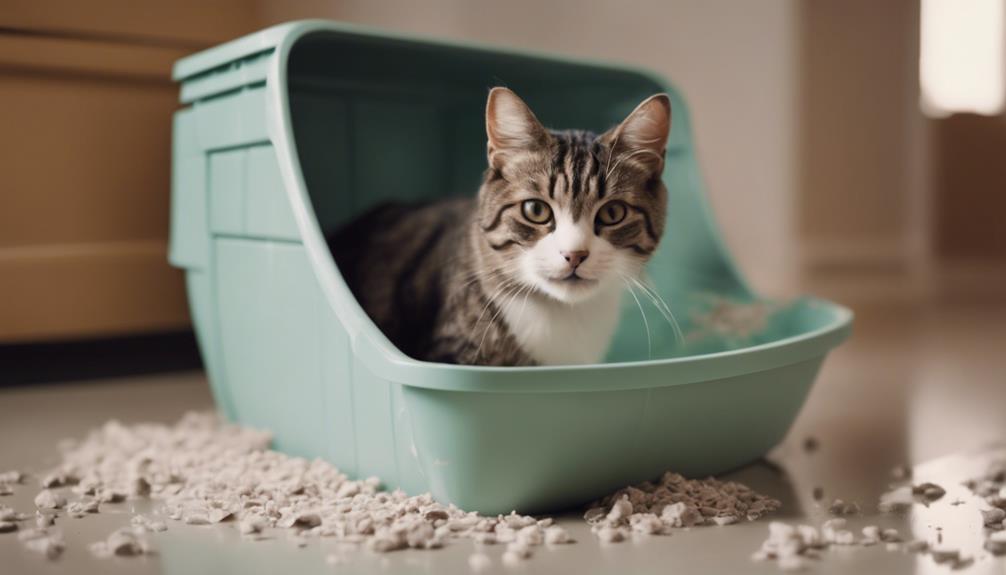
To effectively combat cat smells in your house, proper litter box maintenance is paramount. Regularly changing the litter and cleaning the litter box helps prevent lingering odors caused by urine and feces. A clean litter box is the first step in tackling cat smells effectively.
Consistent hygiene of the litter box is essential to control the spread of unpleasant smells throughout the home. Starting with litter box maintenance is key in eliminating cat odors.
Pet Bedding Washing
Regularly washing your pet's bedding is essential to prevent odor buildup and maintain a fresh-smelling home. Following the washing instructions on the pet bedding label is vital for effective odor removal and reducing allergens.
Cleaning furniture and upholstery regularly also helps prevent odor seepage and guarantees a hygienic living environment for both you and your cat.
Bedding Cleaning Frequency
Maintaining a weekly washing routine for pet bedding is essential in preventing odor accumulation and ensuring a fresh-smelling environment in your home.
Regular cleaning of pet bedding reduces cat smells, eliminates dander, and removes hair.
Following label instructions for washing pet bedding is vital for proper cleaning and odor removal.
This practice also helps in maintaining a hygienic environment for both your pets and your home.
Effective Odor Removal
For ideal odor removal and cleanliness in your home, sticking to a weekly washing schedule for pet bedding is crucial. Regular cleaning helps prevent cat urine and pet smells from lingering. Following washing instructions on labels maintains freshness.
Upholstery and furniture where pets rest should also be regularly cleaned to avoid odor buildup. Thorough cleaning guarantees pet bedding is fresh-smelling, reducing pet odors in the house.
Regular Cat Grooming

To effectively manage cat smells in your home, prioritizing regular cat grooming is essential for maintaining a clean and odor-free environment.
- Regular grooming helps prevent cat smells by reducing shedding and dander buildup.
- Grooming long-haired cats daily and short-haired cats weekly is recommended.
- Brushing your cat regularly can prevent knots in the fur, leading to a cleaner and fresher-smelling home.
- Grooming also helps distribute natural oils in the cat's fur, which can reduce odors.
- Proper grooming routine can contribute greatly to managing and preventing cat smells in the house.
Frequent Vacuuming
In addition to regular cat grooming, frequent vacuuming plays an important role in managing cat smells in the house by effectively controlling cat hair and dander buildup. Consistent cleaning with a vacuum cleaner is essential for getting rid of cat odors. Vacuuming at least once a week helps remove cat hair and dander, preventing them from accumulating and causing cat smells so hard to eliminate.
Emptying the vacuum cleaner promptly after each use can help maintain a fresh-smelling home.
Vinegar Cleaning
Vinegar cleaning is a highly effective method for neutralizing bacteria in fresh cat pee and combating cat urine odor throughout the house.
- Vinegar is acidic and effective in neutralizing bacteria in cat pee.
- Mixing vinegar and water creates a powerful cleaning solution.
- The solution can be sprayed on affected areas to combat odor.
- Blotting with a paper towel helps remove the smell.
- Suitable for floors, furniture, and various surfaces.
Baking Soda Odor Control
Baking soda is known for its odor-absorbing properties, making it a popular choice for combating cat smells in the house.
Placing baking soda in areas where cats frequent, like litter boxes or bedding, can help neutralize unpleasant odors effectively.
To maintain its efficacy, it is crucial to change the baking soda regularly to guarantee a fresh-smelling environment.
Baking Soda Absorbs Odors
The effectiveness of using baking soda to absorb and neutralize cat odors has been widely recognized in household cleaning practices.
- Baking soda is effective at absorbing and neutralizing the acidic properties in cat urine that cause odors.
- Sprinkling baking soda over affected areas and allowing it to sit can help eliminate cat smells from various surfaces.
- Baking soda is a safe and non-toxic option for odor removal, making it suitable for use around pets and children.
- This method is particularly useful for eliminating old cat smells that may have lingered in carpets, upholstery, or other surfaces.
- By using baking soda to absorb odors, you can effectively tackle and neutralize cat smells in your home.
Place in Cat Areas
To effectively control odors in cat-inhabited areas, utilizing baking soda as an affordable and safe solution proves efficient in neutralizing acidic properties present in cat urine. Placing baking soda in cat areas like pet bedding, litter boxes, and carpets can help absorb and control odors, keeping the space fresh-smelling. Below is a table highlighting the effectiveness of using baking soda in cat areas:
| Cat Areas | Benefits |
|---|---|
| Pet Bedding | Absorbs odors |
| Litter Boxes | Controls smells |
| Carpets | Neutralizes odors |
| Cat Areas | Keeps space fresh |
Change Regularly for Effectiveness
Regularly replacing the used baking soda in designated cat areas is essential for maintaining peak odor control effectiveness.
- Change the litter box regularly
- Add baking soda to absorb odors
- Keep cat bedding fresh with baking soda
- Clean cloth with baking soda for wiping surfaces
- Avoid using air fresheners that mask odors
Hydrogen Peroxide Use
Effectively breaking down uric acid in cat urine stains, hydrogen peroxide can be a powerful solution for eliminating unpleasant odors in the house. By mixing hydrogen peroxide with water in a spray bottle and applying it to the affected area, you can effectively neutralize the smells in your home. Additionally, combining hydrogen peroxide with dish soap can leave a fresher scent. Remember to blot dry the area after treatment.
| Hydrogen Peroxide Use | Benefits |
|---|---|
| Breaks down uric acid | Eliminates unpleasant odors |
| Mix with water | Neutralizes smells |
| Combine with dish soap | Leaves a fresh scent |
| Blot dry after treatment | Ensures effective odor removal |
Enzymatic Cleaner Application
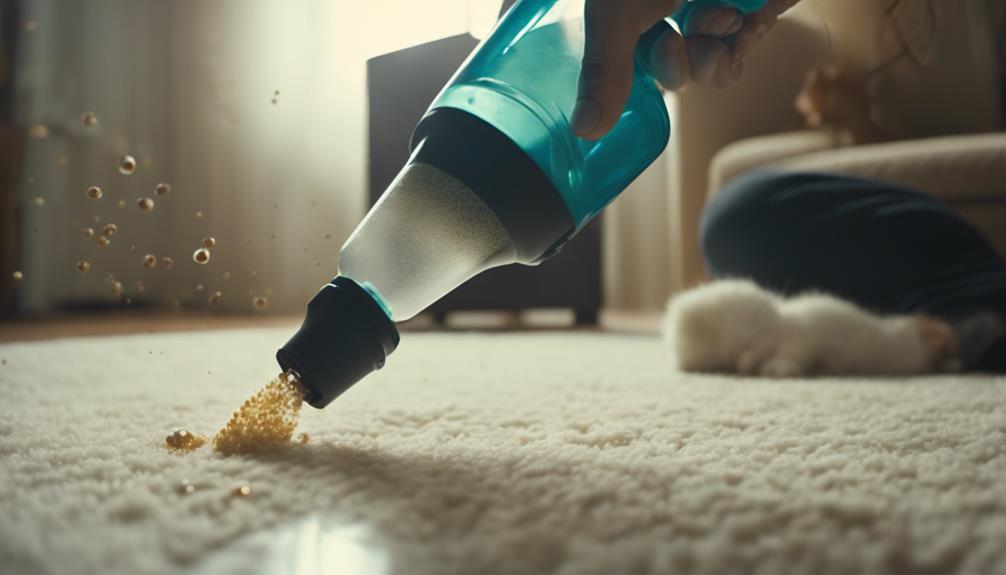
Utilizing enzymatic cleaners is a highly effective method for tackling and eliminating cat smells in your home by targeting and breaking down the uric acid present in cat urine stains.
- Enzymatic cleaners contain enzymes that break down uric acid
- Work by targeting organic compounds
- Specifically designed for pet stains
- Enzymes digest proteins in cat urine
- Proper application essential for long-lasting odor removal
Is Clearing a Cat’s Nose Necessary to Get Rid of Cat Smell in the House?
Clearing a cat’s nose is not necessary to get rid of cat smell in the house. However, if your cat sneezes excessively, it may indicate a health issue and you should consult a veterinarian. Ensuring a clean litter box, regular grooming, and a well-ventilated home can help minimize cat odors.
Seeking Veterinary Advice
If you notice any sudden changes in your cat's odor, it is advisable to promptly seek advice from a veterinary professional.
Discuss any health concerns or underlying issues related to the smell with your vet. Follow their recommendations for addressing and eliminating cat odors in your home.
Be proactive in monitoring your cat's well-being to address any odor-related issues promptly. Veterinary guidance can help tackle litter box smells, urine stains, and other pet-related odors effectively.