
Azaleas are toxic to cats because they contain grayanotoxins. These substances can lead to various harmful effects on feline health. Symptoms of azalea poisoning in cats include vomiting, diarrhea, drooling, lethargy, and even cardiovascular issues. Immediate veterinary attention is essential if ingestion is suspected. Treatment may involve inducing vomiting, giving activated charcoal, providing IV fluids, monitoring cardiac function, and managing symptoms with medications. Protect your cat by keeping azalea plants out of reach. Understanding the risks and symptoms can help safeguard your pet's well-being. Remember, knowledge about azalea toxicity is vital for cat safety.
Azaleas Toxicity in Cats

Azaleas pose a significant toxicity risk to cats due to the presence of grayanotoxins in their leaves. These toxic compounds can lead to adverse effects when ingested by felines. Common symptoms of azalea poisoning in cats include vomiting, diarrhea, drooling, lethargy, and potentially severe cardiovascular issues.
Immediate veterinary attention is essential if a cat consumes any part of an azalea plant. Treatment for azalea toxicity in cats may involve inducing vomiting, administering activated charcoal to absorb the toxins, providing intravenous fluids for hydration, monitoring cardiac function closely, and managing symptoms with appropriate medications.
Understanding the toxic nature of azaleas and recognizing the signs of poisoning are critical in ensuring the well-being of cats exposed to these plants.
Grayantoxin and Cats
Grayantoxin is a toxic component found in azaleas. It can have severe effects on cats by interfering with their sodium channels, particularly affecting their heart and skeletal muscles. Even small quantities of azalea ingestion can be harmful to cats due to the potent nature of grayantoxin, leading to symptoms of poisoning when ingested.
Understanding the risks associated with grayantoxin and its impact on feline health is vital in highlighting the dangers posed by azaleas to our beloved pets.
Azaleas and Feline Toxicity
Feline toxicity caused by grayanotoxins found in azaleas poses a significant risk to cats due to its impact on sodium channels affecting essential organs and muscles in felines.
Azaleas contain toxins that, when ingested by cats, disrupt normal bodily functions, potentially leading to severe health issues. These toxins interfere with sodium channels, affecting the heart and skeletal muscles, which are critical for a cat's overall well-being.
Even small amounts of azalea parts can induce symptoms of toxicity in cats, making it important to keep these plants away from feline companions.
Understanding the dangers of azaleas and their toxic effects on cats is necessary for pet owners to prevent accidental ingestion and protect their beloved feline friends from harm.
Symptoms of Grayantoxin Poisoning
The effects of grayantoxin poisoning on cats manifest through a range of distressing symptoms that signal potential harm to their cardiovascular and muscular systems. When a cat ingests azalea containing grayantoxin, symptoms such as vomiting, diarrhea, and excessive drooling (hypersalivation) may occur. Even small amounts of azalea can lead to cardiovascular issues and weakness in cats, with lethargy and reduced appetite being common indicators of grayantoxin poisoning.
It is important to seek immediate veterinary care if a cat displays these symptoms after ingesting any part of an azalea plant. Understanding these symptoms of Azalea poisoning can help cat owners recognize the signs early and take prompt action to safeguard their pet's well-being.
Symptoms of Azalea Poisoning

Common symptoms of azalea poisoning in cats include:
- Drooling
- Vomiting
- Diarrhea
Additionally, lethargy and cardiovascular issues, such as abnormal heart rate, may manifest after ingestion. Immediate veterinary care is essential as azalea poisoning can lead to potential organ damage if not addressed promptly.
Common Signs of Poisoning
Exhibiting symptoms such as drooling, vomiting, diarrhea, lethargy, and cardiovascular disturbances are indicative of azalea poisoning in cats. When a cat ingests any part of the azalea plant, it can lead to various health issues due to the grayanotoxins present in the plant. These toxins cause gastrointestinal problems like vomiting and diarrhea, as well as cardiovascular complications that may result in cardiac failure.
Drooling is a common early sign of poisoning in cats exposed to azaleas. Recognizing these symptoms promptly is vital in seeking immediate veterinary care to prevent further harm to the cat. If you notice these signs in your feline companion after potential exposure to azaleas, it is essential to act swiftly to safeguard their well-being.
Immediate Veterinary Care
At the onset of azalea poisoning in cats, prompt veterinary intervention is imperative to address the symptoms effectively and prevent potential complications.
Veterinary care for azalea poisoning may include:
- Diagnostic Evaluation: The vet will conduct tests to assess the cat's condition and determine the extent of azalea poisoning.
- Symptom Management: Medications may be administered to manage symptoms like vomiting, diarrhea, and cardiac issues.
- Monitoring: Continuous monitoring of the cat's cardiac function is vital to prevent severe complications.
- Supportive Care: Providing supportive care such as intravenous fluids to maintain hydration and support organ function during the recovery process is essential.
Potential Organ Damage
Potential organ damage resulting from azalea poisoning in cats manifests through a range of symptoms, including cardiovascular issues and gastrointestinal distress. The ingestion of any part of the azalea plant can lead to severe health complications in cats. The following table illustrates the symptoms of azalea poisoning in cats:
| Symptom | Description |
|---|---|
| Drooling | Excessive saliva production |
| Vomiting | Forceful ejection of stomach contents |
| Diarrhea | Loose or liquid bowel movements |
| Lethargy | Lack of energy and alertness |
| Cardiovascular Issues | Abnormalities in heart function |
It is essential to recognize these signs promptly and seek veterinary assistance to prevent further harm to the cat's health. Proper monitoring and treatment are essential in managing azalea poisoning cases.
Azalea Ingestion Effects on Cats
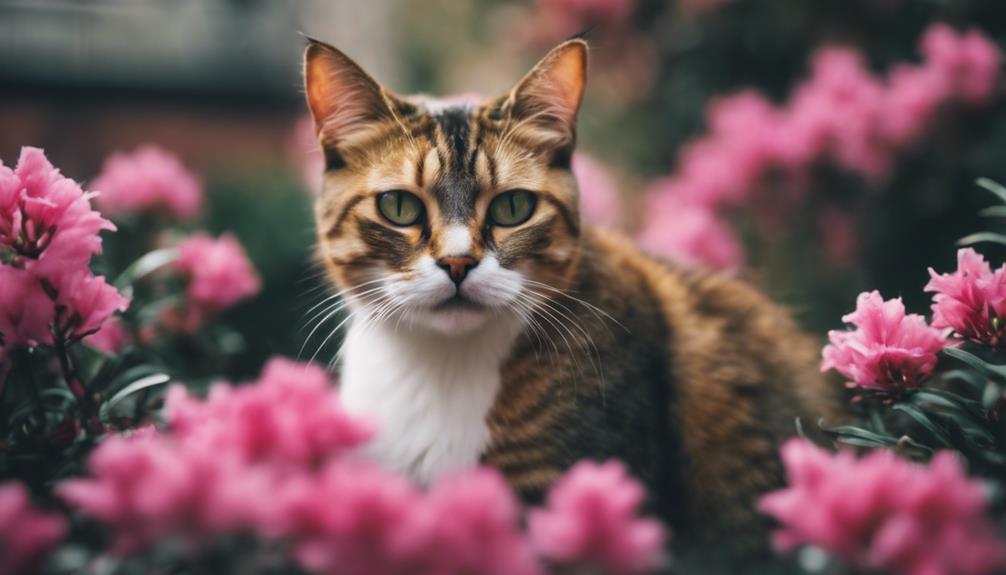
Upon ingestion of azaleas, cats may experience a range of adverse effects due to the toxic grayanotoxins present in the plant. The effects of azalea ingestion on cats include:
- Gastrointestinal Disturbances: Vomiting and diarrhea are common initial symptoms.
- Cardiovascular Issues: Azalea poisoning can lead to abnormal heart rate and heart failure.
- General Symptoms: Cats may exhibit drooling, lethargy, reduced appetite, and weakness.
- Urgent Veterinary Attention: Immediate care is essential if ingestion is suspected to prevent serious complications.
These effects highlight the importance of keeping azalea plants out of reach of cats and seeking prompt veterinary care if ingestion occurs. Treatment may involve interventions like inducing vomiting, administering activated charcoal, providing IV fluids, monitoring cardiac function, and managing symptoms with appropriate medications.
Azaleas and Cat Health Risks
Azaleas pose significant health risks to cats due to the presence of toxic grayanotoxins in the plant, which can lead to various adverse effects upon ingestion. These toxic compounds can cause cats to experience symptoms such as vomiting, diarrhea, drooling, lethargy, and even potential cardiac issues.
Ingesting azalea leaves can be particularly dangerous for cats, as it may result in severe cardiovascular problems that require immediate veterinary attention. Treatment for azalea poisoning in cats typically involves inducing vomiting, administering activated charcoal, providing IV fluids, and closely monitoring the cat's cardiac function.
To prevent such health risks, it is essential to keep azalea plants out of reach of cats, educate oneself on toxic plants, offer safe alternatives, and regularly inspect the environment for any hazardous flora.
Cat Safety Around Azaleas

Azaleas, due to their toxic nature for cats, demand careful consideration and proactive measures to guarantee feline safety around these plants. To safeguard your cat's well-being near azaleas, follow these essential cat safety tips:
- Prevent Access: Keep azalea plants out of reach or consider choosing cat-safe alternatives for your garden.
- Educate Yourself: Recognize the symptoms of azalea poisoning in cats to act swiftly if ingestion occurs.
- Consult a Vet: Seek immediate veterinary assistance if you suspect your cat has ingested any part of an azalea plant.
- Monitor Your Cat: Keep a close eye on your cat's behavior when azaleas are present to detect any signs of poisoning promptly.
Treatment for Azalea Toxicity in Cats
When addressing azalea toxicity in cats, a comprehensive treatment approach typically involves various interventions to mitigate the effects of the poisoning. This may include inducing vomiting to eliminate toxins, administering activated charcoal to absorb any remaining toxins, and providing intravenous fluids to prevent dehydration and support overall health.
Monitoring the cat's heart rate is vital during treatment, as cardiovascular issues can arise due to azalea poisoning. Additionally, medications may be prescribed to manage symptoms like vomiting, diarrhea, and lethargy. By employing these strategies, veterinary professionals aim to address the toxicity effectively and help the cat recover from the harmful effects of azalea ingestion.
Azaleas and Cat Emergency Care
In addressing cat emergency care related to azalea poisoning, immediate veterinary attention is imperative upon the ingestion of any part of the azalea plant to mitigate potential cardiovascular issues and other symptoms.
When dealing with azalea toxicity in cats, the following steps are essential:
- Professional Evaluation: A veterinarian should assess the cat's condition promptly.
- Symptomatic Treatment: Measures such as inducing vomiting may be necessary.
- Supportive Care: IV fluids might be administered to maintain hydration.
- Monitoring: Continuous observation is vital to track the cat's response to treatment and manage any complications effectively.
Can Amaryllis Plants Poisonous to Cats React Similarly to Azaleas?
Yes, both amaryllis plants and cats can be a toxic combination. These plants contain substances that can cause harm to cats if ingested. Similarly, azaleas and cats do not mix well either. It’s important to keep these toxic plants out of reach of pets to avoid potential harm.
Preventing Azalea Poisoning in Cats
What precautions can be taken to safeguard cats against azalea poisoning?
To prevent accidental ingestion, keep azalea plants out of reach of cats. Educate yourself on toxic plants for cats, such as azaleas, to guarantee a safe environment.
Providing alternative safe plants for cats to nibble on can deter them from toxic options like azaleas. Regularly inspect your home and garden for azaleas and other toxic plants to eliminate risks.
Consider planting cat-friendly herbs instead of azaleas to create a cat-safe environment. By taking these measures, you can greatly reduce the chances of your feline friend being exposed to harmful substances from toxic plants like azaleas.