
To maintain litter boxes from smelling, opt for clumping litters for easy waste removal. Cats with sensitive noses might prefer unscented options. Introduce new litter gradually to avoid aversion. Uphold cleanliness; scoop daily and wash weekly. Utilize baking soda to absorb odors effectively. Seek advice from vets for guidance on health issues. Consider high-quality diets to control odors. A clean environment is crucial; it prevents infections and promotes good habits. By implementing these strategies, you can guarantee a fresh and odor-free home for you and your cat. Additional insights are available for further assistance.
Experimenting With Litter Types

When addressing the issue of keeping litter boxes from smelling, the initial step to explore is experimenting with different types of litter to find the most effective solution for waste removal and odor control.
Consider using clumping litters for easier waste management. Cats with a sensitive nose may prefer unscented litter options. By observing your cat's reaction, you can determine the most suitable litter type to maintain hygiene and minimize odors.
Gradual Litter Introduction to Cats
When introducing your cat to a new litter, it's important to take it slow to prevent any aversion issues. By gently introducing small amounts of the new litter mixed with the old, you can help your cat adjust more comfortably.
Monitoring your cat's behavior throughout the process will allow you to cater to their preferences effectively.
Slow Litter Transition
To smoothly shift your cats to a new litter, it is essential to gradually introduce the new litter over a period of 7-10 days. Mixing small amounts of the new litter with the old helps in a gradual change, preventing litter box aversion. Observing your cats' reactions during this process is vital to guarantee their acceptance. Sudden changes can lead to aversion and accidents, so a slow shift is key.
| Slow Litter Shift | |
|---|---|
| Gradual introduction over 7-10 days | Mixing new and old litter |
| Observing cats' reactions | Preventing litter box aversion |
Gentle Litter Acclimation
Implementing a gradual approach to introducing new litter to cats is paramount for reducing stress and promoting consistent litter box usage. Start by mixing a small amount of new litter with the old one to ease the adjustment.
Over several days, increase the ratio of new litter to allow cats to adapt. Monitor cat behavior and offer positive reinforcement during the acclimation process.
Patience and consistency are essential for successful litter acclimation.
Preference for Unscented Options
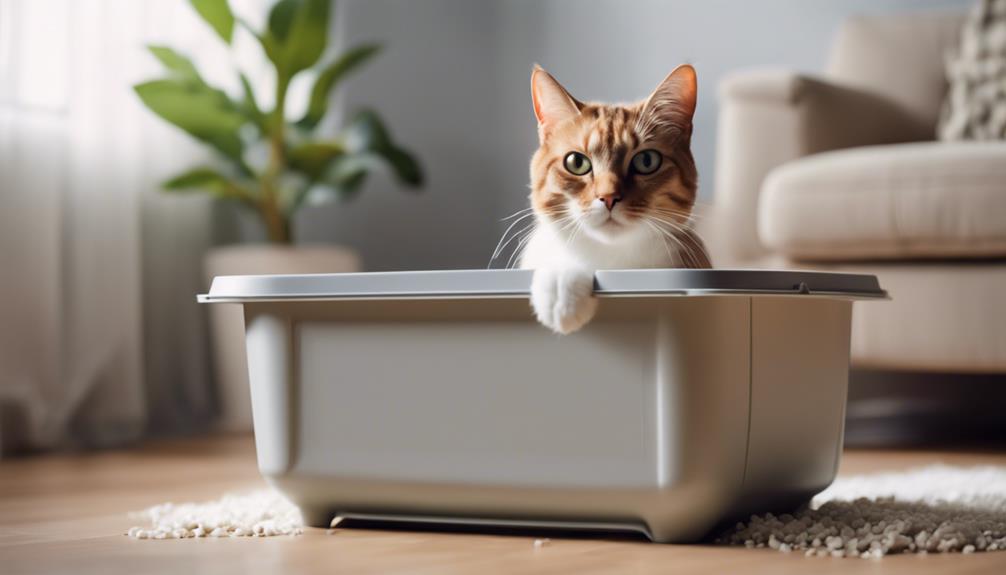
Many cats exhibit a preference for unscented litter options due to their heightened sense of smell. Scented litters can be overwhelming and deter cats from using the box. Here is a comparison of scented vs. unscented litter options:
| Aspect | Scented Litter | Unscented Litter |
|---|---|---|
| Odor Control | Artificial scents | Natural odor control |
| Cat Preference | Some cats dislike | Preferred by many |
| Respiratory Health | Potential irritant | Gentle on the respiratory system |
| Consistency | May deter use | Encourages consistent use |
Regular Cleaning Routine
To maintain a fresh-smelling litter box, it is important to establish a regular cleaning routine that involves daily scooping to remove waste promptly.
Odor neutralizers can also be added to the litter to help control any existing smells effectively.
Additionally, washing the litter box weekly with mild detergent or bleach can aid in eliminating odors and ensuring cleanliness.
Daily Scooping
Consistent maintenance of the litter box through frequent scooping is crucial to prevent unpleasant odors from developing. Scooping the litter at least twice a day helps remove waste promptly, especially urine, which can cause strong odors.
Using a clumping litter makes this task easier as it helps in containing the mess. Regular scooping also prevents the spread of bacteria and guarantees a cleaner environment for your cat.
Odor Neutralizers
Implementing an effective odor neutralization routine is essential for maintaining a fresh-smelling litter box environment. Use baking soda as a natural odor neutralizer by sprinkling it before adding fresh litter.
Consider Zero Odor Litter Box Odor Eliminator with activated charcoal for effective odor control. Avoid perfumed litters and opt for non-toxic methods like baking soda.
Regularly clean with enzymatic cleaners to prevent odors and discourage future accidents. Utilize bamboo charcoal filters for stubborn cat odors.
Incorporating Baking Soda
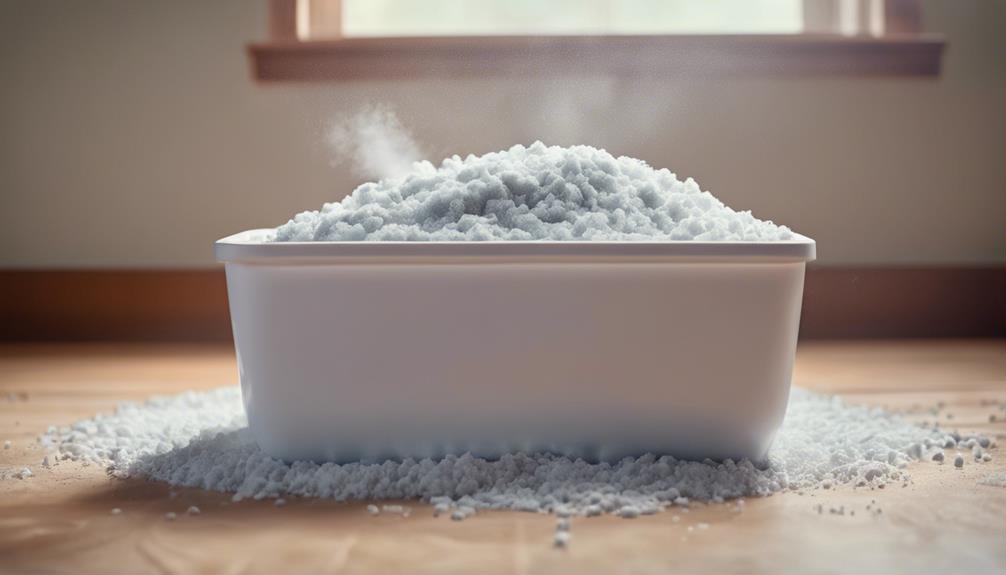
When it comes to managing litter box odors, incorporating baking soda is a proven and reliable method for maintaining a fresh-smelling environment for your cat.
Baking soda is a safe and effective odor absorber that helps neutralize urine odors in the litter box.
Sprinkling baking soda before adding fresh litter or placing an open box of it nearby can greatly enhance odor control, keeping your cat's space clean and pleasant.
Using Charcoal Filters
Charcoal filters are an essential tool in combatting persistent odors emanating from litter boxes. These filters, such as the bamboo charcoal ones from Modkat, are not only effective but also eco-friendly and can be rejuvenated by exposure to sunlight.
Understanding the benefits of charcoal filters, proper maintenance techniques, and selecting the appropriate filter for your needs are vital elements to guarantee a fresh and odor-free litter box environment.
Charcoal Filter Benefits
To enhance odor control in litter boxes, utilizing bamboo charcoal filters can prove to be an effective and environmentally friendly solution. These filters are adept at minimizing stubborn cat odors by absorbing and neutralizing them effectively.
Brands like Modkat offer odor control kits with renewable bamboo charcoal filters that can be recharged in the sun, providing long-lasting odor control. Incorporating charcoal filters into your litter box maintenance routine can greatly reduce unwanted litter smells.
Proper Filter Maintenance
In maintaining ideal odor control in litter boxes, ensuring proper upkeep of charcoal filters is essential for long-lasting freshness and effectiveness.
Bamboo charcoal filters, such as those in Modkat's odor control kit, are eco-friendly options that effectively minimize stubborn cat odors.
These filters can be recharged in the sun, extending their lifespan and maintaining a fresh and odor-free environment in your home.
Choosing the Right Filter
When selecting the appropriate filter for controlling litter box odors, it is important to take into account the environmental impact and effectiveness of the options available. Bamboo charcoal filters, like those from Modkat, are renewable and long-lasting. They can help reduce stubborn cat odors and are environmentally friendly. Charcoal filters, including bamboo ones, offer a natural way to combat strong litter box odors.
| Filter Type | Benefits | Suitability |
|---|---|---|
| Bamboo Charcoal | Renewable, long-lasting | Effective |
| Activated Charcoal | Odor absorption | Environmentally friendly |
| Carbon Filters | Absorbent properties | Rechargeable |
Proper Litter Box Placement
Placing litter boxes in well-lit, accessible areas throughout your home is essential for maintaining a fresh and odor-free environment for your feline companions.
- Avoid dark or isolated corners to prevent odor concentration.
- Choose socially appropriate locations for the litter box.
- Keep the box in well-ventilated areas to reduce lingering odors.
Consulting With a Vet

Considering your cat's overall health and well-being is essential when addressing potential factors contributing to litter box odors, seeking guidance from a veterinarian can offer valuable insights and solutions. Vets can provide information on diet-related factors causing strong odors, suggest dietary adjustments, and identify health issues like digestive problems. Consulting with a vet is vital if your cat's waste has an unusual smell to guarantee a fresh litter box and address underlying concerns.
| Vets | Insights | Solutions |
|---|---|---|
| Offer guidance | Identify health issues | Suggest dietary changes |
| Provide information | Address strong odors | Guarantee a fresh litter box |
| Recommend adjustments | Offer solutions | Maintain well-being |
Dietary Advice for Odor Control
For effective odor control in your cat's litter box, implementing tailored dietary advice recommended by a veterinarian is crucial. Consider the following dietary tips to minimize litter box odors:
- Opt for high-quality, balanced diets
- Introduce specialized cat foods
- Guarantee the diet promotes digestive health and reduces strong-smelling waste
Can Skunk Smell Transfer to a Litter Box and Cause Odor Issues?
If your cat has had a run-in with a skunk, you might be struggling with getting skunk smell off cat and worried about the odor transferring to the litter box. While the smell can linger in the area, regular cleaning and using odor-eliminating products can help alleviate the issue.
Importance of Clean Environment
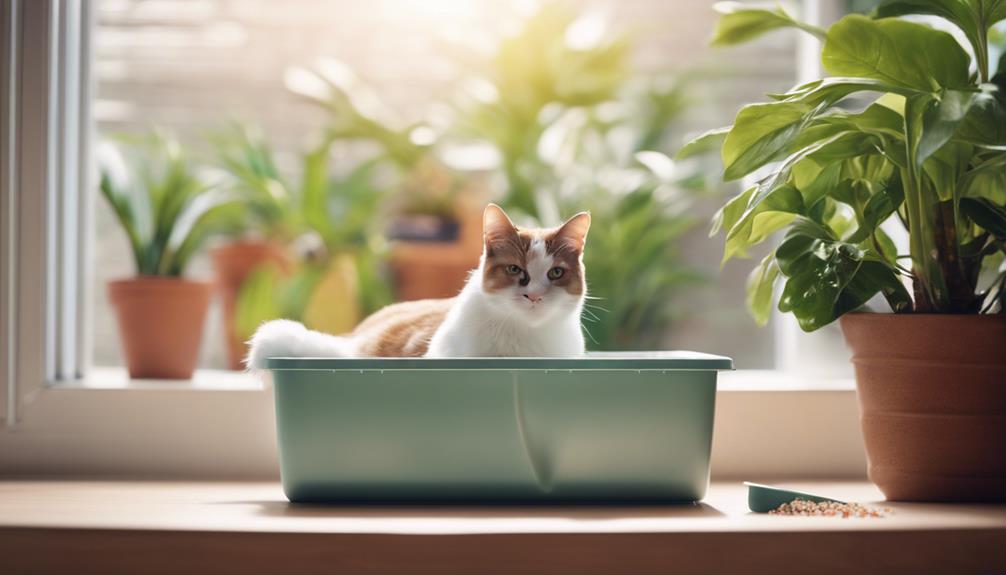
Maintaining a pristine litter box environment is essential for safeguarding your cat's health and well-being. Regular cleaning prevents odors, ensuring a stink-free litter box and a fresh-smelling home for cat parents.
A clean litter box reduces the risk of infections and behavioral issues in cats, promoting good litter box habits and ensuring their comfort. By prioritizing a clean environment, cat owners can enhance their feline companion's quality of life.