
Shifting an indoor cat to an outdoor lifestyle involves careful steps for safety. Benefits include exercise, mental stimulation, and natural behaviors. Safety and health risks need thorough evaluation before outdoor access. Supervised time outdoors helps acclimate cats gradually and reduces risks. Harnesses guarantee security with proper fit and supervision. ID tags and microchips aid in identifying lost cats. Monitoring cat interactions prevents conflicts. A safe outdoor environment involves hazards assessment, shaded areas, and cat-safe materials. Gradual changes and comfort consideration are important. Further insights on moving indoor cats outdoors await for a successful shift.
Benefits of Transitioning Your Cat Outdoors

Introducing your indoor cat to the outdoors can offer numerous benefits for their physical and mental well-being. Outdoor cats enjoy increased physical exercise and mental stimulation compared to indoor cats. Exposure to natural sunlight and fresh air can enhance a cat's overall health.
Acclimating to an outdoor lifestyle allows cats to exhibit natural behaviors like hunting, potentially reducing obesity and related health issues. Outdoor cats may also have reduced litter box maintenance due to natural elimination habits.
Considerations Before Allowing Outdoor Access
When contemplating allowing your indoor cat outdoor access, it's vital to focus on safety considerations outdoors, the health risks your cat may face, and the behavior changes you might observe.
Safety should be a top priority, as outdoor environments pose potential dangers like traffic accidents and diseases. Understanding these aspects is essential for a smooth shift to an outdoor lifestyle for your feline companion.
Safety Considerations Outdoors
Before granting outdoor access to an indoor cat, it is important to thoroughly consider safety implications to protect the cat from potential risks and hazards. Outdoor cats face dangers like traffic accidents, diseases, and conflicts with other animals.
Using a cat harness for supervised outdoor access and gradually introducing the outdoor environment while monitoring interactions can help mitigate risks. Proper identification, such as a collar or microchip, is essential for easy identification and access control.
Health Risks to Consider
Considering the significant health risks associated with outdoor environments, it is imperative to carefully evaluate the potential dangers before allowing an indoor cat outdoor access.
Outdoor cats have a life expectancy of 2–5 years, much lower than indoor cats. Health risks include exposure to diseases, parasites, injuries, accidents, wildlife encounters, traffic incidents, and disputes with other animals.
Before introducing your cat to the outdoors, weigh these risks carefully and prioritize their well-being.
Behavior Changes to Expect
Given the potential behavioral changes that may arise from allowing indoor cats outdoor access, it is important to be aware of the adjustments they may undergo in their new environment.
Cats may exhibit increased hunting behavior, become more territorial and assertive, develop a stronger bond with their outdoor territory leading to marking behaviors, decrease litter box usage, and display more active and agile behavior when moving from indoor to outdoor life.
Importance of Supervised Outdoor Time
Supervised outdoor time is vital when acclimating an indoor cat to the outside environment. It allows for close monitoring of the cat's behavior and guarantees its safety.
This controlled exposure helps the cat adjust gradually and minimizes potential risks.
Outdoor Play Benefits
Engaging indoor cats in supervised outdoor play sessions is essential for providing mental and physical stimulation that aligns with their natural instincts and promotes overall well-being.
Allowing your cat time outdoors helps them exhibit behaviors like hunting and exploring, reducing obesity risks through increased physical activity.
This exposure to fresh air and sunlight contributes to their health, providing peace of mind for owners who train their cats for outdoor play.
Safety Precautions Outdoors
Ensuring the safety of your indoor cat outdoors is paramount for their well-being and overall health. When allowing your cat outdoors, make sure to supervise them closely to prevent accidents and monitor their interactions. Gradually increase outdoor time to assess their comfort level. Provide a secure outdoor space with boundaries to prevent wandering. Regularly check for injuries, parasites, or signs of illness during outdoor time to maintain your cat's health.
| Safety Precautions Outdoors | |
|---|---|
| Supervise outdoor time | Prevent accidents |
| Monitor cat's interactions | Assess comfort level |
| Provide secure space | Check for injuries regularly |
Using a Cat Harness for Safety

When acclimating an indoor cat to the outdoors, utilizing a properly fitted cat harness is essential for ensuring the safety and security of your feline companion.
The harness should be snug but not tight, allowing two fingers to fit between the harness and the cat's body. Start harness training indoors, gradually increasing outdoor time.
Always supervise your cat to prevent hazards, ensuring a safe return home.
Ensuring Proper Identification for Your Cat
How can you guarantee your cat's safety while outdoors?
It's important to make sure your cat wears a collar with an ID tag containing your contact details. Additionally, consider microchipping your cat for permanent identification in case the collar goes missing. Keeping the microchip information up to date is essential to ensure your furry friend can come back to you if lost.
Proper identification is crucial for the safety of your cat.
Monitoring Interactions With Other Animals
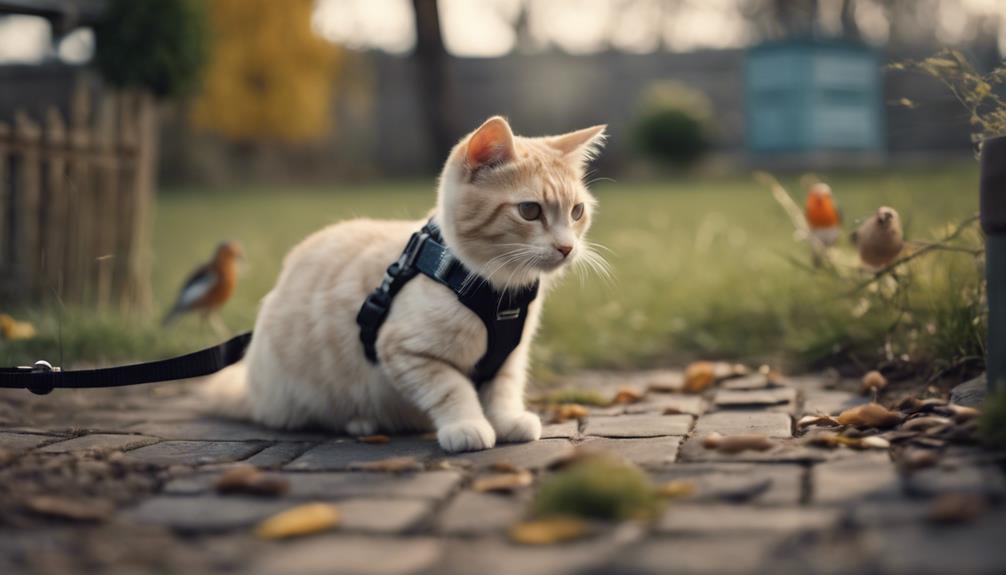
Monitoring your cat's interactions with other animals is vital for ensuring their safety during outdoor excursions. Watch for signs of aggression or fear in your indoor cat every day. Intervene if necessary to prevent conflicts or injuries.
Be mindful of territorial behaviors in both your cat and other animals. Using a harness or leash can help control interactions. Supervising outdoor time is essential in monitoring these interactions effectively.
Creating a Safe Outdoor Environment
To guarantee the safety and well-being of your indoor cat during outdoor excursions, it is crucial to establish a secure and cat-friendly outdoor environment.
Make certain the outdoor area is free from hazards, provide shaded spots and water for hydration, and create hiding places for security.
Use cat-safe plants and materials, as well as inspect the area regularly to prevent any risks to your indoor cat's safety.
Addressing Triggers and Comfort Levels

In preparing your indoor cat for outdoor excursions and ensuring their safety, it is imperative to address potential triggers and comfort levels that may impact their outdoor experience.
- Identify loud noises, unfamiliar scents, or sudden movements that may cause discomfort.
- Gradually expose your cat to triggers to acclimate them.
- Observe body language to gauge comfort.
- Provide safe retreats in the outdoor area for comfort.
Can I Transition My Indoor Cat to Enjoying Outdoor Activities like Hiking?
Transitioning your indoor cat to enjoying outdoor activities like hiking with a cat tips can be a slow process. Start by familiarizing your cat with a harness and leash indoors before venturing outside. Choose quiet, safe hiking trails and stay patient as your cat adapts to the great outdoors.
Gradually Increasing Outdoor Time
Starting the process of acclimating your indoor cat to the outdoors involves a systematic approach of slowly increasing their exposure to the external environment. Begin with short 10-minute outdoor sessions and gradually extend the outdoor time in small increments.
Monitor your cat's behavior and comfort level closely during these outdoor sessions. Guarantee the outdoor space is safe and close to your home for easy access.
Establishing a routine for outdoor time can help your cat feel secure and comfortable.