
Retraining a cat to use a litter involves a structured process. Begin with a medical check-up to rule out health issues. Address behavioral triggers and consider anti-anxiety medication if needed. Confine the cat to a room with only essential items at first. Gradually introduce more freedom while closely monitoring their behavior. Consistent monitoring and positive reinforcement are crucial. Keep the litter box clean and inviting. Stay patient and avoid punishment. Each step plays an essential role in successful retraining. If you follow these steps, you will set your cat on the path to using litter effectively.
Medical Evaluation Before Retraining
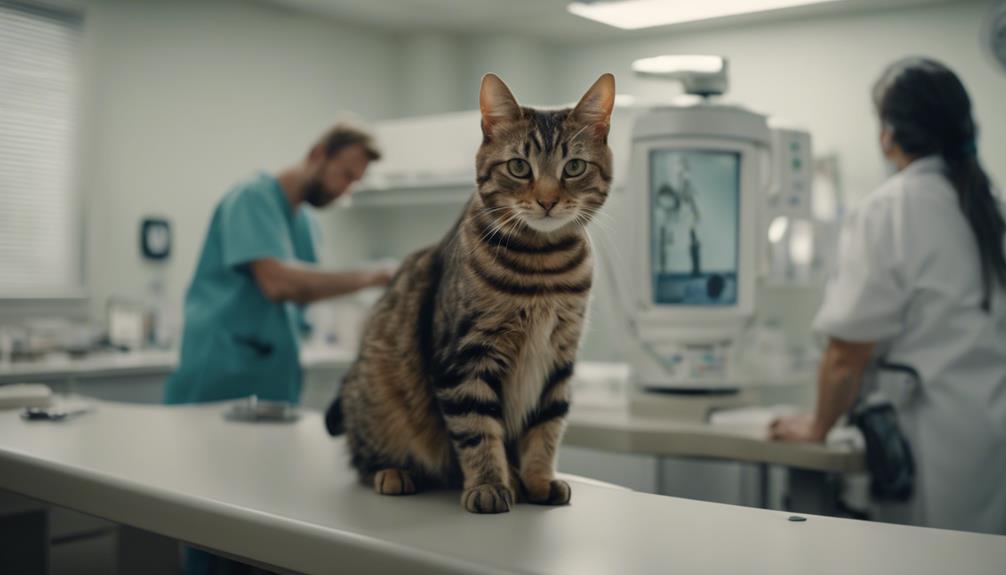
Before initiating the process of retraining a cat to use a litter box, it is essential to conduct a thorough medical evaluation. This step helps identify issues like bladder stones through a urinalysis. If infections are present, antibiotic treatment may be necessary.
Consulting with a veterinarian to address any medical concerns is vital before starting behavioral retraining. Understanding and resolving medical issues can greatly impact a cat's litter box habits.
Behavioral Assessment and Treatment
Behavioral assessment plays an essential role in retraining a cat to use a litter box effectively. This involves identifying triggers for inappropriate elimination.
Treatment may include anti-anxiety medication like Buspirone.
Retraining strategies focus on gradual reintroduction to the home environment, along with consistent monitoring and reinforcement of positive behaviors.
These steps are vital for successful litter box training.
Initial Confinement and Setup

To facilitate successful retraining of a cat to use a litter box, the initial phase involves confining the cat to a designated room with essential amenities. During this period, the cat should have access to only the litter box, food, and water.
It is important to use Cat Attract litter and remove soft surfaces to encourage proper litter box usage. Interaction with the cat is allowed, but roaming outside the confined area is restricted.
Monitor the cat's behavior closely during this initial confinement.
Supervised Outings and Gradual Freedom
During week 2 of retraining, supervised outings play an essential role in helping your cat readjust to its surroundings. By closely monitoring the cat's behavior during these outings, you can reinforce positive litter box habits.
Gradually increasing unsupervised time allows the cat to regain freedom while maintaining consistent litter box training.
Monitor Cat's Progress
Throughout the second week of retraining a cat to use a litter box, it is essential to allow brief supervised outings to evaluate the feline's progress and readiness for increased freedom.
- Evaluate litter box usage during outings.
- Reinforce positive behaviors if accidents occur.
- Increase supervised time outside gradually to aid in the adjustment back.
Allow Controlled Exploration
After carefully monitoring the cat's progress in using the litter box during supervised outings, the next step is to gradually introduce controlled exploration to facilitate the retraining process.
By allowing short supervised outings outside the confined room, you can observe the cat's behavior closely to make sure they maintain proper litter box habits.
Consistent monitoring and supervision during these outings are essential for successful retraining and shift to a larger space.
Increase Unsupervised Time
To facilitate the shift to increased unsupervised time for the cat, implementing a structured approach of supervised outings and gradual freedom is essential.
- Monitor the cat's behavior closely during supervised outings.
- Reinforce positive litter box habits.
- Gradually increase unsupervised time based on successful monitoring and behavior observations for effective retraining.
Consistent Monitoring and Positive Reinforcement
Consistent monitoring of your cat's litter box habits is essential for tracking progress and making adjustments to the retraining process.
Using positive reinforcement, such as treats or praise, immediately after your cat uses the litter box can help reinforce the desired behavior.
Stay patient and consistent in your approach, as rewarding good behavior and avoiding punishment are key elements in successfully retraining your cat to use the litter box.
Monitor Litter Box
During the retraining process, diligent monitoring of the cat's litter box habits is essential for successful outcomes and positive reinforcement.
- Regularly observe the cat's behavior around the litter box to reinforce positive usage.
- Timely intervention through monitoring aids in effective retraining.
- Checking cleanliness and interactions with the litter box regularly is vital for success.
Reward Good Behavior
When retraining a cat to use a litter box, rewarding good behavior through consistent monitoring and positive reinforcement is key to encouraging proper habits. Monitor your cat's behavior closely to catch and reward positive litter box habits promptly.
Use treats, praise, or playtime as positive reinforcement when your cat uses the litter box correctly. Positive reinforcement helps strengthen the association between using the litter box and receiving rewards. Avoid punishment to prevent negative associations with the litter box.
Stay Patient and Consistent
Maintaining a patient and consistent approach, coupled with diligent monitoring and positive reinforcement, is essential when retraining a cat to use a litter box correctly.
- Consistently observe your cat's behavior during retraining.
- Use positive reinforcement like treats and praise to encourage litter box use.
- Patience is vital for establishing lasting litter box habits in your cat.
Importance of Clean Litter Box Environment
Ensuring a pristine litter box environment is essential for fostering consistent litter box usage in cats. Cleanliness plays a vital role in maintaining a hygienic environment, reducing the risk of toileting issues, and promoting positive litter box habits.
Regular cleaning of the box is necessary to encourage cats to use it and prevent accidents outside the box. A clean litter box environment is key to supporting a cat's litter box training success.
Can Retraining My Cat to Use a Litter Help Reduce Litter Tracking?
Retraining your cat to use a litter box with a top entry or deep tray can help reduce cat litter tracking. These designs prevent scatter as your cat exits, keeping the litter contained. Additionally, a litter-tracking mat outside the box can further minimize mess.
Patience and Consistency in Retraining
Developing a retraining plan that emphasizes patience and consistency is essential when working to instill proper litter box habits in a cat. To achieve successful retraining, consider the following:
- Consistency: Implement a consistent routine for the cat's litter box usage.
- Patience: Be patient as retraining may take time to yield results.
- Monitoring: Monitor the cat's behavior closely during the retraining process.