
To save a cat from choking, watch for signs like pawing at the mouth or a pale tongue. Stay calm and check for obstructions. Try the Heimlich maneuver by giving upward thrusts on the abdomen. Adjust pressure carefully based on the cat's size. Clear the mouth and pat the back to help remove the obstruction. If the cat becomes unconscious, check for airway blockages and tilt the head down to prevent aspiration. Seek immediate veterinary help for evaluation and emergency assistance when needed. Learn more about preventing choking incidents and ensuring your cat's safety.
Recognizing Choking Signs in Cats
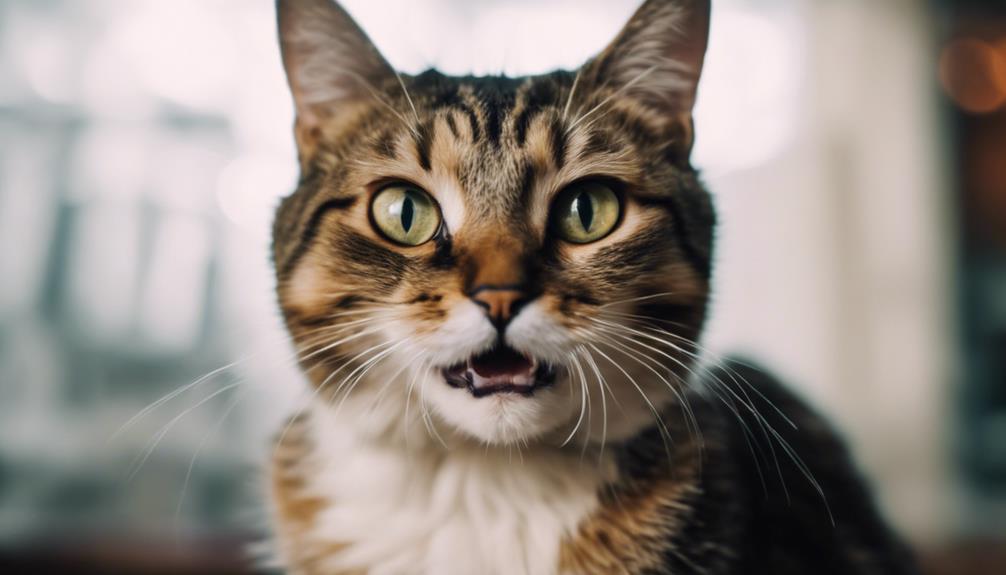
When evaluating a cat for potential choking, pay close attention to any signs of pawing at the mouth, as this behavior can indicate a choking episode. Other signs of choking in cats include a pale or blue tongue, distress, or unconsciousness.
Recognizing these signs promptly is vital in providing timely assistance to prevent serious consequences.
If you suspect your cat is choking, seek immediate veterinary help to guarantee proper care.
Immediate First Aid Actions
In the event of a choking emergency involving your cat, maintaining a composed demeanor while quickly evaluating the situation is essential for timely and effective intervention.
Check your cat's mouth for any visible obstructions. If your cat shows signs of choking, perform the Heimlich maneuver by applying quick upward thrusts to the abdomen.
Monitor your cat's breathing and behavior post-obstruction removal. Seek immediate veterinary assistance if distress or choking signs persist.
Performing Heimlich Maneuver on Cats

When a cat is choking, performing the Heimlich maneuver is crucial to dislodging the obstruction. The technique involves applying quick upward thrusts on the stomach, adjusting the pressure according to the cat's size.
Safety precautions such as gently clearing the mouth and patting the back should be followed to guarantee the successful removal of the blockage.
Technique for Heimlich
To perform the Heimlich maneuver on a cat, apply quick upward thrusts to the abdomen to expel obstructions using either your fist or fingertips based on the cat's size. This technique helps remove the obstruction causing the choking.
Before starting the maneuver, gently sweep the cat's mouth to clear any visible blockages. If needed, pat the cat's back to assist in dislodging the obstruction, potentially saving the cat's life.
Safety Precautions for Cats
For the safe application of the Heimlich maneuver on cats, it is essential to approach with gentle yet decisive pressure on their abdomen to dislodge any obstructing object from their airway.
- Adapt pressure based on cat size
- Confirm airway obstruction before action
- Quick upward thrusts are vital
Handling an Unconscious Cat
In cases of an unconscious cat, immediate action must be taken to assess and address potential airway obstructions and respiratory distress.
Check the cat's mouth for any visible objects that may be blocking the air passage. To prevent fluid aspiration, tilt the cat's head down.
If the cat is not breathing, perform rescue CPR by giving chest compressions and mouth-to-nostril breathing. Clear any obstructions from the cat's mouth to help restore normal breathing.
Seeking Veterinary Assistance
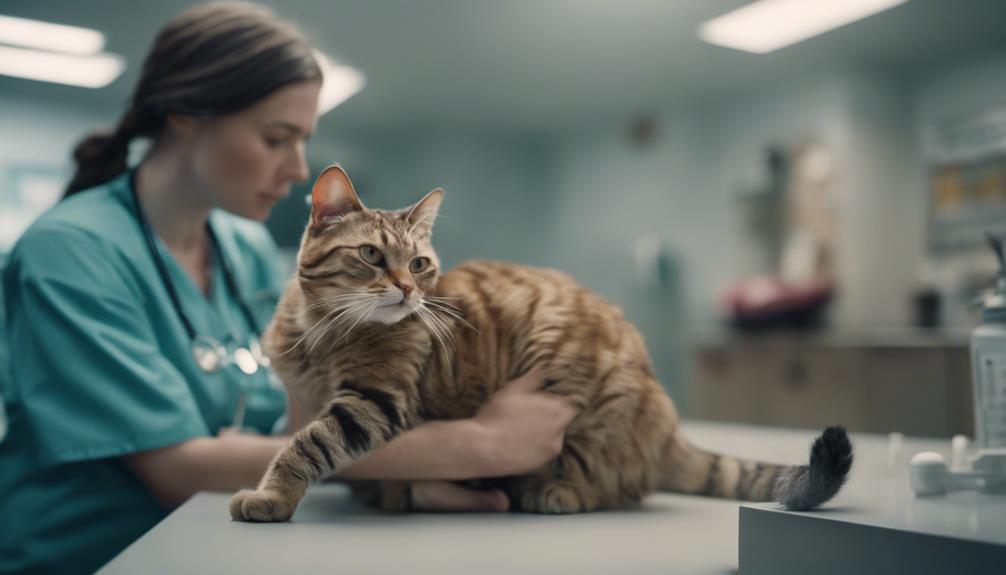
When a cat is choking, seeking veterinary assistance promptly is essential.
A quick visit to the vet or contacting an emergency veterinary service can provide professional medical help.
Veterinarians can perform necessary procedures to remove obstructions and guarantee the cat's safety.
Quick Vet Visit
An urgent veterinary visit is essential in cases of a cat choking to ensure immediate evaluation and appropriate intervention.
- Veterinarians conduct thorough examinations and diagnostic tests to pinpoint the cause of choking in cats.
- Professional veterinary assistance helps determine the severity of the situation and provide necessary interventions.
- Vets can administer emergency procedures like clearing the airway or performing CPR if needed.
Emergency Vet Contact
Promptly contacting an emergency veterinary clinic is essential when seeking immediate assistance for a cat experiencing choking symptoms. If the cat is not breathing or shows blue or purple gums, it indicates a severe lack of oxygen. These signs necessitate immediate veterinary care to address potential airway obstructions and prevent further complications.
Differentiating between choking and other conditions requires professional expertise, underscoring the importance of seeking help from a vet in such emergencies.
Professional Medical Help
Seeking immediate professional veterinary assistance is essential in cases of cat choking to guarantee timely diagnosis and appropriate treatment.
- A veterinarian should be contacted immediately for true choking incidents.
- Urgent veterinary care aids in accurate differentiation between choking and other conditions.
- Prompt intervention is vital if a cat shows signs like blue or purple gums.
Can Chewing Electric Cords Lead to Choking in Cats?
Yes, chewing electric cords can be dangerous for cats. To prevent accidents, it’s important to stop cat chewing electric cords. Covering the cords with PVC tubing or using bitter-tasting sprays can deter them from putting the cords in their mouths. It’s crucial to keep these hazards out of reach.
Preventing Choking Incidents

To prevent choking incidents in cats, it is essential to be proactive in minimizing potential hazards within their environment. Keep small items or objects that can be choking hazards out of your cat's reach.
Supervise playtime to prevent ingestion of harmful items. Regular grooming can reduce hairball formation, a common choking hazard. Educate yourself on common choking hazards for cats to better prevent choking incidents.
Stay vigilant as cats can choke on objects or food.