
To socialize feral cats, use patience and understanding. Start by creating a safe, quiet space with hiding spots. Provide consistent care, like feeding on a schedule and gentle handling. Use positive reinforcement, such as treats and play, to build trust. Slowly introduce human interaction, showcasing non-threatening intentions. Gradually develop bonds by being patient and consistent. Feral cats can adapt to human interaction with time and care. Each step taken can lead to successful socialization.
The Importance of Socializing Feral Cats

Socializing feral cats is vital for improving their welfare and increasing their chances of adoption. By building trust and enhancing their social skills, feral cats become more adaptable to indoor settings. This process reduces stress levels, promotes a positive human-animal bond, and decreases the risk of disease transmission.
Effective socialization is essential for helping feral cats shift into loving homes and improving their overall quality of life.
Understanding Feral Cat Behavior
Understanding feral cat behavior is essential to effectively socializing these cats and improving their welfare outcomes. Feral cats exhibit fear responses, such as hissing and swatting, due to limited human exposure.
Socialization techniques, like patience and love, are vital to building trust. Separating feral kittens initially can aid in their socialization process.
Providing a safe environment is critical for feral cats to adjust and feel secure, tailoring socialization techniques to their specific needs.
Creating a Safe Environment

To guarantee the successful socialization of feral cats, creating a safe and secure environment is crucial. Provide a quiet space with hiding spots like covered beds or boxes. Eliminate loud noises and sudden movements to reduce stress. Incorporate vertical space with cat trees for observation. Use soft bedding to guarantee warmth and comfort.
These measures help feral cats feel secure and facilitate their socialization process.
Establishing Trust Through Consistent Care
Establishing trust through consistent care is a fundamental aspect of socializing feral cats and fostering their gradual integration into human interaction.
Consistent feeding schedules help build positive associations with humans, while gentle handling and patience during care routines show reliability.
Providing a safe environment and predictable routine with feeding, playtime, and affection helps feral cats feel secure and develop bonds with caregivers, aiding in the process of socializing a cat.
Using Positive Reinforcement Techniques
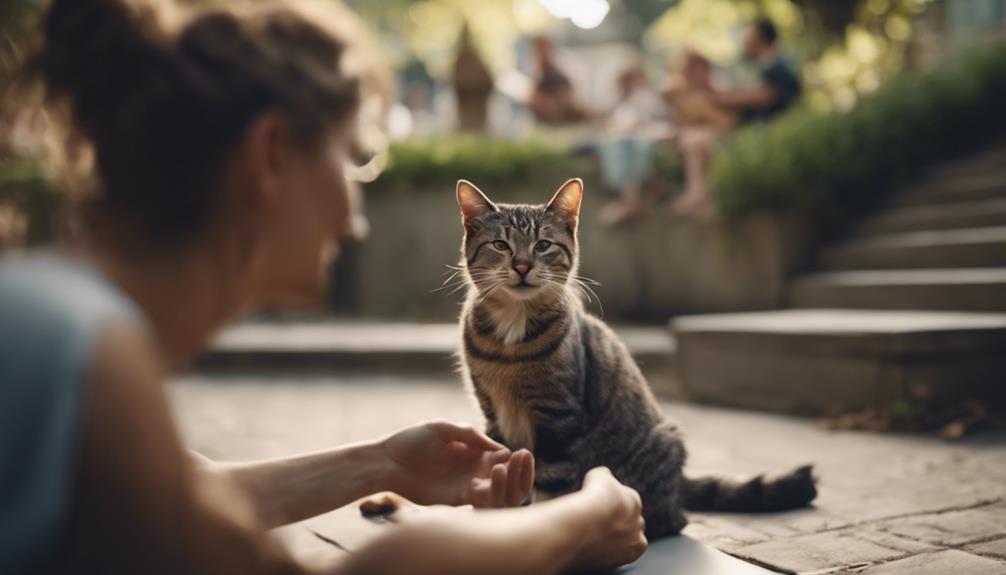
Implementing positive reinforcement techniques is essential in encouraging the socialization of feral cats by rewarding desired behaviors to foster trust and comfort around humans.
Using treats, praise, and play as rewards can help feral cats associate human interaction with positive experiences.
Consistency in applying positive reinforcement is key to helping feral cats overcome fear and build trust, making them feel safe, secure, and gradually more comfortable around humans.
Slowly Introducing Human Interaction
When socializing feral cats, it is essential to approach the process with patience and consistency. Building trust slowly is key to establishing a positive relationship with the cat.
Building Trust Slowly
In the process of socializing feral cats, the gradual approach of building trust slowly through slowly introducing human interaction is essential for fostering a bond with these wary animals.
By gradually exposing yourself to the feral cats and using soft, reassuring tones and movements, you can convey non-threatening intentions. Avoid sudden movements or loud noises to prevent startling the cats.
This trust-building process requires patience and consistency for successful socialization.
Patience and Consistency
Exercising patience and maintaining consistency are fundamental principles in the gradual introduction of human interaction when socializing feral cats.
Patience is vital as feral cats may need time to adjust, while consistency in your approach helps build trust over time.
Slowly introducing human interaction, beginning with feeding and observing from a distance, can help cats feel more at ease.
Gradual exposure and gentle interactions are essential for them to associate human contact positively.
Patience and Persistence in Socialization
Developing trust and rapport with feral cats necessitates a steadfast commitment to patient and persistent interactions.
- Consistent positive interactions are essential.
- Persistence is key in socialization efforts.
- Slow introduction to handling and touch is beneficial.
- Adapting approaches to varying comfort levels is vital.
What Are the Similarities in Socializing Feral Cats and Kittens?
Socializing young kittens and feral cats both require patience and gentleness. Building trust through slow, consistent interactions is key. Providing food, shelter, and positive experiences can help them warm up to human companionship. Using play and positive reinforcement can also encourage socialization in both kittens and feral cats.
Celebrating Successes and Progress
Recognizing milestones in the socialization of feral cats is important for acknowledging the progress and successes achieved in building trust and rapport with these animals.
Celebrate successes by observing increased comfort levels, track progress through interactions like accepting food, recognize improvements in behavior such as voluntary approaches, document milestones like gentle petting, and rejoice in achievements like decreased fear responses or increased curiosity towards humans.