
To stop cats from scratching leather furniture, redirect their behavior to suitable scratching surfaces like sisal scratching posts. Providing various textures and heights in scratching posts can meet their scratching preferences. Use deterrent sprays with citrus scents, double-sided tape, or plastic covers to protect the furniture. Regularly trim your cat's claws with proper nail clippers and gentle handling. Strategically place scratching posts and offer alternative surfaces like cardboard pads to redirect their scratching behavior effectively. Consistency and patience in training are essential. For further insights on preventing cat scratching issues, explore valuable strategies for a harmonious environment.
Reasons Why Cats Scratch Furniture
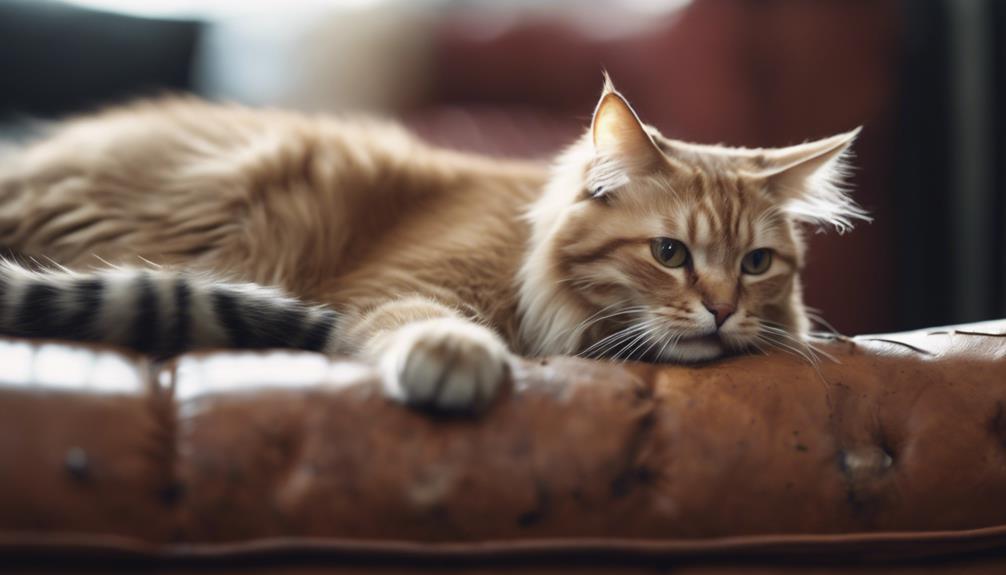
Why do cats scratch furniture, causing frustration for many pet owners and potential damage to leather pieces in the home environment?
Cats scratch to mark territory, maintain healthy claws, and seek stimulation. Understanding cat behavior is key to addressing this issue.
Redirect their attention to appropriate scratching surfaces to encourage healthy scratching habits.
Importance of Providing Scratching Surfaces
To effectively address the issue of cats scratching leather furniture, it is imperative to understand the significance of providing appropriate scratching surfaces that cater to their instinctual behavior and overall well-being.
Offering scratching posts with materials like sisal, cardboard, or carpet can redirect cats from the furniture to designated areas. Varying textures and heights in scratching posts can satisfy different scratching preferences, preventing damage and promoting cat well-being.
Using Deterrent Sprays and Covers
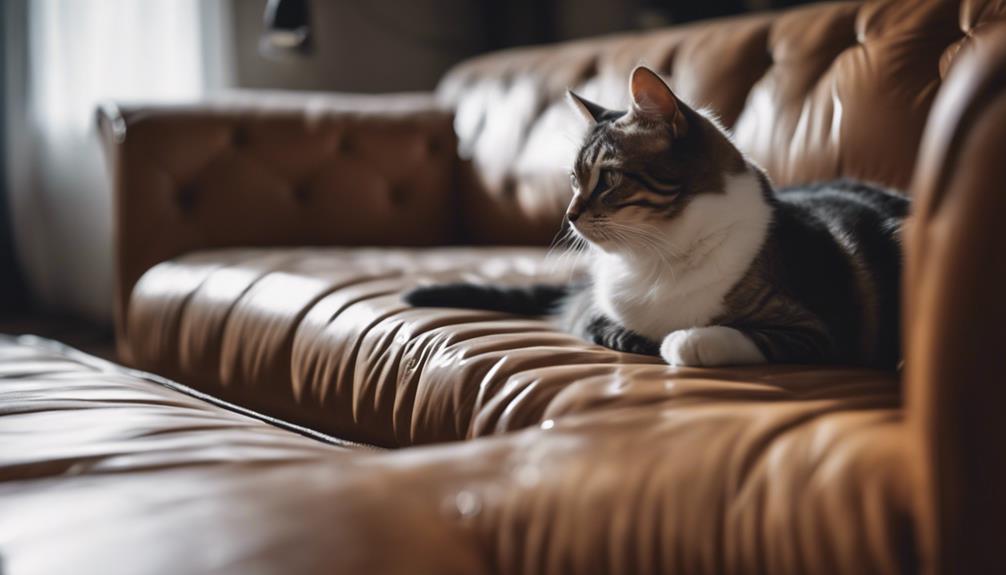
Utilizing deterrent sprays and covers is a practical approach to discourage cats from scratching leather furniture, safeguarding the upholstery from damage.
Deterrent sprays with citrus scents or vinegar can be effective, as well as using double-sided tape on leather surfaces for its sticky texture.
Plastic covers designed for furniture corners offer protection, while aluminum foil can create an unpleasant sound and sensation for cats, deterring scratching.
Tips for Trimming Cat's Claws
Regularly trimming your cat's claws is essential to prevent damage to furniture.
Using a proper nail clipper designed for cats and handling your feline friend's paws gently are key aspects of safe trimming techniques.
Consistent nail trimming not only helps maintain your cat's claws but also allows them to get accustomed to the process over time.
Safe Trimming Techniques
When trimming your cat's claws, make sure you use a sharp and high-quality cat nail clipper to maintain safety and effectiveness.
Gently handle your cat's paws to minimize stress during the process. Trim the white tip of the claw, avoiding the pink quick to prevent bleeding.
Regular nail trimming is essential to prevent furniture damage caused by sharp claws. Consistent sessions help acclimate your cat to the process and reduce resistance.
Tools for Claw Care
Ensuring proper claw care for your cat is essential. Selecting the appropriate tools for trimming their claws is crucial. Regular claw trimming using a nail clipper can help prevent damage to leather furniture.
Employing positive reinforcement and a gentle approach when handling your cat's paws for trimming is vital. Providing scratching posts and cat trees can also aid in keeping your cat's nails at a manageable length and minimizing furniture scratching.
Redirecting Cat's Behavior Effectively
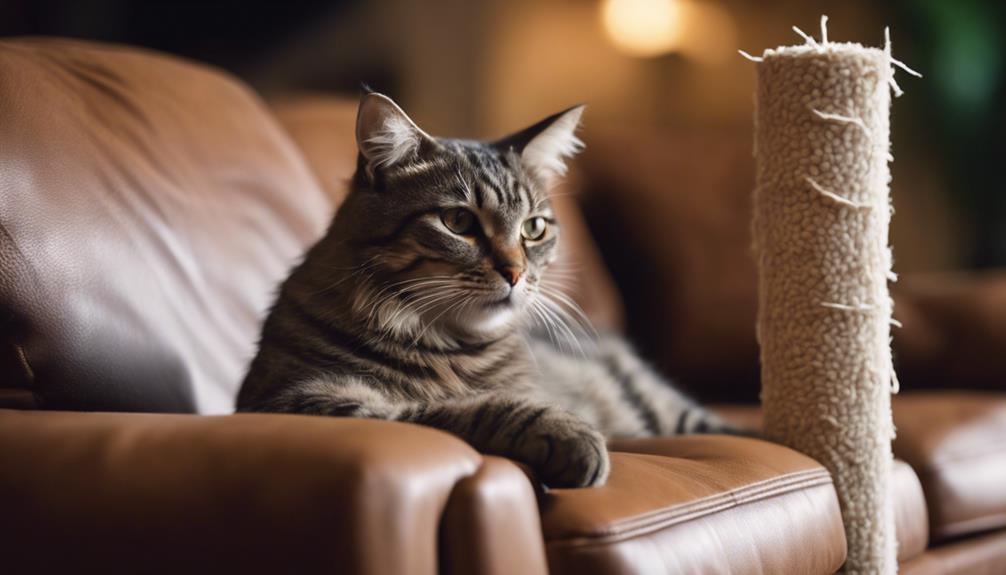
To effectively redirect a cat's scratching behavior, consider using scratching posts strategically placed around your home.
Providing alternative surfaces, such as cardboard scratching pads or sisal mats, can offer cats suitable places to scratch instead of your leather furniture.
Additionally, applying deterrent sprays on the areas you want to protect can help discourage cats from scratching where they shouldn't.
Use Scratching Posts
By providing cats with strategically placed and engaging scratching posts, their natural urge to scratch can be effectively redirected from leather furniture. Using scratching posts with various textures and materials, along with interactive features like toys, can help fulfill their scratching instincts. Additionally, incorporating organic catnip pouches on the posts can attract cats to use them, making it less likely for them to scratch the leather furniture.
| Scratching Post Features | Benefits |
|---|---|
| Different textures and materials | Fulfill scratching instincts |
| Interactive posts with toys | Engage cats effectively |
| Organic catnip pouches | Attract cats to use the posts |
Provide Alternative Surfaces
In redirecting a cat's behavior effectively, offering alternative surfaces for scratching is key to preserving leather furniture.
- Placing multiple scratching posts in various areas can redirect your cat's scratching behavior.
- Using toys or catnip to attract cats to the scratching posts can encourage them to use the alternatives.
- Different types of scratching posts, like vertical or horizontal, cater to cats' preferences and can help in redirecting their scratching habits.
Apply Deterrent Sprays
Employing deterrent sprays infused with citrus or vinegar scents can effectively discourage cats from scratching leather furniture. These sprays create an unpleasant smell for cats, redirecting their behavior away from the leather surface.
Consistency and Patience in Training
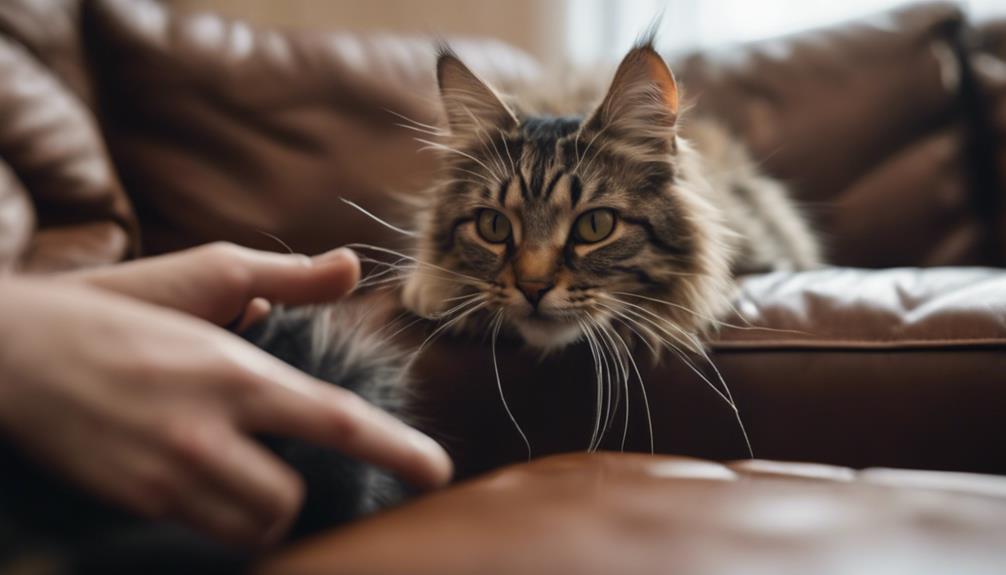
To effectively curb your cat's scratching behavior on leather furniture, maintaining a consistent training approach with patience is essential.
- Consistency in training involves using the same cues and techniques every time you redirect your cat's scratching behavior.
- Patience is vital as training your cat to stop scratching leather furniture may take time and persistence.
- Reward positive behavior consistently to reinforce the desired scratching habits on appropriate surfaces.
Can the Methods to Stop Cat Scratching on Carpet Also Work for Leather Furniture?
There are various ways to discourage cat scratching on both carpet and leather furniture. Providing scratching posts, using deterrent sprays, and trimming their nails are effective methods. Additionally, covering the furniture with double-sided tape or aluminum foil can help redirect their scratching behavior.
Consulting a Behavioral Specialist
Engaging a behavioral specialist can provide valuable insights into addressing your cat's scratching behavior on leather furniture. These professionals offer training advice and personalized solutions to modify your cat's scratching behavior effectively. By consulting a behavioral specialist, you can receive professional guidance tailored to your cat's specific needs. This is essential if scratching issues persist, ensuring a healthy relationship with your pet while resolving any underlying problems.
| Benefits of Consulting a Behavioral Specialist |
|---|
| Identifying underlying issues causing scratching behavior |
| Offering effective training advice tailored to your cat |
| Providing personalized solutions for behavior modification |
| Maintaining a healthy relationship with your pet |
| Addressing scratching issues through professional guidance |