
Cast Iron Plants, scientifically known as Aspidistra elatior, are non-toxic to cats. These plants are safe for feline companions due to their harmless nature. They are a part of the Lily family and have safe levels of iron. Cast Iron Plants feature dark green, pointed leaves that can reach up to 2 feet in height. While they are generally safe, it's advisable to supervise cats around these plants. Considered ideal for homes with pets, these plants provide a cat-friendly environment. Understanding the safety of Cast Iron Plants guarantees a secure space for your furry friends.
Cast Iron Plant Toxicity to Cats
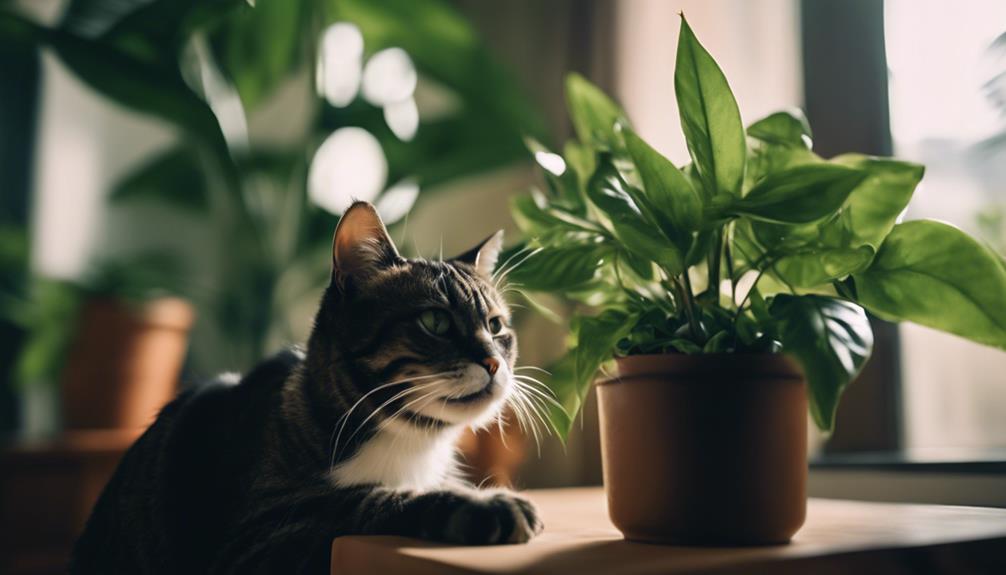
Cast Iron Plants, specifically Aspidistra elatior, present no toxicity risk to cats, ensuring a safe environment for feline companions. These sturdy plants, part of the Lily family, contain iron in their composition, which is safe for cats even if ingested.
Their dark green, pointed leaves can reach heights of up to 2 feet, adding a touch of nature to indoor spaces without posing a threat to curious pets. While Cast Iron Plants are generally considered safe for cats, it's important to monitor them around the plant to prevent any potential ingestion that could lead to mild stomach issues.
Cat owners can enjoy the beauty of Cast Iron Plants without the worry of toxicity, making them an excellent choice for pet-friendly homes.
Cat-Safe Care Guidelines for Cast Iron Plants
When caring for Cast Iron Plants in a cat-friendly environment, it is important to adhere to specific guidelines to guarantee the well-being of both your plants and your feline companions.
- Water every: These plants should be watered when the soil is dry to the touch, providing straightforward care for cat-friendly environments.
- Indirect light: Cast Iron Plants thrive in low light conditions, making them perfect for indoor spaces where direct sunlight is minimal.
- Non-toxic to cats: Ensuring your plants are non-toxic to cats is essential; Cast Iron Plants are safe for feline friends, giving you peace of mind in your plant care routine.
Cat-Friendly Placement of Cast Iron Plants
Strategic placement of Cast Iron Plants is vital to safeguard them from feline interference and promote a harmonious coexistence with your pets. Elevate the Aspidistra elatior, also known as the Bar Room Plant and native to Japan, on high shelves or in hanging baskets to keep them out of reach of curious cats.
Create designated pet-free zones using baby gates or closed doors to guarantee the safety of your non-toxic plants. By preventing nibbling and keeping the plants away from even the most acrobatic kitties, you can avoid potential upset stomachs for your feline friends.
Propagating Cast Iron Plants Safely
To safely propagate Cast Iron Plants, it is advisable to utilize methods such as division and rhizome cuttings while maintaining a pet-friendly environment.
When propagating these plants, consider the following:
- Keep newly propagated parts out of reach of cats to prevent ingestion.
- Use non-toxic materials, fresh soil, and clean tools for a safe environment.
- Guarantee the propagation process is conducted in an area that is inaccessible to pets.
Can Cast Iron Plants Pose a Danger to Cats Similar to Catnip Sticks?
While cast iron plants are not toxic to cats, it’s always a good idea to keep an eye on your feline friend’s interest in chewing on plants. Catnip sticks for cats, on the other hand, can pose a different kind of danger if ingested in large amounts, so be sure to monitor your pet’s interaction with them.
Benefits of Cast Iron Plants for Cats
Cast Iron Plants offer a host of benefits to cats, serving as non-toxic and air-purifying additions to feline-friendly households. These popular houseplants are safe for cats, making them ideal for creating cat-friendly environments.
Known for their air-purifying qualities, Cast Iron Plants help maintain a clean and fresh atmosphere, benefiting both humans and feline companions. Their low-maintenance nature makes them easy to care for, adding to the tranquility of the space.
The lush greenery of Cast Iron Plants contributes to a peaceful ambiance, promoting a sense of well-being for cats and their owners alike. By incorporating these plants into homes, a harmonious environment that enhances the overall quality of life for all inhabitants can be achieved.