
While not all white cats with blue eyes are deaf, there is a significant correlation between the two. Approximately 75% of white cats with two blue eyes experience deafness, with those having one blue eye at a 40% risk. Genetic components heavily influence this deafness risk, particularly in cats with blue eyes. Understanding these factors is crucial in managing potential auditory impairments in white cats. Further exploration into the interplay between genetics and deafness prevalence sheds light on this intriguing connection.
Deafness Rates in White Cats

Deafness rates in white cats, especially those with blue eyes, are significantly higher compared to cats of other colors. Approximately 75% of white cats with both eyes blue are deaf, while those with one blue eye have a 40% chance of being deaf.
In contrast, white cats with non-blue eyes exhibit deafness rates of around 17-22%. The increased likelihood of deafness in cats with blue eyes is attributed to genetic factors, indicating a hereditary component to deafness in these cat breeds.
Cats with two blue eyes are 3-5 times more likely to be deaf than those with non-blue eyes, emphasizing the influence of eye color on deafness prevalence among white cats. These statistics underscore the importance of understanding the link between genetics, eye color, and deafness in white felines.
Influence of Blue Eyes on Deafness
White cats with blue eyes are more prone to deafness due to genetic factors.
The connection between blue eyes and deafness is well-documented, with the presence of two blue eyes substantially increasing the likelihood of deafness.
This link underscores the importance of understanding the genetic components that contribute to deafness in white cats with blue eyes.
Blue Eyes and Deafness
The correlation between the presence of blue eyes and the likelihood of deafness in white cats has been extensively documented in research studies. White cats with blue eyes have a higher likelihood of being deaf compared to those with non-blue eyes. Approximately 75% of white cats with both eyes blue are deaf, with deafness rates ranging from 40% for those with one blue eye to 70% for those with two blue eyes.
While blue eyes alone are not a direct predictor of deafness, they are often associated with higher deafness rates in white cats. Genetic factors play a significant role in determining the level of deafness observed in white cats with blue eyes, highlighting the complex interplay between color genes and deafness in these felines.
Genetic Factors at Play
In the intricate genetic landscape of white cats with blue eyes, the importance of specific factors on the prevalence of deafness emerges as a compelling subject of study. Genetic factors, particularly those related to the W gene, play a vital role in determining the likelihood of deafness in these cats.
The presence of blue eyes in white cats is a significant indicator of potential deafness, with higher rates of deafness observed in those with both eyes blue compared to those with non-blue eyes. Deafness rates can be as high as 65-85% in all-white cats with both eyes blue, highlighting the strong association between blue eyes and deafness. Additionally, cats with one blue eye also exhibit a higher percentage of deafness compared to those with two non-blue eyes.
White Fur Connection
Within the field of genetics and feline characteristics, the correlation between blue eyes and deafness in white cats presents a compelling area of study. White cats with blue eyes have a higher likelihood of being deaf, with approximately 75% of those with both eyes blue experiencing deafness.
Deafness rates in white cats vary, ranging from 20% for those without blue eyes to up to 75% for cats with two blue eyes. The presence of blue eyes in white cats is linked to an increased risk of deafness, indicating a strong connection between these traits.
Genetic factors play a significant role in determining the level of deafness in white cats with blue eyes, highlighting the inherited nature of deafness in blue-eyed cats.
Genetic Factors in Deafness
Having a direct influence on the prevalence of deafness in white cats, genetic factors, particularly the W gene, play a significant role in determining the auditory health of these felines. White cats with two blue eyes have a 60-80% likelihood of being deaf, while those with one blue eye face a 30-40% chance. In contrast, deafness is less prevalent in white cats with non-blue eyes, around 17-22%.
The W gene is specifically linked to the high rates of deafness in white cats with blue eyes. Deafness in these cats is commonly bilateral, affecting both ears, but it can also be unilateral, impacting just one ear. Understanding these genetic factors is important in addressing the deafness risk in white cats with blue eyes.
Deafness Risk in Two Blue-Eyed Cats
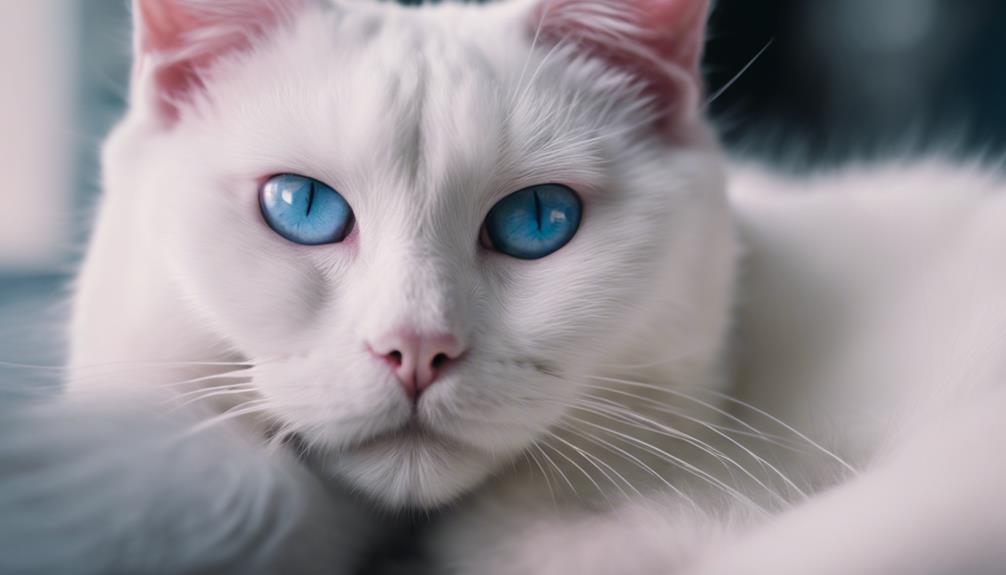
White cats with two blue eyes face a notably higher risk of deafness compared to those with one blue eye. Studies show that approximately 65-85% of all-white cats with both eyes blue are deaf, highlighting the prevalence of this concern in these felines.
The link between blue eyes and deafness underscores the importance of understanding genetic factors that contribute to this condition in cats.
Blue Eyes and Deafness
In white cats with two blue eyes, there is a high risk of deafness, with a prevalence rate of 70%. Blue-eyed white cats, especially those with both eyes blue, have a higher deafness risk compared to cats with one blue eye or non-blue eyes.
The deafness rate is highest in all-white cats with both eyes being blue. Having two blue eyes greatly increases the likelihood of deafness in white cats.
It is crucial for owners of white cats with blue eyes to be aware of this increased risk and to take necessary precautions to guarantee the well-being of their feline companions. Regular veterinary check-ups and early intervention can help in managing any potential hearing issues that may arise.
Genetic Factors in Deafness
Genetic factors greatly contribute to the heightened risk of deafness in white cats with two blue eyes. The presence of two blue eyes in these cats is a significant indicator of potential deafness due to specific genetic characteristics. Deafness risk in white cats with two blue eyes is significantly higher, ranging from 60-80%, compared to those with one blue eye. Breeding practices should carefully consider the increased deafness risk to prevent hereditary deafness in white cats. Understanding the genetic factors influencing deafness in these cats is vital for responsible breeding practices. The table below highlights the increased deafness risk associated with white cats having two blue eyes:
| Deafness Risk | Eye Color |
|---|---|
| 60-80% | Two Blue Eyes |
| 40-50% | One Blue Eye |
Testing for Deafness in Cats
Breeders commonly employ the BAER test to assess hearing ability in cats, particularly focusing on white-furred kittens. This test checks the hearing response and ear structure in cats, including those with blue eyes.
The BAER test is important, as it is quick, taking only 5-15 minutes to complete without the need for sedation. Specialists are skilled in conducting this test to accurately assess deafness in cats.
Testing for deafness in white cats is vital as it helps prevent breeding from individuals with a deaf ear. By identifying deaf cats early on, breeders can make informed decisions to avoid passing on genetic deafness traits, ensuring the overall health and well-being of future feline generations.
Challenges of Caring for Deaf Cats

Deaf cats face unique challenges that demand special care and attention to guarantee their safety and well-being. Communication with deaf cats is vital, and vibrations can be used to alert them to your presence. Hand signals or light flashes are effective ways to interact with deaf cats since they cannot rely on auditory cues.
When approaching a deaf cat, it is advisable to do so from the front to avoid startling them. Ensuring the safety of deaf cats is essential, making it advisable to keep them indoors to prevent potential dangers they may not hear approaching.
Providing this special care and attention can help deaf cats lead happy and fulfilling lives despite their hearing impairment.
Other Health Concerns in White Cats
White cats, particularly those with blue eyes, are not only susceptible to deafness but also face additional health concerns related to their lack of pigmentation. Due to genetic predispositions, white cats are more prone to sunburn and sun-related cancers. To mitigate these risks, it is important to provide sun protection and promote indoor living.
Regular vet check-ups are vital for early detection of any health issues that may arise. White cats may require specialized care to ensure their well-being. By taking preventive measures and ensuring regular veterinary care, owners can help white cats lead healthy lives despite their unique health concerns.
Can White Cats With Blue Eyes Have Normal Vision?
Yes, white cats with blue eyes can have normal vision. However, they may be more prone to certain eye conditions, such as deafness or photophobia. Their ability to see depends on various factors, including genetics and environmental factors. It’s still a mystery as to how far cats see.
Debunking Myths About White Cats

Moreover, dispelling the misconception that all white cats with blue eyes are deaf is essential in understanding the complexities of feline genetics and health. Deafness rates in white cats vary based on the number of blue eyes they possess: 20% for those with no blue eyes, 40% for cats with one blue eye, and 70% for those with two blue eyes.
Contrary to popular belief, blue eyes in albino and Siamese cats are not directly linked to deafness, debunking the myth that all white cats with blue eyes are deaf. Moreover, deafness in white cats can manifest unilaterally, affecting only one ear, showcasing the intricate role genetic factors play in determining the likelihood and extent of deafness in white cats with blue eyes.