Are Cats Self Aware


Cats have not displayed self-awareness in mirror tests, unlike some other animals. They don't recognize themselves in reflections, possibly due to sensory limitations and differences in cognitive processing. Cats heavily rely on their sense of smell for recognition, using pheromones for communication and marking territories. Despite showcasing impressive memory and problem-solving skills, cats fail the mirror test, suggesting a lack of visual self-recognition. Behavioral responses to mirrors include curiosity and defensive aggression. This raises questions about the depth of cats' self-awareness compared to species that pass mirror tests.
The Concept of Self-Awareness
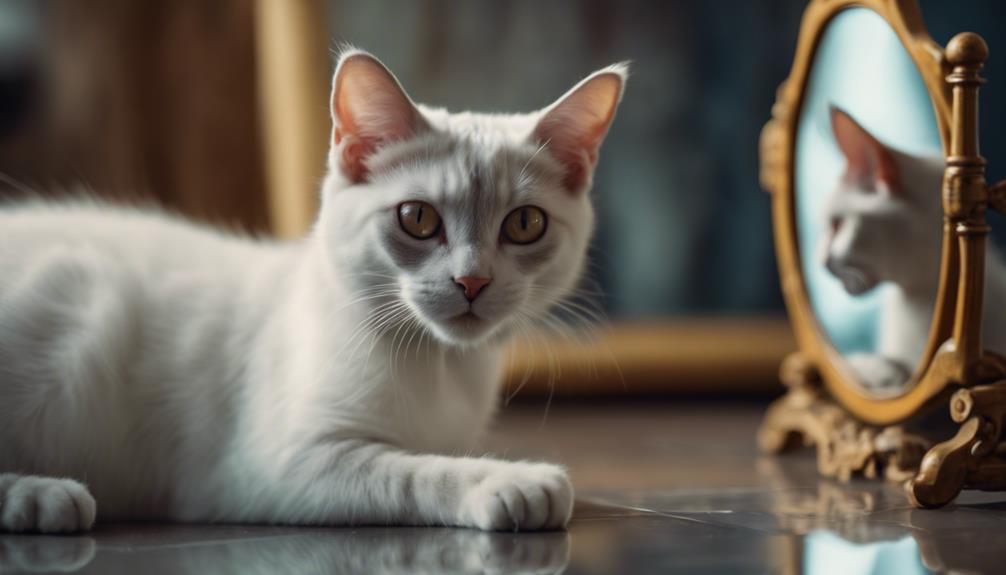
Self-awareness, a fundamental cognitive trait, is characterized by the ability to recognize oneself in a mirror, demonstrating higher levels of cognitive complexity. This trait is pivotal in understanding animal cognition.
Various species, such as whales, dolphins, orangutans, chimpanzees, and elephants, have shown the capacity to pass the mirror test, indicating a form of self-awareness. The mirror test, also known as the mirror self-recognition test, plays a significant role in evaluating this ability in animals.
Red Spot Test for Cats
Cats, unlike certain species such as dolphins, great apes, and magpies, have not demonstrated self-awareness in the red spot test, which is commonly used to assess self-recognition in animals. The red spot test involves marking an animal with a visible spot and observing if they recognize themselves in a mirror. While dolphins, great apes, and magpies have shown self-awareness by reacting to the mark in the mirror, cats, along with dogs, do not display this behavior.
Their failure in the red spot test suggests that they do not recognize themselves in mirrors. Researchers use this test to evaluate the level of self-awareness in animals, with the reactions to the marked reflection providing valuable insights into their cognitive abilities.
Mirror Test and Cats
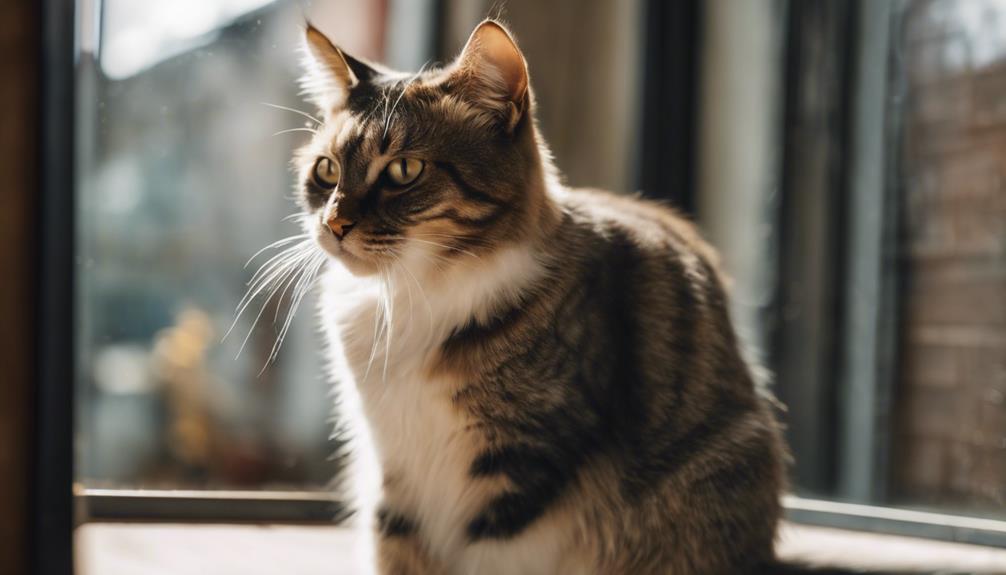
Cats have not shown self-awareness in the Mirror Self-Awareness test, often exhibiting defensive behaviors when faced with their reflection. Their reactions can range from curiosity to aggression, indicating a lack of recognition or potential threat perception.
Observing cats' body language, such as posture and tail movements, can provide insights into their responses to mirrors.
Mirror Test Results
The Mirror Test results regarding cats' self-awareness highlight a distinct lack of recognition of themselves in mirrors compared to certain other species. Cats have not demonstrated self-awareness in the Mirror Self-Awareness test developed by Gordon Gallup in 1970. While animals like great apes and dolphins have passed the test, cats have not shown recognition of themselves in mirrors.
When faced with their reflection, cats may react defensively, curiously, or aloofly, suggesting a lack of self-recognition. This behavior contrasts with species that have passed the mirror test. Cats rely more on olfactory senses to identify their surroundings, which may explain their failure in the mirror test for self-awareness.
Cat Behavior Observations
In behavioral assessments such as the Mirror Test, cats have clearly demonstrated a lack of self-recognition when faced with their reflections. When observing cat behavior in front of mirrors, several notable reactions have been documented:
- Cats do not recognize themselves in mirrors and may react defensively or curiously to their reflections.
- Cats rely more on olfactory senses than visual cues to identify their surroundings, leading to confusion when faced with their reflection.
- Cats may investigate mirrors as if encountering a stranger, displaying behaviors that suggest they perceive the reflection as another animal.
Understanding how cats interact with their reflections can provide insights into their cognitive processes and sensory preferences.
Feline Olfactory Recognition
Feline olfactory recognition plays a crucial role in the daily interactions and behaviors of these mysterious and independent creatures. Cats heavily rely on their keen sense of smell to identify objects, individuals, and their surroundings. With approximately 200 million scent receptors in their noses, cats have a highly developed olfactory system.
Olfactory cues are essential for cats to recognize other animals, mark territories, and detect potential threats. Scent marking is a common behavior among cats, used to establish boundaries and communicate with other felines through the release of pheromones. Through their advanced olfactory recognition abilities, cats navigate their social interactions and environment, showcasing the significance of scent in their communication and daily lives.
Comparative Self-Recognition Studies
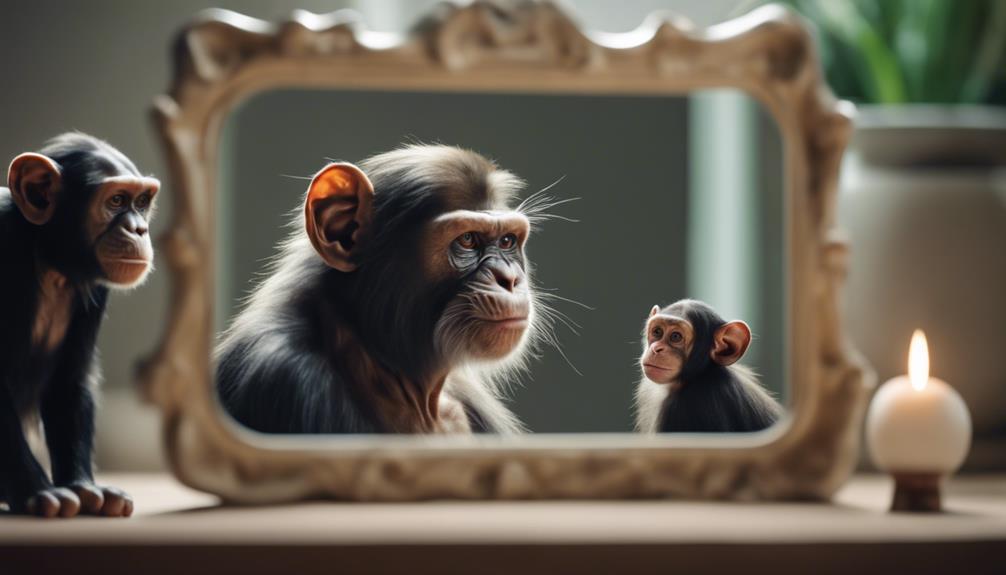
Despite cats not demonstrating self-awareness in the Mirror Self-Awareness test, various comparative self-recognition studies have shed light on their cognitive abilities.
- Cats understand mirrors differently: Unlike animals like great apes, dolphins, and elephants that have shown self-recognition in the mirror test, cats have not displayed the same level of understanding when faced with their reflection.
- Gordon Gallup Jr.'s MSR test: Developed in 1970, this test has been a benchmark for evaluating self-awareness in animals, highlighting differences in cognitive processing among various species.
- Importance of interpreting results: While cats may not excel in the mirror test, it's crucial to remember that success in this test doesn't encompass all aspects of intelligence or awareness in felines.
Cognitive Abilities in Cats
Cats possess remarkable cognitive abilities. This is evident through their impressive memory skills, problem-solving acumen, and adept learning capacity. Their ability to retain information for up to a decade showcases their cognitive prowess, while their knack for solving complex puzzles highlights their intelligence.
Additionally, cats' capacity to learn from experiences and adapt their behaviors further underscores their cognitive sophistication.
Cat Memory Skills
With remarkable long-term memory capabilities, felines exhibit a profound ability to retain information for up to a decade. When it comes to memory skills, cats showcase impressive cognitive abilities.
- Long-lasting Memories: Cats have memories that can last up to 10 years, indicating their strong long-term memory skills.
- Object Permanence: Cats understand object permanence, knowing that objects exist even when out of sight.
- Cause and Effect: Unlike humans, cats do not grasp cause and effect as easily, showing a difference in cognitive processing.
These elements shed light on how cats process and retain information, offering insights into their memory skills and cognitive functions.
Problem-Solving Abilities
Exhibiting remarkable cognitive prowess, felines showcase problem-solving abilities that highlight their adaptive nature and intelligence. Cats possess the capacity to anticipate actions, adapt to challenges, and learn from past experiences, demonstrating their cognitive abilities.
Their adaptive behaviors suggest a level of intelligence that enables them to overcome obstacles by strategizing and planning actions based on cause and effect understanding. Studies on cat cognition provide evidence of their problem-solving skills, challenging previous assumptions and revealing the depth of their mental processes.
While cats have not been proven to pass the mirror test, their ability to navigate complex situations showcases a notable level of cognitive prowess. These findings contribute to understanding the cognitive abilities of cats, shedding light on their self-awareness and adaptive intelligence.
Learning Capacity
Highlighting the cognitive prowess observed in felines, an examination of their learning capacity reveals a complex interplay of intelligence and adaptive behaviors. Cats are known to be adept learners, showcasing various cognitive abilities that contribute to their overall intelligence.
When considering their learning capacity, it is evident that cats can comprehend object permanence, anticipate hidden objects, and retain information over extended periods, demonstrating a strong memory retention capability. Additionally, their ability to follow the law of effect indicates that they can learn from consequences in certain situations.
While cats may not fully grasp cause and effect like humans do, they exhibit cognitive skills in problem-solving and adaptive behaviors that contribute to their learning capacity. Overall, cats display a remarkable capacity for learning and adapting to their environment.
Behavioral Indicators of Self-Awareness
Cats' behavioral responses to mirrors provide valuable insights into their level of self-awareness. When faced with mirrors, cats may display defensive aggression, anxiety, or avoidance, indicating a lack of self-recognition. Observing their body language, such as tail position and ear direction, can offer clues about their response to mirrors, showing signs of curiosity or discomfort. Despite these behaviors, cats often fail the mirror test, suggesting their unique perception of reflections and limited visual self-awareness. Their interactions with mirrors can range from aloofness to hostility, further highlighting their inability to recognize their own reflection. This lack of definitive self-awareness in cats calls for tailored research methods to explore deeper into understanding their cognition.
| Behavioral Indicators | Description |
|---|---|
| Defensive Aggression | Cats may show aggression towards their reflection. |
| Anxiety | Cats might display signs of stress or unease. |
| Avoidance | Cats may ignore or retreat from the mirror. |
| Curiosity | Some cats exhibit interest or investigation. |
| Discomfort | Signs of unease or tension in front of the mirror. |
Limitations of Mirror Tests
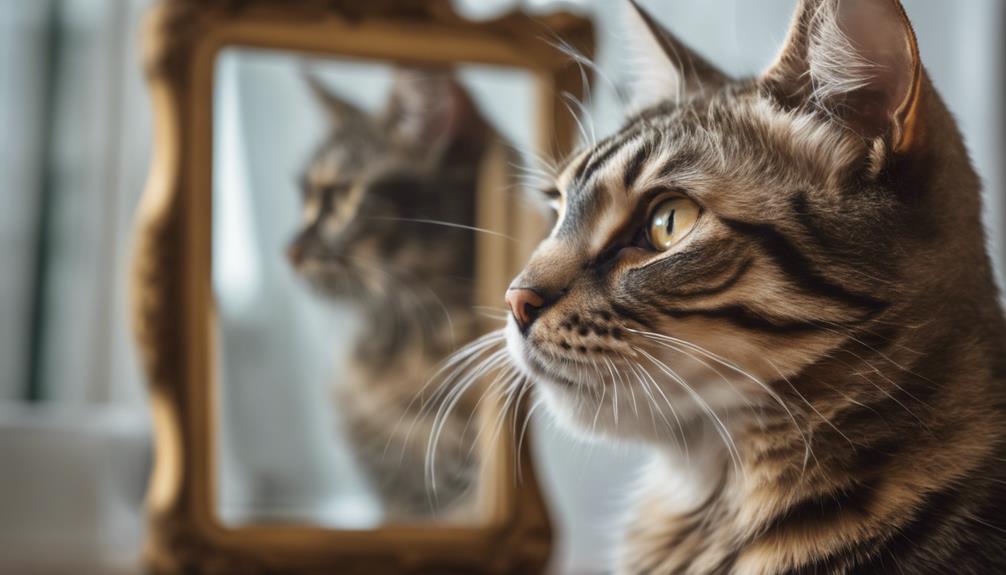
In evaluating self-awareness in cats, the limitations of mirror tests pose significant challenges due to discrepancies between the test methodology and feline sensory perceptions.
Limitations of Mirror Tests:
- Cats' reactions to mirrors, such as defensive aggression or avoidance, suggest limitations in their recognition of their own reflection.
- The visual-centric nature of the mirror test may not align with cats' sensory modalities, raising concerns about its effectiveness in evaluating cat self-awareness.
- The mirror test may not accurately assess self-awareness in animals like cats due to their sensory preferences and behaviors.
Can a Cat’s Independence Affect Its Level of Self-Awareness?
Yes, cats are independent creatures. Their ability to fend for themselves can either enhance or limit their level of self-awareness. Independent cats may have a stronger sense of self as they are more accustomed to relying on their own instincts and decisions, shaping their understanding of their own abilities.
Implications for Cat Psychology
Given the limitations of mirror tests in evaluating self-awareness in cats, understanding the implications for cat psychology sheds light on the intricate interplay between feline behavior and cognitive processes. While cats do not pass the mirror test, showing a lack of visual self-recognition, they exhibit complex responses that hint at a deeper understanding of their environment.
Cats' reliance on olfactory senses over visual cues suggests a different perception of self-awareness. The inconclusive evidence for cat self-awareness highlights the need for further research into their cognitive abilities. Stress reactions to mirrors indicate a potential discomfort with self-reflection or the perception of their reflections as unfamiliar.
Exploring these behaviors can provide valuable insights into the unique psychology of cats.