Are Cicadas Toxic To Cats


Cicadas are not toxic to cats. They pose no threat of poisoning, making them safe for feline interaction. Cats may find cicadas interesting to explore. Unlike bees or wasps, cicadas do not sting, bite, or transmit diseases. Ingesting cicadas can, however, lead to mild stomach upset. Owners can feel reassured regarding toxicity concerns. For further details on cats and cicadas, continue exploring the nuances of their interaction.
Cicadas and Cat Safety
Cicadas pose no toxic threat to cats and are generally safe for feline interaction. These insects, while noisy and abundant during their emergence, do not harm cats if ingested. Due to their natural hunting instincts, cats may find cicadas intriguing and may even consume them without adverse effects. Unlike other insects, cicadas do not sting, bite, or transmit diseases that could endanger cats. Owners can rest assured that their feline companions can freely explore and interact with cicadas without the worry of toxicity.
It is essential to monitor cats when engaging with cicadas to prevent any potential choking hazards due to the insects' hard exoskeletons. Overall, cicadas present minimal risk to cats and can be considered a safe form of environmental enrichment.
Toxicity Concerns for Cats
While cicadas do not pose a toxic threat to cats, it is important to understand the potential concerns regarding other aspects of their interaction with these insects. Ingesting cicadas can sometimes lead to stomach upset in cats, but this is typically not a serious issue. Cats, being opportunistic feeders, may consume cicadas without experiencing harmful effects.
Unlike some insects that are toxic to cats and dogs, cicadas do not sting, bite, or carry diseases that could be harmful to pets. Hence, concerns about cicadas being toxic to cats are unfounded, and caregivers need not worry about cicadas being poisonous to their feline companions. It is advisable to monitor your cat's behavior around cicadas to make sure they do not consume them excessively.
Cat-Friendly Cicada Consumption
Cat owners can rest assured that their feline companions can safely consume cicadas without posing a threat to their health. When it comes to cat-friendly cicada consumption, pet owners can be reassured that these insects are not toxic to cats. Since cicadas primarily feed on plant fluids and do not sting or bite, they are considered safe for cats to eat.
Healthy cats can enjoy cicadas without experiencing any adverse effects. Additionally, cicadas are more focused on mating and laying eggs than on evading predators, making them vulnerable to being eaten by cats. Hence, if cats encounter cicadas, pet owners should not be overly concerned, as these insects are generally harmless to felines.
Risks of Cicada Overindulgence
Overindulging in cicadas can lead to stomach upset in cats.
Excessive consumption of these insects may cause digestive issues due to their hard exoskeletons.
It is essential to monitor the amount of cicadas your cat consumes to prevent potential gastrointestinal problems.
Cats Digestive System
Excessive consumption of cicadas by cats can potentially lead to digestive disturbances such as vomiting or diarrhea. Cats' digestive systems are typically efficient at processing cicadas, which are not toxic to felines. However, overindulgence may result in short-term stomach upset. To understand how a cat's digestive system responds to cicadas, let's look at the following table:
| Digestive System Response to Cicadas |
|---|
| Efficient digestion |
| May cause vomiting |
| Can lead to diarrhea |
| Not toxic to cats |
| Moderation is key for stomach health |
Potential Poisoning Symptoms
Consuming an abundance of cicadas may manifest in various gastrointestinal symptoms in felines, necessitating careful monitoring for signs of distress. Cats that overindulge in cicadas may experience stomach upset, vomiting, and diarrhea due to the insects' exoskeletons and potential toxins.
The ingestion of large quantities of cicadas can irritate the stomach lining, leading to digestive issues in cats. Symptoms of cicada overindulgence may include lethargy and discomfort in affected felines.
It is essential for cat owners to observe their pets closely for any signs of GI disturbances after consuming cicadas to promptly address any complications that may arise. Monitoring for symptoms such as vomiting, diarrhea, and changes in behavior can help in early intervention and treatment.
Cicada Exoskeleton Digestive Issues
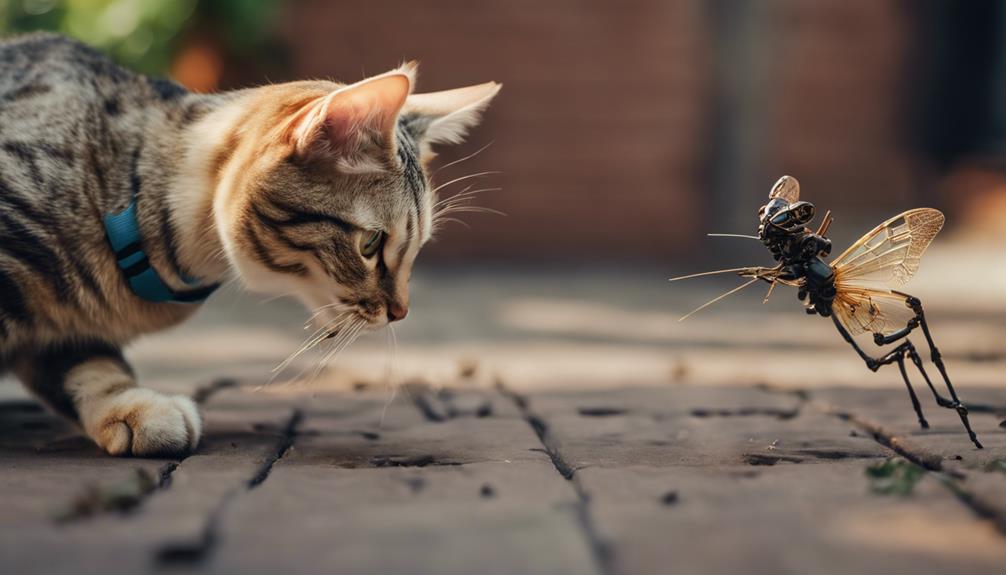
Cats may experience stomach upset and gastrointestinal disturbances when ingesting cicada exoskeletons due to their abrasive nature and difficulty in digestion. The tough exoskeletons of cicadas can lead to issues such as vomiting, diarrhea, and indigestion in cats.
Consuming large quantities of these exoskeletons may result in digestive problems for felines, as their digestive systems struggle to break down these hard outer coverings. The abrasive nature of cicada exoskeletons poses a risk for stomach irritation and discomfort in cats.
It's essential to monitor your cat's intake of cicadas to prevent potential gastrointestinal issues associated with the ingestion of these challenging exoskeletons.
Monitoring Cats Cicada Intake
Cats may exhibit unusual behavior around cicadas, showing excessive interest that could signal potential ingestion. Symptoms of cicada poisoning in cats include stomach upset or discomfort, requiring prompt veterinary attention.
Treatment for cicada ingestion involves seeking professional advice and monitoring the cat's condition closely for any complications.
Cat Behavior Around Cicadas
Observing feline interactions with cicadas can provide valuable insights into their natural curiosity and predatory instincts. Cats may show interest in cicadas due to their movement and sound, often leading them to catch and eat these insects.
Monitoring cats around cicadas is important to prevent overconsumption. It's common for cats to play with or chase cicadas as part of their instinctual behavior. To make sure they don't eat too many cicadas, close observation is essential.
Providing indoor enrichment for cats can also help reduce their exposure to cicadas. By understanding cat behavior around cicadas, pet owners can take proactive measures to keep their feline companions safe from potential risks associated with these insects.
Symptoms of Cicada Poisoning
Monitoring cats for symptoms of cicada poisoning is vital for ensuring their well-being and prompt intervention when necessary. Keep a close eye on your cat for signs such as vomiting, diarrhea, or lethargy, which could indicate cicada ingestion.
It's important to monitor the amount of cicadas your cat consumes as this can help assess potential risks. If your cat exhibits any distress after ingesting cicadas, seek veterinary care immediately.
The exoskeletons of cicadas can be challenging for cats to digest, potentially leading to gastrointestinal issues. Educate yourself on the risks associated with cicada ingestion in cats to implement appropriate preventive measures and safeguard your feline companion's health.
Treatment for Cicada Ingestion
When a cat ingests cicadas, careful attention to their intake is crucial to guarantee their well-being and prompt intervention if necessary. Monitor your cat for signs of distress post-ingestion, such as vomiting or diarrhea. Keeping track of the amount of cicadas consumed helps gauge potential health issues.
If your cat shows symptoms of illness after eating cicadas, seek veterinary care. Prevent excessive cicada consumption to avoid digestive problems. Pay attention to any changes in your cat's behavior or health related to cicada ingestion.
Can Cats Get Sick from Eating Cicadas if They’re Lactose Intolerant?
Yes, cats can experience digestive issues if they consume cicadas, especially if they are lactose intolerant. Cicadas are known to cause gastrointestinal upset in cats and lactose intolerance can exacerbate these symptoms. It’s important to monitor your cat’s behavior and seek veterinary advice if you suspect any issues.
Enjoying Cicadas With Cats
Cat owners may find that their feline companions derive pleasure from engaging with cicadas in a natural way. Cats, driven by their instinct to hunt insects, may enjoy eating one or two cicadas as a tasty treat during the cicada season.
Fortunately, cicadas are not toxic to cats and pose no significant threat when consumed in moderation. These insects are rich in protein, which may further entice cats to indulge in them. While ingesting cicadas is generally safe for cats, it's advisable to supervise them to prevent excessive consumption.