Are Diffusers Safe For Cats To Be Around


Diffusers emitting essential oils can be unsafe for cats. Cats can experience respiratory issues and ingestion risks from diffusers. Exposure to certain oils can lead to symptoms like drooling, vomiting, and even toxicity due to cats' enzyme makeup. It's important to keep cats away from active diffusers to guarantee their safety. Consult a veterinarian for guidance on cat safety around diffusers. Monitoring for signs of discomfort and proper ventilation are key. Learning more about the risks and preventive measures can help protect your feline friend's well-being.
Potential Risks of Diffusers for Cats

Cats are vulnerable to various potential risks associated with the presence of diffusers in their environment. When diffusers emit essential oils, cats with sensitive respiratory systems can experience respiratory irritation.
Micro-droplets from diffusers may collect on a cat's fur and pose a risk if ingested during grooming. Symptoms like drooling, vomiting, tremors, and respiratory distress can occur in cats exposed to diffusers emitting essential oils.
Additionally, cats may suffer from a low heart rate, low body temperature, and potential liver failure due to toxic exposure. To safeguard the safety of cats, it is important to keep them away from active diffusers.
Understanding these risks is vital for cat owners to protect their pets' well-being.
Enzyme Metabolism in Cats
Cats possess limited phenol UDP-glucuronosyltransferase enzymes essential for processing toxins found in essential oils. Due to this enzyme deficiency, cats metabolize certain chemicals such as benzyl alcohol and benzoic acid slowly, heightening their risk of toxicity from exposure to these substances.
Understanding cats' unique enzyme makeup is essential in recognizing the safety concerns surrounding their interaction with essential oils.
Cat Enzyme Function
The metabolic pathways of enzymes in cats differ greatly from those found in dogs and humans, resulting in an increased sensitivity to certain chemicals. Cats lack major phenol UDP-glucuronosyltransferase enzymes in their liver, making them unable to effectively metabolize phenols and phenolic compounds. This deficiency can render substances like benzyl alcohol, benzoic acid, and essential oils toxic to cats.
Due to their unique enzyme function, cats have a limited ability to break down these compounds efficiently, leading to potential poisoning risks through skin contact, ingestion, or inhalation. Particularly, citrus oils, high limonene flea repellants, and certain phenolic compounds can pose significant toxicity threats to cats due to their distinctive enzyme metabolism.
Enzyme Safety Concerns
Given the unique metabolic pathways of enzymes in felines compared to other common household pets, particularly in the context of phenol UDP-glucuronosyltransferase deficiency, it is essential to understand the implications of enzyme safety concerns when it comes to cats.
Cats lack major phenol UDP-glucuronosyltransferase enzymes important for metabolizing and eliminating certain toxins found in essential oils. Substances like benzyl alcohol and benzoic acid are processed slowly in cats, heightening toxicity risks. This deficiency in metabolizing specific chemicals in essential oils renders cats more vulnerable to poisoning.
For instance, citrus oils and high limonene concentrations in flea repellants can pose toxicity risks due to cats' unique liver metabolism. Exposure to essential oils through ingestion, inhalation, or skin contact requires careful consideration to prevent adverse effects on feline health.
Toxicity Risks From Essential Oils
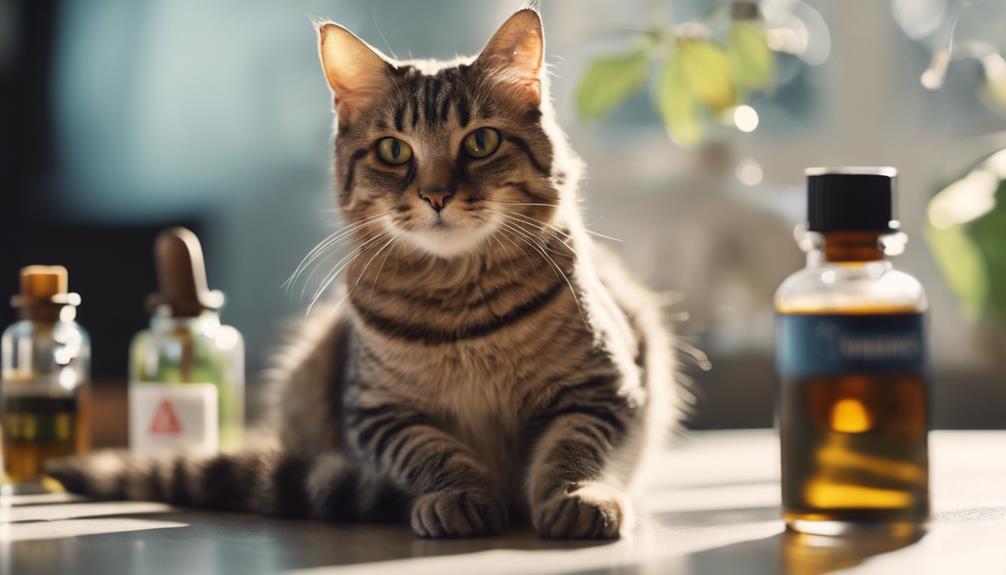
Exposure to essential oils poses a significant risk of toxicity for felines due to their unique inability to metabolize certain compounds found in these oils. Cats lack the necessary liver enzyme to break down toxins in essential oils, making them highly sensitive to substances like phenols and phenolic compounds. Oils such as peppermint, cinnamon, eucalyptus, and tea tree oil can be toxic to cats, leading to symptoms such as drooling, vomiting, tremors, and respiratory distress.
The concentration of essential oils is directly linked to the risk for cats, potentially causing severe outcomes like low heart rate, low body temperature, and liver failure. Passive diffusers, commonly used in homes, present risks to cats by causing respiratory irritation, resulting in symptoms like watery nose/eyes, nausea, drooling, and breathing difficulties, particularly affecting cats with respiratory issues or those exposed to secondhand smoke.
Cat Safety Around Oil Diffusers
Cats have a heightened sensitivity to scents, making them susceptible to potential health risks posed by oil diffusers.
When exposed to diffused oils, cats may experience symptoms such as drooling, vomiting, tremors, and respiratory distress.
Ensuring cat safety around oil diffusers involves keeping them away from active diffusers and maintaining proper ventilation in the environment.
Cat Sensitivity to Scents
With their heightened olfactory abilities, cats are particularly sensitive to scents emitted by oil diffusers, necessitating caution when using such products around feline companions.
- Cats' superior sense of smell makes them more susceptible to respiratory irritation from essential oils.
- Strong odors from diffusers can cause cats to experience symptoms like watery eyes/nose, nausea, and difficulty breathing.
- Cats with pre-existing respiratory conditions or exposed to secondhand smoke are at higher risk of adverse reactions to diffused scents.
- Persistent respiratory symptoms in cats after exposure to diffuser scents may require immediate veterinary attention.
- To prevent accidental ingestion or exposure to potent scents, it's crucial to keep diffusers out of reach or in areas inaccessible to cats.
Potential Health Risks
Given the potential health risks associated with cats being around oil diffusers, it is important to be aware of the dangers posed by diffused essential oils to feline companions. Cats can experience respiratory distress if they inhale essential oils from diffusers, especially those with pre-existing respiratory conditions.
Ingestion or skin contact with essential oils can also be harmful to cats, necessitating immediate veterinary care if signs of poisoning appear. To prevent such incidents, it is essential to diffuse oils in well-ventilated areas and make sure that cats cannot directly access the diffusers.
If a diffuser tips over onto a cat or if a cat ingests a personal diffuser, it can lead to severe health consequences, emphasizing the importance of feline safety around oil diffusers.
Recognizing Poisoning Symptoms in Cats
Symptoms of essential oil poisoning in cats can manifest in various ways, including vomiting, drooling, muscle tremors, and difficulty breathing. Cats may also exhibit lethargy, walk as if drunk, or experience seizures if exposed to toxic oils. It's essential to be vigilant as cats may not always show immediate symptoms of poisoning from essential oils. Immediate veterinary attention is paramount for cats showing signs of essential oil poisoning for proper diagnosis and treatment. Checking for the smell of oils, observing behavior changes, and seeking professional help promptly can save a cat's life in poisoning cases.
- Vomiting
- Drooling
- Muscle tremors
- Difficulty breathing
- Lethargy
Immediate Actions for Oil Poisoning
Upon observing symptoms of essential oil poisoning in your cat, immediate actions must be necessary to guarantee prompt veterinary intervention and proper care. Contact your vet immediately and provide vital details such as the type of oil, the amount ingested, your cat's weight, and age.
The vet may conduct tests to evaluate the extent of poisoning and focus on appraising any potential liver or kidney damage. Veterinary care is essential for your cat's recovery from essential oil poisoning, as these substances can be toxic for cats.
Quick action can help mitigate the effects of the poisoning and improve the chances of a successful outcome for your feline companion.
Preventing Cat Exposure to Toxic Oils
To safeguard the well-being of your feline companion, it is important to take proactive measures in preventing their exposure to toxic essential oils.
- Store essential oils out of reach: Keep oils in locked areas to prevent accidental ingestion by cats.
- Wash hands after handling: Avoid transferring toxins to cats through petting or grooming.
- Dilute essential oils before using: Reduce the risk of toxicity to cats by diluting the oils.
- Avoid cleaning with essential oils: Do not clean in areas accessible to cats to prevent exposure.
- Keep diffusers away from cats: Place diffusers in areas where cats cannot knock them over or come into direct contact with the oils.
Consulting a Veterinarian for Safety
Is it advisable to seek guidance from a veterinarian regarding the safety of diffusers around cats, especially considering individual pet health factors?
Consulting a veterinarian is essential to understand the risks associated with diffusers and essential oils for pets. Vets can offer valuable advice on the potential harm diffusers may pose to cats, particularly those with respiratory issues.
Before introducing diffusers or essential oils to your home, seeking professional advice from a veterinarian is highly recommended. Veterinarians can provide insights into how diffusers and essential oils may impact the well-being of cats, ensuring that their health and safety are prioritized.
Can Using a Diffuser around Feral Cats Pose any Risks to Them?
Using a diffuser around feral cats can potentially pose risks to public safety. Feral cats may feel threatened and act aggressively when exposed to unfamiliar scents or noises. It’s important to consider the potential impact on feral cats and public safety when using diffusers in areas frequented by these animals.
Ensuring Cat Well-being Around Diffusers
Ensuring the well-being of cats around diffusers requires careful consideration of potential respiratory risks posed by exposure to essential oils.
- Cat owners should opt for diffusers that allow for controlled and limited dispersal of essential oils to minimize the risk of respiratory irritation.
- Placing diffusers in areas inaccessible to cats can help prevent direct contact with oils and reduce the likelihood of ingestion.
- Monitoring cats for any signs of discomfort or illness when diffusers are in use is vital for early detection of potential respiratory issues.
- Consulting with a veterinarian about safe essential oil options and proper usage around cats can provide valuable guidance for cat owners.
- Regularly cleaning diffusers and ensuring proper ventilation in the home can help reduce the concentration of essential oils in the air, promoting a safer environment for cats.