Are Ferns Toxic To Cats


Certain fern species like Asparagus Fern, maidenhair, bracken, and Boston fern are toxic to cats. Symptoms of fern toxicity in cats include vomiting, diarrhea, stomach pain, drooling, and skin inflammation. Immediate veterinary attention is essential if ingestion occurs. Treatment may involve rinsing irritants, administering IV fluids, and using prescription creams. Preventative measures include keeping ferns out of reach to create a safe environment. To discover more about which ferns are safe for cats and how to prevent toxicity incidents, explore further information on fern safety and cat-friendly plant alternatives.
Fern Toxicity in Cats
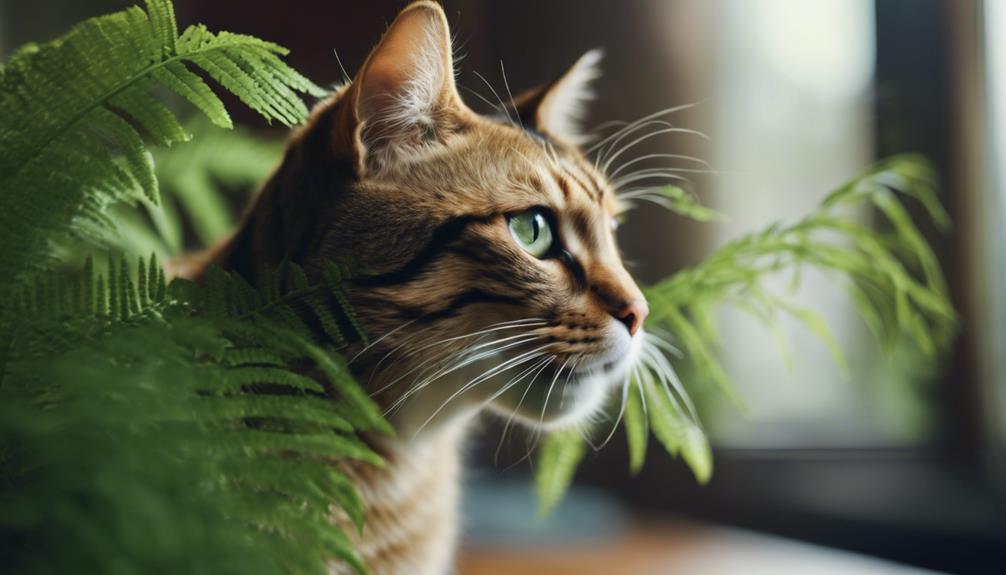
Fern toxicity in cats poses a serious health risk, manifesting through symptoms such as vomiting, diarrhea, stomach pain, drooling, and skin inflammation. Asparagus Fern, among other toxic ferns like maidenhair, bracken, and Boston fern, can lead to severe health issues in cats if ingested. Immediate veterinary attention is vital if a cat shows signs of fern toxicity.
Treatment may involve rinsing irritants, providing IV fluids, and administering prescription creams for skin irritation. Prevention is key in safeguarding cats against fern toxicity. This includes keeping ferns out of their reach, educating oneself on toxic plants, and creating a safe environment for pets. Understanding the risks associated with toxic ferns is essential for responsible pet ownership.
Types of Toxic Ferns
Some common toxic fern species that pose a risk to cats include Asparagus fern, maidenhair fern, bracken fern, and Boston fern. Cats exposed to these toxic ferns may exhibit symptoms ranging from drooling to more severe effects like tremors.
Treatment options for fern toxicity in cats vary depending on the specific type ingested and the cat's overall health status.
Toxic Fern Species
Among the various types of toxic fern species that can pose a risk to cats are the Asparagus fern, Sprengeri fern, fern palm, and winter fern. While Asparagus ferns and related species are toxic to cats, other true ferns like Boston, button, rabbits foot, and staghorn varieties are generally safe. The toxicity levels vary among fern species, affecting cats differently. It is important to note that the impact of fern poisoning on cats can occur not only through ingestion but also via pollen triggers. Immediate veterinary attention is important if a cat exhibits symptoms of fern poisoning. Understanding the specific fern species and their potential dangers is crucial to ensuring the safety and well-being of feline companions.
| Toxic Fern Species | Effects on Cats | Common Names |
|---|---|---|
| Asparagus Fern | Highly toxic if ingested | Emerald fern, Sprengeri fern |
| Sprengeri Fern | Can cause vomiting, diarrhea | Lace fern, Plumosa fern |
| Fern Palm | Symptoms include lethargy, abdominal pain | Cat palm, Parlor palm |
Symptoms in Cats
In cats affected by toxic fern species, symptoms such as vomiting, diarrhea, stomach pain, drooling, and skin inflammation may manifest.
Cats can experience skin irritation from contact with poisonous ferns.
Vomiting or diarrhea are common signs of fern toxicity in cats.
Asparagus fern, Sprengeri fern, fern palm, and winter fern are examples of toxic ferns for cats.
It is essential for cat owners to be aware of these symptoms and the specific fern species that are harmful to their pets. If a cat displays any of these signs after potential exposure to toxic ferns, immediate veterinary attention is necessary to ensure proper treatment and care. Different fern species possess varying levels of toxicity, with some capable of causing severe health issues in cats.
Treatment Options
What treatment options are available for cats affected by toxic ferns?
When a cat ingests toxic ferns like Asparagus fern, maidenhair fern, bracken fern, or Boston fern, prompt veterinary care is essential.
Treatment for fern toxicity in cats may involve rinsing irritants from the mouth, administering IV fluids to prevent dehydration and support kidney function, and providing antihistamines to alleviate symptoms like drooling and tremors.
The prognosis for fern toxicity in cats varies depending on the type of fern ingested and the cat's overall health. Severe cases may require more intensive care, while mild cases can often be managed successfully with appropriate treatment.
If you suspect your cat has ingested a toxic fern, seek immediate veterinary assistance for the best outcome.
Signs of Fern Poisoning
Symptoms of fern poisoning in cats typically manifest as vomiting, diarrhea, stomach pain, drooling, and skin inflammation. Cats may also exhibit lethargy, weakness, and gastrointestinal upset if they ingest toxic ferns.
If a cat has ingested a fern with a fern-like appearance, immediate veterinary attention is vital to prevent severe health issues. Specific symptoms like tremors or seizures can indicate severe fern poisoning, requiring prompt medical intervention.
It is essential to be aware of these signs to quickly identify potential fern poisoning in cats. Remember, early recognition and treatment are key to a better prognosis for cats exposed to toxic ferns.
Cat Ingestion of Ferns
When considering cat ingestion of ferns, it is important to understand the potential risks associated with these plants. If a cat consumes a toxic fern, it may experience symptoms such as vomiting, diarrhea, stomach pain, drooling, and skin inflammation. Ingesting these plants can lead to severe health issues in cats, necessitating immediate veterinary care.
Treatment for fern toxicity in cats typically involves rinsing irritants, providing IV fluids, and using prescription creams for skin irritation. It is essential to bring a sample of the plant ingested by the cat to the vet to confirm toxicity and administer appropriate treatment promptly.
To prevent fern poisoning, it is advisable to manage ferns in a home or garden by keeping them out of the cat's reach, using hanging planters or high shelves, and avoiding toxic varieties like the asparagus fern.
Preventing Fern Poisoning
Preventing fern poisoning in cats involves choosing cat-safe fern varieties, recognizing symptoms of fern poisoning such as vomiting and lethargy, and seeking immediate veterinary intervention if ingestion occurs.
By being proactive in creating a cat-friendly environment and knowing how to respond in case of poisoning, pet owners can effectively safeguard their feline companions from potential harm.
Educating oneself on plant toxicity and ensuring quick access to professional help are key steps in preventing fern-related incidents.
Cat-Safe Fern Varieties
Cat owners can establish a safe environment for their feline companions by selecting cat-safe fern varieties that are non-toxic and pose no risk of poisoning.
- Boston fern, sword fern, button fern, mother fern, and carrot fern are safe varieties of ferns for cats.
- These ferns are non-toxic to cats and can be a secure option for indoor plants.
- Cat-safe ferns provide textures for cats to explore without posing a poisoning risk.
Choosing cat-friendly fern varieties like these can help guarantee the well-being of both pets and plants in the household. Keeping toxic ferns such as the asparagus fern out of reach is crucial to prevent accidental ingestion by cats. By opting for cat-safe ferns, owners can offer a safe and engaging environment for their beloved feline friends.
Symptoms of Fern Poisoning
To recognize the potential dangers associated with fern poisoning in cats, it is important to be vigilant for symptoms such as vomiting, diarrhea, stomach pain, drooling, and skin inflammation. If a cat has ingested a toxic fern, it may exhibit signs of discomfort like vomiting, diarrhea, and drooling. Immediate veterinary attention is essential in such cases.
Treatment for fern poisoning in cats may involve rinsing the mouth and skin, providing IV fluids, and prescribing creams for skin irritation. To prevent fern poisoning, it is advisable to keep toxic ferns like asparagus fern out of reach and opt for safe houseplants like Boston fern or spider plant.
Being aware of these symptoms and taking prompt action can help in ensuring the well-being of your feline companion.
Immediate Vet Intervention
In cases where fern poisoning is suspected in cats, prompt veterinary intervention is critical for ensuring the well-being of the affected feline.
- Immediate veterinary intervention: Seek professional help as soon as possible to address any potential toxicity from fern exposure.
- Bringing a sample: Bringing a sample of the plant can assist vets in confirming the diagnosis and providing appropriate treatment.
- IV fluids: Vets may administer IV fluids to the cat to prevent dehydration and aid in the elimination of any toxins.
These steps, along with any necessary treatments like rinsing the cat's skin or mouth and prescribing creams for skin irritation, can greatly improve the cat's chances of recovery.
Treatment for Fern Toxicity
Treatment for fern toxicity in cats typically involves a combination of rinsing irritants from the skin or mouth, administering IV fluids for hydration, and providing prescription creams to alleviate skin irritation caused by the toxic fern.
If a cat ingests a toxic fern, immediate veterinary attention is essential. The vet may administer IV fluids to help with hydration and provide prescription creams to soothe skin irritation. Bringing a sample of the plant to the vet can aid in confirming the type of fern ingested.
It is important to act promptly and follow the vet's recommendations to guarantee the best possible outcome for the poisoned cat. Swift treatment and care are vital in cases of fern toxicity in cats.
True Fern Safety for Cats
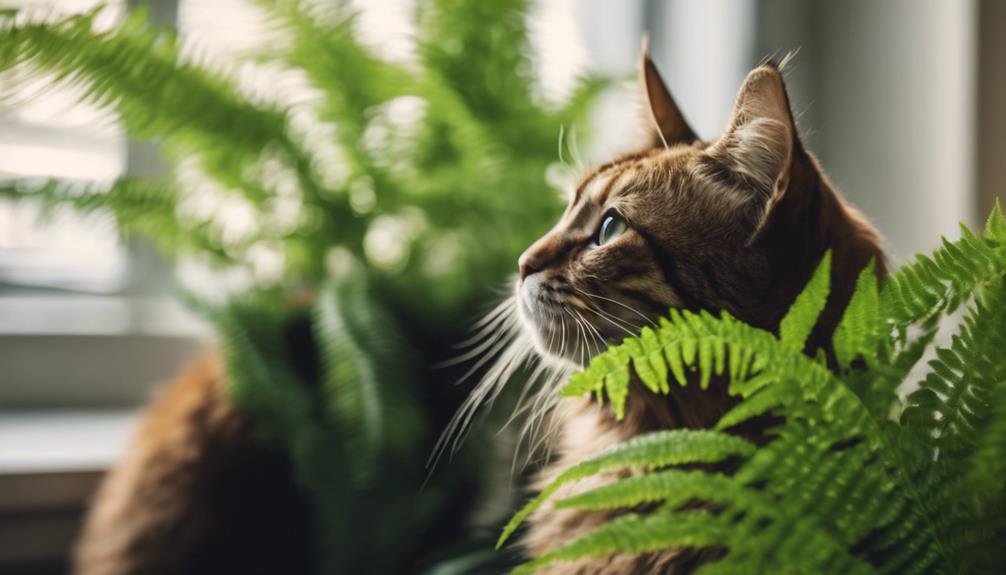
True ferns like Boston, button, rabbits foot, and staghorn varieties are considered safe for cats, posing no toxicity risk even in small amounts.
Cats can safely interact with true ferns without any risk of poisoning.
True ferns are non-toxic to cats, making them a safe option for households with feline companions.
Identifying true ferns such as Boston, button, rabbits foot, and staghorn varieties is important to guarantee the safety of cats around plants.
Warning: Asparagus Fern
Caution is warranted when considering the presence of Asparagus Fern around cats due to its toxic nature despite its attractive appearance.
This plant, like many others, is poisonous to cats if ingested. Ingesting Asparagus Fern can lead to severe health issues in felines, with symptoms such as vomiting, diarrhea, and stomach pain being common indicators of poisoning.
If a cat shows signs of having consumed Asparagus Fern, immediate veterinary attention is critical to prevent further complications. To safeguard your pets, it is essential to keep Asparagus Fern out of their reach to avoid any poisoning incidents.
Awareness of the potential dangers associated with toxic plants like Asparagus Fern can help ensure the well-being of your feline companions.
Are All Types of Ferns Toxic to Cats, or Just Frosty Ferns?
Not all types of ferns are toxic to cats, but it’s important to know which ones are safe. Frosty ferns are generally safe for cats, but it’s best to research each specific variety to ensure their safety. When choosing plants for your home, always consider frosty ferns and cats safety.
Safe Alternatives for Cat-Friendly Plants
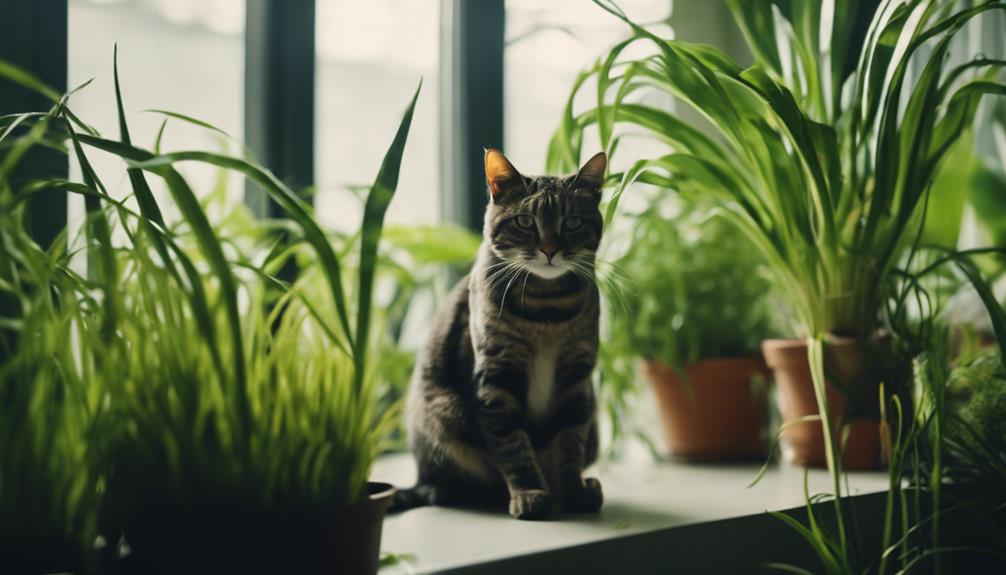
When considering the well-being of cats in relation to plants, exploring safe alternatives like Boston fern, spider plant, money tree, banana tree, and areca palm becomes crucial to create a pet-friendly environment.
- Boston Fern: Known for its lush green foliage and air-purifying qualities.
- Spider Plant: Features long, arching leaves that are safe for cats to nibble on.
- Money Tree: Believed to bring good luck and prosperity while being non-toxic to felines.
These cat-friendly plant options not only add a touch of nature to your indoor spaces but also provide a safe and engaging environment for your beloved cats. By incorporating these alternatives, you can help prevent potential plant poisoning incidents and promote a harmonious coexistence between your pets and greenery.