Are Fiddle Leaf Figs Toxic To Cats


Fiddle Leaf Figs are toxic to cats due to insoluble calcium oxalate crystals in their sap. Contact can lead to severe reactions like oral pain, drooling, vomiting, and decreased appetite. Ingestion may cause swallowing difficulties and breathing issues. Immediate veterinary attention is vital to prevent worsening effects. Symptoms of ingestion include drooling, vomiting, lack of appetite, and difficulty swallowing. Quick action is essential, as severe cases can result in life-threatening airway swelling. To protect your cat, prevent access to Fiddle Leaf Figs, seek guidance from a vet or ASPCA, and consider safe plant alternatives.
Toxicity of Fiddle Leaf Figs to Cats
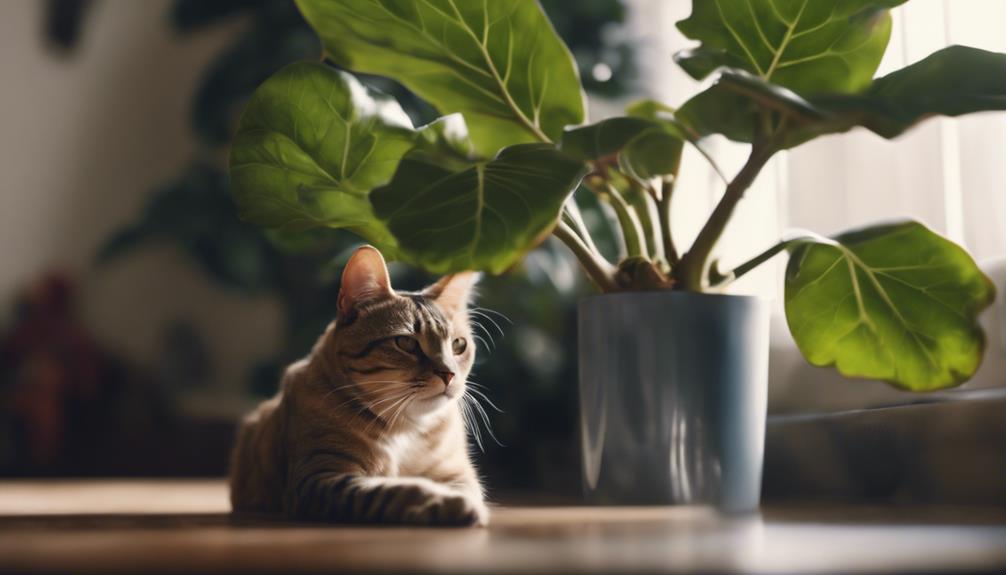
Fiddle leaf figs pose a significant toxicity risk to cats due to the presence of insoluble calcium oxalate crystals in their sap. These crystals can cause severe reactions if a cat comes into contact with the plant, leading to symptoms like oral pain, excessive drooling, vomiting, and decreased appetite.
Ingesting any part of the fiddle leaf fig, including the leaves, can result in further complications such as difficulty swallowing and potential breathing issues for the pet. Recognizing the signs of fiddle leaf fig ingestion in cats is important for prompt treatment.
Immediate veterinary attention is necessary to address any toxicity issues and prevent the situation from worsening. Keeping fiddle leaf figs out of reach and using deterrents can help safeguard cats from accidental ingestion and its harmful effects.
Symptoms of Fiddle Leaf Fig Ingestion
Upon ingestion of fiddle leaf figs, cats may exhibit a range of symptoms indicating potential toxicity. These symptoms include excessive drooling, oral pain, vomiting, lack of appetite, and difficulty swallowing.
If a cat shows any of these signs after ingesting a fiddle leaf fig, immediate action is necessary. In rare cases, severe ingestion can lead to swelling of the upper airways in cats, which can be life-threatening.
Hence, reaching out to a vet or the ASPCA for guidance and potential treatment is vital. Monitoring the cat closely and seeking professional help promptly can make a significant difference in the outcome.
It is essential to take any ingestion of fiddle leaf figs by cats seriously to safeguard their well-being.
Immediate Actions for Cats Exposed
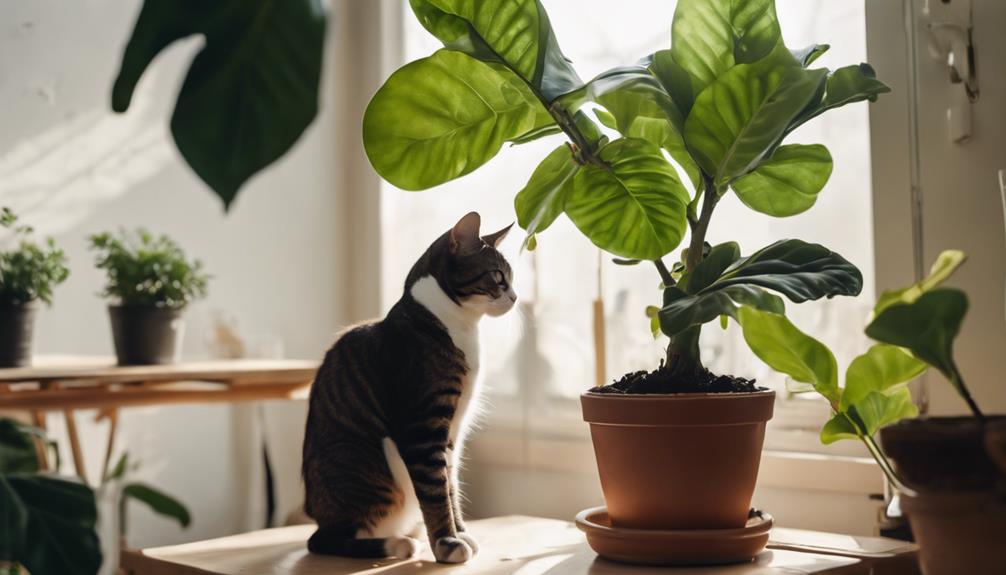
In the event of a cat being exposed to fiddle leaf figs, immediate action is essential to mitigate potential risks and safeguard the well-being of the animal. Here are some steps to take:
- Observe for Symptoms: Watch out for signs like excessive drooling, vomiting, and oral irritation in cats.
- Contact a Vet or ASPCA: Seek guidance from a veterinarian or the ASPCA for advice on potential treatment options.
- Be Aware of Serious Complications: Note that swelling of the upper airways is a rare but severe consequence of ingesting the plant.
- Prevent Future Exposure: Keep fiddle leaf figs in areas less frequented by cats to reduce the chances of ingestion and potential harm.
Preventing Fiddle Leaf Fig Access
To protect cats from potential harm, it is essential to implement strategic measures that limit their access to fiddle leaf fig plants.
Place these toxic plants on high shelves or in rooms that are out of reach for pets to prevent ingestion of the red fiddle leaf fig leaves.
Using citrus essential oils can act as a deterrent, discouraging cats from approaching the plants.
Consider utilizing adjustable pet gates as physical barriers to create a safe zone for the fiddle leaf figs away from curious pets.
Train cats through positive reinforcement techniques to stay away from these toxic plants.
Providing alternative distractions for cats can also help deter them from investigating or chewing on the fiddle leaf fig leaves, which contain insoluble calcium harmful to pets.
– Are Alocasia plants as toxic to cats as Fiddle Leaf Figs?
Yes, Alocasia plants, also known as elephant ear plants, can be toxic to cats. The leaves and stems contain insoluble calcium oxalate crystals, which can cause mouth and throat irritation, vomiting, and difficulty swallowing if ingested. It’s important to keep Alocasia plants out of reach of curious feline companions.
Cat-Safe Alternatives to Fiddle Leaf Figs
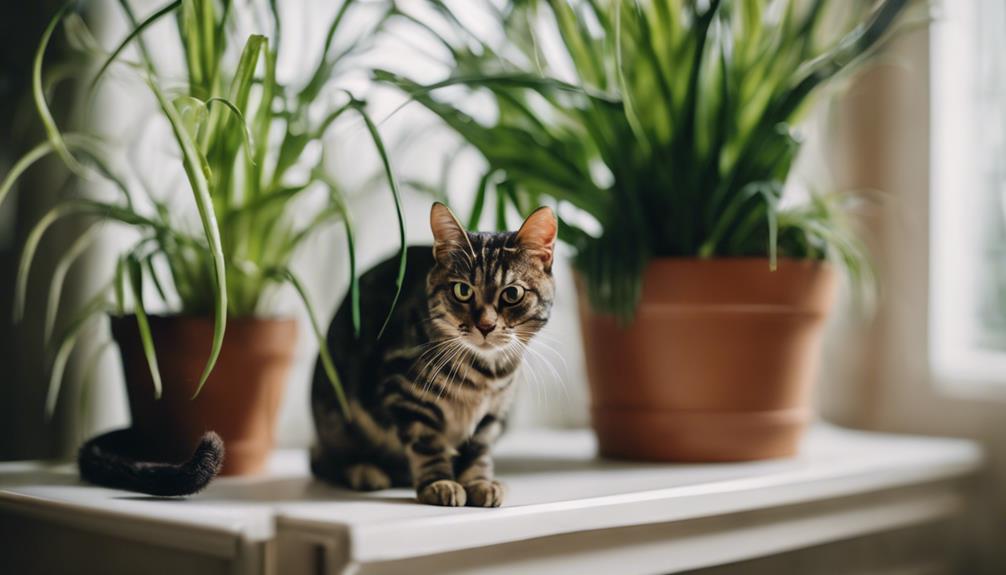
Consider incorporating cat-safe alternatives to fiddle leaf figs in your home to provide a safe environment for your pets while still enjoying the beauty of indoor plants.
- Spider Plant: Thriving in indirect light and well-drained soil, it is a low-maintenance option.
- Maidenhair Fern: Requiring constant moisture and indirect light, this plant adds a delicate touch to your space.
- Orchids: A pet-friendly choice that prefers indirect light, high humidity, and alternating watering patterns.
- Majesty Palm: Non-toxic and needing bright light and moist soil, it can bring a tropical feel indoors.