Are Himalayan Salt Lamps Safe For Cats


Himalayan salt lamps may not be safe for cats due to the high sodium content, risking salt poisoning if consumed. Symptoms of salt poisoning can include vomiting, lethargy, and seizures. Cats might be attracted to lick or ingest the lamp, leading to potential health issues. It is important to keep salt lamps out of reach to safeguard the well-being of feline companions. Understanding the dangers and signs of sodium poisoning is vital for cat owners. Exploring safer lighting alternatives and prioritizing cat safety are key considerations. Find out more about the risks associated with Himalayan salt lamps for cats.
Toxicity of Himalayan Salt Lamps for Cats

Himalayan Salt Lamps pose a significant risk of toxicity to cats due to the high sodium content present in the rock salts used in these lamps. Cats are particularly vulnerable to excess sodium, and exposure to salt lamps can lead to salt poisoning.
When cats ingest excessive amounts of sodium from licking or chewing on these lamps, it can result in dehydration, electrolyte imbalances, vomiting, diarrhea, and even seizures. Salt poisoning is a serious condition that can have critical health implications for cats.
Due to the potential fatal consequences, it is essential to keep salt lamps out of reach of cats to prevent them from being enticed by the minerals and risking repeated exposure to harmful levels of sodium.
Signs of Salt Poisoning in Cats
Cats experiencing salt poisoning may display various symptoms, including vomiting, diarrhea, and lethargy. When exposed to excessive sodium from sources like Himalayan salt lamps, cats can suffer from dehydration, electrolyte imbalances, and potential seizures. Salt poisoning may also manifest in altered mental status, staggering, and difficulty seeing.
If left untreated, this condition can progress to seizures, coma, and even death. It is important to seek prompt veterinary care upon observing any signs of salt poisoning in cats to prevent further complications. Understanding the signs of sodium poisoning in felines is vital for ensuring their well-being and avoiding serious health issues associated with excessive salt ingestion.
Dangers of Salt Ingestion in Felines
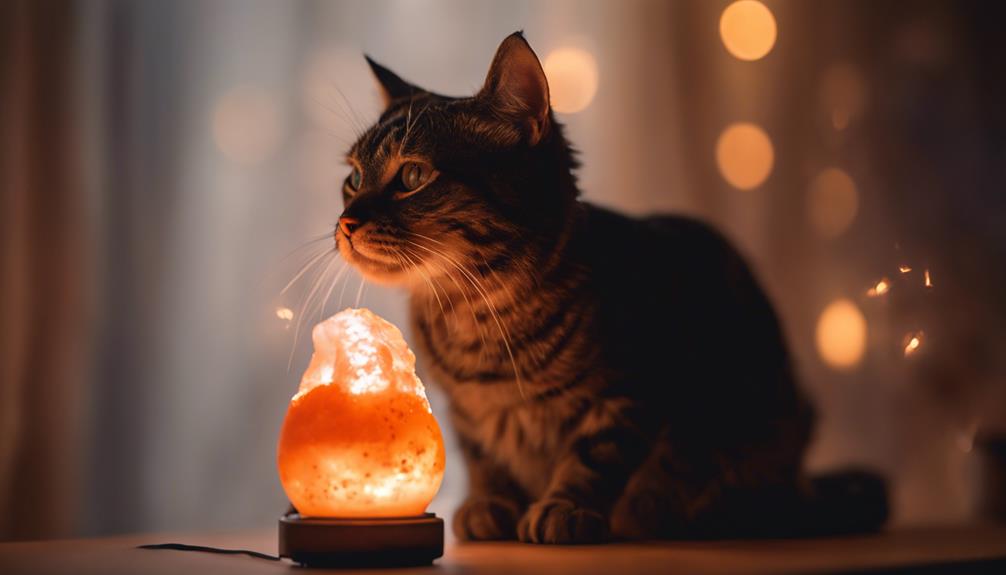
Excessive salt ingestion poses a significant risk to feline health, potentially leading to severe consequences such as sodium poisoning and electrolyte imbalances. Cats, being curious creatures, may be attracted to salt lamps due to their climbing habits, putting them at risk of ingesting harmful amounts of salt.
The minerals present in salt lamps can cause repeated exposure issues for cats, resulting in various health complications. Salt poisoning can lead to critical conditions in cats, including dehydration and electrolyte imbalances, which can be life-threatening if not addressed promptly.
It is crucial for cat owners to be aware of the dangers associated with salt lamps and to keep them out of reach of pets to prevent salt poisoning and safeguard the well-being of their feline companions.
Risks of Salt Lamps Around Cats
Exposure to salt lamps can present serious risks to cats, including salt poisoning from high sodium levels and potential health complications like dehydration and electrolyte imbalances.
Cats may be drawn to licking or ingesting salt lamp minerals, leading to respiratory issues and ingestion risks that could endanger their well-being.
Keeping salt lamps out of reach of cats is essential to avoid salt poisoning and safeguard their safety and health.
Salt Lamp Toxicity
High levels of sodium in Himalayan salt lamps can pose a significant risk to feline companions due to the potential for salt toxicity. Cats may be drawn to salt lamps, especially due to their climbing habits, increasing the likelihood of exposure.
When cats lick salt lamps excessively, it can lead to sodium poisoning, causing severe health issues like dehydration, electrolyte imbalances, and seizures. To safeguard cats from salt lamp toxicity, it is important to keep these lamps out of their reach and discourage them from accessing or licking them.
Preventative measures play an important role in ensuring the well-being of feline friends, as salt poisoning can have detrimental effects on their health.
Cat Respiratory Issues
Particles emitted by salt lamps can pose a risk to cats' respiratory health, particularly for those with existing conditions such as asthma. When cats are exposed to the ions released by salt lamps, they may experience respiratory issues like coughing and sneezing. This can be more problematic for cats with asthma or other respiratory sensitivities, as the fine particles from salt lamps can exacerbate their conditions. To illustrate the risks further, the table below summarizes the impact of salt lamps on cats' respiratory health:
| Risk Factor | Impact on Cats' Respiratory Health |
|---|---|
| Asthma | Increased risk of exacerbation |
| Respiratory Sensitivities | Higher susceptibility to irritation |
| Coughing and Sneezing | Common symptoms observed |
Ingestion Risks
Could the allure of Himalayan salt lamps pose a potential ingestion risk for curious cats? Cats may be enticed by the minerals in salt lamps, increasing the chance of ingesting harmful substances like sodium. Here are some key points to take into account regarding ingestion risks of salt lamps around cats:
- Cats' climbing habits may lead them to explore salt lamps.
- Himalayan rock salts in lamps contain high levels of sodium.
- Excessive salt intake can cause sodium poisoning in cats.
- Licking salt lamps repeatedly can pose health hazards.
- To prevent salt poisoning, keep salt lamps out of reach and make sure fresh water access for pets at all times.
Symptoms of Sodium Poisoning in Cats
Exhibiting symptoms such as vomiting, diarrhea, and lethargy, cats can show signs of sodium poisoning when exposed to Himalayan salt lamps. The salt used in these lamps, if ingested by cats, can lead to serious health issues.
Additional symptoms of sodium poisoning in cats include tremors, seizures, dehydration, reduced appetite, and excessive urination. If left untreated, sodium poisoning can even be fatal for cats.
It is essential to recognize these signs early and seek urgent treatment. Treatment often involves administering IV fluids and balancing electrolytes to counteract the effects of salt poisoning.
Being aware of these symptoms and acting promptly can greatly improve the chances of a cat recovering from salt lamp exposure.
Preventing Salt Lamp Exposure to Cats
To safeguard your feline companions from potential harm, it is crucial to take proactive measures to prevent their exposure to Himalayan salt lamps. Here are some ways to guarantee your cats stay safe:
- Place salt lamps in areas that are inaccessible to cats.
- Use deterrents like double-sided tape or aluminum foil around the salt lamp to discourage climbing.
- Consider placing the salt lamp in a room that your cats do not have access to.
- Utilize cat-friendly alternatives like cat trees or scratching posts to redirect their climbing behavior.
- Supervise your cats when they are near the salt lamp to prevent any unwanted interaction.
Health Implications for Cats From Salt Lamps
Excessive salt intake from Himalayan salt lamps can pose serious health risks to cats, including sodium poisoning, dehydration, and electrolyte imbalances.
It's important for cat owners to be mindful of the potential dangers salt lamps can present to their feline companions and consider safer alternatives to safeguard their pets' well-being.
Providing fresh water access and monitoring cats' interactions with salt lamps can help prevent salt toxicity and related health complications.
Cat Safety Concerns
Cats face potential health risks from Himalayan salt lamps due to the risk of salt poisoning and associated complications. Cats may be intrigued by the lamps, putting them at a higher risk of salt exposure. Here are some cat safety concerns to take into account:
- Excessive salt intake can lead to sodium poisoning.
- Cats' climbing habits may bring them closer to salt lamps.
- Minerals in salt lamps can cause repeated exposure issues.
- Salt poisoning can result in critical conditions like dehydration.
- Keep salt lamps out of reach to prevent salt poisoning and prioritize cat well-being.
Salt Lamp Alternatives
When considering the health implications for cats from salt lamps, it is essential to explore alternative lighting options that pose no risks to feline well-being. Salt lamp alternatives like LED lights or traditional lamps are safe choices that do not present any health hazards to cats.
Cats should be kept away from salt lamps to prevent sodium poisoning, which can lead to serious health issues. It is important to prioritize the safety and well-being of your feline companions by avoiding the use of salt lamps in households with cats.
Opting for cat-friendly lighting options ensures that your pets are not exposed to the risks associated with salt lamp ingestion. To prevent any potential harm, choosing safer lighting alternatives is the best course of action for a cat-friendly environment.
Safety Measures for Cat Owners
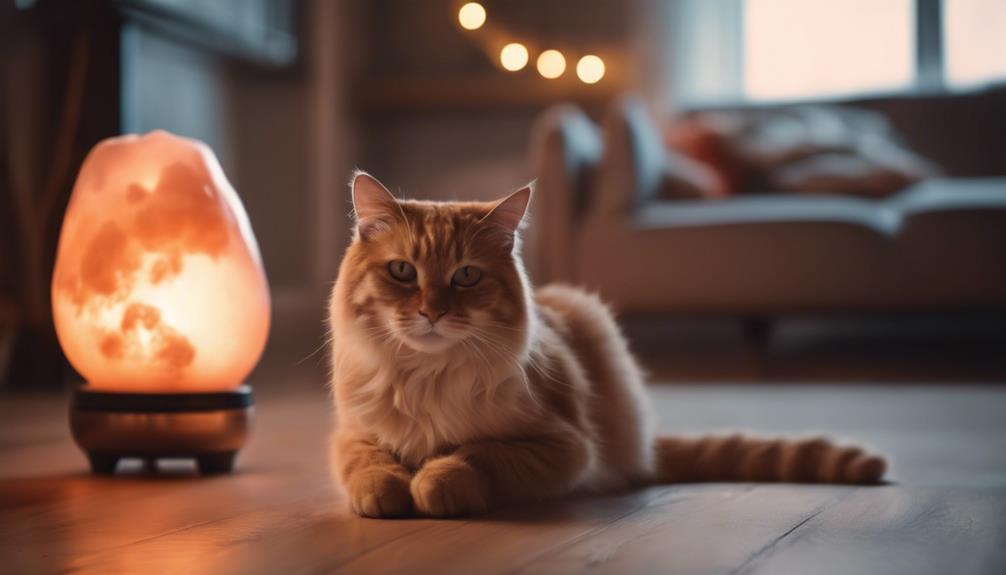
In order to guarantee the well-being of feline companions, cat owners must implement effective safety measures when it comes to Himalayan salt lamps.
- Keep salt lamps out of reach of cats to prevent ingestion and potential salt poisoning.
- Discourage cats from accessing or licking the salt lamp to reduce health risks.
- Consult a veterinarian for advice on the safety of salt lamps for cats.
- Prioritize cat safety by understanding the dangers of salt lamps in relation to cats.
- Store salt lamps safely when not in use to avoid any accidental contact by cats.
Avoiding Salt Lamp Hazards for Felines
In order to ensure the safety of feline companions, it is essential for cat owners to be mindful of the potential hazards associated with Himalayan salt lamps. Cats are at risk of sodium poisoning from excessive salt intake through Himalayan rock salts present in these lamps.
Their natural climbing tendencies may draw them towards the salt lamps, increasing the likelihood of exposure. The minerals in salt lamps can attract cats to lick or ingest them repeatedly, leading to salt poisoning. This condition can cause severe health issues and even be fatal for cats.
To protect cats, it is important to keep salt lamps out of their reach and prevent access to minimize the health hazards associated with these decorative items.
Can Himalayan Cats Safely Be Around Himalayan Salt Lamps?
Yes, himalayan cat allergies explained make it important to consider the safety of having Himalayan salt lamps around these feline friends. Fortunately, there is no evidence to suggest that Himalayan cats are at risk from the salt or any negative effects. It is safe for them to be around Himalayan salt lamps.
Importance of Cat-Friendly Home Environment

Emphasizing the cultivation of a feline-friendly ambiance within the household is paramount for the well-being and safety of cats. To guarantee a safe environment for your feline friends, consider the following:
- Keep salt lamps out of reach to prevent cats from accessing them.
- Provide alternative elevated spaces for climbing and lounging.
- Offer engaging toys and scratching posts to keep cats mentally and physically stimulated.
- Create cozy nooks or hiding spots where cats can retreat when feeling overwhelmed.
- Use cat-friendly furniture and decor that prioritize safety and comfort over aesthetic appeal.