Are Lilies Toxic To Cats


Lilies are highly toxic to cats, particularly Lily-of-the-valley and Gloriosa. Ingestion can lead to severe kidney damage and multi-organ failure. Symptoms include vomiting, diarrhea, weakness, and abnormal heartbeats. Immediate veterinary attention is essential. Signs of toxicity include lethargy, loss of appetite, increased urination, and dehydration. Kidney failure can escalate rapidly. Treatment focuses on managing kidney failure with IV fluids and monitoring kidney function closely. Prevent exposure by keeping lilies out of reach and seeking veterinary care promptly if toxicity is suspected. Awareness of toxic lilies and quick action are paramount for a cat's well-being.
Common Toxic Lilies for Cats

When it comes to the well-being of cats, it is important to be aware of common toxic lilies that pose a threat to their health. Lilies such as Lily-of-the-valley and Gloriosa, also known as flame lily, can be highly toxic to cats. These plants can lead to severe kidney damage and even multi-organ failure if ingested by your pet.
It is vital to understand that some plants with 'lily' in their name may not be true lilies but can still be harmful to cats. Immediate veterinary attention is necessary if your cat ingests any part of these toxic plants.
Signs of toxicity in cats may include vomiting, diarrhea, weakness, and abnormal heartbeats, indicating the importance of lily toxicity in pets.
Signs of Lily Toxicity in Cats
Signs of lily toxicity in cats manifest through a range of symptoms, including vomiting, lethargy, and loss of appetite.
If a cat ingests lilies, it may also show signs of increased urination and dehydration, which are indicators of kidney damage.
Kidney failure can develop rapidly within 36 to 72 hours without proper treatment for lily toxicity.
A critical sign of severe toxicity is the lack of urine production, signaling a life-threatening emergency that requires immediate veterinary care.
Timely treatment is essential for the survival of cats affected by lily toxicity. Knowing these signs and seeking prompt veterinary attention can greatly improve the cat's chances of recovery.
Treatment for Lily Ingestion in Cats
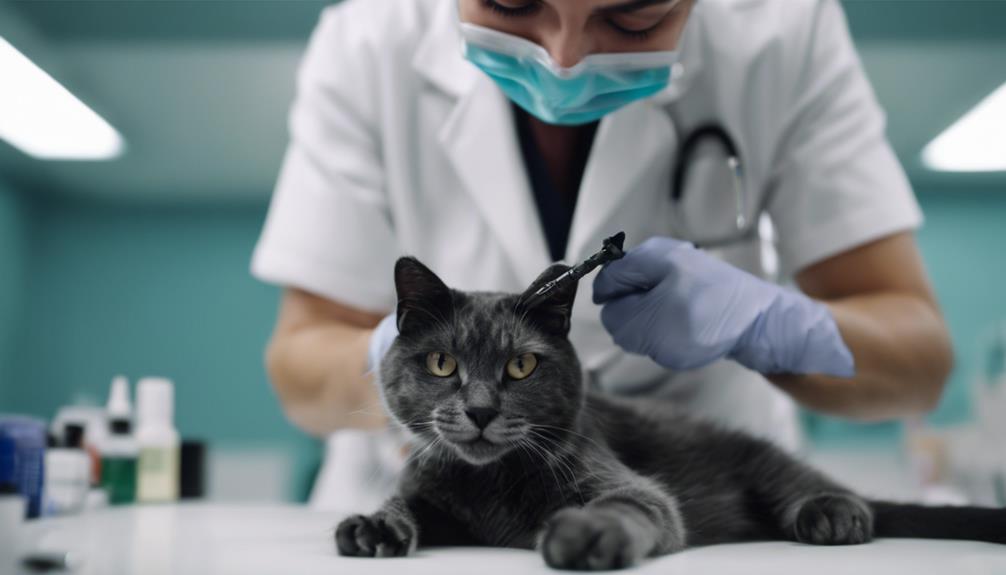
After identifying lily toxicity symptoms in a cat, immediate veterinary intervention becomes essential for initiating the necessary treatment for lily ingestion. Treatment primarily focuses on managing kidney failure, a severe consequence of lily toxicity in cats. Veterinary care involves providing supportive treatments such as intravenous (IV) fluids to maintain hydration and support kidney function. Regular monitoring of kidney function is important to assess the cat's progress.
Unfortunately, there is no specific antidote for lily toxicity in cats, making prevention the best approach. The prognosis for cats with lily toxicity depends on the timeliness of intervention and the effectiveness of supportive care. By seeking prompt veterinary attention and following treatment recommendations, the chances of a positive outcome can be significantly improved.
Preventing Lily Exposure to Cats
To safeguard the health of cats, it is imperative to take proactive measures to prevent exposure to lilies, known for their toxicity to felines. Here are key steps to prevent lily exposure to cats:
| Prevention Measures | Details |
|---|---|
| Keep lilies out of reach | Place cut flowers, pot plants, and garden beds containing lilies where cats cannot access them. |
| Educate on toxic types | Learn about lilies that are toxic to cats to avoid accidental exposure. |
| Beware of grooming hazards | Even grooming lilies can lead to ingestion of toxic pollen. |
| Immediate vet attention | Seek veterinary help promptly if lily toxicity is suspected in a cat. |
| Avoid lilies as decorations | Prevent incidents by not using lilies as decorative plants in areas accessible to cats. |
Can Jade Plants and Lilies Together Be Harmful to Cats?
Yes, the jade plants and cats relationship can be harmful. Both jade plants and lilies are toxic to cats if ingested. It’s important to keep these plants out of your cat’s reach to avoid potential poisoning. Keep your feline friends safe by opting for cat-friendly houseplants instead.
Importance of Veterinary Care
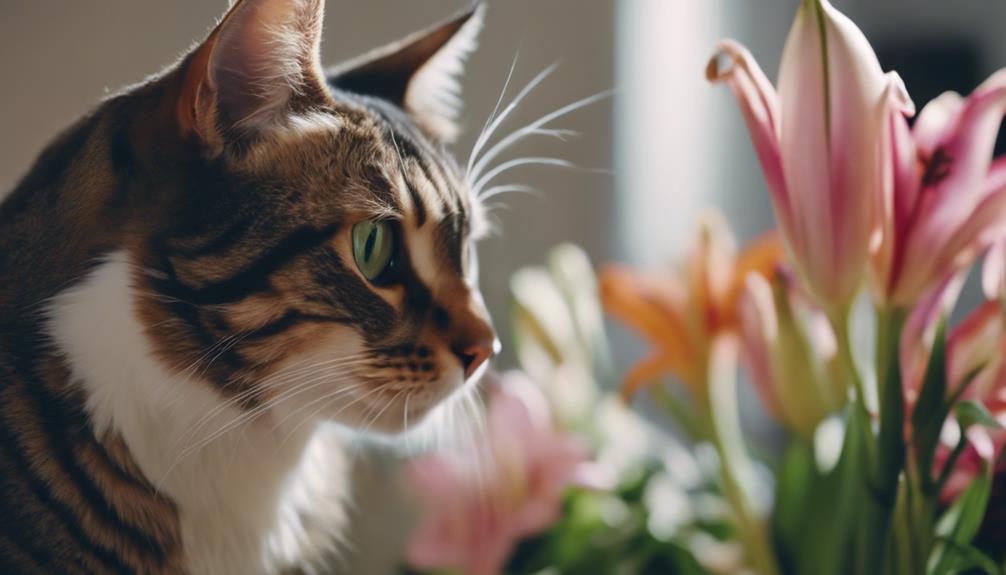
Timely access to veterinary care plays an important role in addressing cases of lily toxicity in cats and preventing the onset of irreversible kidney failure.
When a cat is exposed to toxic lilies, prompt action is essential. Bringing a sample of the plant or a photo to the vet aids in accurate identification and appropriate treatment. Different lilies may require varying levels of emergency care, underscoring the need for timely intervention.
Veterinarians can provide essential support and treatment options that greatly improve a cat's prognosis post-exposure. Contacting a vet or poison control center immediately upon suspecting lily ingestion is crucial for saving the cat's life.
Veterinary care is the cornerstone in managing cases of lily toxicity, with early intervention being key to preventing irreversible kidney damage in cats.