Are Reed Diffusers Bad For Cats


Reed diffusers can harm cats due to the toxic essential oils they contain, risking ingestion and inhalation. These oils can cause organ damage and seizures in felines, necessitating caution. Signs of toxicity include drooling and breathing difficulties, requiring immediate vet care. Proactive measures involve keeping diffusers out of reach and opting for safe oils. Consider beeswax candles or air-purifying houseplants as cat-friendly alternatives. If you're concerned about your cat's safety with reed diffusers, taking preventive steps is essential.
Potential Risks of Reed Diffusers for Cats
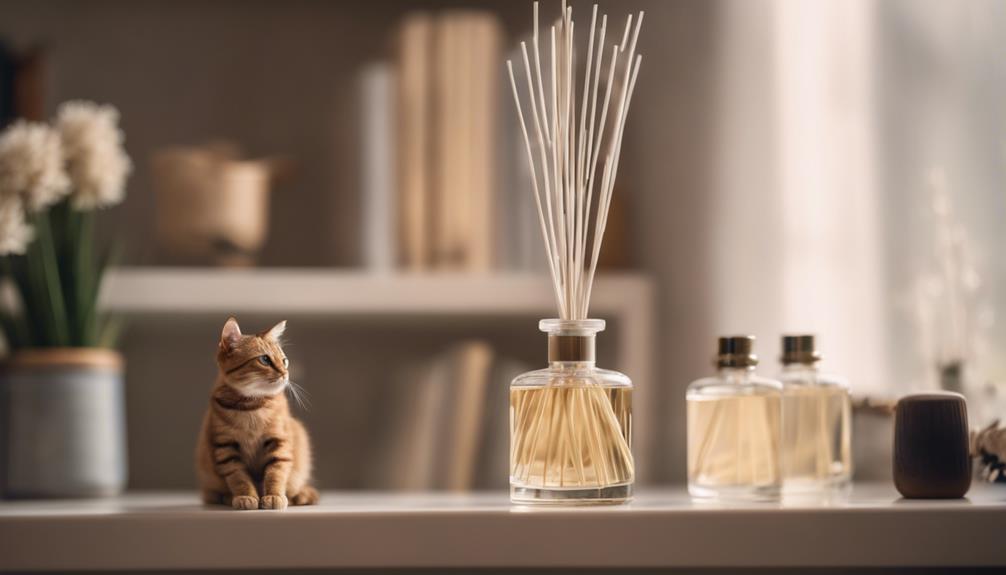
Reed diffusers pose significant risks to cats, including the potential for ingestion, inhalation, and skin exposure to harmful essential oils. These diffusers contain concentrated essential oils that can be toxic to cats when ingested or inhaled. Skin exposure to these oils can lead to chemical burns in cats, causing pain and discomfort.
Knocking over a diffuser can result in spillage, leading to accidental ingestion by curious cats. Additionally, inhaling micro-droplets from diffusers can cause lung issues in felines. Cats, known for grooming fastidiously, may inadvertently ingest essential oils while near diffusers, further increasing the danger.
Understanding these risks is vital for cat owners to safeguard the safety and well-being of their feline companions.
Toxicity of Essential Oils to Cats
Essential oils pose a significant threat to cats, causing toxicity through skin contact, ingestion, and inhalation, potentially resulting in severe organ damage, liver failure, seizures, and fatalities. Cats should never be exposed directly to essential oils, whether through application on fur or skin, or inhaling from diffusers, especially if they have underlying medical conditions.
Due to cats' inability to metabolize certain compounds, they are at higher risk of toxicity from essential oils. To keep cats safe around essential oils, it is important to keep them away from diffuser rooms, store oils out of reach, use heavily diluted oils, and avoid cleaning with oils. Taking these precautions can help prevent harm to your cat and safeguard their well-being.
Signs of Reed Diffuser Toxicity in Cats
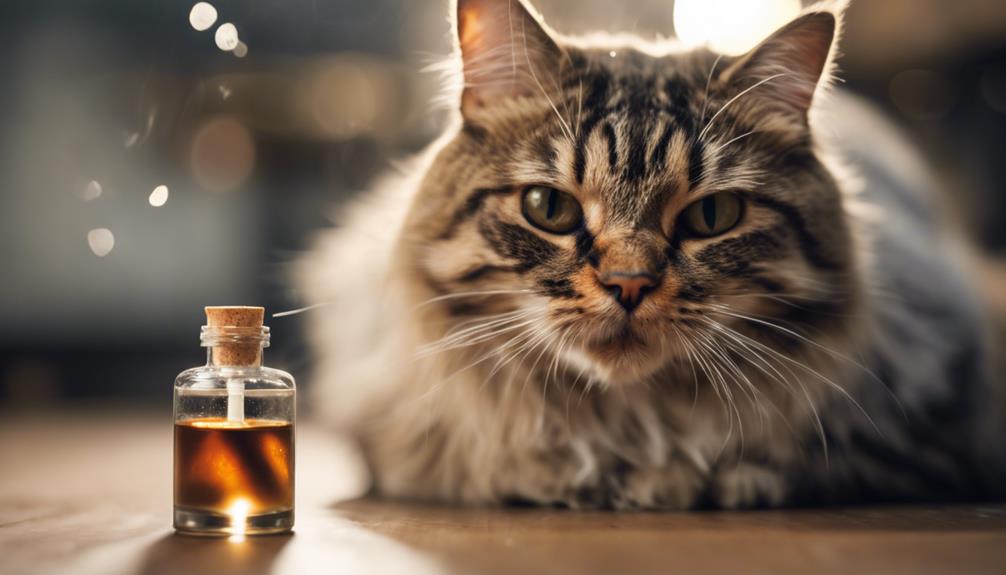
Excessive drooling, shaking, lethargy, difficulty breathing, vomiting, tremors, depression, open-mouth breathing, collapse, seizures, and organ damage are all signs of reed diffuser toxicity in cats.
Immediate veterinary attention is vital if a cat displays any of these symptoms, as they can indicate serious health issues.
Recognizing these signs promptly can help prevent further harm to cats exposed to toxic reed diffusers.
Symptoms in Cats
Signs of toxicity in cats from exposure to reed diffusers can manifest through various alarming symptoms. Cats exposed to toxic reed diffusers may exhibit excessive drooling, shaking, lethargy, or depression. Additionally, open-mouth breathing and difficulty breathing could be observed.
Vomiting, collapse, or seizures are also concerning signs of reed diffuser toxicity in cats. If your cat displays any of these symptoms after exposure to essential oils from reed diffusers, it is important to seek immediate veterinary attention.
While reed diffusers are popular for their pleasant scents, it's vital to ensure they are safe for cats and to contact your vet promptly if you suspect your feline friend has been affected.
Immediate Vet Attention
Upon noticing any unusual behavior or physical symptoms in your cat, immediate veterinary attention is imperative if you suspect reed diffuser toxicity. Signs of reed diffuser toxicity in cats may manifest as drooling, squinting, coughing, respiratory distress, skin irritation, gastrointestinal upset, and abnormal behavior.
Reed diffusers containing toxic essential oils can lead to organ damage and serious health issues in cats. Quick action is necessary to prevent further complications and safeguard the well-being of the cat exposed to toxic reed diffusers.
If your cat displays any of these symptoms after exposure to a reed diffuser, do not hesitate to seek professional help to address the potential toxicity and provide the necessary treatment for your feline companion.
Preventing Reed Diffuser Exposure in Cats
To prevent potential harm to cats from reed diffuser exposure, it is important to take proactive measures to guarantee the safety of your feline companions. Essential oils found in reed diffusers can pose a threat to cats due to their inability to metabolize certain compounds. It is essential to keep reed diffusers containing these oils out of reach of cats to avoid accidental contact or ingestion.
Opt for safe essential oils like lavender, cedarwood, and frankincense, but make sure they are heavily diluted. Pay close attention to your cat's behavior, and if any signs of distress arise after exposure to a reed diffuser, promptly seek veterinary care.
Safe Alternatives to Reed Diffusers for Cat Owners

Consider utilizing pet-safe alternatives such as beeswax candles or natural air purifiers to guarantee the safety of your feline companion when using reed diffusers. These alternatives offer pleasant scents without the potential harm of essential oils found in reed diffusers.
Opt for unscented or phthalate-free products to secure the well-being of your beloved pet. Cat-friendly options like activated charcoal bags or bamboo charcoal air purifiers can effectively freshen the air without posing a toxic threat to your pet.
Additionally, incorporating houseplants known for their air-purifying qualities or simmering spices and herbs on the stove can provide a natural and safe way to enhance your home's atmosphere for both you and your cat. Choose these alternatives to prioritize the well-being of your beloved pet.
Can Scented Products Harm My Cat’s Health?
While scented candles may seem harmless, they can pose a danger to your cat’s health. Cats have sensitive respiratory systems, and the chemicals released by scented candles can irritate their lungs and airways. It’s important to prioritize your cat’s safety and avoid using scented products in your home.
Immediate Actions for Cat Exposure to Reed Diffusers
When a cat is inadvertently exposed to a reed diffuser, immediate removal of the cat from the area where the diffuser is located is essential to prevent any further harm. Contact your vet straight away for guidance on the next steps and potential treatment options. Monitor the cat closely for signs of distress like excessive drooling, coughing, or breathing difficulties post-exposure. To aid in visualizing the urgency of the situation, consider the following table:
| Immediate Actions for Cat Exposure to Reed Diffusers |
|---|
| 1. Remove cat from the area with the diffuser |
| 2. Contact vet promptly for guidance |
| 3. Monitor cat for distress symptoms |
Ensure the diffuser is kept out of reach of your cat and maintain good ventilation in the area to reduce inhalation risks.