Are Savannah Cats Dangerous


Savannah cats can be potentially dangerous due to their strong hunting instincts and territorial behavior, especially in the earlier generations. Their wild ancestry contributes to a predatory nature, which can lead to aggression if not properly managed. Concerns also arise from their impressive size, agility, and strength. Adequate socialization from a young age is key to preventing behavior issues. Seeking guidance from experienced owners and specialists is recommended. These cats are best suited for individuals with previous cat ownership experience. Understanding their needs, providing mental and physical stimulation, and creating a safe environment are essential for their well-being and safety.
Savannah Cat Behavior Overview

Savannah cats display distinctive behavior traits influenced by their wild ancestry. This includes showcasing strong hunting instincts, territorial tendencies, and a need for proper socialization. F1 Savannah cats, being closer to their wild roots, often exhibit intense hunting instincts, making them enthusiastic hunters. Their territorial nature can lead to aggression towards other cats if not adequately socialized, emphasizing the importance of early socialization for these unique felines.
Proper mental and physical stimulation are essential to prevent behavioral issues in Savannah cats, ensuring they lead fulfilled lives. Despite their wild lineage, with appropriate socialization from a young age, Savannah cats can display affectionate behavior towards their human companions, forming strong bonds. Additionally, their love for water and climbing activities adds to their engaging and distinctive behavior traits.
Hunting Instincts and Aggression
Due to their innate predatory nature stemming from ancestral lineage, Savannah cats often exhibit strong hunting instincts that can manifest as aggression towards smaller household pets and animals. These instincts are deeply ingrained in their behavior due to their wild ancestry, making them skilled predators.
F1 and F2 generation Savannah cats may display more intense aggressive behaviors compared to later generations. Proper socialization and training are essential to manage any potential aggression in Savannah cats effectively. It is vital for owners to understand and respect their natural instincts to prevent aggressive behavior.
Territorial Behavior Concerns
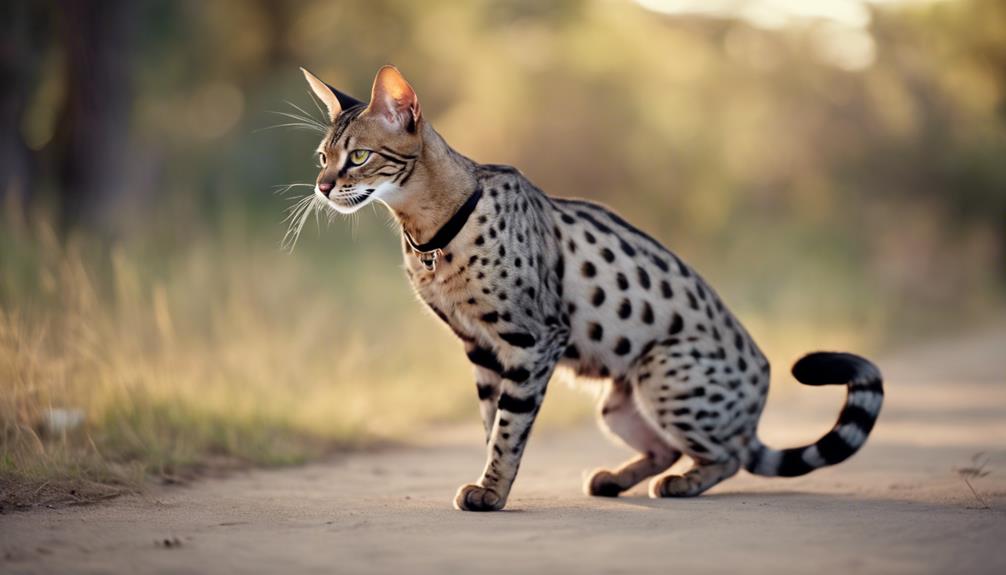
Territorial behavior in Savannah cats, particularly prevalent in earlier generations like F1 or F2 due to their wild ancestry, can pose challenges in multi-pet households. Their hunting instincts may trigger aggression towards smaller pets, necessitating careful supervision and introductions.
Proper socialization plays an important role in managing territorial tendencies. Enrichment activities can help redirect their focus and energy positively. Understanding the roots of territorial behavior in Savannah cats is key to addressing and preventing potential conflicts in a multi-pet household.
Risks of Size and Strength
Savannah cats are known for their impressive size and strength. They can grow up to 30 pounds and exhibit agile behaviors like jumping up to 8 feet high. This physical prowess can pose challenges and raise concerns about potential risks. Particularly in the F1 and F2 generations, which bear a closer resemblance to wild cats, the risks associated with their size and strength require careful consideration and management.
This unique combination of traits makes Savannah cats a fascinating yet potentially challenging pet choice.
Size and Agility
Possessing a notable combination of substantial size and remarkable agility, Savannah cats present inherent risks due to their physical prowess. These felines can grow to be over 16 inches long and weigh up to 30 pounds, making them larger and more powerful than typical domestic cats.
Their impressive jumping abilities, allowing them to leap up to 8 feet in the air, pose a risk due to their size and agility. The combination of their size and strength increases the potential for unintentional harm or accidents, especially with smaller or more vulnerable pets.
Additionally, due to their wild instincts and hunting abilities, Savannah cats may exhibit aggressive behavior towards other animals, underscoring the risks associated with their size and strength. Proper handling and supervision are essential when interacting with Savannah cats to mitigate any potential dangers arising from their remarkable size and agility.
Strength and Potential
Given the notable size and agility of Savannah cats, their strength and potential for risks become significant considerations in responsible ownership and interaction.
Savannah cats can grow over 16 inches long and weigh up to 30 pounds, showcasing their impressive size and strength. Their incredible jumping abilities, allowing them to leap up to 8 feet in the air, display their agility and power.
F1 Savannah cats, as one of the largest domestic cat breeds, may pose a threat to smaller pets due to their hunting instincts. While not inherently dangerous to humans, their wild instincts and size can present risks in certain situations.
The potential risks associated with the size and strength of Savannah cats emphasize the importance of responsible ownership and proper socialization.
Importance of Proper Socialization

Proper socialization plays a pivotal role in fostering positive behaviors and managing potential aggression in Savannah cats. Early exposure to various stimuli is essential for Savannah cats to develop favorable behaviors towards humans and other animals. Inadequate socialization can result in fear-based aggression, making it important to employ positive reinforcement training techniques.
Consistent efforts in socializing Savannah cats can greatly reduce the likelihood of aggressive behavior as they mature. By introducing them to different environments, people, and experiences in a positive and controlled manner, owners can help their Savannah cats become well-adjusted and sociable companions. Effective socialization lays the foundation for a harmonious relationship between Savannah cats and their human families, promoting a safe and enjoyable living environment for both parties.
Handling and Safety Measures
When interacting with a Savannah cat, it is important to approach them calmly and gently to guarantee a safe and positive experience. Utilizing proper handling techniques and refraining from rough play can help minimize the risk of aggression. To guarantee the well-being of both the cat and those around it, provide adequate mental and physical stimulation to prevent behavioral issues. Supervising interactions with children and other pets is essential for safety. If faced with any concerning behaviors, seeking professional behavior advice is recommended. Below is a table summarizing key safety measures when handling Savannah cats:
| Safety Measures | Description | Importance |
|---|---|---|
| Approach Calmly | Prevents startling the cat | Important |
| Avoid Rough Play | Minimizes risk of aggression | Essential |
| Supervise Interactions | Ensures safety with children and other pets | Important |
| Seek Professional Advice | For concerning behaviors | Recommended |
| Provide Stimulation | Prevents behavioral issues | Important |
Experienced Ownership Requirements
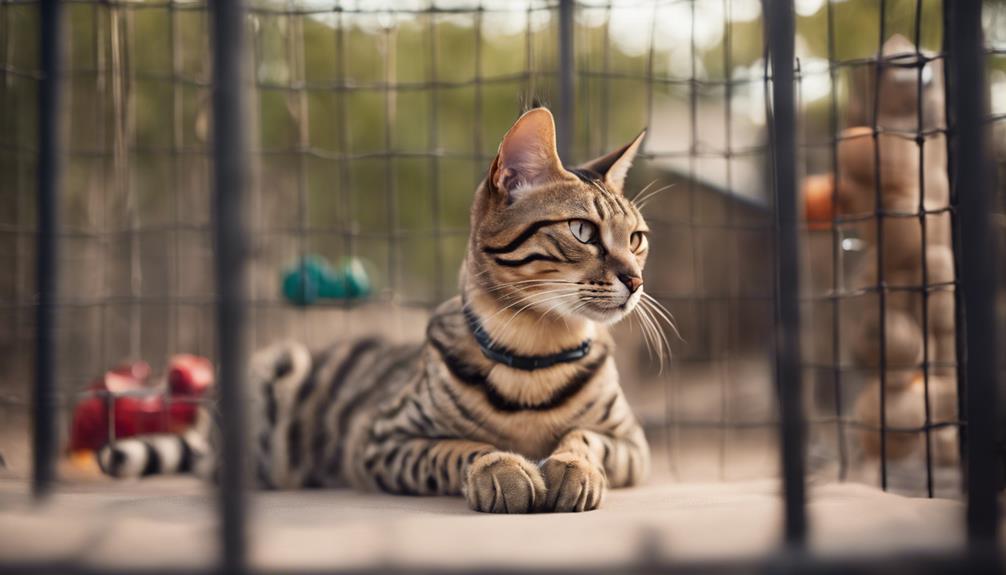
To effectively care for Savannah cats, a high level of experience and understanding of their unique needs and behaviors is essential. Experienced owners must be prepared to handle their strong hunting instincts and territorial behaviors. Proper socialization and training are vital to prevent aggression towards other animals or humans.
Providing the necessary mental and physical stimulation is key to avoiding behavioral issues in Savannah cats. Due to their size, strength, and wild ancestry, these cats require knowledgeable and patient owners to address challenges effectively. By meeting these experienced ownership requirements, individuals can create a safe and enriching environment for their Savannah cats, ensuring their well-being and happiness.
Behavior Problems and Solutions
Behavioral challenges in Savannah cats often stem from their innate hunting instincts and territorial tendencies. To address these issues effectively, owners should consider the following:
- Proper Socialization: Early socialization is essential to help Savannah cats adapt to different environments and interact positively with people and other animals.
- Providing Mental and Physical Stimulation: Engaging these cats in interactive play, puzzle toys, and activities that mimic hunting can help prevent boredom and destructive behavior.
- Seeking Guidance from Experienced Owners: Consulting with individuals who have experience with Savannah cats or animal behavior specialists can provide valuable insights and strategies for managing behavior problems.
Suitability for Experienced Homes
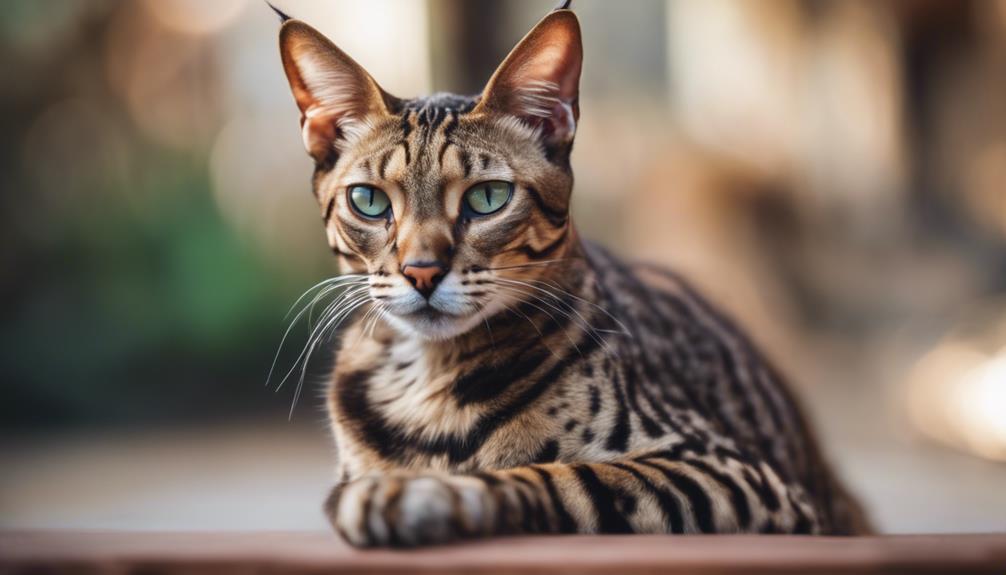
With their unique needs and behaviors, Savannah cats are best suited for experienced homes that can provide the necessary care and attention they require. These cats can exhibit behavior problems stemming from their size and strength, making experienced owners better equipped to handle them.
Acquiring a Savannah cat from reputable breeders is important to guarantee proper socialization and care from the start. Their high maintenance requirements mean they need more time and resources compared to typical domestic cats. In suitable environments, Savannah cats can be affectionate and intelligent companions, rewarding experienced owners with their unique personalities.
Hence, individuals considering welcoming a Savannah cat into their homes should be prepared for the challenges and responsibilities that come with these extraordinary feline companions.
:Why Are Savannah Cats Considered Good Pets Despite Their Wild Ancestry?
Savannah cats as pets are highly sought after for their exotic appearance and dog-like loyalty. Despite their wild ancestry, they bond closely with their owners and are known for their intelligence and playful nature. With proper care and attention, savannah cats can make loving and affectionate companions in a domestic setting.
Preparation and Resources Needed
Proper preparation for welcoming a Savannah cat into your home encompasses understanding their wild instincts and securing resources for their specific needs. Owners should guarantee they have a secure outdoor area for the cat to play and exercise, mimicking their natural habitat.
Providing mental and physical stimulation is vital to prevent behavioral issues that may arise from boredom. Additionally, access to specialized veterinary care is essential for exotic cat breeds like the Savannah cat.
Being aware of the potential for aggression towards other pets can help in managing interactions and preventing conflicts. By being proactive in meeting these needs, owners can create a safe and enriching environment for their Savannah cat.