Are Savannah Cats Hypoallergenic


Savannah cats are not entirely hypoallergenic. They contain allergenic proteins in their saliva and skin, such as Fel d 1 protein, which may trigger allergic reactions. The hypoallergenic properties can vary depending on the individual cat and generation. Regular grooming practices can help reduce allergen spread, aiding in managing potential allergic reactions. If you want to further explore how specific factors like breeding generations and grooming routines can influence the hypoallergenic qualities of Savannah cats, there is more valuable information available.
Factors Affecting Savannah Cats Hypoallergenic Qualities
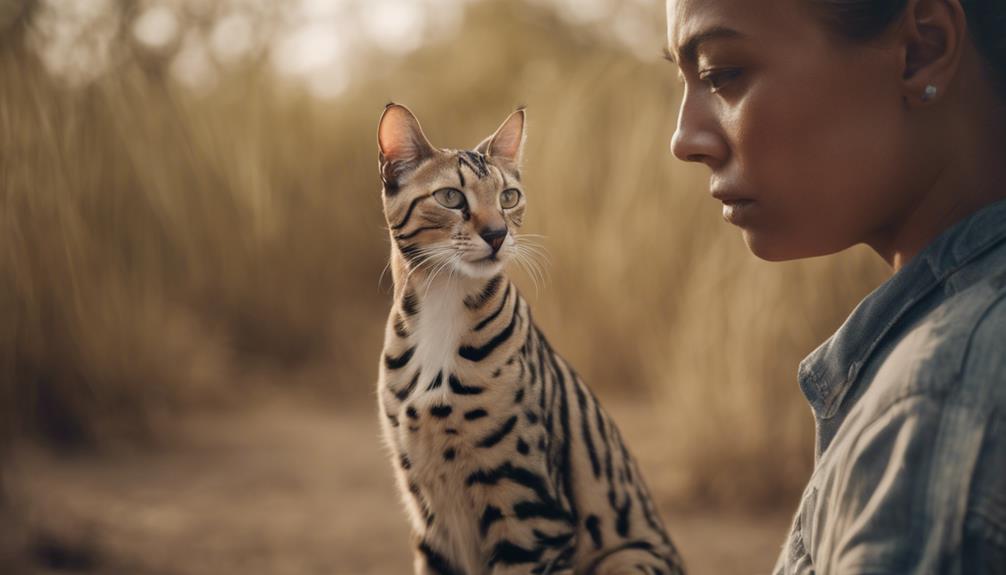
Factors affecting the hypoallergenic qualities of Savannah cats include the presence of allergenic proteins in their saliva and skin, as well as variations based on their generational lineage. While no breed is entirely hypoallergenic, F1 and F2 Savannahs, especially, are known to be less likely to trigger allergic responses in people with allergies.
The amount of Fel d 1 protein, a common allergen, can differ among individual cats within the breed, influencing the severity of allergic reactions. Understanding the generational lineage of a Savannah cat is important when considering its hypoallergenic properties. Despite some variability, regular grooming practices can help minimize allergen spread and potentially reduce allergic reactions in sensitive individuals.
It is essential for prospective owners to be aware of these factors before bringing a Savannah cat into their home.
Understanding Allergies to Savannah Cats
Understanding allergies to Savannah cats involves identifying common triggers such as dander, saliva, and proteins that can lead to allergic reactions.
Managing these reactions may require implementing strategies to minimize exposure to allergens and seeking advice from healthcare professionals or allergists.
Individuals with allergies should consider factors like breeding generations and their own immune responses when deciding to bring a Savannah cat into their homes.
Allergy Triggers Identified
Identifying the triggers responsible for allergies to Savannah cats is essential for individuals considering bringing these unique felines into their homes. Cat allergies are typically triggered by proteins found in cat saliva, skin cells, and urine, with the primary allergen being Fel d 1.
Savannah cats, like all cats, produce dander, saliva, and fur that can cause allergic reactions in sensitive individuals. These allergies can vary from mild symptoms to severe reactions based on individual immune responses. Exposure to Savannah cats may sometimes lead to decreased allergic reactions over time.
To assess potential allergic reactions before adopting a Savannah cat, visiting a breeder and interacting with Savannah kittens can be beneficial. Understanding these allergy triggers is important for making informed decisions regarding owning a Savannah cat.
Managing Allergic Reactions
Individuals considering owning a Savannah cat should be aware of effective strategies for managing allergic reactions associated with these unique felines.
- Understand Cat Allergies: Recognize that cat allergies are not solely caused by cat hair but also by proteins in their saliva and skin.
- Evaluate Savannah Cat Generation: Different generations of Savannah cats produce varying levels of dander and proteins, affecting allergen exposure.
- Pre-Adoption Interaction: Spend time with Savannah kittens to gauge potential allergic reactions before committing to bringing one home.
- Maintain Hygiene Practices: Implement regular cleaning routines such as wet wiping surfaces and vacuuming to reduce allergen accumulation.
Seeking Professional Advice
Seeking guidance from a healthcare provider is essential for individuals considering owning a Savannah cat, especially if there are known or suspected cat allergies. Understanding allergic reactions to Savannah cats requires professional input due to the variability in immune responses. Consultation with a primary care physician can help assess the potential risks and management strategies for dealing with allergies. To provide further clarity, the table below outlines key considerations related to Savannah cats and allergies:
| Consideration | Explanation |
|---|---|
| Generation of Savannah Cat | Different generations may impact the level of allergenic proteins present in the cat's dander. |
| Shedding Levels | Lower shedding levels in Savannah cats may reduce allergens present in the environment. |
| Dander Levels | Dander, a common allergen source, varies among individual cats and can affect allergic reactions. |
| Professional Consultation | Seeking advice from a healthcare provider can offer tailored guidance for managing allergies. |
Managing Allergen Exposure in Savannah Cats
In addressing allergen exposure in Savannah Cats, understanding the factors influencing allergen spread and shedding levels is crucial for effective management.
Regular grooming of Savannah Cats can help reduce allergen spread by removing loose hair and dander.
Providing a well-ventilated living environment can help minimize the concentration of allergens in the air.
Using air purifiers with HEPA filters can aid in capturing allergens present in the environment.
Consulting with a veterinarian to discuss potential allergen-reducing strategies tailored to your Savannah Cat's specific needs is advisable.
Breeding Generations and Hypoallergenic Properties
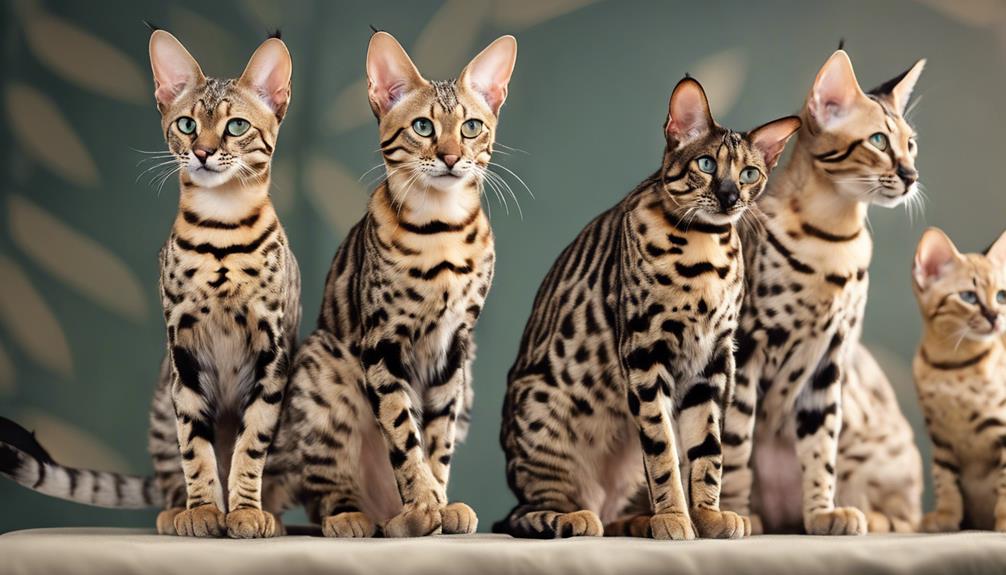
Understanding the impact of breeding generations on hypoallergenic properties is pivotal when evaluating the allergen potential of Savannah Cats. Higher generation Savannah cats, such as F1 and F2, are less likely to trigger allergic reactions due to potentially lower dander and protein levels. Research indicates that early exposure to Savannah cats could decrease allergic reactions in some individuals.
It is essential to take into account the generation of the Savannah cat when examining hypoallergenic properties for those with allergies. Visiting a breeder to interact with Savannah kittens can help determine if specific generations elicit allergic reactions. The hypoallergenic properties of Savannah cats may vary based on their breeding generations, emphasizing the importance of this factor before deciding to bring one home.
Grooming Tips for Allergic Reactions
Regular grooming practices play an essential role in managing allergic reactions for Savannah cat owners.
By brushing the cat's coat regularly using suitable tools like StarRoad 2 gloves or Hertzko brush, allergens can be minimized at home.
Implementing allergy-friendly grooming techniques is key to reducing allergen exposure and maintaining a comfortable environment for individuals sensitive to cat allergens.
Allergy-Friendly Grooming Techniques
Implementing effective grooming techniques is essential for reducing allergen exposure and managing allergic reactions in Savannah cats. To create an allergy-friendly environment for both the cat and its owner, consider the following grooming tips:
- Regular Brushing: Brush the cat's coat at least three times a week to minimize shedding and allergen spread.
- Use Specific Grooming Tools: Utilize gloves or brushes designed to trap allergens and remove dander and saliva effectively.
- Bathing with Pet-Safe Shampoo: Bathe your Savannah cat with pet-safe shampoo to further decrease allergen levels on their skin and fur.
- Consistent Grooming Habits: Practice good grooming habits consistently to contribute to a more allergy-friendly environment for Savannah cat owners.
Minimizing Allergens at Home
To create a more allergy-friendly environment for Savannah cat owners, effective grooming techniques play an essential role in minimizing allergens at home. Regular grooming, such as brushing the coat of Savannah cats at least three times a week using tools like StarRoad 2 gloves or a Hertzko brush, can help reduce allergens in their fur and control shedding.
Bathing Savannah cats with pet-safe shampoo is another effective way to decrease allergens on their skin and lower the risk of allergic reactions. By implementing proper grooming practices, individuals with allergies to cats can maintain a healthier living space and enjoy their companionship with reduced allergic reactions.
Consistent grooming and maintenance are key in managing allergens for a more comfortable coexistence with Savannah cats.
Visiting Breeders for Allergy Considerations
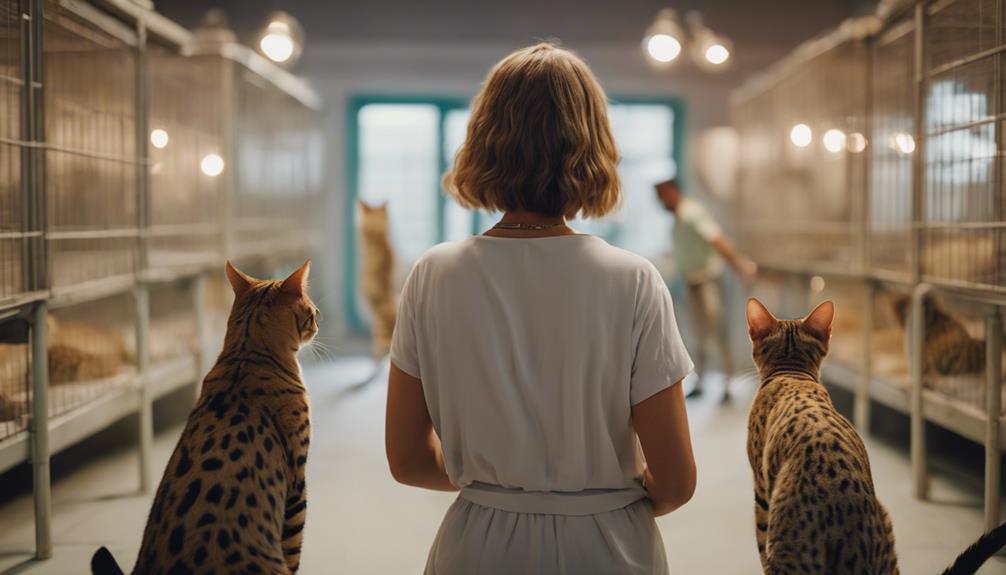
When thinking about potential allergies to Savannah cats, visiting breeders plays an important role in evaluating compatibility and identifying possible triggers firsthand. Here are four key reasons why visiting breeders is pivotal for allergy considerations:
- Interaction: Visiting breeders allows you to interact with Savannah kittens and observe your allergic reactions in real-time.
- Assess Compatibility: In-person visits help you determine compatibility with Savannah cats and potential allergy triggers within that specific environment.
- Responsible Ownership: Considering allergies before bringing a cat home from a breeder is an essential part of responsible ownership.
- Evaluation: Meeting the breeder and kittens helps you evaluate the likelihood of allergic reactions before making the decision to invest in a Savannah cat.
Can Savannah Cats’ Allergies Trigger Dangerous Reactions in Humans?
The safety of savannah cats with regard to human allergies is a common concern. While some individuals may experience mild allergic reactions, dangerous reactions are rare. It’s important to consult with a healthcare professional if you have concerns about potential allergies to savannah cats.
Minimizing Allergic Reactions With Proper Care
Proper care and maintenance practices play an essential role in minimizing allergic reactions for Savannah Cat owners. Regular grooming and bathing of Savannah Cats with pet-safe shampoo can reduce allergens on their skin, helping to lower allergic reactions.
Establishing cat-free zones in specific areas of the house can also help minimize allergen exposure for individuals prone to allergies. Additionally, using allergen-reducing products and cleaning methods in the household can assist in reducing allergy triggers associated with Savannah Cats.
Seeking guidance from a doctor or allergy specialist can provide personalized advice on managing allergic reactions effectively. By implementing these strategies, Savannah Cat owners can create a more allergy-friendly environment and enjoy their feline companions with reduced risk of allergic reactions.