Can Cats Eat Octopus


Cats can eat octopus, but it comes with potential risks. Octopus provides lean protein, essential nutrients, and enriches a cat's diet. However, there are choking hazards due to its texture and possible allergic reactions leading to skin irritations or digestive issues. Cooking thoroughly is vital to avoid bacterial contamination. Heavy metals in octopus from ocean pollution are a concern, and monitoring for allergic reactions is important. Cutting it into small pieces and avoiding harmful seasonings are good practices. Safety guidelines like cooking well and quality sourcing are essential when considering feeding octopus to cats. Learn more about octopus feeding guidelines. Can cats have seafood? It’s a common question among pet owners, and the answer is yes, some types of seafood can be safe for cats to eat. However, it’s important to do research and consult with a veterinarian before introducing any new foods into a cat’s diet. Seafood can be a good source of nutrients and protein for cats, but it’s crucial to understand the potential risks and take proper precautions. Despite the potential benefits, moderation and careful preparation are key when introducing any type of seafood into a cat’s diet. Additionally, it’s essential to ensure the specific food is suitable for feline consumption—this goes for other human foods as well, leaving many pet owners wondering, “can cats safely eat pizza?” While pizza is generally not recommended due to ingredients like cheese, spices, or onions that can be harmful, understanding each food’s impact on a cat’s health is crucial.
Nutritional Benefits of Octopus for Cats
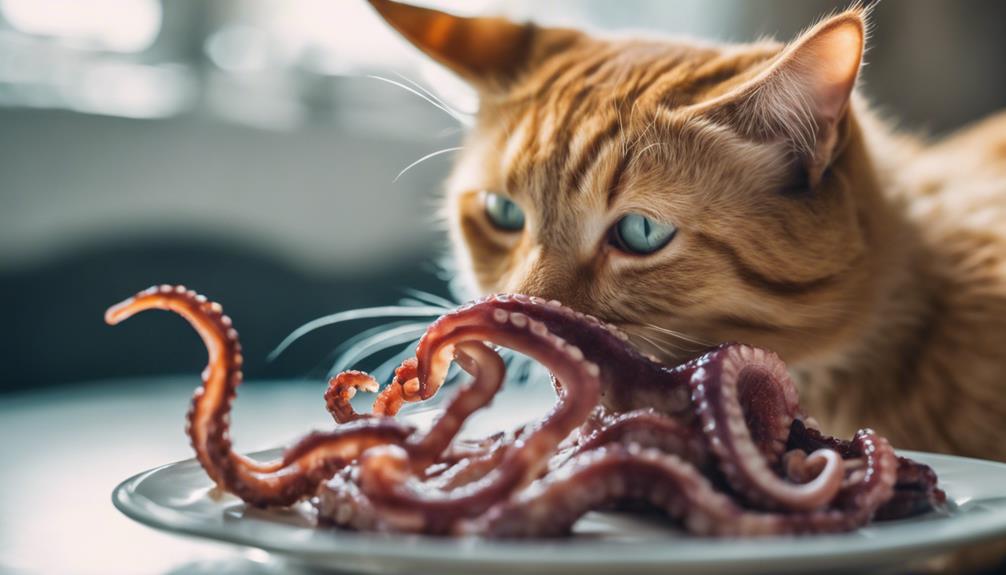
Octopus offers a wealth of nutritional benefits for cats, serving as a valuable source of lean protein essential for muscle development and maintenance. Cats require high-quality protein in their diet for energy and to support their natural carnivorous tendencies.
In addition to protein, octopus contains essential nutrients like iron, copper, and vitamins B12 and B6, which are crucial for overall feline health. The low levels of fat and calories in octopus make it a healthy option for weight management in cats.
Moreover, the presence of taurine in octopus helps maintain heart health and proper vision in felines. Including octopus in a cat's diet can provide variety and enrichment, ensuring mealtime remains interesting for these curious creatures.
Risks of Feeding Octopus to Cats
Feeding cats octopus presents risks like potential choking hazards due to the texture of the meat, which may be difficult for cats to chew properly. Allergic reactions in cats can also occur, manifesting as skin irritations, itching, or digestive disturbances.
Digestive issues such as vomiting, diarrhea, or abdominal discomfort may arise from introducing this unfamiliar protein source to a cat's diet.
Potential Choking Hazard
Could the rubbery texture and suction cup-like tentacles of octopus present a potential choking hazard for cats when consumed? Cats may find it challenging to chew and swallow octopus due to its slippery and rubbery consistency, increasing the risk of choking.
The unique texture of octopus can make it difficult for cats to break down into manageable pieces for safe swallowing. Cats might attempt to swallow large chunks of octopus, which can lead to potential choking incidents.
To mitigate this risk, it is advisable to cut octopus into small, bite-sized portions before offering it to your feline companion. By taking these precautions, cat owners can help reduce the likelihood of choking hazards associated with feeding octopus to their pets.
Allergic Reactions in Cats
Allergic reactions in cats to octopus consumption can pose significant health risks and necessitate careful monitoring for symptoms of adverse reactions. Cats can develop seafood allergies, with octopus proteins being a common trigger. Symptoms of allergic reactions in cats may manifest as itching, skin redness, swelling, vomiting, or diarrhea after consuming octopus.
In severe cases, seafood allergies can be life-threatening, requiring immediate veterinary attention. It's important to be cautious when introducing new foods like octopus to cats, especially those with known seafood allergies. If you suspect your cat is experiencing an allergic reaction to octopus or any other seafood, consulting a veterinarian promptly is vital to safeguard your cat's health and well-being.
Digestive Issues in Cats
When pondering the potential risks associated with including octopus in a cat's diet, it is important to be mindful of the digestive issues that can arise due to bacterial contamination present in raw octopus. Raw octopus may harbor harmful bacteria like Vibrio, Salmonella, and E. coli, posing a significant threat to cats' digestive health.
Cooking octopus thoroughly is essential to avoid food poisoning risks and guarantee the safety of cats. Thorough cooking helps eliminate pathogens present in raw seafood, such as Salmonella and E. coli, reducing the chances of gastrointestinal upset. It is crucial to avoid feeding cats raw seafood to prevent bacterial contamination and the associated digestive problems.
Introducing new foods like octopus can lead to vomiting, diarrhea, and discomfort in cats, warranting veterinary attention if severe symptoms occur.
Cooking Octopus for Feline Consumption
When preparing octopus for feline consumption, it is essential to cook it thoroughly to eliminate any harmful bacteria. Properly cooking and cutting the octopus into small pieces reduces the risk of bacterial contamination and choking hazards for cats.
Additionally, seasoning should be avoided, especially with ingredients like onions or garlic, which can be toxic to felines.
Octopus Preparation for Cats
To safeguard the safety and health of cats, proper cooking of octopus is vital before feeding it to felines.
When preparing octopus for cats, it is important to cut it into small, manageable pieces to avoid any choking hazards. Additionally, it is essential to refrain from seasoning the octopus with ingredients like onions or garlic, as these can be harmful to cats.
Opting for ethically and organically sourced octopus ensures quality and safety for your feline companion.
Feeding octopus to cats should be done in moderation, treating it as an occasional special food rather than a regular part of their diet to prevent any potential adverse effects.
Safe Octopus Serving
Properly cooked octopus is important to guarantee the safety and well-being of cats when serving it as a part of their diet. When cooking octopus for feline consumption, consider the following:
- Cooking Thoroughly: Make sure the octopus is cooked thoroughly to eliminate bacteria and reduce the risk of food poisoning for cats.
- Cut into Small Pieces: Cut the octopus into small, manageable pieces to prevent choking hazards when feeding cats.
- Avoid Seasonings: Refrain from adding seasonings like onions or garlic when preparing octopus for your cat.
- Ethical Sourcing: Purchase ethically and organically sourced octopus to ensure quality and safety for your feline companion.
Always monitor your cat for any adverse reactions after feeding octopus to ensure their well-being.
Heavy Metal Concerns With Octopus
Due to their diet and exposure to ocean pollution, octopuses accumulate elevated levels of heavy metals in their bodies. Cadmium poses a particularly significant risk due to its concentration in their heads. Octopuses mainly feed on shellfish and mollusks, which are known to contain heavy metals. The pollution in the oceans further exacerbates this issue, leading to higher heavy metal content in octopuses.
Cadmium, a toxic heavy metal, tends to accumulate in the heads of octopuses, making it a major concern for consumption. These creatures struggle to eliminate the heavy metals ingested through their prey, and their habitat on the ocean floor exposes them to increased levels of these harmful substances. It is important to take into account these factors when contemplating feeding octopus to cats.
Allergies and Octopus in Cats
Cats, like humans, can also experience allergies, and it is important to be aware of potential reactions they may have to various foods, including octopus. When it comes to octopus allergies in cats, here are some key points to keep in mind:
- Seafood Allergies: Some cats may have seafood allergies, which can include octopus.
- Symptoms: Allergic reactions to octopus in cats can manifest as skin problems, digestive issues, or respiratory difficulties.
- Signs to Watch For: Watch out for symptoms like itching, vomiting, diarrhea, or breathing troubles in your cat after consuming octopus.
- Vet Consultation: If you suspect that your cat is allergic to octopus or any other seafood, it is important to seek advice from a veterinarian for proper diagnosis and guidance.
Octopus Preparation Tips for Cats
When preparing octopus for cats, it is crucial to cook it thoroughly to eliminate any risks of food poisoning and bacterial contamination.
Cut the octopus into small, manageable pieces to prevent choking hazards for cats.
Avoid seasoning the octopus with ingredients like onions and garlic, which can be harmful to cats.
Opt for ethically and organically sourced octopus to guarantee quality and safety for your feline companions.
By following these preparation tips, you can provide a safe and enjoyable dining experience for your cats.
Remember to monitor them for any adverse reactions, especially if it's their first time trying octopus.
Proper preparation is key to ensuring your cats can safely enjoy this seafood treat.
Octopus Safety Guidelines for Cats
What precautions should cat owners take to guarantee the safe consumption of octopus by their feline companions?
- Cook Thoroughly: Cooking octopus is important to eliminate risks of Vibrio bacterium, Salmonella, and E. coli that could harm cats.
- Watch for Heavy Metals: Monitor for heavy metals like mercury that may be present in octopus due to their diet, as they can pose health risks to cats.
- Monitor for Allergies: Cats can have seafood allergies, so observe for any adverse reactions after feeding octopus to your cat.
- Choose Quality: Opt for ethically and organically sourced octopus to ensure the highest quality and safety standards for your cat.