Can Cats Eat Oranges


Cats should not eat oranges. Oranges contain toxic compounds like limonene and linalool in the peel, harmful due to high sugar content, especially for diabetic cats. Additionally, psoralens in the peel and seeds can cause skin irritation and blockages. The acidity of oranges may lead to upset stomach in cats, while ingesting the peel can result in choking or intestinal obstruction. If you want to know more about safe fruits for cats and how to maintain their well-being, remember that cats should avoid consuming oranges for their health and safety.
Orange Composition for Cats
Oranges pose potential health risks to cats due to the presence of toxic compounds and high sugar content, making them unsuitable for feline consumption. Toxic compounds like limonene and linalool found in the peel can be harmful to cats. Additionally, the high sugar content in oranges can be detrimental, especially for cats with diabetes.
Psoralens in the peel and seeds of oranges can lead to skin irritation and gastrointestinal blockages in cats. The acidity of oranges may also result in an upset stomach for cats. Moreover, ingesting orange peel can be hazardous for cats, potentially causing choking or intestinal obstruction.
It is essential to keep oranges and their peels away from cats to prevent any potential health issues.
Signs of Orange Ingestion in Cats
After consuming oranges, cats may exhibit various signs indicative of ingestion, including vomiting and diarrhea. Ingesting orange peel can lead to skin irritation and even depression of the central nervous system in cats.
Symptoms such as gastrointestinal issues and skin sensitivity to sunlight may also arise from orange consumption. If your cat displays any of these signs after ingesting oranges or orange peel, it is important to contact a veterinarian promptly for proper assessment and treatment.
Pay close attention to any changes in your cat's behavior or health, as these could indicate a reaction to the citrus fruit. Being aware of these potential symptoms can help you take prompt action to safeguard your cat's well-being.
Healthier Fruit Options for Cats
When considering healthier fruit options for cats, it's crucial to focus on safe choices like:
- Blueberries
- Strawberries
- Bananas
- Apples
- Melons
These cat-friendly fruits not only offer nutritional benefits but also serve as suitable treats when given in moderation.
Consulting a veterinarian before introducing new foods, especially for cats with health conditions, guarantees their dietary needs are met without compromising their health.
Safe Fruit Choices
Among the various fruit options suitable for cats' consumption, blueberries, strawberries, bananas, apples, and melons stand out as safe and nutritious choices that offer vitamins and nutrients without the potential risks associated with oranges. These fruits are free from the harmful effects that citrus fruits like oranges can pose to cats.
When feeding fruits to your cat, it is essential to do so in moderation to maintain a balanced diet. Treats should make up only about 10% of your cat's daily caloric intake. Before introducing new fruits into your cat's diet, especially if they have dietary restrictions or health conditions, it's advisable to consult a veterinarian for guidance.
Cat-Friendly Fruits
Cat owners seeking healthier fruit options for their feline companions can consider incorporating blueberries, strawberries, bananas, apples, and melons into their diets. Blueberries are safe for cats and offer antioxidants, fiber, and essential vitamins.
Strawberries provide vitamin C, manganese, and dietary fiber, all beneficial for cats. Bananas are a good source of potassium, vitamin B6, and fiber, supporting overall feline health.
Apples, containing vitamin C, fiber, and antioxidants, are suitable for cats. Melons like watermelon and cantaloupe can be enjoyed by cats in moderation, providing hydration and essential vitamins.
These fruits offer a variety of nutrients that can complement a cat's diet, promoting their well-being without the risks associated with oranges.
Nutritional Benefits for Cats
Blueberries, strawberries, bananas, apples, and melons offer essential nutrients that can enhance a cat's diet while avoiding the risks associated with oranges. These fruits contain vitamins, minerals, and antioxidants beneficial to feline health. When given as an occasional treat, they can provide a tasty alternative to oranges without the harmful compounds. Importance is vital, with treats constituting only 10% of a cat's daily caloric intake to prevent nutritional imbalances. Consultation with a veterinarian is advisable before introducing new foods, especially if a cat has underlying health conditions. Below is a table highlighting the nutritional benefits of these cat-friendly fruits:
| Fruit | Vitamins | Minerals |
|---|---|---|
| Blueberries | C, K | Manganese |
| Strawberries | C, K | Folate |
| Bananas | B6, C | Potassium |
| Apples | A, C | Fiber |
| Melons | A, C | Potassium |
Citrus Toxicity Symptoms in Cats
When cats experience citrus toxicity, they may display a range of symptoms including vomiting, diarrhea, drooling, weakness, and seizures.
Citrus ingestion can lead to skin irritation, depression of the central nervous system, and gastrointestinal issues in cats. Cats may also exhibit photosensitivity and allergic dermatitis after consuming citrus fruits like oranges.
Ingesting orange peel can cause choking, intestinal blockages, and additional toxic reactions in cats. Immediate veterinary attention is essential if a cat shows any signs of citrus poisoning to guarantee proper treatment and recovery.
It is important for cat owners to be aware of these symptoms and the potential risks associated with allowing their feline companions to consume oranges or other citrus fruits.
Managing Orange Consumption in Cats
When managing orange consumption in cats, it is crucial to limit their exposure to oranges, including the peel, seeds, and juice, to prevent potential health issues.
Monitoring your cat for any adverse reactions after accidental ingestion can help in providing timely veterinary care if needed.
Safe Orange Portions
Avoiding any portion of oranges in a cat's diet is essential due to their toxicity to felines, including the flesh, peel, seeds, and leaves. Cats are highly sensitive to citrus fruits due to the presence of toxic compounds like essential oils and citric acid in oranges.
To manage orange consumption in cats effectively, consider the following:
- Even small amounts of oranges can lead to symptoms of citrus poisoning in cats.
- Orange peels contain toxic essential oils that can cause gastrointestinal upset.
- Seeds and leaves of oranges are also harmful to cats and should be kept away from them.
- Opt for safe fruit alternatives like strawberries, blueberries, and apples to treat your pet without risking their health.
Monitor Cat's Reactions
Given the potential risks associated with orange consumption for cats, it is imperative to closely observe and monitor your feline companion's reactions to any exposure to oranges. Oranges contain essential oils that can be harmful to cats, leading to symptoms such as vomiting, diarrhea, drooling, weakness, depression, or allergic dermatitis.
In severe cases, ingestion of orange seeds and leaves can be highly toxic, causing nervous system issues and seizures. If your cat shows any signs of gastrointestinal distress or photosensitivity after consuming oranges, it is essential to contact your vet immediately.
Monitoring your cat's reactions diligently can help in detecting any potential issues early on and seeking prompt medical attention to safeguard your cat's well-being.
Safe Fruits for Feline Consumption
Fruits that are safe for feline consumption include strawberries, blackberries, and blueberries. Some other safe fruits for our feline friends are apples, mangos, and watermelon, which can be given in small amounts. Bananas are also a good option for cats. Additionally, pears and peaches can be offered to cats in moderation, as long as the seeds and pits are removed. While offering fruits to your cat, it is important to ensure that they are plain and free from artificial additives, as food coloring safety for cats is a valid concern. Always consult your veterinarian before introducing new foods to your cat’s diet to avoid potential health issues.
When offering fruits to cats, always remember to remove seeds, pits, and cores as they can be harmful. It's important to limit fruit treats to occasional indulgences to prevent any potential hazards. Cats shouldn't eat all types of fruits, but the ones mentioned above are generally safe and can be a tasty and healthy addition to their diet.
- Strawberries
- Blackberries
- Blueberries
- Apples
Orange Peel and Seed Dangers
Orange peels and seeds pose potential dangers to cats due to the presence of toxic compounds like limonene, linalool, and psoralens. These substances can lead to various health issues if ingested, such as skin irritation, upset stomach, and gastrointestinal blockages.
The essential oils in orange peels and seeds are known to cause irritation and may result in choking hazards or intestinal obstruction in cats. It is important to keep orange peels and seeds away from cats to prevent accidental ingestion and to safeguard their well-being.
Being mindful of these risks can help avoid unnecessary health complications and guarantee the safety of our feline companions.
Addressing Orange-Related Digestive Issues
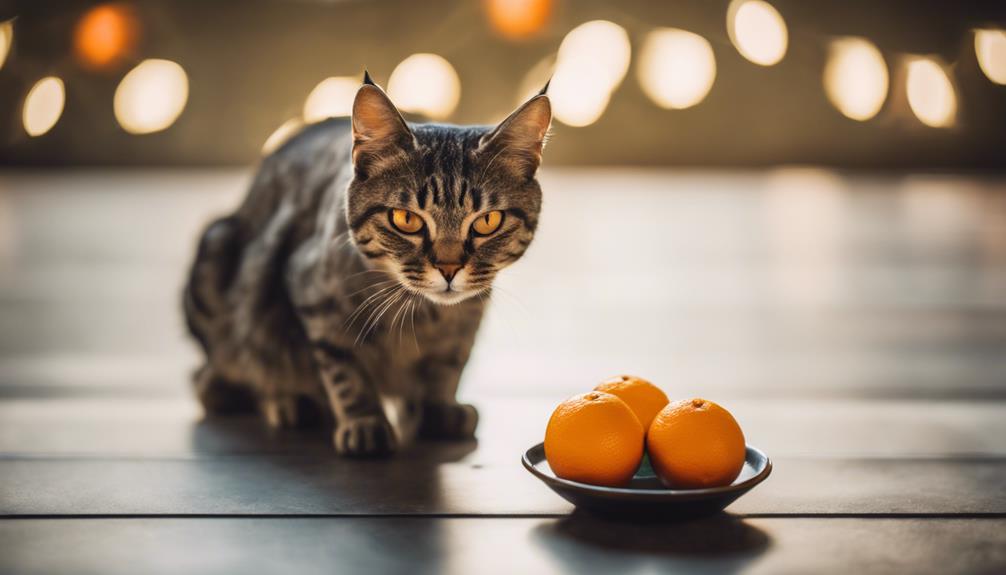
In addressing digestive issues stemming from the consumption of oranges by cats, it is important to recognize the potential symptoms and take immediate action to safeguard the well-being of our feline companions. Cats are obligate carnivores, and citrus fruits like oranges can pose risks to their digestive health. If your cat shows signs of stomach distress, vomiting, diarrhea, or skin irritation after consuming oranges, consider the following:
- Monitor your cat's daily caloric intake to make sure they receive proper nutrition.
- Avoid giving cats orange juice as it can upset their stomach.
- Contact your veterinarian promptly if you notice any adverse reactions.
- Be cautious of skin irritation that may occur from contact with orange peels or juice.
Importance of Balanced Cat Diet
When considering the dietary requirements of cats, it is important to prioritize a balanced nutrition plan that caters to their unique needs for peak health and well-being. Cats need a diet rich in animal-based proteins to fulfill their specific nutritional demands.
Providing the right balance of proteins, fats, vitamins, and minerals through commercial cat foods is essential for their overall health. A well-rounded diet not only supplies important nutrients but also aids in preventing common health issues such as obesity, diabetes, and urinary tract problems in cats.
Consulting a veterinarian for personalized dietary advice tailored to your cat's individual requirements is critical for ensuring top-notch pet care. By focusing on foods that are safe and meeting essential nutrient needs, you can support your cat's well-being through proper feeding practices.