Can Cats Eat Pansies


Pansies are generally safe for cats but can cause mild stomach issues. ASPCA confirms their non-toxicity, yet ingestion might lead to vomiting, diarrhea, and appetite changes. Observing cats after exposure is important. Severe symptoms need vet attention promptly. Immediate action is essential for cat health. Mild symptoms typically resolve on their own, but severe cases require veterinary evaluation. Cat-safe plants like catnip and grass are better alternatives. Monitoring and preventing pansy consumption are key. Seeking professional guidance guarantees cat well-being. Understanding feline behavior around plants is essential. Further insights on cat safety await.
Potential Dangers of Pansies for Cats
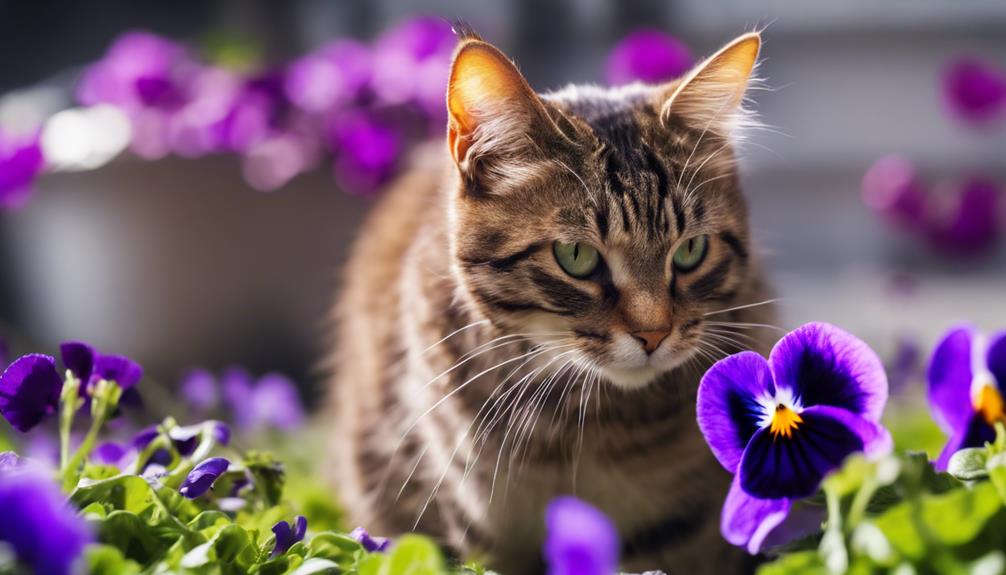
Pansies pose minimal risk to cats as they are considered non-toxic according to the ASPCA, but ingestion can potentially cause mild stomach upset. While pansies are generally safe for felines, consuming these flowers may lead to gastrointestinal issues such as vomiting, diarrhea, and a decreased appetite in cats. Additional signs of pansy-induced stomach upset can include licking lips and lethargy.
It is advisable to keep cats away from pansies as a precautionary measure to guarantee their well-being and prevent any discomfort or illness. Although severe toxicity is rare, it is essential to monitor your cat's behavior closely after exposure to pansies to ensure their health. If any concerning symptoms persist, contacting a veterinarian for guidance is recommended.
Signs of Pansy Toxicity in Cats
Signs of pansy toxicity in cats manifest primarily as vomiting, diarrhea, and a decreased appetite. Further indications of toxicity can include excessive lip licking and a notable lack of energy.
Any severe symptoms following pansy consumption warrant immediate veterinary attention to guarantee the well-being of the feline.
Toxicity Symptoms in Cats
Exhibiting symptoms of toxicity in cats, such as vomiting, diarrhea, and loss of appetite, may indicate pansy ingestion. Additional signs of pansy toxicity in cats include licking lips and lethargy.
Mild stomach upset is a common symptom of pansy ingestion in cats. It is advisable to monitor cats for any signs of distress if they have ingested pansies.
If you notice any of these symptoms in your cat after they have potentially ingested pansies, it is essential to seek veterinary care promptly. Understanding these signs can help cat owners recognize when their feline friends may be experiencing toxicity from pansy consumption.
Immediate Veterinary Attention
Seeking prompt veterinary care is essential if a cat displays symptoms of pansy toxicity, such as vomiting, diarrhea, and loss of appetite. Additional signs to watch for include licking lips and lethargy in cats who may have ingested pansies.
While mild stomach upset is a common outcome if a cat consumes pansies, severe symptoms or prolonged upset from pansy ingestion necessitate immediate veterinary attention. It is vital to seek vet help to rule out ingestion of toxic substances if a cat shows signs of pansy toxicity.
Treatment for Pansy Ingestion in Cats

In cases of pansy ingestion by cats, monitoring for mild stomach upset symptoms is the primary focus of treatment. Mild symptoms typically resolve within 24-48 hours without intervention.
However, if severe symptoms or prolonged upset occur, a visit to the vet for evaluation and treatment is necessary. Immediate veterinary attention is vital if cats show severe signs of distress after ingesting pansies.
During the assessment, vets will provide supportive care, monitor the cat's condition closely, and rule out ingestion of other toxic substances.
Safe Alternatives to Pansies for Cats
When considering safe alternatives to pansies for cats, catnip and cat grass emerge as non-toxic and engaging options for feline enrichment. Catnip is a safe herb that provides stimulation and entertainment for cats, satisfying their natural instincts.
Cat grass, on the other hand, can aid in digestion and deter cats from consuming potentially harmful plants like pansies. These non-toxic alternatives guarantee that cats have enriching experiences without the risk of ingesting toxic substances.
By introducing safe plants such as catnip and cat grass, pet owners can help satisfy their cats' natural behaviors in a secure manner. Remember, it's vital to provide enriching alternatives to keep cats healthy and engaged.
If you suspect your cat has ingested a toxic plant, contact the pet poison hotline immediately for guidance.
Pansy Poisoning Prevention Tips
To safeguard your feline companions from potential pansy poisoning, implementing preventive measures is essential. Despite pansies not being toxic to cats, it's important to keep an eye on their interactions with these plants.
Here are some tips to prevent pansy poisoning:
- Elevate or hang pansy plants out of reach to prevent cats from accessing them.
- Use citrus peels as a natural deterrent to keep cats away from pansies, but avoid toxic citrus essential oils or sprays near the plants.
- Place pansies near herbs like rosemary that cats dislike to discourage grazing.
Immediate Actions for Pansy Consumption
Immediate actions for pansy consumption in cats are vital to guarantee their well-being. Symptoms such as vomiting, diarrhea, and loss of appetite should be closely monitored. If any of these symptoms arise, it is crucial to consult a veterinarian promptly to prevent potential complications. While addressing dietary concerns, pet owners might also wonder, can cats have pancakes safely? Although plain pancakes without additives may not be toxic, they are not nutritionally beneficial for cats and should only be offered in moderation, if at all.
If severe signs persist, seeking prompt veterinary care is essential to address any potential toxicity risks.
Toxicity Risks
In cases of pansy consumption by cats, prompt identification of toxicity risks is essential to ensure timely intervention and appropriate care. Cats may experience mild stomach upset after ingesting pansies, leading to symptoms such as vomiting, diarrhea, and loss of appetite.
Additionally, licking lips and lethargy are warning signs to watch for if a cat has consumed this toxic plant. Most cats that ingest pansies exhibit no signs or only mild stomach upset.
However, if severe symptoms or prolonged stomach upset occur, it is important to seek veterinary attention promptly for further evaluation and treatment.
Vet Consultation
Upon suspecting or confirming that your cat has ingested pansies, prompt consultation with a veterinarian is essential to assess and address any potential risks to your pet's health.
If your cat shows signs of mild stomach upset such as vomiting, diarrhea, loss of appetite, licking lips, or lethargy after consuming pansies, monitoring closely is advised. Most cats will experience no severe effects from eating pansies, but if your cat displays severe symptoms or prolonged upset, immediate veterinary attention is vital.
Veterinarians can provide appropriate guidance, conduct examinations, and administer treatments to safeguard your cat's well-being. Remember, early intervention through vet consultation can prevent any complications and help your feline companion recover swiftly from any pansy ingestion-related issues.
Effects of Pansies on Cat Health
Pansies, although non-toxic to cats, can lead to mild stomach upset if consumed. Signs of upset stomach in cats from eating pansies include vomiting, diarrhea, and loss of appetite. Additional signs to watch for in cats after consuming pansies are licking lips and lethargy.
If a cat shows severe symptoms or experiences prolonged stomach upset after eating pansies, a vet visit is necessary. Immediate vet attention is essential for cats displaying severe symptoms from ingesting pansies. Remember to monitor your cat closely if they have ingested pansies and seek professional help if needed.
Expert Advice on Cats and Pansies
For expert advice on cats and pansies, consulting a veterinarian is recommended to guarantee the well-being of your feline companion. Pansies are considered non-toxic to cats, as stated by the ASPCA. However, ingesting pansies can potentially lead to mild stomach upset in cats. Symptoms of an upset stomach may include vomiting, diarrhea, and loss of appetite.
It is advisable to keep cats away from pansies as a precautionary measure. If your cat shows severe symptoms after ingesting pansies, immediate veterinary attention is necessary to make sure proper care and treatment are provided. By being vigilant and seeking professional guidance, you can help protect your cat from any potential harm associated with consuming pansies.