Can Cats Eat Parsley


Cats can eat parsley in moderation for potential health benefits. While it is generally important, some toxic parsley varieties should be avoided. Italian parsley contains furanocoumarins which can be harmful. Fresh parsley is safer than dried due to lower toxicity risks. Benefits include immune system support and anemia prevention. Cats with urinary issues can benefit from parsley water. It's essential to consult a vet for proper serving sizes. Avoid parsley sauce for digestive upset. In small amounts, parsley can provide antioxidants and nutrients for overall well-being. Understanding safe levels and consulting a vet are essential for feline health.
Safety of Parsley for Cats
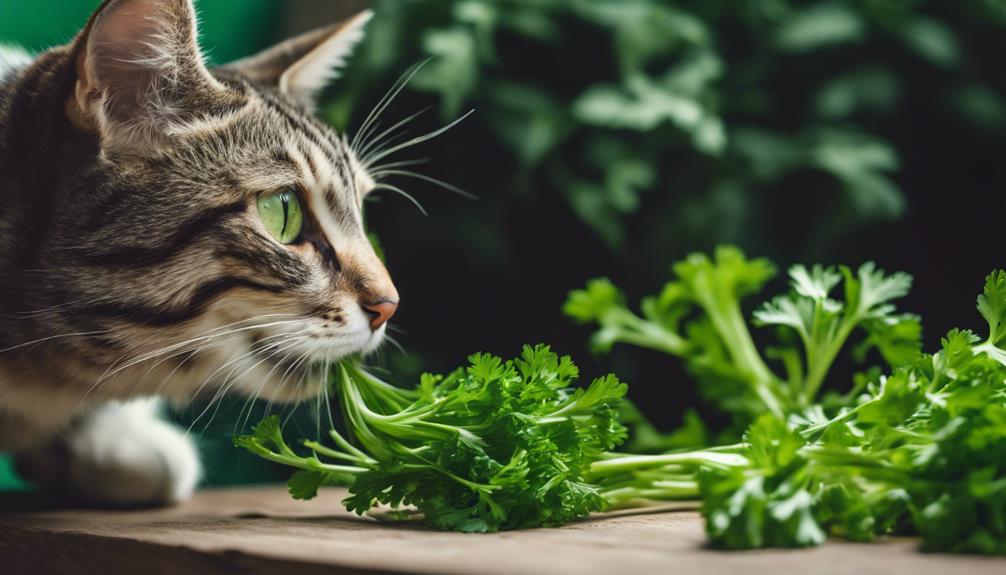
Parsley can be a safe addition to a cat's diet when provided in moderation to guarantee the well-being of the feline companion. While parsley offers health benefits like essential vitamins and antioxidants, it's important to avoid toxic varieties like spring parsley and curly parsley, which can be harmful to cats. Moderation is key, as overconsumption of parsley may lead to adverse effects. It’s also crucial to consult with a veterinarian before introducing any new foods to your cat’s diet, including parsley, to ensure their safety and nutritional needs are met. Similarly, if you’re wondering about other human foods, such as “can cats safely eat peppers,” it’s best to research thoroughly and seek professional guidance, as some varieties of peppers might not be suitable for feline consumption. Always prioritize your cat’s health by being cautious with any dietary additions.
For cats with urinary tract issues, feeding parsley water in small amounts can be beneficial. Consulting with a vet before introducing parsley into a cat's diet is vital to ensure safety and appropriate serving sizes. By being mindful of the type and quantity of parsley given to cats, pet owners can harness its potential benefits while safeguarding their feline friends' health.
Health Benefits of Parsley
Rich in essential nutrients and antioxidants, parsley offers a range of health benefits for cats when incorporated thoughtfully into their diet. The vitamins and minerals present in parsley, such as potassium, folate, vitamin A, C, and K, contribute to overall feline health. These nutrients support the immune system, prevent anemia, and promote healthy eyesight in cats.
Additionally, parsley can aid in addressing urinary tract issues in cats. While parsley is safe for cats in moderation, it should not be a primary component of their diet. By including parsley appropriately, cat owners can provide their pets with additional health benefits without risking overconsumption.
Toxicity Concerns With Parsley
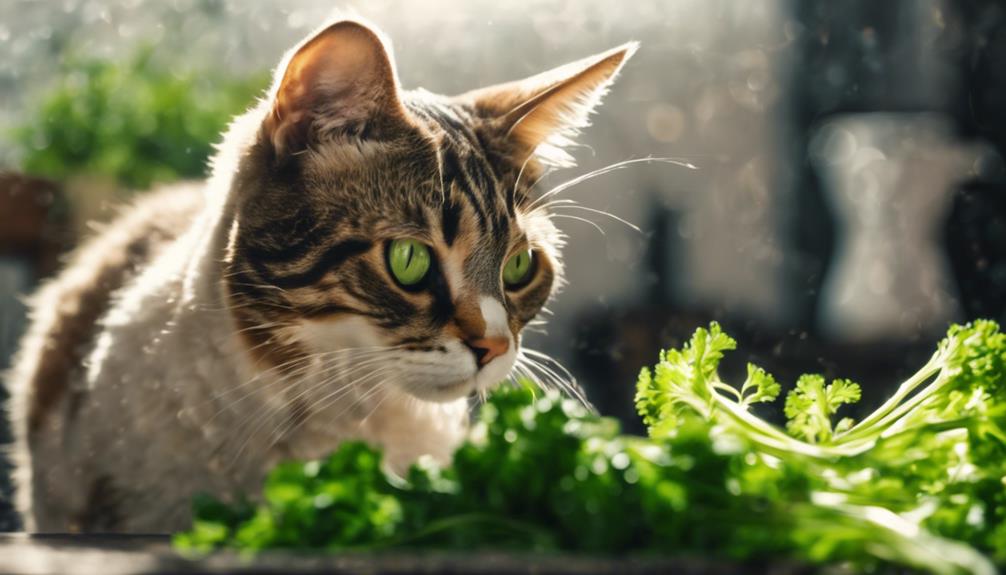
An important consideration for cat owners is the potential toxicity associated with parsley consumption by felines. Italian Parsley contains furanocoumarins, compounds that can lead to photosensitization in cats, making them more susceptible to sunburn and severe sun damage. Ingestion of parsley, especially in dried form, can pose a higher risk due to its potency even in small quantities. Symptoms of parsley toxicity in cats may include photosensitization, gastrointestinal upset, and neurological changes. If you suspect your cat has ingested parsley, immediate action should be taken by contacting a vet or Animal Poison Control Center for guidance and assistance. Below is a table summarizing the key toxicity concerns related to parsley consumption in cats:
| Toxicity Concerns | Details |
|---|---|
| Italian Parsley | Contains furanocoumarins that can lead to photosensitization in cats. |
| Photosensitization | Can cause severe sun damage and risk extremity loss in cats. |
| Toxicity in Dried Form | Dried parsley poses a higher risk due to its potency in smaller quantities. |
| Symptoms | Include photosensitization, gastrointestinal upset, and neurological changes. |
| Action Needed | Contact a vet or Animal Poison Control Center if parsley ingestion is suspected in your cat. |
Offering Parsley Water to Cats
Parsley water can be important for cats with urinary tract issues, thanks to its diuretic properties. Serving one to two teaspoons of parsley water daily can aid in preventing the formation of kidney stones in felines.
However, it is vital to be cautious as giving parsley water to pregnant or nursing cats is not recommended due to potential health risks.
Benefits of Parsley Water
When considering the potential advantages of offering parsley water to cats, it is important to prioritize their urinary health. Parsley water can benefit cats with urinary issues due to its diuretic properties, helping to promote urine production and potentially prevent kidney stones.
However, it is vital to consult with a veterinarian before introducing parsley water to your cat to make sure it is suitable for their specific needs. Veterinarians can provide guidance on the proper amount of parsley water to offer and whether it is an appropriate addition to your cat's diet.
Serving Size for Cats
For cats, the appropriate serving size of parsley water should typically range from one to two teaspoons per day. Parsley water can benefit cats, especially those with urinary tract issues, due to its diuretic properties. However, caution is key when offering parsley water to cats to safeguard their health and well-being. Please be aware that pregnant or nursing cats should not be given parsley water as a precaution. To help you understand better, let's look at the table below outlining the serving size recommendations for cats:
| Cat Weight (lbs) | Teaspoons of Parsley Water |
|---|---|
| 5 | 1 |
| 10 | 2 |
| 15 | 2 |
| 20 | 2 |
Potential Health Risks
Given the potential health benefits of parsley water for cats with urinary tract issues, it is important to be mindful of the associated risks that may arise from offering this herbal remedy.
- Parsley Safe: While parsley water can be beneficial in small amounts, excessive consumption can lead to health issues in cats.
- Photosensitization (sunburn): Cats may develop sensitivity to sunlight when exposed to high doses of parsley, causing skin irritation or sunburn.
- Known risks: Pregnant or nursing cats should avoid parsley water due to its potential effects on reproductive health. It is vital to consult a veterinarian before introducing parsley water into a cat's diet, especially for those with pre-existing medical conditions or on specific medications.
Dried Parsley for Cats
Due to its increased potency compared to fresh parsley, dried parsley should be approached with caution when considering it as a dietary option for cats. The concentrated nature of dried parsley can lead to potential toxicity in cats, especially when consumed in larger quantities. In extreme cases, ingestion of dried parsley can result in adverse effects on a cat's health.
The lack of conclusive studies on the safety of dried parsley for cats further highlights the need for vigilance. Moderation is key when it comes to introducing any new food or supplement to a cat's diet. As such, it is advisable to err on the side of caution and prioritize the well-being of cats by avoiding the risks associated with feeding them dried parsley.
Risks of Parsley Sauce for Cats
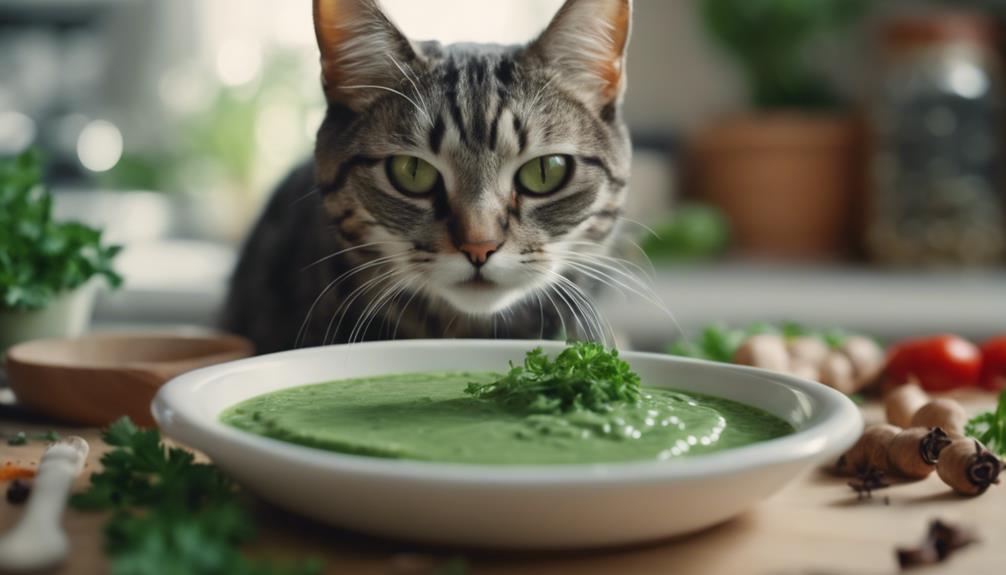
Featuring milk and butter components, parsley sauce presents potential risks to cats' digestive systems and overall well-being, warranting caution in its inclusion in their diets. When considering the risks of parsley sauce for cats, it is essential to note the following:
- Digestive Upset: The milk and butter in parsley sauce can lead to digestive issues in cats, such as diarrhea or vomiting.
- Lactose Intolerance: Many adult cats are lactose intolerant, making the consumption of dairy-based products like parsley sauce unsuitable for them.
- Health Concerns: Parsley can cause gastrointestinal discomfort in cats, emphasizing the importance of avoiding this ingredient in their food to prevent potential health problems.
It is vital to prioritize your cat's well-being by choosing cat food options that are safe and beneficial for their health.
Italian Parsley and Feline Health
Italian Parsley, commonly used in culinary dishes, contains furanocoumarins that can pose serious health risks to felines. These compounds can lead to photosensitization in cats, causing potential sun damage and even extremity loss.
Understanding safe amounts and potential symptoms of Italian Parsley ingestion is essential for maintaining feline health.
Health Benefits of Parsley
Parsley, a herb rich in essential vitamins like A, C, and K, offers numerous health benefits for feline well-being. Here are some key advantages of incorporating Italian parsley into a cat's diet:
- Boosts Immune System: The antioxidants in Italian parsley can support a cat's immune system, helping them fight off illnesses and stay healthy.
- Blood Health: Italian parsley contains folate, which plays a role in preventing anemia in cats and supports their overall blood health.
- Promotes Healthy Vision: The vitamin A in Italian parsley promotes healthy eyesight and vision in cats, ensuring their ocular health is maintained.
These benefits make Italian parsley a valuable addition to a cat's diet when given in appropriate amounts.
Safe Amounts for Cats
Incorporating moderate amounts of parsley into a cat's diet is vital for maintaining feline health and well-being. While Italian parsley is safe for cats to eat, it should only be given in small quantities due to its furanocoumarin content.
Large amounts of parsley can lead to photosensitization in cats, causing severe sunburn. To prevent adverse effects on their health, cats should consume parsley in moderation.
Symptoms of parsley ingestion in cats may include gastrointestinal upset, behavioral changes, and urinary issues. If a cat shows signs of parsley toxicity, immediate veterinary attention is necessary.
It is important for cat owners to be cautious and mindful of the amount of parsley their feline companions consume to safeguard their well-being.
Culinary Uses for Cats
To enhance a cat's overall health and well-being through dietary enrichment, exploring culinary applications that offer nutritional benefits can be a rewarding endeavor. When it comes to Italian parsley and feline health, there are several ways to incorporate this herb into a cat's diet:
- Parsley Sauce: Creating a parsley sauce to drizzle over your cat's food can provide a flavorful addition that is rich in essential vitamins like A and C.
- Cats are obligate carnivores: While cats primarily require a meat-based diet, adding small amounts of spring parsley can aid in digestion and support immune system function.
- Spring Parsley Treats: Chopped Italian parsley can be mixed into cat food, offered as a treat, or added to homemade cat treats to offer a variety of health benefits while keeping their breath fresh.