Can Cats Eat Pastrami


Cats should not eat pastrami. This meat has high salt levels, toxic ingredients like onion and garlic, and harmful spices. Regular consumption can cause long-term health issues and even increase cancer risk in cats. Sodium in pastrami can lead to high blood pressure and kidney problems. Cats lack enzymes to digest such processed meats efficiently, risking digestive disruption. Opt for basic meats like boiled animal protein without seasoning. Moderation in treats like pastrami is vital for overall feline health. To guarantee a nutritious diet, consider healthier meat options. Further insights reveal the importance of making informed choices for cats' well-being.
Understanding Pastrami and Cats
When considering the compatibility of pastrami with cats, it is important to understand the composition and potential risks associated with this type of deli meat. Cats have specific dietary requirements that differ greatly from humans. Cat food is specially formulated to provide the necessary nutrients for feline health.
While pastrami may seem like a tasty treat, it lacks the essential nutrients that cat food offers. Additionally, cat food is designed to meet the protein and amino acid needs of cats, which pastrami may not fulfill adequately. It is essential to prioritize a balanced diet for cats, focusing on cat food that meets their nutritional requirements to promote their well-being and longevity.
Thus, when considering what to feed your feline companion, opt for cat food over pastrami to support their health.
Risks of Feeding Cats Pastrami
What potential dangers do cats face when consuming pastrami as part of their diet?
Cats should avoid pastrami and other deli meats due to various risks associated with these foods.
The high salt content in pastrami can be toxic to cats, leading to issues like dehydration and kidney damage.
Additionally, ingredients like garlic, onion, and spices commonly found in pastrami can be harmful and toxic to cats, causing digestive problems and potential organ damage.
Regular consumption of pastrami can also contribute to long-term health issues in cats.
Moreover, smoked meats like pastrami contain carcinogens that increase the risk of cancer in cats.
To safeguard the well-being of your feline companion, it is best to stick to a diet of basic meats such as beef, pork, poultry, and fish, avoiding deli meats like pastrami altogether.
Sodium Concerns With Pastrami
Highlighting the detrimental effects of high sodium levels in pastrami, caution must be exercised when considering this deli meat as part of a cat's diet. Cats are sensitive to salt, and pastrami's sodium content, with one slice containing around 302 mg, poses significant sodium concerns.
Excessive sodium intake can lead to health issues such as high blood pressure and kidney problems in cats. Regular consumption of pastrami can disrupt the cat's electrolyte balance, potentially causing dehydration. Monitoring sodium intake is essential for maintaining a healthy diet for cats, making pastrami an unsuitable option.
Due to the risks associated with elevated sodium levels in pastrami, it is advisable to choose healthier and safer food options for your feline companion.
Nitrates in Deli Meats
Nitrates present in deli meats, such as pastrami, serve as chemical compounds utilized as preservatives to inhibit bacterial growth. While nitrates play an important role in preventing spoilage and ensuring food safety, they can pose health risks when consumed excessively.
When nitrates in deli meats are processed or cooked at high temperatures, they can be converted into nitrosamines, which are known carcinogens linked to an increased risk of cancer. Research indicates a correlation between high intake of nitrates from processed meats and certain types of cancer, particularly colorectal cancer.
Additionally, overconsumption of nitrates can lead to methemoglobinemia, a condition that affects the blood's oxygen-carrying capacity. To promote better health, it is advisable to moderate the consumption of processed meats containing nitrates like pastrami and consider healthier alternatives.
Preservatives in Processed Meats
Processed meats like pastrami often contain preservatives such as nitrates and nitrites. These additives are used to enhance the color and flavor of the meat but can have negative health implications.
Nitrites in particular can form nitrosamines, potential carcinogens linked to cancer, highlighting the importance of evaluating the impact of preservatives on both human and pet health.
Harmful Preservatives in Meats
Numerous harmful preservatives are commonly found in processed meats, such as pastrami, posing significant health risks to consumers. These preservatives can lead to liver toxicity and other serious health issues. To help you understand better, here are three key points worth noting:
- Nitrites and Nitrates: These preservatives, commonly used in processed meats, can form nitrosamines, which are known carcinogens.
- Cancer Risk: Regular consumption of meats containing these preservatives is linked to an increased risk of cancer, making them a potential danger to human health.
- Cardiovascular Concerns: Additionally, the high levels of sodium found in processed meats can contribute to cardiovascular problems like high blood pressure, further emphasizing the need to be cautious with processed meat consumption.
Impact on Cat's Health
In addition, high levels of preservatives in processed meats like pastrami can have detrimental effects on the health of cats, leading to various digestive and long-term health issues. Processed meats, which often contain preservatives such as nitrates and nitrites, can trigger digestive problems and allergic reactions in cats.
The additives and chemicals used in preserving deli meats like pastrami may cause adverse reactions in cats, impacting their overall well-being. Additionally, the high sodium content in processed meats can contribute to kidney issues, hypertension, and dehydration in felines.
Due to their sensitivity to artificial additives and preservatives, deli meats like pastrami are considered an unhealthy dietary choice for cats, potentially posing risks to their health in the long run.
Safe Meat Alternatives
When prioritizing your feline friend's diet, it is crucial to focus on natural and healthier choices. Here are three safe meat alternatives for cats to enjoy:
- Boiled Animal Meat: Opt for whole proteins like boiled animal meat without seasoning to provide a safer option for your cat.
- Fresh Cooked Fish: Consider feeding your cat fresh cooked fish as a protein-rich alternative to processed meats.
- Lean Cooked Poultry: Lean cooked poultry, such as chicken or turkey, can be a nutritious and safe choice for your cat's diet.
Why Cats Should Avoid Pastrami
While pastrami may be a tasty treat for humans, cats should steer clear of this deli meat. The high sodium levels in pastrami can pose a significant health risk to our feline friends, potentially leading to digestive issues and other complications.
It's important to prioritize your cat's well-being by avoiding feeding them pastrami and opting for healthier meat options instead.
Harmful to Cats
Regrettably, pastrami is not a suitable food choice for cats due to its potential harm stemming from the high salt content and various toxic ingredients it contains. Cats should avoid pastrami for the following reasons:
- Toxic Ingredients: Pastrami contains ingredients like garlic, onion, cloves, and coriander, which are toxic to cats and can lead to health issues.
- Increased Cancer Risk: The carcinogens present in smoked meats, such as pastrami, can elevate the risk of cancer in cats if consumed regularly.
- Long-Term Health Effects: Regular consumption of pastrami can result in various health problems for cats, making it vital to opt for healthier meat options to safeguard their well-being.
High Sodium Content
The elevated sodium content in pastrami poses a significant health risk to cats, making it unsuitable for feline consumption. Cats are highly sensitive to salt, and the high sodium levels in pastrami can have detrimental effects on their health. Excessive sodium intake can lead to issues such as dehydration, electrolyte imbalances, and even sodium ion poisoning in cats. To highlight the sodium content in pastrami, the following table presents a comparison with the recommended maximum daily intake of sodium for cats:
| Sodium Content in Pastrami | Recommended Maximum Daily Sodium Intake for Cats |
|---|---|
| One slice (302 mg) | 42 mg/kg of body weight |
It is clear that pastrami far exceeds the safe sodium levels for cats, emphasizing the importance of avoiding this food to prevent potential health complications.
Potential Digestive Issues
Why should cats steer clear of pastrami when contemplating their digestive well-being? Cats should avoid pastrami due to several reasons related to potential digestive issues, especially concerning herbs and spices present in this deli meat. Here are some key points to ponder:
- Spices and Seasonings: The herbs and spices used in pastrami can upset a cat's stomach, potentially leading to vomiting or diarrhea.
- Digestive Disruption: Cats lack the necessary enzymes to efficiently digest processed meats like pastrami, which can disrupt their gastrointestinal balance.
- Dehydration Risk: The excessive sodium content in pastrami can cause dehydration in cats, further exacerbating digestive problems.
Taking into account these factors, it is advisable to avoid feeding pastrami to cats to prevent digestive distress and maintain their well-being.
Healthier Meat Options for Cats
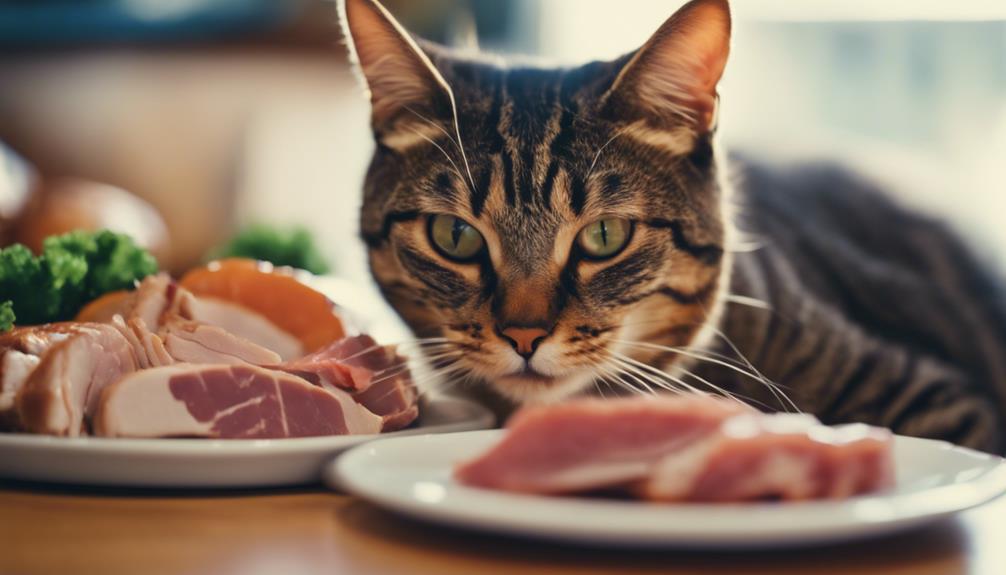
When considering healthier meat options for cats, it is advisable to offer them boiled animal protein without seasoning as a nutritious alternative to pastrami. Small amounts of beef, pork, chicken, fish, and turkey can be suitable options for cats' meat consumption. These whole proteins can serve as great snacks for cats and can even be dehydrated to make homemade treats. It’s important to ensure that the meat is fully cooked to eliminate any potential risks from harmful bacteria. While protein is essential for cats, you may wonder about other human foods, such as, “can cats eat pasta?” Pasta is not toxic to cats, but it lacks the nutritional value they require and should only be offered occasionally, if at all, and without sauces or seasonings that could be harmful.
It is essential to avoid harsh spices and herbs when providing meat to cats, ensuring a balanced and nutritious diet. By offering a variety of meat options without seasonings, cat owners can promote their feline companions' overall well-being and health. Remember, moderation is key when it comes to introducing different types of meat to your cat's diet.
Moderation and Cat Diet
Discussing moderation in a cat's diet highlights the importance of balancing nutrients to guarantee the best feline health. When it comes to feeding your cat, moderation is essential to prevent any adverse effects on their well-being. Here are some key points to ponder:
- Portion Control: Offering small amounts of treats like pastrami ensures that your cat enjoys a variety without compromising their overall nutrition.
- Nutritional Balance: Cats require a diet rich in essential nutrients found in high-quality cat food and meat. Pastrami, although tasty, is not a suitable source of these crucial elements.
- Health Risks: Regular consumption of pastrami can lead to potential health issues due to its high salt content. Moderation is the key to keeping your cat healthy and happy.
Impact of Processed Foods on Cats
Processed foods like pastrami can have detrimental effects on cats due to their high salt content and toxic seasonings like garlic and onion.
Cats, being sensitive to salt, are at risk of salt toxicity from consuming processed meats such as pastrami.
To guarantee their peak health, cats should stick to a meat-based diet free from added seasonings and preservatives commonly found in deli meats like pastrami.
Processed Foods' Effects
High levels of salt and potentially toxic ingredients found in processed meats like pastrami pose significant health risks for cats, given their sensitivity to sodium and certain substances. When considering the effects of processed foods on cats, it is vital to understand the following:
- High Salt Content: Processed meats contain elevated levels of salt, which can lead to issues like dehydration and kidney damage in cats.
- Toxic Ingredients: Ingredients commonly found in processed meats, such as garlic and onion, are toxic to cats and can cause severe health problems.
- Long-term Health Concerns: Regular consumption of processed foods like pastrami can result in various long-term health issues for cats, making it important to prioritize whole, unprocessed meats in their diet for their well-being.
Cats' Nutritional Needs
The impact of processed foods on cats' nutritional needs is significant, especially regarding essential nutrient deficiencies and potential health risks associated with certain ingredients. Processed foods like pastrami lack important nutrients essential for cats, which can lead to deficiencies over time.
The high salt content in processed meats such as pastrami poses a risk of kidney issues and dehydration in cats. Ingredients like garlic, onion, and spices found in pastrami can be toxic to cats, harming their digestive system.
Regular consumption of processed foods can also contribute to obesity and other health problems in cats. As such, opting for a balanced, species-appropriate diet is crucial to promote the overall health and well-being of cats.
Conclusion: Cats and Pastrami Relations
When considering the dietary well-being of cats, it is crucial to recognize the detrimental impact that pastrami can have on their health. Cats should avoid pastrami due to its high salt content and toxic seasonings like garlic, onion, and cloves.
Regular consumption of pastrami can lead to health issues in cats, including salt toxicity and potential carcinogen exposure. Additionally, pastrami offers no nutritional benefit to cats and should be avoided in their diet for long-term health.
Ingredients in pastrami, such as ground black pepper and mustard seeds, can be harmful to cats if consumed regularly. It's best to stick to healthier meat alternatives for cats and avoid deli meats like pastrami to safeguard their well-being.