Can Cats Eat Peaches


Cats should not eat peaches due to cyanide in pits, leaves, and stems causing serious health issues if ingested. Peach poisoning symptoms include breathing difficulties and coma. Avoid pits to prevent choking hazards. Fresh peaches are preferable over canned for cats. Benefits include hydration and essential nutrients. Only offer small, peeled pieces as an occasional treat, monitoring for adverse reactions. Consult a vet before introducing peaches. Safely wash and cut peaches, making sure no potential contaminants. Moderation is key for cat's well-being. Observing closely for any adverse effects is essential. Guarantee your cat's health by following feeding guidelines.
Peach Poisoning in Cats
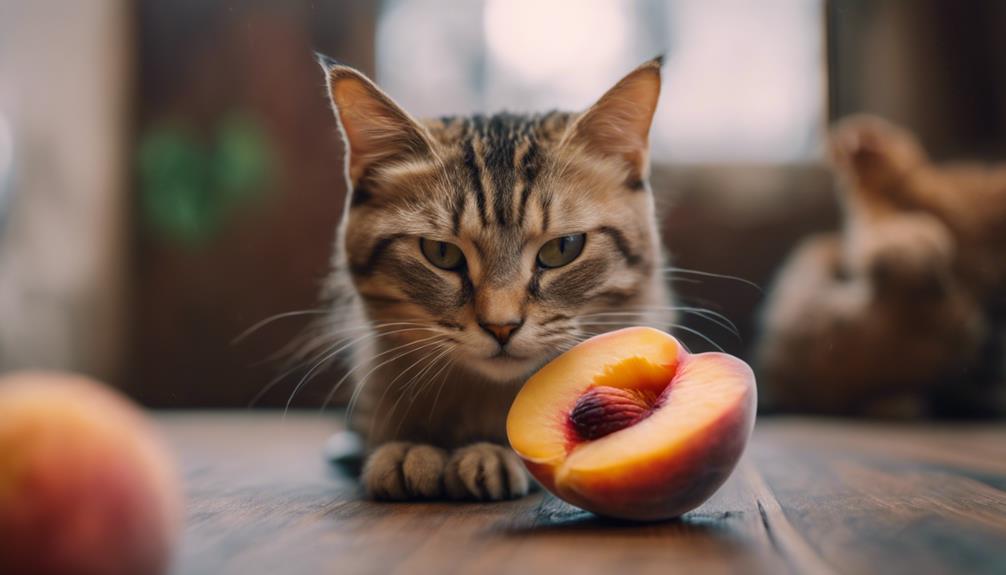
Peach poisoning in cats poses a grave threat due to the toxicity of peach pits, leaves, and stems containing cyanide. While the flesh of peaches is safe for cats to consume, ingestion of the pits can lead to serious health issues.
Symptoms of peach toxicity in cats may include difficulty breathing, dilated pupils, and even coma. In cases of poisoning, inducing vomiting is generally not recommended due to the risk of choking on pit fragments.
Treatment for peach poisoning in cats involves providing supportive care such as oxygen therapy, intravenous fluids, and specific medications. The prognosis for cats affected by peach toxicity is often poor, and surviving cats may require ongoing special diets and medication to manage any lasting effects.
Risks of Peaches for Cats
Cats may face several potential risks when it comes to consuming peaches. The peach pit, containing cyanide, is toxic and poses a danger to cats if ingested. Additionally, the fuzzy skin of peaches can be hard for cats to digest, potentially leading to gastrointestinal problems. Allergies to peaches are also a concern, as they can trigger adverse reactions and health issues in cats.
Introducing peaches too quickly into a cat's diet may result in stomach upset and digestive disturbances. It is recommended to avoid feeding cats canned peaches due to the presence of added sugars and preservatives, which are not suitable for feline consumption. Careful consideration and moderation are essential to make sure that peaches are safe for cats to eat.
Symptoms of Peach Poisoning
Symptoms of peach poisoning in cats can manifest as:
- Loss of appetite
- Vomiting
- Diarrhea
- Drooling
- Lethargy
Additionally, signs like difficulty breathing, dilated pupils, and even coma may indicate peach toxicity. Ingesting peach pits could lead to choking hazards and potential respiratory distress, underscoring the importance of immediate veterinary attention for affected cats.
Peach Poisoning Signs
Exhibiting signs of peach poisoning in felines indicates a potential ingestion of toxic peach components. Symptoms of peach poisoning in cats may include difficulty breathing, dilated pupils, and even coma. Ingested peach pits can also pose a choking hazard to cats.
While the flesh of peaches is not poisonous, it may lead to gastrointestinal issues in cats. The leaves, stems, and pits of peaches contain cyanide, making them toxic to cats. Diagnosis of peach poisoning in cats is typically based on the ingestion history and any toxic exposure to different parts of the peach.
Recognizing these signs promptly is essential for seeking appropriate veterinary care and ensuring the well-being of your feline companion.
Immediate Veterinary Care
Seeking immediate veterinary attention is imperative if a cat displays signs of peach poisoning, as timely intervention is critical in managing potential toxicity. Symptoms of peach poisoning in cats may include difficulty breathing, dilated pupils, and even coma.
To diagnose peach poisoning, veterinarians rely on a history of peach ingestion or exposure to toxic parts. They may conduct blood and urine tests to assess the levels of toxicity.
Treatment for peach poisoning typically involves providing supportive care such as oxygen therapy, intravenous fluids, and medications to alleviate specific symptoms. Acting promptly and seeking professional help can greatly improve the cat's chances of recovery from peach poisoning.
Potential Health Risks
Upon ingestion, peaches can pose significant health risks to cats due to the cyanide content present in various parts of the fruit. Cats can suffer from peach poisoning symptoms such as gastrointestinal upset, difficulty breathing, dilated pupils, and even coma.
The toxic nature of peach leaves, stems, and pits can lead to serious consequences for felines, including potential choking hazards from ingesting the pits. In cases of peach poisoning in cats, inducing vomiting may not be advisable as it could increase the risk of respiratory issues from pit fragments.
Recovery from peach toxicity in cats is often challenging, with the possibility of permanent organ damage and the necessity for ongoing specialized care. Hence, it is important to understand that peaches are toxic to cats and can result in severe digestive issues if ingested.
Benefits of Peaches for Cats
Peaches offer numerous benefits for cats, including hydration, essential nutrients, and digestive support. Due to their high water content, peaches can help keep your cat hydrated, especially if they are not drinking enough water. These fruits are rich in antioxidants, vitamin A, vitamin C, and potassium, which are essential for your cat's overall health.
Additionally, the fiber found in peaches can aid in digestion, promoting a healthy gut. While not a necessary part of a cat's diet, some felines may enjoy the taste and texture of peaches as an occasional treat. When fed in moderation, peaches can add variety to your cat's meals and provide additional nutrients for their well-being.
How Much Peach Can I Give?
When considering incorporating peaches into your cat's diet, it is important to be mindful of the appropriate portion size to guarantee their well-being and health. It is recommended to give cats a teaspoon-size piece of peach flesh as a treat. However, it is essential to limit peach consumption to 1-2 small pieces per week to avoid any potential hazards. Avoid giving cats the pit and skin of the peach to prevent choking or digestive issues. Monitor your cat for any adverse reactions after feeding peaches, such as vomiting or diarrhea. If you have any concerns or questions, it is best to consult with a veterinarian before introducing peaches to your cat's diet to ensure their safety.
| Peach Portion Size | Frequency | Potential Hazards |
|---|---|---|
| Teaspoon-size piece of peach flesh | 1-2 small pieces per week | Avoid pit and skin to prevent choking |
Feeding Your Cat Peaches
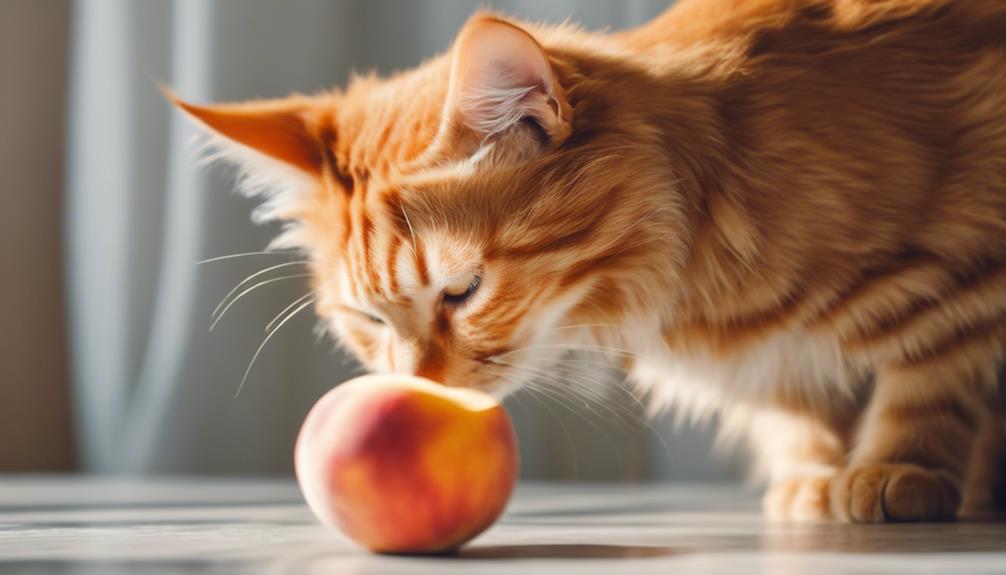
When considering feeding your cat peaches, it is important to follow certain precautions. Make sure that the peaches are washed thoroughly, peeled, and cut into small pieces to prevent any potential harm to your feline friend.
Remember to avoid giving your cat peach pits due to their toxic nature, and opt for fresh peaches as a safer alternative for your pet's health and well-being.
Peachy for Cats
With their high water content, peaches can serve as a hydrating treat for cats when fed in small, peeled pieces. As obligate carnivores, cats have a digestive system that is designed for meat, but they can occasionally enjoy fruits like peaches in moderation.
It is crucial to cut the peaches into small pieces to prevent any choking hazards and remove the skin before offering them to your feline friend. Fresh peaches are preferred over canned ones due to lower sugar content and fewer additives.
Before introducing peaches into your cat's diet, it's always advisable to consult with your vet to make sure they are safe for your cat and won't cause any digestive issues.
Moderation Is Key
Shifting seamlessly from the benefits of feeding peaches to cats, it is important to highlight the significance of moderation when incorporating this fruit into their diet. Cats should only consume small amounts of peach flesh to prevent digestive issues.
Before offering peaches to your cat, it is vital to remove the pit and skin to guarantee safe consumption. Cutting the peach into tiny pieces can help avoid choking hazards and facilitate easier eating for cats.
It is essential to monitor your cat for any signs of allergies or digestive upset after introducing peaches. Consulting a veterinarian before adding peaches to your cat's diet is recommended to receive personalized guidance and advice, ensuring the well-being of your feline friend.
Wash Them Thoroughly
Thorough cleansing is vital to remove any potential contaminants from peaches before offering them as a safe treat for cats. Washing peaches before giving them to your kitty helps eliminate pesticide residues that may linger on the skin. Whether store-bought or home-grown, this practice guarantees the safety of the fruit for your cat.
Preserved Vs. Fresh Peaches
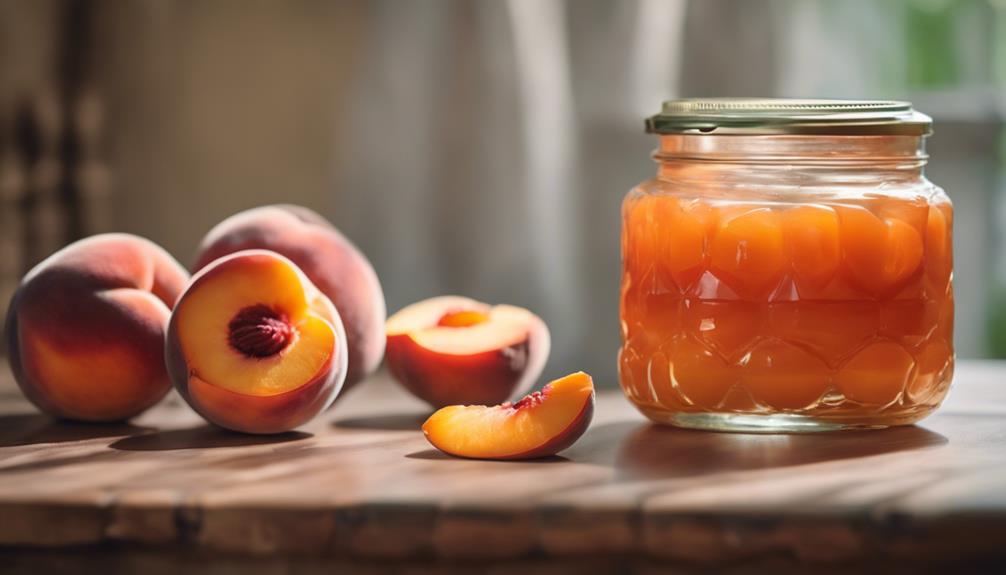
When considering whether cats can eat peaches, it is crucial to distinguish between preserved and fresh peaches to make an informed decision about their suitability for feline consumption. Canned peaches are not recommended for cats due to their high sugar content and potential additives, which may be harmful. Fresh peaches, on the other hand, can be safe for cats in moderation as long as the pit and skin are removed, since they can pose choking hazards or contain trace amounts of harmful compounds. It’s always best to introduce new foods gradually and monitor for any adverse reactions. While exploring whether cats can eat other fruits, a common question arises: can cats digest oranges? The answer is no, as oranges and other citrus fruits are generally toxic to cats due to their essential oils and citric acid content.
Fresh peaches are a better choice as they are free from harmful preservatives that could be detrimental to cats' health. Opting for fresh peaches eliminates the risk of cats consuming potentially harmful additives found in preserved peaches.
Serving small pieces of fresh peaches guarantees the cat's safety while allowing them to enjoy this occasional treat without compromising their health.
Everything in Moderation
To guarantee the well-being of your feline companion, it is important to offer peaches in moderation and monitor their response to this occasional treat closely. Cats should be introduced to new foods cautiously to prevent potential digestive issues.
It is essential to watch for any adverse effects when feeding peaches to your cat, as some felines may be sensitive to this fruit. Feed small amounts of peaches at a time to prevent stomach upset and maintain your cat's health and happiness.
Moderation is key when it comes to treating your cat with peaches, as excessive consumption can lead to various health issues. By monitoring your cat's intake and observing their reactions, you can enjoy sharing this occasional delight with your furry friend responsibly.