Can Cats Eat Pork


Cats can eat pork, but it comes with risks. Pork is high in fat and sodium, which can lead to obesity and health issues in cats. Cooked, boneless, and seasoned-free pork can be given as an occasional treat. Always make sure the pork is thoroughly cooked to eliminate harmful bacteria. Consult a vet before introducing pork to your cat, considering their dietary needs and any health risks. Moderation is key to prevent weight gain and digestive problems. Providing high-quality protein, pork can be a valuable addition to a cat's diet. Understanding the risks and benefits is essential for your cat's well-being.
Risks of Feeding Cats Pork
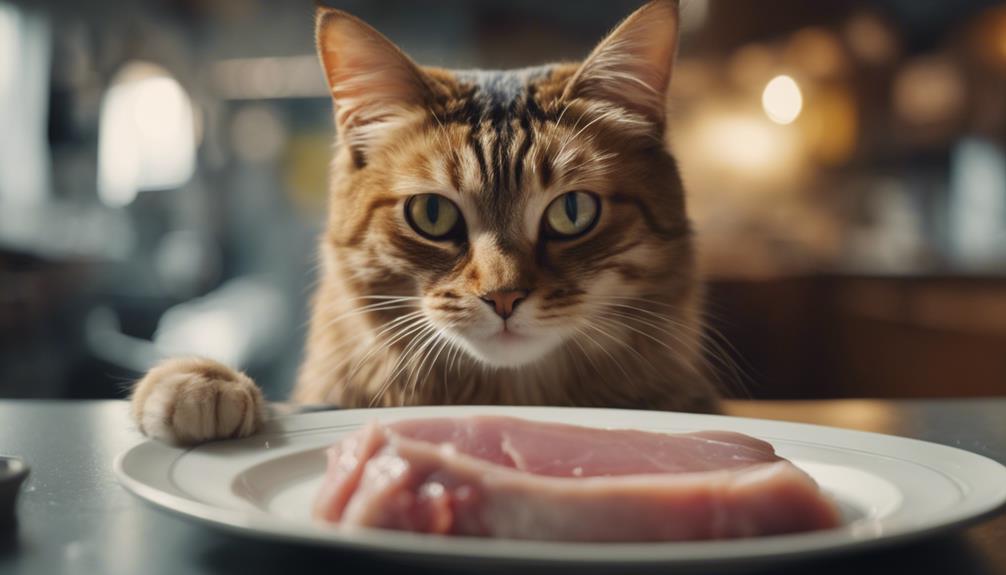
Furthermore, feeding cats pork poses health risks due to its high fat and sodium content, potentially leading to obesity and strain on essential organs. Cats are obligate carnivores, and while they can consume some types of meat, pork is not the ideal choice. The high fat content in pork can contribute to weight gain and obesity in cats, putting them at risk of developing various health issues.
Additionally, the sodium levels in pork are concerning, as excessive consumption can lead to sodium poisoning and cardiovascular problems. Seasoned pork products often contain harmful ingredients like onion and garlic powder, which are toxic to cats. The splintering bones in pork can present a choking hazard for cats, emphasizing the importance of offering pork in moderation and without harmful additives.
Safe Ways to Offer Pork
When considering incorporating pork into your cat's diet, guaranteeing safe ways of offering this meat is paramount to maintaining your cat's health and well-being. To feed pork safely to your feline friend, follow these guidelines:
- Remove bones: Prevent choking hazards by removing all bones from the pork before feeding it to your cat.
- Cut into small pieces: Ensure easy consumption and digestion by cutting the pork into small, digestible pieces.
- Cook thoroughly: Avoid potential digestive issues by cooking the pork thoroughly without any flavorings or seasonings.
- Choose high-quality pork: Opt for fresh, organic, and high-quality pork to provide the best nutritional value for your cat.
Remember to offer pork as an occasional treat in moderation to prevent any potential health problems.
Pork Benefits for Cats
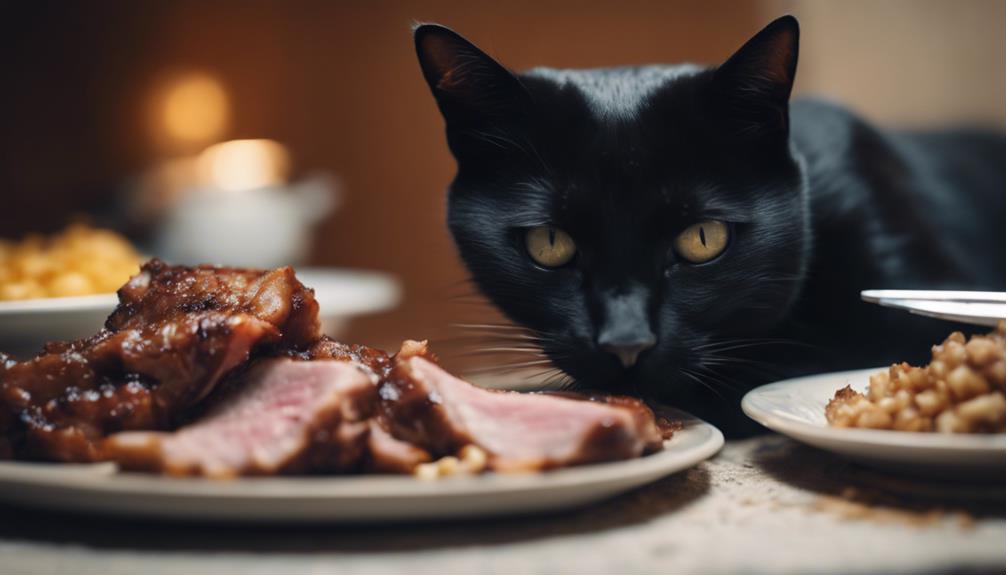
Pork offers cats a valuable source of high-quality protein essential for their muscle growth and repair. This feline-friendly meat contains important vitamins and minerals, such as B vitamins and minerals, that contribute to overall health in cats.
Vitamin B12 found in pork can enhance a cat's nervous system and immune system functions. Additionally, lean cuts of pork are easily digestible for cats and provide an enticing flavor for even the pickiest eaters.
Feeding cooked pork to cats occasionally can add variety to their diet and serve as a high-value reward for positive reinforcement. When considering your pet's food choices, incorporating pork as part of a balanced diet can offer essential nutrients that support your cat's well-being.
Raw Pork Concerns
Feeding cats raw pork raises concerns about potential bacterial contamination and parasites that could harm their health. Cooking pork thoroughly is essential to guarantee the elimination of harmful pathogens before offering it as an occasional treat for cats.
It is advisable to consult with a veterinarian before introducing raw pork into a cat's diet to fully understand and mitigate the associated risks.
Raw Pork Risks
Exposure to raw pork presents significant concerns for cats due to the potential risks of bacterial contamination and parasitic infections. When considering raw pork risks for cats, it's important to understand the following:
- Feeding cats raw pork can lead to bacterial contamination and foodborne illnesses.
- Raw pork may contain parasites like Trichinella spiralis, which can be harmful to cats.
- Cooking pork thoroughly is essential to eliminate bacteria and parasites before offering it to cats.
- Consumption of raw pork by cats can result in digestive issues such as vomiting, diarrhea, and potential long-term health complications. Veterinary guidance is paramount before introducing raw pork into a cat's diet.
Cooking Pork for Cats
In order to safeguard the health and safety of cats, it is essential to thoroughly cook any pork before offering it to them due to the potential risks associated with consuming raw meat. Raw pork poses health risks to cats as it may contain harmful bacteria that can lead to foodborne illnesses. Cooking pork thoroughly eliminates these risks, making it safe for cats to consume.
Ensuring that the pork is properly cooked is vital in maintaining the well-being of cats, without the need for any seasoning that could be harmful to them. It is important to avoid offering raw pork to cats to prevent any potential harm and to promote their safety and health.
Pork as Occasional Treat
Occasionally offering cooked pork to cats can provide a delightful variation in their diet, but caution must be taken to avoid the potential risks associated with feeding them raw pork. To guarantee the safety of your feline friend, consider the following points:
- Cooked pork: Always serve cooked pork to cats as a special treat to eliminate harmful bacteria present in raw meat.
- Harmful bacteria: Raw pork can contain dangerous bacteria that may cause digestive issues or illnesses in cats.
- Pork bones: Avoid giving cats pork bones, as they can splinter and pose a choking hazard.
- Occasional treat: Keep pork as an occasional addition to your cat's diet to prevent any adverse effects on their health.
Cooked Pork Chop Risks
Cooked pork chops present risks to cats, primarily due to the dangers associated with pork bones. Cats face potential hazards like bone splintering and digestive tract damage when consuming cooked pork chops.
Seasonings and other additives in pork chops can also be harmful to cats, making boneless, lean cuts a safer choice for occasional feline treats.
Pork Bones Dangers
When contemplating the risks associated with feeding cats pork bones, it is imperative to understand the potential dangers of cooked pork chop bones.
- Splintering Hazard: Cooked pork bones can splinter, posing a choking risk or causing internal injuries in cats.
- Digestive Tract Damage: The risk of bone fragments in cooked pork chops can lead to severe digestive tract damage in cats.
- Health Hazard: Pork bones are not recommended for cats as they can seriously endanger their health.
- Injury Prevention: Avoid offering cooked pork chops with bones to prevent potential injuries or blockages. Opting for boneless lean cuts of pork is a safer treat option for cats.
Seasonings Harmful to Cats
To safeguard the health of cats, it is important to be cautious of the harmful seasonings that may be present in cooked pork, such as onion and garlic powder. Seasonings like these can have toxic effects on cats when consumed.
It is essential to feed cats only plain, unseasoned pork to avoid any potential health risks associated with seasoned meat. Seasoned pork chops, containing ingredients toxic to cats, should be avoided in their diet to prevent digestive issues and other health problems.
Ensuring that any pork offered to cats is free from seasonings like onion and garlic powder is crucial to protect their well-being. Being mindful of the seasonings used when preparing pork for cats can help maintain their health and prevent any adverse effects.
Suitable Pork Cuts for Cats
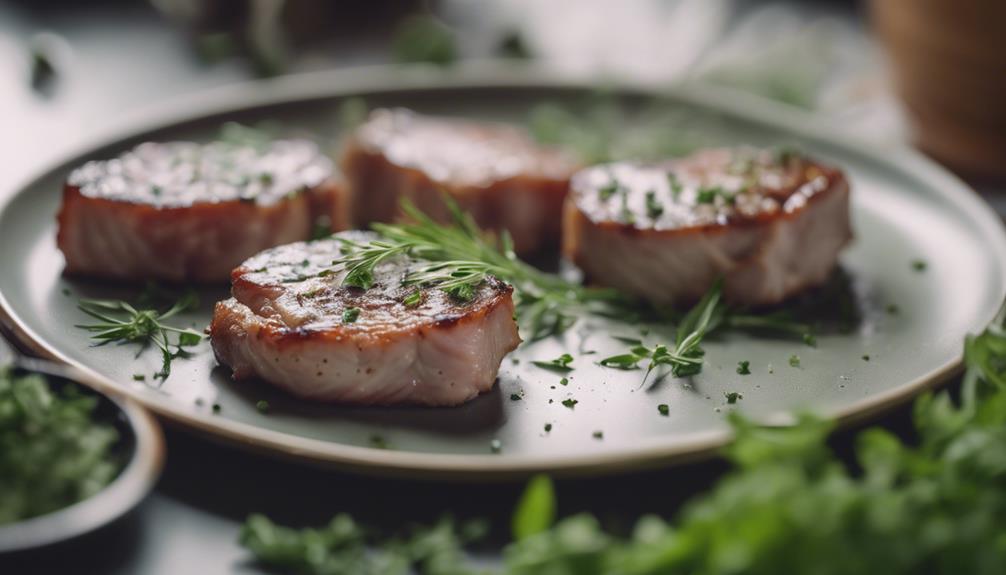
When it comes to choosing suitable pork cuts for cats, lean options such as tenderloin or loin chops are recommended due to their lower fat content, which helps prevent obesity and other health issues. To guarantee your feline friend benefits from pork safely, consider the following tips:
- Opt for Lean Cuts: Choose lean cuts like tenderloin or loin chops to prevent excessive fat intake.
- Avoid Fatty Cuts: Steer clear of fatty cuts such as pork belly or ribs to prevent health issues.
- Select Unseasoned Pork: Provide unseasoned pork to avoid harmful additives and excessive salt.
- Offer Boneless Pork: Opt for boneless pork to reduce choking hazards and digestive issues.
Consult a Vet Before Feeding
Before introducing pork into your cat's diet, it is important to seek guidance from a veterinarian to guarantee the safety and suitability of this protein source for your feline companion. Consulting a vet is necessary for pet care, as they can advise on the appropriate frequency and portion size of pork treats for your cat. They will also help identify any potential health risks or allergies your cat may have to pork, ensuring the well-being of your pet. If pork is not suitable, vets can recommend alternative sources of protein found in commercial cat foods. This step is essential in maintaining a balanced diet for your cat and preventing any adverse effects from feeding pork without professional guidance.
| Importance of Consulting a Vet |
|---|
| Ensures Safety and Suitability of Pork Treats |
| Helps Determine Frequency and Portion Size |
| Identifies Health Risks and Allergies |
| Recommends Alternative Protein Sources |
Is It Safe for Cats to Consume Pork Like Humans?
Many cat owners wonder about the safety of eating cat food as humans. It’s generally safe for cats to consume pork in moderation, as long as it’s cooked and doesn’t contain any seasonings or additives harmful to cats. However, fatty cuts should be avoided to prevent digestive issues. Additionally, it’s important for cat owners to be cautious when introducing new foods into their pet’s diet. For instance, many wonder, can cats safely eat persimmons? While small amounts of ripe persimmons are not toxic to cats, consuming too much fruit can upset their stomachs due to the sugar content, and the seeds should always be removed to avoid potential choking hazards. Always consult a veterinarian before offering your cat any unfamiliar food.
Moderation and Cat Safety
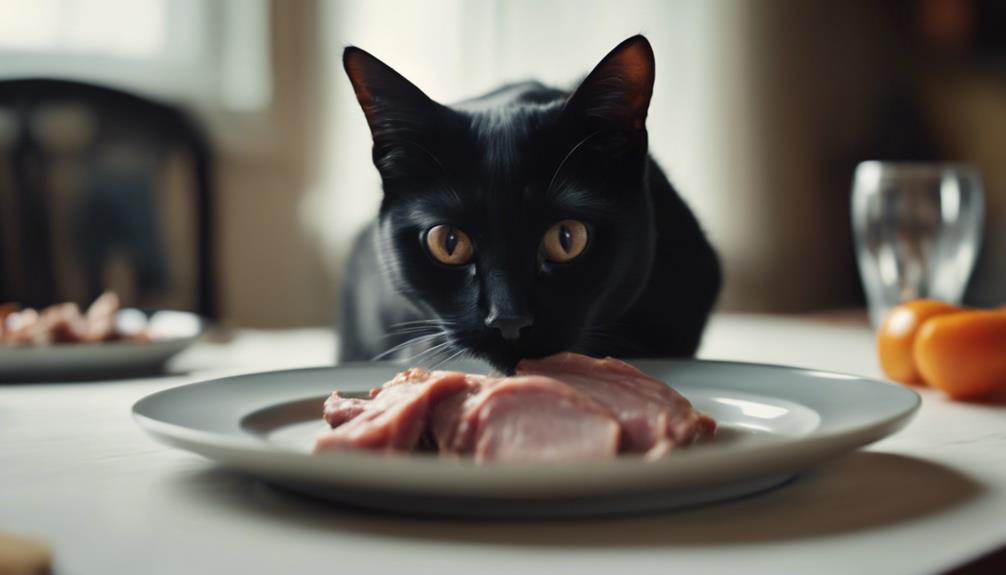
Before incorporating pork into your cat's diet, it is imperative to understand the importance of moderation and cat safety considerations. Here are four key points to keep in mind when feeding your feline friend pork:
- Obligate carnivores: Cats are obligate carnivores, which means their diet should primarily consist of animal-based proteins.
- Harmful to your cat: Feeding high amounts of pork to your cat can be harmful, leading to weight gain and potentially impacting their digestive tract.
- Safe for cats: While pork can provide cats with the protein they need, it should be offered in moderation as an occasional treat.
- Weight gain: Excessive consumption of pork can contribute to weight gain, which may lead to various health issues in cats.