Can Cats Recognize Faces


Cats can recognize faces by using visual, olfactory, and behavioral cues. They distinguish familiar faces through behaviors like purring, rubbing, or following, while displaying fear towards unfamiliar ones. Memory, facial features, and emotions help in this recognition process. Cats prioritize scent and body language over visual cues. They form strong bonds through facial recognition, favoring consistent care providers. Cats remember faces for up to ten years, showing different behaviors towards familiar individuals. Understanding these cues can enhance interactions with felines and deepen the bond. Further insights into cats' facial recognition abilities offer a fascinating look into their perceptiveness.
Cats' Facial Recognition Abilities
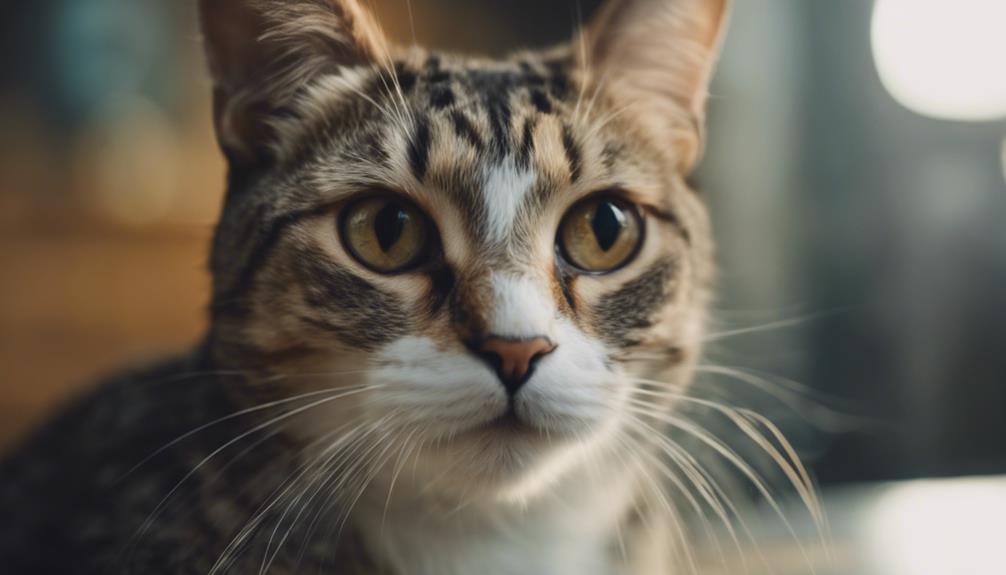
Cats exhibit remarkable facial recognition abilities, allowing them to distinguish familiar faces from unfamiliar ones through visual and behavioral cues. Research indicates that cats can recognize human faces, particularly their owners, through a learned process of association. When encountering familiar faces, cats display distinct behaviors such as purring, rubbing against their owners, or even following them around.
In contrast, when faced with unfamiliar faces, cats may exhibit signs of fear or avoidance. Besides facial features, cats also rely on scent and body language to identify individuals, highlighting the complexity of their recognition process.
This ability to recognize faces not only showcases cats' cognitive skills but also contributes significantly to the strong bond they form with their human companions.
Visual Cues in Face Recognition
When considering visual cues in face recognition for cats, it is essential to understand the importance of:
- Facial features
- Memory
- Association
- Emotional recognition
Cats may not focus solely on individual facial components but rather on the overall appearance of a familiar face. By prioritizing familiarity, consistency, and behavioral interactions, cats use a combination of senses to identify and recognize faces, including those of their owners.
Facial Features Importance
In the domain of feline recognition, the significance of facial features in identifying individuals takes a secondary role to other sensory cues such as scent, body language, and sounds. Cats prioritize these cues over facial expressions when recognizing others.
While facial features play a role, cats rely more on a combination of various senses rather than solely on visual cues. It's important to understand that cats may not focus on isolated faces for recognition but consider a broader range of cues for identification.
This suggests that facial recognition is not the primary method of identification for cats; instead, they rely on a mix of sensory information to distinguish individuals, highlighting the complexity of their recognition processes.
Memory and Association
Facial recognition in cats involves a complex interplay of memory and association, particularly emphasizing the importance of visual cues in distinguishing individuals. Cats can remember and associate faces with specific individuals, relying on visual cues like facial features, expressions, and movements. Their ability to recognize faces is tied to their memory and associative learning skills. Cats may develop strong connections with familiar faces, such as their owners, utilizing their familiarity with facial features to differentiate between known and unknown individuals. Below is a table summarizing key points related to cats recognizing faces:
| Key Points | Details | Importance |
|---|---|---|
| Memory and Association | Cats remember faces and associate them with individuals | Vital for recognizing familiar faces |
| Visual Cues | Cats rely on facial features, expressions, and movements | Essential for distinguishing individuals |
| Associative Learning Skills | Cats' ability to recognize faces is linked to their memory | Facilitates differentiation between known and unknown faces |
Emotional Recognition
How do emotional connections influence a cat's recognition of familiar faces based on visual cues?
Emotional recognition is an essential aspect of how cats perceive and differentiate faces. Cats can associate familiar faces with positive emotions like comfort and security. The emotional context of a face greatly impacts how cats interact with individuals, as facial expressions and emotional responses play a significant role in their recognition process.
For cats, recognizing a familiar face goes beyond just visual cues; it involves a deep emotional connection that influences their behavior and responses towards specific individuals. Understanding the role of emotional recognition in cat face recognition sheds light on the complex interplay between visual cues and emotional associations in their social interactions.
Olfactory Recognition in Cats
Through their keen sense of smell, cats rely on olfactory recognition to distinguish between individuals. Cats deposit their scent on objects and humans as a way of identification, utilizing olfactory cues to differentiate between familiar and unfamiliar individuals.
Olfactory recognition is a fundamental aspect of feline social interactions, allowing cats to establish territory, express familiarity, and communicate with other cats. By detecting subtle changes in scent, cats can recognize known individuals and determine their relationship with them.
This olfactory communication system is intricate and essential in the lives of cats, shaping their social behavior and interactions with others. Understanding the significance of olfactory recognition provides insight into how cats navigate their environment and form relationships based on scent cues.
Vocal Recognition by Cats
Cats demonstrate a significant ability to recognize voices based on vocal cues, exhibiting signs of familiarity and acknowledgment when exposed to specific sounds. They can efficiently identify their owners' voices and display recognition by responding to their names being called.
Vocal recognition plays a vital role in how cats perceive and distinguish individuals, with studies showing that cats rely more on voices than faces for identification purposes. This ability highlights the importance of auditory cues in a cat's cognitive processes.
Patterns in Face Recognition
Patterns in face recognition refer to the specific features or arrangements that cats use to distinguish one face from another.
Cats may rely on factors like the shape of the eyes, the arrangement of facial markings, or the contours of the face to identify individuals.
Understanding how cats perceive and categorize faces based on these patterns can provide valuable insights into their cognitive abilities and social interactions.
Facial Feature Recognition
Facial feature recognition plays a crucial role in cats' ability to distinguish between familiar and unfamiliar faces. Cats can recognize human faces through learned associations and visual cues, allowing them to differentiate between individuals based on specific patterns.
Research shows that cats can pick out their owners' faces from a lineup of similar-looking individuals, indicating a level of facial recognition similar to that of other animals. Behavioral changes and responses in cats are often influenced by the facial expressions they recognize, highlighting the importance of facial feature recognition in their interactions.
This ability is part of a broader recognition process that involves integrating visual cues with other sensory information, enhancing cats' overall perception of familiar and unfamiliar faces.
Familiarity With Faces
In the domain of recognizing faces, familiarity plays a significant role in how cats distinguish individuals. When it comes to familiarity with faces, cats can recognize their owners through specific patterns and visual cues. This recognition is not just limited to distinguishing between different faces but also extends to forming bonds.
Here are some key points regarding how cats perceive familiar faces:
- Cats can recognize their owner's face from others based on visual cues.
- They rely on patterns and memory to distinguish familiar faces.
- Facial recognition helps cats bond with their owners, leading to preferences and displays of affection.
Bonding Through Face Recognition
Through the intricate process of facial recognition, cats form strong bonds with their owners based on visual cues and familiarity. Cats can distinguish between different faces, including their owners, through visual memory.
When interacting with familiar faces, cats show behavioral differences compared to unfamiliar ones, indicating the importance of facial recognition in their overall recognition process. This ability to recognize owners' faces plays a significant role in strengthening the bond between cats and their owners.
Human Vs. Cat Face Recognition
When comparing human and cat face recognition abilities, it is crucial to recognize that humans rely heavily on facial features such as eyes, nose, and mouth for identification.
In contrast, cats prioritize other sensory cues like scent and body language when recognizing individuals.
Understanding these differences can shed light on how cats perceive and interact with the world around them.
Cat Facial Recognition
Facial recognition in cats differs between human and cat faces, highlighting their ability to distinguish between familiar individuals based on visual, scent, and behavioral cues. When it comes to cat facial recognition, they primarily rely on scent and body language cues for identification, but they also possess the visual acuity to recognize faces.
Here are a few key points to contemplate regarding cat facial recognition:
- Cats perceive their owner's face through a combination of visual, scent, and behavioral cues.
- They can differentiate between familiar and unfamiliar faces, with a particular ability to distinguish their owner's face.
- Cats showcase signs of recognition towards their owner's face, displaying different behaviors based on familiarity.
Human Face Perception
Human facial recognition differs greatly from cat face recognition due to the emphasis on visual cues in humans compared to the reliance on scent, body language, and sounds in cats for identifying individuals. While humans primarily use visual stimuli to recognize individuals, cats employ a combination of scent, body language, and sounds.
For humans, the face is a central aspect of recognition, with specific features like eyes, nose, and mouth playing key roles. In contrast, cats prioritize olfactory cues to identify individuals, relying on the unique scents associated with each person. This distinction showcases how human faces hold significance in facial recognition processes, whereas cats utilize a broader spectrum of sensory information beyond just the visual aspects when identifying familiar individuals.
Smiling and Cats' Perception

Cats' interpretation of facial expressions, such as smiling, varies greatly from human understanding. When it comes to perceiving smiles, cats have a different perspective than humans. Here are some key points to bear in mind: Cats rely more on body language, vocalizations, and scent rather than facial expressions to communicate their emotions. While humans associate smiling with happiness, a cat’s subtle gestures, such as slow blinking or relaxed posture, might serve as their equivalent. This often leads to the curious question, can cats actually smile, and the answer depends on how one defines a smile in the feline context.
- Limited Association: Cats do not necessarily link a smile with positive emotions or recognition like humans do.
- Body Language and Scent: Cats rely more on body language, scent, and vocal cues for recognition rather than facial expressions.
- Possible Misinterpretation: A cat may perceive a smile as a baring of teeth, which in their language can be a sign of aggression or fear.
Understanding these differences can help improve communication and interactions between cats and their human companions.
Cat's Attachment to Owners
The important bonds that cats form with their owners are rooted in daily interactions and consistent care, leading to a deep sense of attachment. Cats recognize their owners through familiar faces and positive associations, showing preferences for those who provide primary care. This recognition is evident when cats approach, rub against, or purr around their owners, displaying signs of attachment.
The ability of cats to remember faces contributes greatly to their bond with their human companions, fostering a sense of security and trust. By forming these strong attachments, cats demonstrate their social nature and dependence on reliable and caring relationships with their owners. Owners play a vital role in nurturing these bonds through regular interaction and affection, strengthening the connection between feline pets and their human counterparts.
Can Cats’ Ability to Understand Humans be Linked to their Ability to Recognize Faces?
Many studies have shown that cats have a unique ability to understand humans. This may be linked to their strong ability to recognize faces, as evidenced by their response to their owners’ facial expressions and body language. Overall, it is clear that can cats understand humans on a deeper level than previously thought.
Duration of Cat's Face Memory

Approximately ten years is the estimated duration for which cats can retain memory of familiar faces, according to research findings on feline cognition. Cats have short-term memory spans, typically ranging from 16 hours to a few days.
When it comes to recognizing their owners, studies suggest that cats can remember familiar faces for up to a decade. Cats may recognize their owners' faces based on daily interactions and routines, showing the depth of their memory capacity.
This ability to recognize faces may vary depending on the bond and socialization cats have with humans. Their recognition of familiar faces may lead to different behaviors or responses, showcasing the significance of facial memory in cats' interactions with their owners.