Can Cats See Fire


Cats can see fire differently from humans due to their unique visual abilities. Their specialized ocular anatomy and enhanced night vision allow them to detect the brightness, movement, and flickering flames. Cats are attracted to the warmth and light of fires, showing increased alertness and potential attempts to escape when faced with fire. Their keen perception of light sources and ability to distinguish different hues contribute to their distinct visual perspective on fire. This intriguing interaction with flames showcases cats' vigilance and curiosity towards potential threats, making their behavior around fire a fascinating subject to explore further.
Feline Vision Abilities Explained

Feline visual acuity, shaped by specialized cellular structures and adaptations, plays a pivotal role in cats' ability to navigate and interpret their surroundings.
Cats possess specialized cells known as rods that grant them exceptional night vision, enabling them to see in low-light conditions. The tapetum lucidum, a reflective layer in their eyes, further enhances their vision at night by reflecting light. This unique visual ability allows cats to detect subtle movements and changes in light associated with fire.
While cats may perceive fire as shades of blue or green due to their color vision, they are more attuned to the brightness and flickering nature of flames. Their keen visual senses enable them to swiftly notice and react to visual cues in their environment.
Understanding Cats' Perception of Fire
Cats possess a unique visual sensitivity that allows them to perceive flames differently from humans. Their attraction to the brightness and movement of fire influences their behavior around flames.
Understanding how cats perceive fire can help pet owners create safe environments and prevent potential dangers related to fire exposure.
Cat's Visual Sensitivity
With their exceptional visual acuity, felines possess a heightened sensitivity to perceive the brightness and flickering of fire. Cats can detect movements and changes in light related to fire, showcasing their heightened visual sensitivity. While cats may not see fire colors vividly, they are adept at noticing the presence of fire in their surroundings. Cats remain vigilant and observant near fires, reacting to unusual sounds and visual cues. The table below highlights key aspects of cats' visual sensitivity in relation to fire:
| Aspect | Description |
|---|---|
| Detection of movements | Cats can detect subtle movements associated with fire, enhancing their alertness. |
| Perception of changes in light | Cats are sensitive to variations in light caused by flames, allowing them to notice the presence of fire. |
| Response to flickering | Cats react to the flickering of fire, which can capture their attention and curiosity. |
| Heightened visual sensitivity | Cats' visual acuity enables them to perceive the brightness of fire more vividly than humans. |
Behavior Around Flames
The behavior of domestic felines around flames reveals their instinctual response to the presence of fire and their keen awareness of potential dangers in their environment. Cats are attracted to the brightness and flickering of fire, which may catch their attention due to changes in light and movement.
While cats may not perceive fire colors vividly, they remain vigilant and observant, showing a subtle change in behavior when they detect signs of danger. Cats do not directly sense fire but may react to unusual sounds or visual cues associated with flames.
Their behavior around fire reflects their innate curiosity and awareness of their surroundings, showcasing a delicate balance between fascination and caution.
The Science Behind Cats' Vision
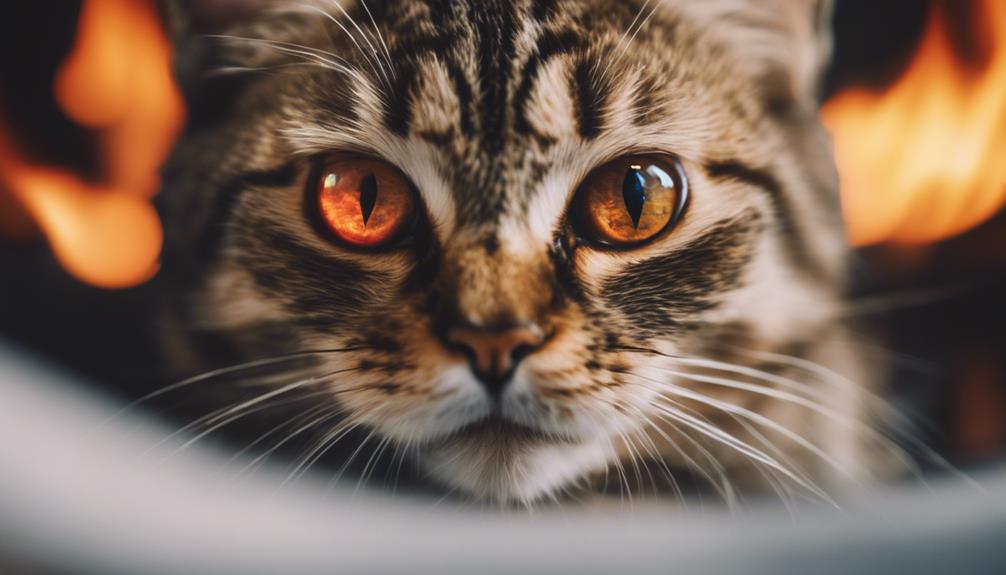
Utilizing their specialized ocular anatomy, felines possess a remarkable ability to perceive visual stimuli, particularly in low-light conditions. This capability stems from their enhanced night vision, thanks to a higher concentration of rod cells in their eyes.
Additionally, the tapetum lucidum, a reflective layer behind the retina, improves light sensitivity, allowing cats to see clearly in the dark. Their color vision, although not as vivid as humans, enables them to distinguish different hues, possibly perceiving fire as shades of blue or green.
This heightened visual perception also allows cats to detect the brightness and movement of flames. As a result, cats can react to the visual cues of fire, showcasing their unique visual prowess in various lighting conditions.
Cats' Unique Visual Sensitivity to Fire
Cats possess a remarkable ability to detect the brightness and movement associated with fire due to their unique visual sensitivity. Their vision allows them to perceive the flickering of flames and changes in light, enabling them to react to fire-related elements.
While cats may not see fire in the same colors as humans, their visual system equips them to be attracted to the warmth and light of fires.
Cats and Fire Detection
Exceptional visual sensitivity allows cats to detect subtle movements and flickering flames associated with fire. Cats' eyes, with their specialized structure including the tapetum lucidum, enhance their ability to see changes in light, making them adept at perceiving fire-related movements.
Despite their limited color vision, particularly in the red spectrum, cats are attracted to the brightness and flickering nature of fire. This sensitivity to light sources like flames enables cats to notice variations in their environment that may indicate the presence of fire.
Their unique visual acuity equips them to pick up on visual cues linked to fire hazards, showcasing their remarkable ability to detect potential dangers through their keen perception of light and movement.
- Cats' specialized visual structure enhances their ability to perceive fire-related movements.
- The tapetum lucidum plays a vital role in cats' visual sensitivity to changes in light associated with fire.
- Cats are attracted to the brightness and flickering of fire, highlighting their keen perception of light sources.
Cats' Reaction to Flames
With their acute visual senses finely tuned to detect movements and changes in light, cats exhibit a distinctive responsiveness to the brightness and flickering characteristics of flames, showcasing their unique visual sensitivity to fire. Cats possess superior night vision, allowing them to detect movement and changes in light effectively. While cats may not perceive the color of fire as vividly as humans do, their visual acuity enables them to react to the presence of flames. This heightened sensitivity to brightness and flickering can trigger subtle changes in their behavior when they sense potential danger associated with fire. Cats' eyes are specifically designed to excel in detecting movements and variations in light, making them particularly attuned to recognizing the presence of fire.
| Cats' Reaction to Flames | |
|---|---|
| Superior Night Vision | Detect Movement |
| Color Perception | Cats' Vision |
| Visual Acuity |
How Cats React to Fire
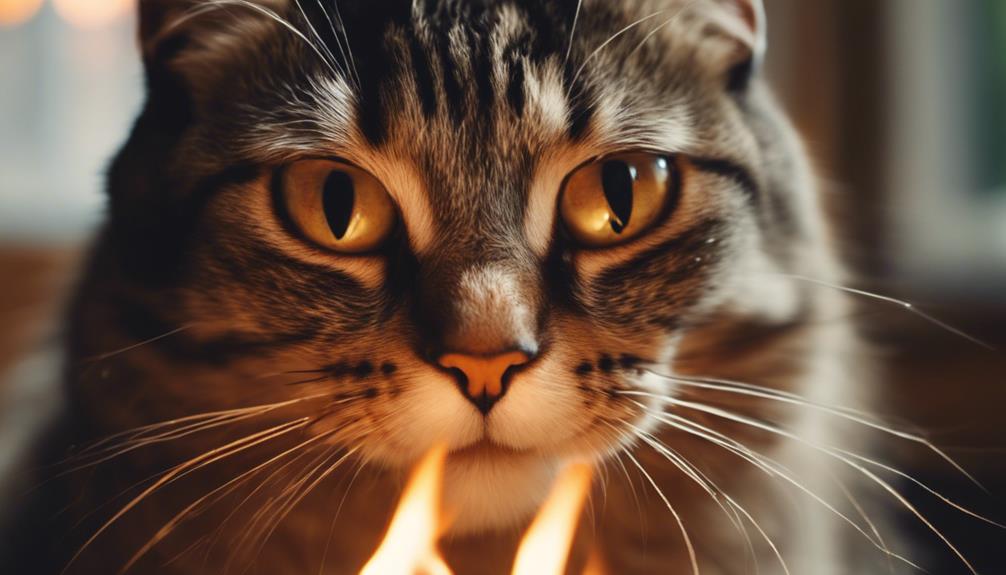
When encountering fire, felines instinctively exhibit heightened vigilance and subtle behavioral shifts. Cats' reactions to fire are primarily based on their perception of the danger it presents.
Here are three ways cats typically react to fire:
- Increased Alertness: Cats become more alert and attentive when they sense the presence of fire, as they instinctively recognize it as a potential threat to their safety.
- Behavioral Changes: Cats may display subtle changes in their behavior, such as pacing, hiding, or vocalizing, in response to the perceived danger of fire.
- Escape Responses: When faced with fire, cats may attempt to flee the area to protect themselves from harm, showcasing their natural survival instincts.
Insights Into Cats' Vision of Flames
Cats perceive flames as a mesmerizing interplay of colors, revealing their unique visual perspective on fire. Feline vision allows them to see the flickering flames and changes in light associated with fire. Due to their distinct color vision, cats may not perceive fire in the same colors as humans. Their heightened visual prowess enables them to detect fire-related movements and variations in their surroundings. Cats are attracted to the brightness and flickering of fire, but their perception of fire colors differs from that of humans. This unique perception of flames showcases how cats interact with and view fire in a way that highlights their individual color vision and appreciation for the dynamic nature of flickering flames.
| Insights Into Cats' Vision of Flames | |
|---|---|
| Color Vision | Cats perceive fire colors uniquely |
| Flickering Flames | They are attracted to the flickering of flames |
| Unique Perception | Cats have a distinct visual perspective on fire |
| Fire-related Movements | They can detect movements associated with fire |
Exploring Cats' Fascination With Fire
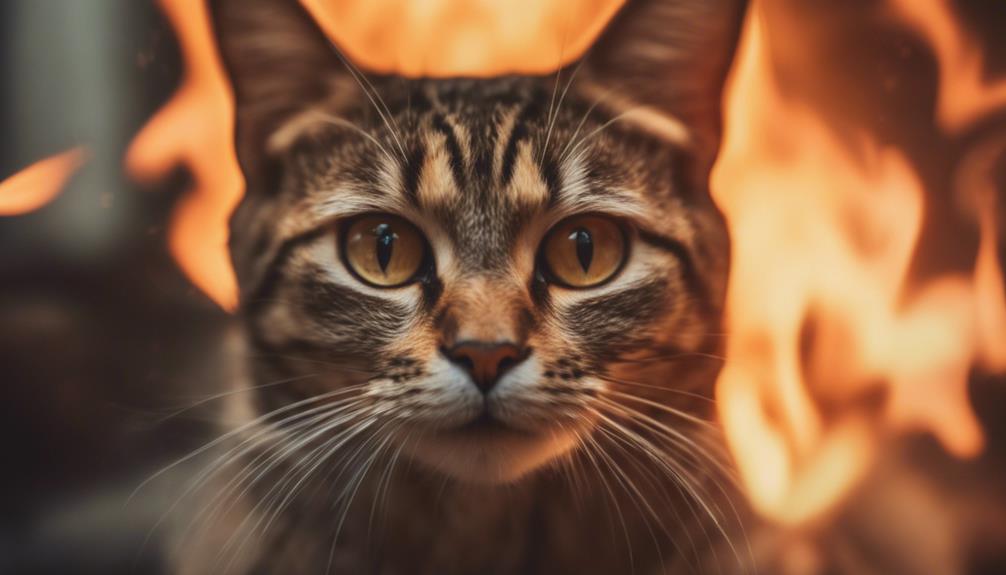
Exploring the allure of flames for felines reveals a mesmerizing facet of their visual and behavioral engagement with fire. Cats are inherently drawn to the brightness and flickering of fire, which captures their attention due to the changes in light and movement associated with it. While cats may not perceive the colors of fire vividly, they react to unusual sounds or behaviors related to it, showcasing their vigilant nature. Despite their fascination, cats may not fully comprehend the danger of fire, but their behavior subtly changes when they detect signs of danger, including fire. This complex mix of attraction and wariness towards fire highlights the intriguing yet potentially risky relationship between cats and flames.
- Cats are attracted to the brightness and flickering of fire.
- Cats react to changes in light and movement associated with fire.
- Cats may not fully comprehend the danger of fire but exhibit vigilant behavior towards it.
Can Cats Detect Fire's Heat?
With their heat-sensitive whiskers and skin receptors, cats possess the ability to detect the warmth emanating from fire. Cats' whiskers are not only used for navigation but also act as heat sensors, helping them sense temperature changes, including those from fires. When near a fire, cats may feel the heat radiating from it and adjust their behavior accordingly to avoid getting too close.
This thermal sensitivity in cats enables them to perceive the heat from a fire, allowing them to react in ways that help them steer clear of potential dangers. By detecting the heat from fires, cats can better protect themselves and stay safe in their environment.
Do Cats’ Ability to See Infrared Lights Affect Their Vision of Fire?
Yes, cats can see infrared lights, but it does not significantly affect their vision of fire. Cats’ ability to see infrared lights allows them to detect body heat in the dark, but they rely more on their other senses like smell and hearing to perceive fires.
Cat Behavior Around Fire
Around fire, felines exhibit a heightened sense of curiosity and vigilance, responding to the brightness and movement it emits. When cats encounter fire, they display specific behaviors:
- Captivation by Brightness: Cats are attracted to the flickering and brightness of fire, which can mesmerize them.
- Noticing Changes in Light: While cats may not perceive fire colors vividly, they can detect alterations in light patterns caused by flames.
- Reacting to Unusual Sounds: Cats may not directly sense fire but can react to atypical sounds associated with it. Their behavior changes subtly when detecting potential danger from fire-related cues.
Cats remain watchful and observant in the presence of fire, showcasing their instinctual responses to potential threats.