Can My Cat Wear A Harness All The Time


While harnesses can be useful, it's best not to have your cat wear one all the time. Prolonged use may lead to tangling, discomfort, and even stress. Be sure the harness fits well and supervise outdoor adventures. Regularly check for slipping or snugness to prevent accidents. Keep an eye on your cat's behavior for signs of distress. Breaks from the harness are important to prevent issues like skin irritation and grooming difficulties. For more insights on balancing safety and comfort for your feline friend, stay informed on best practices for your pet's well-being.
Risks of Prolonged Harness Wear
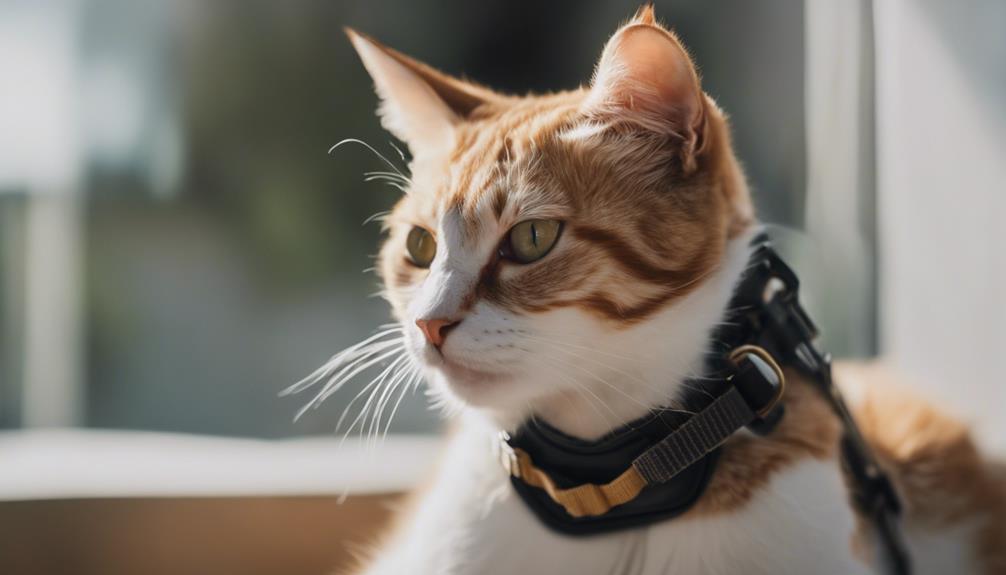
Prolonged harness wear for cats can pose various risks that encompass safety concerns, discomfort issues, and potential behavioral consequences. Safety risks include potential tangling leading to injury and poor fit cutting off blood supply. Discomfort may arise from the harness rubbing against the cat's skin, material allergies, and skin irritation. Additionally, prolonged use of a harness can lead to stress, anxiety, and negative behaviors in cats.
Grooming may also be limited, resulting in matted fur and hygiene issues. To mitigate these risks, it is important to choose the correct harness for your cat, introduce it slowly to allow them to adjust, and monitor them closely while wearing it. These steps can help ensure the cat's well-being and comfort while wearing a harness.
Safety Tips for Cat Harnesses
When it comes to ensuring the safety of your feline friend while wearing a harness, two critical points stand out:
Proper fit is essential and outdoor adventures should be supervised.
A well-fitted harness prevents slipping out and discomfort, while supervision outdoors reduces risks of entanglement or other dangers.
These safety tips are foundational to keeping your cat secure and comfortable during harness use.
Proper Fit Is Essential
Ensuring a proper fit for your cat's harness is crucial to guaranteeing their safety and comfort during outdoor adventures. A harness that fits well should be snug but not tight, reducing the risk of escape, injury, or discomfort for your feline companion.
To determine the right size harness, measure your cat's chest girth accurately. It's vital to choose a harness specifically designed for cats, as dog harnesses may not provide the necessary security.
A correctly fitting harness enhances comfort and minimizes potential tangling hazards. By prioritizing the proper fit of your cat's harness, you can help them stay safe and happy during their outdoor explorations.
Supervise Outdoor Adventures
An essential aspect of guaranteeing the safety of your cat during outdoor adventures while wearing a harness is to always provide supervision. When supervising your cat's outdoor excursions, consider the following safety tips:
- Regularly check the harness: Make sure it is secure and won't easily come off during activities.
- Be cautious with leash attachment: Avoid sudden movements that may startle your cat.
- Stay vigilant during training: Monitor closely to guarantee their safety and comfort.
- Prioritize correct fit: Confirm the harness fits well and doesn't cause discomfort.
- Monitor for comfort: Watch for any signs of distress or unease in your cat during outdoor activities.
Harness Fit and Comfort Check
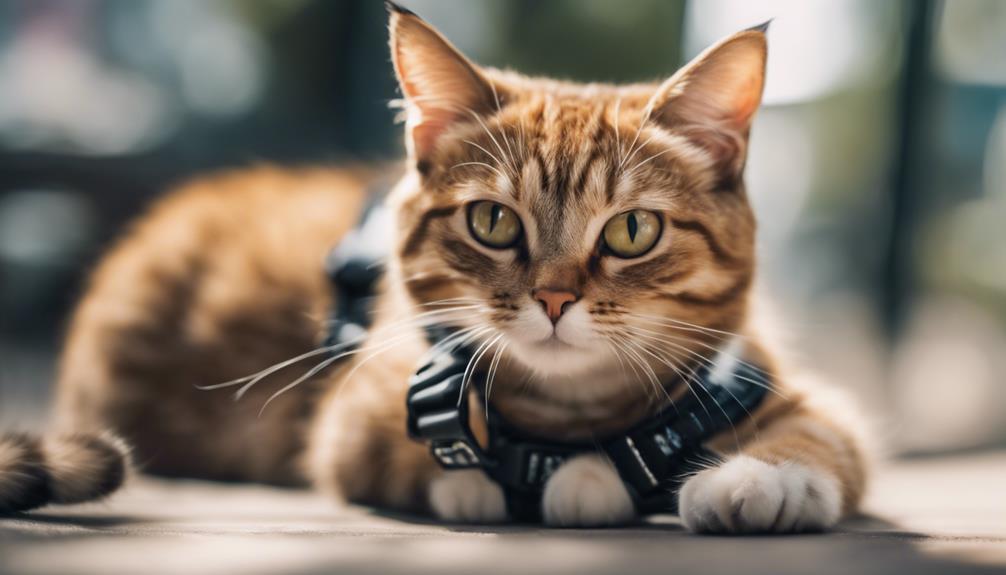
Ensuring a proper fit and comfort level for your cat's harness is vital for their well-being and enjoyment during wear. A well-fitted harness should be snug but not too tight, preventing discomfort for your feline friend.
It is essential to check that the fastening points of the harness meet appropriately to maintain comfort during wear. If your cat shows signs of discomfort or irritation, adjust the harness immediately.
Ending each harness session on a positive note can help reinforce comfort and progress. Regularly monitoring your cat's reaction to the harness is important to guarantee ongoing comfort and fit.
Monitoring Cat Behavior With Harness
How can pet owners effectively monitor their cat’s behavior while wearing a harness to guarantee their comfort and safety? Here are some essential tips to help safeguard your cat’s well-being and comfort: First, it’s important to introduce the harness to your cat gradually, allowing them to become familiar with it before trying to take them for a walk. This might involve letting them sniff and inspect the harness before putting it on, and then wearing it around the house for short periods of time. This will help your cat to become more comfortable with the harness and reduce their anxiety about wearing it. Additionally, it’s crucial to pay attention to your cat’s body language while wearing the harness, as this can indicate whether they are feeling stressed or uncomfortable. For example, watch for signs such as flattened ears, tense body posture, or attempts to remove the harness with their paws. Lastly, be mindful of my cat’s ability to sense nudity so that I can choose appropriate locations for outdoor activities.
- Monitor cat for signs of distress or discomfort while wearing the harness.
- Watch for any attempts to escape or chew on the harness.
- Note any changes in behavior like excessive grooming or aggression.
- Ensure the harness is properly fitted and secure on the cat.
- Supervise closely to prevent accidents or tangling while the cat is harnessed.
Avoiding Skin Irritation With Harness
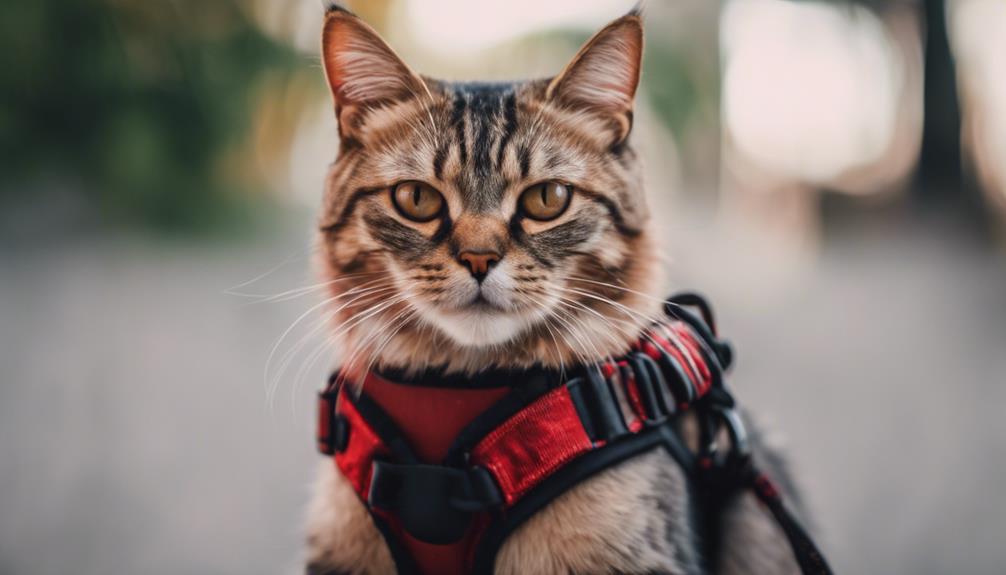
To guarantee your cat's comfort and well-being while wearing a harness, selecting a harness made of soft, breathable material is essential in reducing the risk of skin irritation. Regularly checking for signs of redness, chafing, or hair loss under the harness, making sure the harness fits properly to prevent unnecessary rubbing, and cleaning it regularly to prevent dirt and bacteria buildup are critical steps in avoiding skin irritation. Monitoring your cat's skin closely is important, and if any skin issues develop, seeking veterinary advice promptly is recommended. Below is a table outlining additional tips to help prevent skin irritation when using a harness:
| Prevention Tips | Description | Importance |
|---|---|---|
| Choose a soft, breathable harness | Opt for a harness made of materials that are gentle on your cat's skin and allow for airflow. | Reduces risk of skin irritation. |
| Check for proper fit | Ensure the harness is snug but not too tight to avoid rubbing and discomfort. | Prevents chafing and skin damage. |
| Clean the harness regularly | Regular cleaning helps prevent dirt and bacteria buildup that can lead to skin irritation. | Maintains skin health and hygiene. |
Importance of Supervision With Harness
Supervising your cat while wearing a harness is vital for guaranteeing their safety and well-being during outdoor excursions. Proper supervision ensures that the harness fits correctly, preventing discomfort and potential injuries. Here are some key reasons why supervision is essential:
- Prevents tangling and injuries from unsupervised harness use.
- Reduces the risk of escape attempts that could harm the cat.
- Helps monitor stress, anxiety, and negative behaviors.
- Ensures the cat's safety and comfort are prioritized.
- Enhances the overall harness experience by maintaining constant supervision.
Impact on Cat's Freedom and Movement
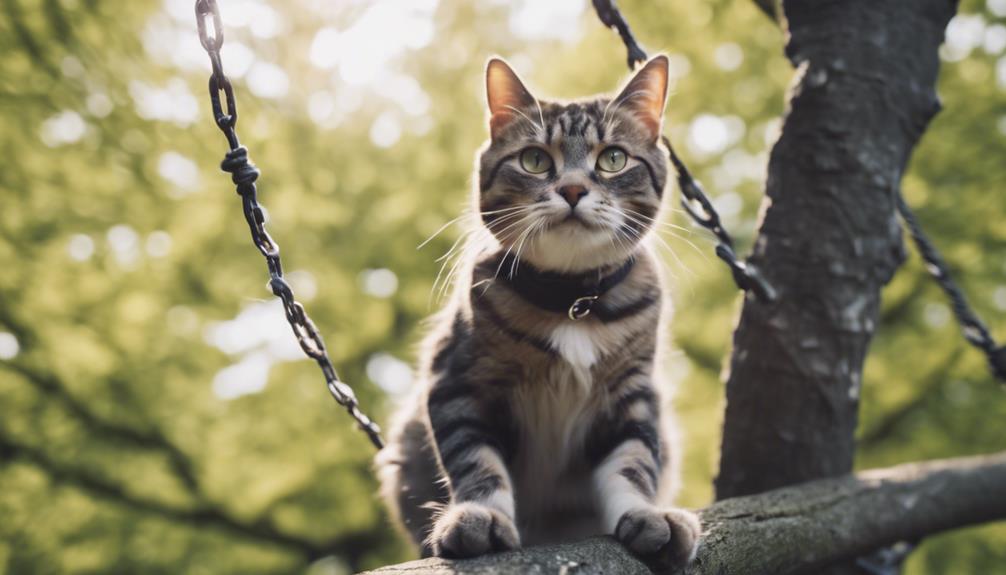
When contemplating the impact of a harness on a cat's freedom and movement, it's important to acknowledge the potential limitations on their exploration and roaming capabilities. Cats may experience discomfort from constant harness wear, affecting their ability to move freely and comfortably.
Training for adjustment becomes essential to help cats adapt to wearing a harness while maintaining their physical and mental well-being.
Limitation on Exploration
Wearing a harness continuously can greatly restrict a cat's freedom and natural movement, potentially hindering its ability to fully explore and engage in its environment.
- Cats may feel confined and unable to roam freely.
- Continuous harness use may limit the cat's ability to climb and jump.
- Exploring new areas may be challenging with a harness on at all times.
- Cats might struggle to interact with their surroundings comfortably.
- Allowing your cat breaks from the harness can promote natural behaviors and mental well-being.
Potential Discomfort Issues
The continuous use of a harness on a cat can lead to potential discomfort issues, affecting the animal's freedom and natural movement.
Constant harness wearing can restrict a cat's mobility and agility, hindering its ability to roam and explore freely. Prolonged use of a harness may cause irritation and discomfort to the cat's skin, especially if the harness is too tight or loose, potentially leading to chafing.
Cats may also struggle with grooming properly and maintaining hygiene with a harness on all the time. Hence, it is crucial to ponder the impact on the cat's comfort and movement before deciding to have them wear a harness continuously.
Training for Adjustment
Harness training is crucial for cats to gradually adapt to wearing a harness, preserving their freedom and movement while guaranteeing comfort and safety. When training your cat to wear a harness, consider the following:
- Proper Fit: Guarantee the harness fits correctly to allow for comfort and mobility.
- Gradual Introduction: Introduce the harness slowly to help your cat feel safe and reduce discomfort.
- Adding the Leash: Gradually attach a leash to prevent restricting your cat's movements.
- Supervision: Always supervise your cat during harness training to assure their safety and comfort.
- Positive Reinforcement: Use treats and praise to associate the harness with positive experiences.
Breaks From Harness Use
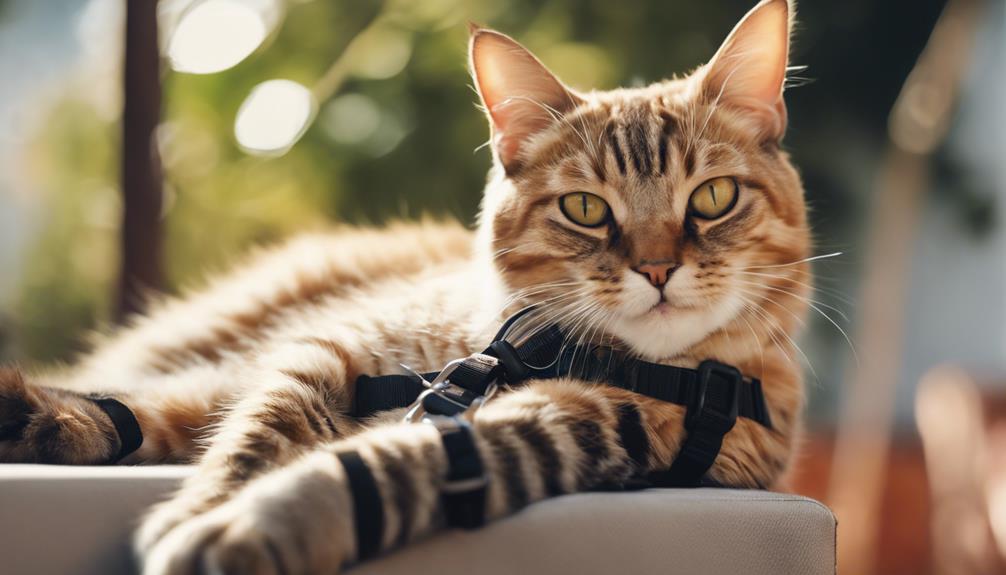
Regular breaks from using a harness are essential for ensuring the comfort and well-being of your feline companion. Cats, like all animals, need time without the constraint of a harness to feel at ease and relaxed. Continuous wear of a harness can lead to discomfort, skin irritation, and even hair loss for your cat.
By allowing your cat regular breaks from the harness, you give them the opportunity to groom themselves properly, ensuring their hygiene is maintained. Additionally, these breaks help prevent behavioral issues and anxiety that can arise from constant harness use.
Hence, it is recommended to provide your cat with time free from the harness to promote their overall comfort and happiness.
Potential Hazards of Continuous Wear
Continuous wear of a harness on a cat presents a number of potential hazards that owners should be mindful of to guarantee their pet's safety and well-being. Harness-related risks include:
- Safety concerns such as potential tangling and the risk of getting stuck on furniture.
- Discomfort from rubbing, skin irritation, and material allergies, especially with poorly fitting harnesses.
- Stress, anxiety, and negative behaviors like aggression can result from continuous harness use.
- Limited grooming access leading to hygiene issues like matted fur and frustration.
- Increased risks of harm and distress if a cat wearing a harness is left unattended, especially when tangled or in distress.
Is It Safe to Leave a Harness on My Cat All the Time?
Leaving a harness on your cat all the time is not safe. It can cause discomfort and even injury. When you want to put a cat on a leash, it’s best to supervise them and remove the harness when they are indoors or unsupervised.
Balancing Safety and Cat's Comfort

When considering whether your cat can wear a harness all the time, it is crucial to find a balance between safety and comfort. Safety considerations include ensuring the harness fits well to prevent tangling and injuries. Comfort tips involve monitoring for signs of irritation or stress. Limiting the duration of wear can help prevent grooming difficulties and minimize potential negative behaviors in your cat.
Safety Considerations for Harness
Safety considerations for harnesses when it comes to balancing both safety and the comfort of your cat are essential to guarantee the well-being of your feline companion.
- Harnesses can easily get stuck on furniture, leading to potential tangling and injury risks.
- Ill-fitting harnesses can cut off blood supply, emphasizing the importance of correct sizing for safety.
- Cats should not be left unattended with a harness on due to the risk of harm if tangled and left alone.
- Continuous wear of a harness can cause discomfort, including hair loss, skin irritation, and potential material allergies.
- Prolonged use of a harness can lead to stress, anxiety, negative behaviors like aggression, and can trigger excessive grooming in cats.
Comfort Tips for Cats
To guarantee a positive experience for your cat while wearing a harness, prioritizing their comfort alongside safety considerations is essential. Properly fitting harnesses are vital to prevent discomfort and potential injuries.
Gradually introducing the harness to your cat can aid in their adjustment and make them feel more at ease wearing it. It's important to monitor your cat for any signs of distress or discomfort while they have the harness on.
Ending each harness training session on a positive note can help reinforce good associations with wearing the harness. Always make sure the harness is secure and correctly attached before adding a leash; this step can help prevent accidents and ensure the cat is comfortable and safe during walks.
Duration of Wear
Maintaining a balance between guaranteeing your cat's comfort and safety when wearing a harness involves being mindful of the duration of wear.
When it comes to the duration of harness wear for your cat, consider the following:
- Avoid Prolonged Wear: Cats should not wear a harness all the time to prevent safety risks and health issues.
- Monitor Signs of Discomfort: Watch out for signs of distress, skin irritation, or hair loss indicating discomfort.
- Supervise Wear Time: Use the harness for short periods under supervision to prevent stress and anxiety.
- Ensure Correct Fit: A well-fitted harness reduces the risk of injuries and ensures your cat's comfort.
- Regular Breaks: Give your cat breaks from the harness to allow grooming and prevent hygiene problems.