Can Two Male Cats Get Along


Male cats can get along if properly introduced and their behavior understood. Each cat's personality plays a role in their interaction, with peaceful coexistence possible without cuddling. Clear territories, supervised interactions, and positive reinforcement are essential. Matching personality types, using neutral spaces, and gradual introductions minimize conflicts. Neutering both cats and close monitoring can help. If conflicts persist, seeking professional advice is wise. Understanding male cat dynamics and facilitating proper introductions are key to harmonious living. Additional details on establishing peaceful relationships are available.
Understanding Male Cat Behavior

Within the world of feline behavior, understanding male cat dynamics is essential for successful cohabitation and harmonious relationships between these animals. Male cats often establish hierarchies to maintain peace within a household. While conflicts may arise, these interactions typically do not result in serious harm.
Each male cat has its individual personality, which greatly influences their behavior towards other cats. Some male cats can coexist peacefully, even napping in close proximity, but may not engage in cuddling behaviors commonly seen in other species. It is important to take into account the temperament of each male cat when introducing them to one another to prevent potential conflicts.
Female cats can also exhibit territorial behavior and aggression towards males, further emphasizing the importance of understanding and managing male cat dynamics.
Importance of Proper Introductions
Proper introductions between male cats are essential for establishing clear territories and preventing conflicts.
Slow, supervised interactions allow the cats to acclimate to each other's presence while reducing the chances of aggression.
Positive reinforcement techniques can be employed to encourage peaceful behavior and create a harmonious environment for the male cats.
Establishing Clear Territories
Establishing clear territories between two male cats hinges on the important step of guaranteeing proper introductions. When introducing cats, it's crucial to match personality types, provide a neutral space, and supervise their initial interactions. Below is a table summarizing key points for establishing clear territories:
| Key Points | Description | Importance |
|---|---|---|
| Match Personality Types | Pair cats with similar energy levels and temperaments to reduce potential conflicts. | Minimizes Aggression |
| Provide a Neutral Space | Introducing cats in a neutral area unfamiliar to both can prevent territorial disputes. | Promotes Positive Interaction |
| Supervise Initial Interactions | Monitoring their first meetings helps ensure safety and allows for intervention if needed. | Prevents Escalation |
Slow, Supervised Interactions
Careful and attentive introductions are essential for fostering a positive relationship between two male cats. Slow, supervised interactions play an important role in helping the cats establish trust and familiarity with each other. Proper introductions are key to preventing conflicts and reducing the likelihood of aggressive behavior between male cats.
Allowing the cats time to adjust and get used to each other's scent before direct contact is crucial for a positive relationship. Gradual bonding can be achieved by gradually increasing the time they spend together under supervision, enabling the cats to build a bond at their own pace.
Providing separate resources such as food, water, and litter boxes during initial interactions can help prevent issues like resource guarding and territorial disputes.
Positive Reinforcement Techniques
When introducing two male cats, utilizing positive reinforcement techniques is instrumental in fostering a harmonious relationship and creating a foundation of good experiences between the felines. Positive reinforcement involves rewarding desired behaviors to encourage their repetition. This can include using treats, toys, and praise to reinforce calm and friendly interactions during the introduction process. By consistently rewarding positive behaviors, such as sniffing without aggression or playful interactions, male cats can associate each other's presence with positive outcomes. This approach helps reduce tension, build trust, and promote bonding between the cats. Establishing a positive environment through reinforcement techniques sets the stage for a smoother integration and potentially lasting companionship between the two male cats.
| Positive Reinforcement Techniques | ||
|---|---|---|
| Technique | Description | Purpose |
| Treats | Provide treats for calm interactions | Reward positive behavior |
| Toys | Use engaging toys to encourage play | Foster friendly interactions |
| Praise | Offer verbal praise for non-aggressive behavior | Reinforce good conduct |
Neutral Spaces for Initial Meetings
When introducing male cats, offering a neutral space is essential. These areas help diminish territorial responses and create a sense of safety for both felines.
It is essential to monitor their initial interactions carefully in these neutral territories.
Safe Introduction Spaces
Utilizing neutral spaces for initial meetings is a strategic approach to mitigating territorial behavior in male cats. These spaces provide a stress-free environment where both cats can interact on a level playing field. By choosing a room that neither cat has claimed as their territory, it helps reduce the chances of one cat feeling threatened or intruded upon during the introduction.
Neutral spaces allow male cats to establish their own dynamics and hierarchy without the pressure of defending their territory. This approach sets a foundation for a more harmonious relationship between the cats by giving them the opportunity to explore and interact without triggering territorial instincts.
Creating a safe introduction space is essential for a successful initial meeting between two male cats.
Neutral Territory Importance
Introducing two male cats in a neutral territory is a strategic approach to minimizing territorial disputes and aggression during their initial meetings. Neutral spaces, such as a separate room or a neutral outdoor area, are essential for preventing dominance conflicts between male cats.
These initial meetings in a neutral territory allow the cats to assess each other without feeling threatened in established territories. Neutral spaces provide a safe environment for male cats to familiarize themselves with each other's scents and behaviors.
Monitoring Initial Interactions
In the process of introducing two male cats, monitoring their initial interactions in neutral spaces is essential to prevent territorial disputes and promote a harmonious relationship. When facilitating the first meetings between male cats, creating a neutral environment is vital for their well-being and the success of their introduction.
Here are three key points to keep in mind when monitoring initial interactions in neutral spaces:
- Reduce Stress and Aggression: Neutral spaces help decrease stress and aggressive behaviors by providing a non-threatening environment for the cats to interact.
- Safe Assessment: Neutral environments allow both cats to assess each other without feeling the need to defend their territory, fostering a more peaceful initial interaction.
- Establish Positive Foundation: Monitoring interactions in neutral spaces helps establish a positive foundation for their relationship, setting the tone for future interactions.
Transitioning to One Cat's Home
After the initial adjustment phase, integrating two male cats into one cat's home can be facilitated by providing a familiar environment conducive to minimizing territorial behaviors and promoting a harmonious coexistence. Utilizing proper introduction methods, such as scent swapping and supervised interactions, can help ease the adaptation period. Offering a neutral space for the initial meeting between the cats can reduce the likelihood of conflicts arising due to territorial instincts. Allowing the cats to establish their hierarchy within the home naturally can foster a sense of security and potentially decrease aggression. Monitoring their behaviors closely during this adjustment phase is essential to identifying and addressing any issues promptly.
| Key Points | Details | Importance |
|---|---|---|
| Neutral Space | Reduces territorial behavior | Smooth integration |
| Proper Introduction | Scent swapping and supervised interactions | Prevents conflicts |
| Supervised Interactions | Monitoring behavior closely | Early issue detection |
Managing and Respecting Territories
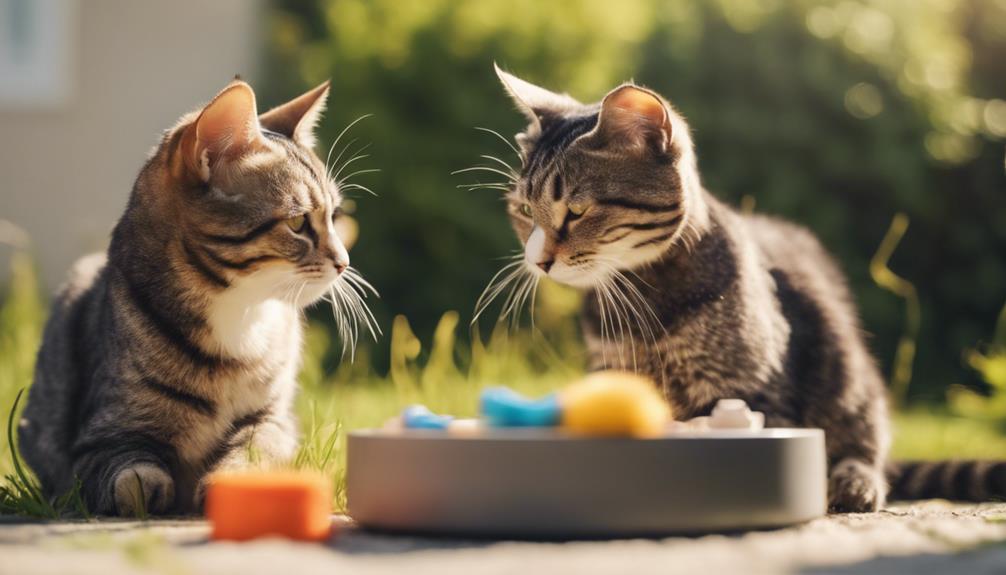
Establishing and respecting individual territories is crucial for maintaining harmony among male cats sharing the same living space. To guarantee male cats can coexist harmoniously, consider the following:
- Understanding Territorial Behavior: Recognize that male cats may exhibit territorial tendencies, such as marking areas with urine or displaying aggression towards other males.
- Providing Separate Resources: Offer each cat their own litter box, feeding station, and resting areas to reduce competition and potential conflicts over shared resources.
- Managing Territory Dynamics: Create zones within the home where each cat feels secure, allowing them to retreat to their designated areas when needed, promoting a sense of safety and minimizing territorial disputes.
Minimizing Conflicts Through Recommended Methods
To promote harmonious coexistence between male cats, implementing recommended conflict-minimizing methods is vital. Cats are naturally easygoing and socially flexible, but introducing two male, neutered cats requires a carefully managed introduction period. Techniques such as gradual introductions, scent swapping, and supervised interactions can help foster positive relationships. Providing separate resources like litter boxes and feeding stations reduces competition. Allowing the cats to establish their own hierarchy can prevent dominance-related conflicts. Seeking professional advice if conflicts persist is essential for resolving issues effectively. Below is a table summarizing key methods to minimize conflicts between two male cats:
| Conflict-Minimizing Methods | Description |
|---|---|
| Gradual Introductions | Slow, supervised meetings between cats to reduce initial tension |
| Scent Swapping | Exchanging bedding or toys to familiarize cats with each other's scent |
| Separate Resources | Providing individual litter boxes and feeding stations |
Can Cats’ Ability to Get Along with Other Animal Species Transfer to Getting Along with Another Cat?
Cats and rabbits relationship: While a cat’s ability to get along with other animals can vary, it doesn’t necessarily indicate how well they will get along with another cat. Each feline has its own unique personality, and their compatibility with other cats may differ from their relationship with other animal species.
Facilitating Peaceful Coexistence

Facilitating harmonious coexistence between male cats requires meticulous planning and strategic implementation of proven methods. To achieve peaceful coexistence between male cats, consider the following steps:
- Neutering: Guarantee both male cats are neutered to reduce territorial behaviors and aggression.
- Proper Introduction: Introduce the cats gradually in a controlled environment to prevent conflicts.
- Supervised Interactions: Monitor their interactions closely, intervening if signs of aggression appear, and provide positive reinforcement for calm behavior.