Do British Shorthair Cats Shed More Than Average


British Shorthair cats have a moderate shedding pattern, falling within the average range compared to other breeds. Shedding can increase during seasonal changes and is influenced by genetics, health, and environment. Regular grooming and a high-quality diet are key in managing shedding. When comparing with other breeds, British Shorthairs shed more than Russian Blues but less than Maine Coons. Monitoring for abnormal shedding signs and addressing them promptly is important. Proper grooming techniques and a balanced diet play vital roles in managing shedding. Understanding these factors can help in keeping shedding under control.
Shedding Characteristics of British Shorthair Cats

The shedding characteristics of British Shorthair cats reveal a moderate shedding pattern that tends to increase during seasonal changes. While they are not excessive shedders, regular grooming is essential to manage shedding and maintain coat health.
British Shorthairs have a short, dense coat that requires consistent brushing to prevent matting and hairballs. Providing a high-quality diet plays an important role in reducing shedding in these cats. By ensuring they receive proper nutrition and a clean living environment, owners can help minimize shedding issues.
Despite their moderate shedding, British Shorthairs are generally easier to maintain compared to long-haired breeds, making them a popular choice for pet owners looking for a balance between grooming needs and affectionate companionship.
Factors Influencing Shedding in British Shorthairs
Influenced by genetics, health status, and environmental factors, shedding in British Shorthair cats is a significant and essential trait. Seasonal changes can trigger increased shedding in these cats. Underlying health issues, stress, and diet quality also play a role in the amount of shedding experienced by British Shorthairs.
Regular grooming practices, such as brushing their coat and providing a balanced diet, are vital for managing shedding in these cats. Monitoring for any signs of abnormal shedding is important, as it may indicate an underlying health problem that requires veterinary attention.
Grooming Tips for Managing Shedding
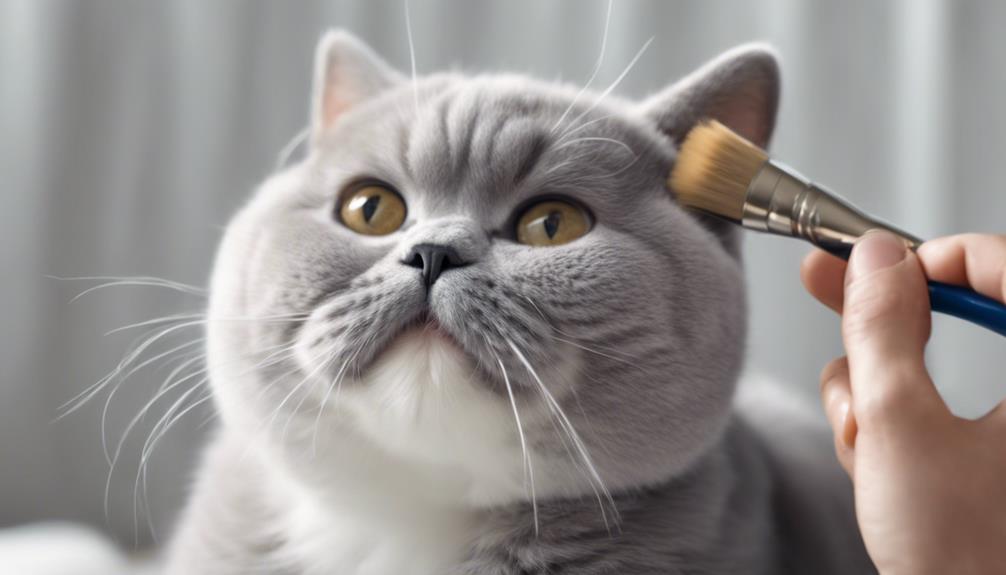
To effectively manage shedding in British Shorthair cats, implementing proper grooming techniques is essential for maintaining their coat health and reducing excessive hair loss. Regular brushing, using a specialized brush like the Furminator, can help control shedding, especially during seasonal changes. Monitoring the cat's skin and coat for any changes in quality, bald spots, or irritation is vital in shedding management.
Additionally, providing a balanced diet rich in vitamins and minerals through quality cat food, including wet food, can contribute to a healthy coat and reduce shedding. Keeping the living environment clean and paying attention to signs of stress or anxiety that may lead to over-grooming are also important aspects of British Shorthair grooming for shedding control.
Shedding Comparison With Other Cat Breeds
When comparing shedding patterns among different cat breeds, the frequency and volume of hair loss vary greatly. British Shorthair cats, known for their moderate shedding, may shed slightly more than short-haired breeds like the Russian Blue but less than breeds with denser undercoats such as the Maine Coon.
In comparison, short-haired breeds like the Siamese tend to shed less than British Shorthairs. It's crucial to provide a balanced diet, suitable cat foods, and positive reinforcement for grooming habits to manage shedding effectively. Offering a variety of grooming tools, including a scratching post, can help reduce loose hair.
If you notice excessive shedding, speaking to your vet is advisable to rule out any underlying health issues and promote your cat's well-being.
– Do Bengal cats shed more or less than British Shorthair cats?
Bengal cats are known for their minimal shedding habits compared to other breeds. On the other hand, British Shorthair cats tend to shed more. Regular grooming and proper care can help manage the shedding in both breeds, but overall, Bengal cats are usually a better choice for those concerned about shedding.
Monitoring and Addressing Excessive Shedding
Excessive shedding in British Shorthair cats necessitates vigilant monitoring and prompt intervention to maintain their coat health and overall well-being. Regular grooming and brushing help manage shedding, as the British Shorthair sheds relatively low compared to other breeds. Monitoring their food intake is important; dietary adjustments and supplements, under veterinary guidance, can address deficiencies that may lead to increased shedding.
If you notice bald spots, skin irritation, or abnormal fur loss, it's important to seek veterinary consultation to address any underlying medical conditions contributing to excessive shedding. Being attentive to these signs will let you know when intervention is necessary to ensure your British Shorthair's coat remains healthy. Make sure to take action promptly to maintain their well-being.