Do Cats Get Embarrassed


Cats do not experience embarrassment like humans do. Their behaviors are mainly driven by instincts rather than complex emotions such as shame or self-consciousness. Signs of embarrassment in cats, like avoiding eye contact or reacting strangely when laughed at, may actually stem from fear or confusion rather than true embarrassment. Deciphering feline emotions, including embarrassment, can be challenging due to their subtle communication methods. Understanding feline body language, like tail position and ear movement, is vital for interpreting their feelings accurately. Cats' reactions are complex, possibly influenced by instincts more than emotions. Their unique ways of communication make it essential to observe them closely.
Signs of Embarrassment in Cats

Embarrassment in cats is a complex and often misunderstood aspect of feline behavior, frequently misinterpreted due to human biases and assumptions. While owners may attribute behaviors like hiding or avoiding eye contact to embarrassment, these actions can actually stem from fear or responses to human emotions. Cats may seem embarrassed when exhibiting certain behaviors, but they could be reacting to cues from their owners rather than feeling genuine embarrassment.
For instance, checking their surroundings after slipping is not necessarily due to embarrassment but could be a way for them to assess potential threats in the environment. Similarly, cats looking strangely when laughed at may be more a result of confusion rather than true embarrassment, highlighting the importance of understanding feline behaviors beyond human interpretations.
Understanding Feline Behaviors
Cats exhibit a wide range of behaviors that reflect their unique communication style and responses to various stimuli. Understanding feline behaviors involves decoding their body language and responses to social cues. Cats, as pets, may display actions that seem like embarrassment, but it could be a reaction to their surroundings. Deciphering cats' emotions, like embarrassment, can be complex due to their subtle cues. Here is a table summarizing key points about feline behaviors:
| Aspect | Description | Importance |
|---|---|---|
| Body Language | Cats communicate mainly through body movements, making it tricky to interpret emotions. | Understanding |
| Social Cues | Cats are sensitive to social cues, which can influence their behavior and responses. | Interpretation |
| Complex Emotions | Deciphering complex emotions like embarrassment in cats requires further exploration. | Insight |
Differentiating Cat Emotions
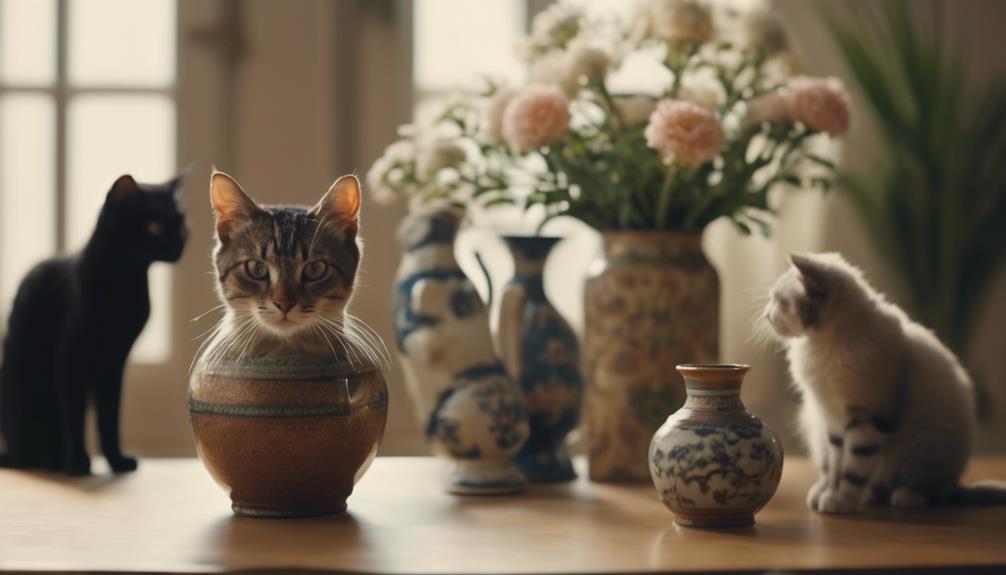
Understanding the intricacies of feline emotions involves closely observing their behavioral cues and responses to environmental stimuli. While cats exhibit various emotions through their body language, deciphering complex feelings like embarrassment can be challenging.
Basic emotions like fear, happiness, and frustration are more easily recognizable in cats, whereas signs of embarrassment may be misconstrued. Behaviors that seem like embarrassment, such as avoiding eye contact or hiding, could stem from fear or social cues. Cats' independence and sensitivity further complicate attributing human emotions to them.
Research is ongoing to determine definitively whether cats can experience emotions like embarrassment or if their behaviors are driven by other factors. Therefore, understanding our pets' emotions requires a nuanced approach to interpreting their behaviors accurately.
Exploring Cat Body Language
What subtle cues can we observe in cat body language to decipher their emotions accurately?
Cat body language is a complex form of communication that includes tail position, ear movement, and eye contact.
For example, a cat's body posture, whether crouching or arching its back, can reveal feelings of fear or discomfort.
Purring, rubbing against you, and slow blinking are positive signs of contentment and relaxation in cats.
On the other hand, hissing, flattened ears, and dilated pupils indicate that a cat may feel threatened or defensive.
Understanding these signs is essential for interpreting a cat's emotions and responding appropriately to their behavior.
Do Cats Experience Emotions Like Embarrassment and Remorse?
Many experts believe that cats remorse guilt feelings despite appearing aloof. It’s debated whether cats experience embarrassment and other complex emotions, but their body language and behavior often indicate a sense of remorse or shame when caught in the act. Their capacity for emotional complexity is still being unraveled.
Deciphering Feline Reactions
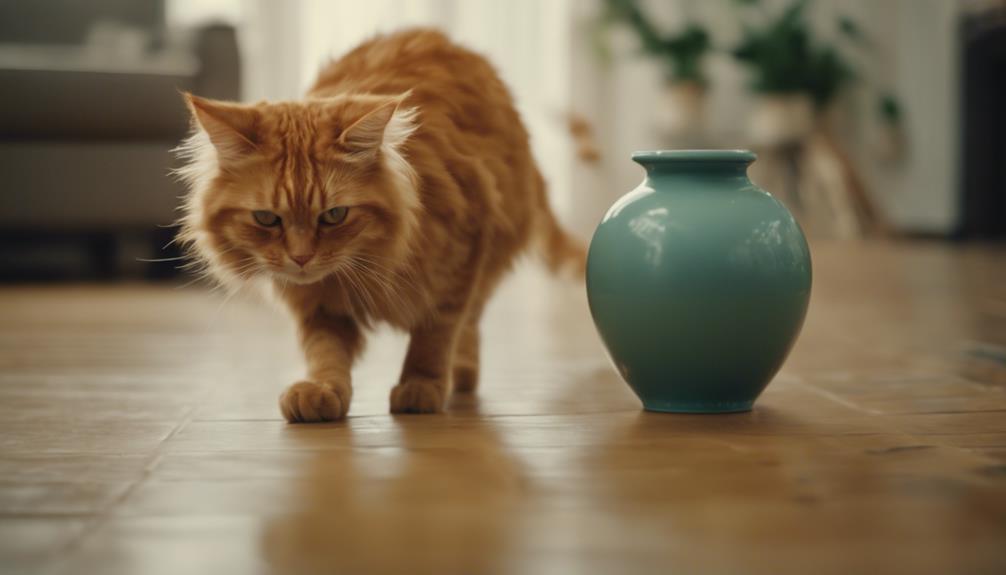
Decoding the myriad ways in which felines express their reactions presents a fascinating challenge for observers and researchers alike. Understanding the inner workings of cats and deciphering if they can feel embarrassment is hard to know.
Cats act based on their instincts, making it far more likely that their behaviors are driven by factors other than embarrassment. It requires an awareness of their unique communication methods and responses to stimuli. A study showed that attributing human emotions to animals, called anthropomorphism, can lead to misinterpreting cat behaviors.
While cats may exhibit responses that seem like embarrassment, further exploration is needed to determine conclusively if they genuinely experience such complex emotions.