How Do Cats Cool Down


Cats cool down by licking their coats for evaporative cooling. Sweat glands in their paw pads help regulate heat, while seeking cooler surfaces like tiles aid in heat dissipation. Grooming mimics sweating as saliva evaporates, and fur acts as insulation to slow heat absorption. These natural mechanisms effectively regulate a cat's body temperature. Providing cooling mats and ice treats can further aid in keeping cats cool during hot weather. Understanding these cooling methods can help guarantee your feline companion stays comfortable and safe.
Natural Cooling Mechanisms of Cats
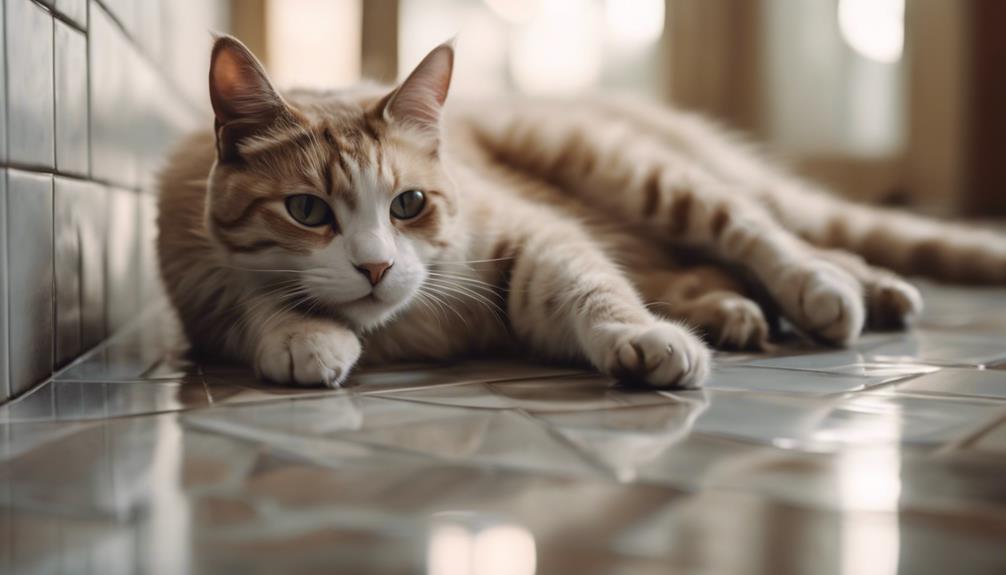
Cats employ various natural mechanisms to regulate their body temperature efficiently. They cool down by licking their coats for evaporative cooling, akin to human sweating. Sweat glands in their paw pads also aid in heat regulation. Cats seek cooler surfaces like tiles to conduct heat away. Grooming helps mimic sweating as saliva evaporates.
Their fur acts as insulation, slowing heat absorption and aiding in temperature control.
Importance of Grooming for Cats
Grooming plays an essential role in maintaining the health and well-being of felines by facilitating thermoregulation and preventing overheating, particularly in warm climates. Cats groom to regulate body temperature, mimicking sweating through saliva evaporation.
Regular grooming is crucial for a healthy coat and efficient cooling. Using damp cloths or cooling mats can assist in cooling cats effectively. This natural behavior aids in thermoregulation during extreme temperatures.
Avoid Shaving Cats' Fur
Shaving a cat's fur can disrupt its natural cooling process, as fur acts as a protective barrier against heat and helps regulate body temperature efficiently. Cats have evolved to use their fur for both warmth in cold climates and cooling in hot weather.
Removing a cat's fur through shaving can interfere with its ability to stay cool and may lead to heat-related issues, making it essential to avoid this practice.
Fur Protects From Heat
In maintaining a cat's natural cooling mechanisms, it is important to recognize the protective function of their fur against heat and sun exposure.
- Cats' fur acts as a thermal regulator, slowing down heat absorption.
- It provides protection from sun exposure.
- Fur coats help cats regulate their body temperature in various climates.
- Cats have evolved to rely on their fur for both warmth and cooling.
- Shaving disrupts the natural cooling process.
Shaving Disrupts Natural Cooling
Cats rely on their fur as a crucial thermal regulator, playing an essential role in maintaining their body temperature and cooling process. Shaving disrupts natural cooling by interfering with cats' fur, which helps prevent overheating by slowing heat absorption. Cats' fur protects them from sun exposure and dehydration, making shaving unnecessary for cooling purposes. Evolution has equipped cats to efficiently use their fur for both warmth and cooling, emphasizing the importance of not shaving cats for cooling.
| Cats' Fur Role in Cooling | |
|---|---|
| Acts as thermal regulator | Slows heat absorption |
| Protects from sun exposure | Prevents dehydration |
| Essential for body temperature maintenance | Prevents overheating |
Cats Regulate Temperature Efficiently
Efficient regulation of body temperature in felines is crucial, underscoring the necessity of preserving their natural fur coat.
- Cats' fur acts as a thermal regulator, slowing down heat absorption
- Shaving disrupts their natural cooling process
- Fur protects from sun exposure and dehydration
- Evolution has optimized fur for warmth and cooling
- Understanding fur's role aids in proper care for cats in various climates.
Domestic Comforts for Cat Cooling

To keep cats cool and comfortable indoors, owners can provide cooling mats for their pets to lie on. Additionally, offering cats ice treats can help lower their body temperature during hot weather.
These simple domestic comforts can make a significant difference in ensuring cats stay cool and happy in the home.
Cooling Mats for Cats
During scorching summer days, feline companions can find solace and relief on specially designed cooling mats.
Cooling mats for cats are designed to provide a cool surface for cats to lay on during hot weather.
These mats are often filled with gel or water that helps dissipate heat and keep cats comfortable.
Some cooling mats for cats are portable and can be used indoors or outdoors for added convenience.
The materials used in cooling mats are non-toxic and safe for cats to use without any harm.
Cooling mats can be beneficial for senior cats, cats with thick fur, or cats that struggle to regulate their body temperature.
Ice Treats for Cats
Cats can further enjoy relief and comfort from the heat through the delightful option of ice treats designed to help them cool down.
Ice treats like tuna water or chicken stock lollies provide an invigorating and hydrating snack, while ice cubes offer play and enrichment opportunities.
Cooling down cats' paws with ice cubes can provide instant relief, and providing indoor activities with ice treats can prevent overheating while keeping them engaged.
Conduction in Cats
By instinct, felines actively engage in conduction as a means to regulate their body temperature efficiently. Cats use conduction by seeking out cool surfaces like tiles to dissipate excess heat in hot weather. Cool kitchen or bathroom tiles serve as effective cooling spots for cats through conduction.
This natural behavior helps cats stay cool by transferring heat to cooler objects. Understanding conduction aids in creating ideal cooling environments for cats at home.
Saliva Evaporation for Cooling
Saliva evaporation plays a vital role in helping cats cool down efficiently.
When cats groom themselves, the saliva on their fur evaporates, aiding in heat dissipation.
This natural cooling mechanism is essential for cats to regulate their body temperature, especially in hot weather conditions.
Saliva and Cooling
Utilizing their natural physiological mechanisms, felines employ saliva evaporation as an essential method for regulating body temperature and achieving cooling effects.
- Cats use their saliva to mimic the sweating process, aiding in lowering their body temperature.
- Saliva acts as a natural cooling mechanism for cats to dissipate heat.
- Grooming helps spread saliva on their fur, assisting in the cooling process.
- Evaporation of saliva on the skin aids cats in regulating their body temperature during hot weather.
- Saliva evaporation is necessary for cats to cool down and maintain a comfortable body temperature.
Cat's Cooling Mechanism
Felines employ saliva evaporation as a crucial cooling mechanism to regulate their body temperature and counteract heat during warm weather conditions. This grooming behavior helps spread saliva on their fur, aiding in the process of body temperature regulation.
Understanding this method can assist in ensuring proper care for cats in warm temperatures, as saliva evaporation plays an essential role in helping cats stay cool when the weather gets hot.
Evaporation for Heat
How do cats utilize a natural cooling mechanism to regulate their body temperature during hot weather conditions?
Cats cool down through evaporation by licking their fur, allowing saliva to evaporate and lower their body temperature. Saliva evaporation mimics the sweating process in cats, aiding in heat regulation.
Grooming induces efficient evaporation, a natural cooling method. Understanding this process can help pet owners support their cats during warm periods.
Cats' Paw Sweat Myth

Contrary to popular belief, the notion that cats sweat through their paws as a means of cooling down is a myth. Cats use grooming and evaporation, not sweating through paw pads, to regulate body temperature. Moist paw prints serve purposes like protection and moisture retention, not cooling. Understanding this helps prevent dehydration and heat stroke in cats during hot weather.
| Facts About Cats' Paw Sweat Myth | |
|---|---|
| Myth | Cats sweat through |
| Reality | Grooming and |
| Purpose | Protection and |
| Benefit | Prevent dehydration |
Effects of Fur on Temperature Regulation
Cats' fur plays a crucial role in regulating their body temperature, acting as a protective barrier against heat absorption and aiding in maintaining a stable internal environment.
- Fur slows heat absorption
- Protects against dehydration
- Aids in temperature regulation
- Acts as a defense mechanism
- Helps prevent sunburn
Role of Air Conditioning for Cats

In maintaining ideal conditions for cats, the role of air conditioning is vital for ensuring their comfort and well-being.
Air conditioning helps cats keep cool on hot days, especially for indoor cats. It prevents heatstroke, dehydration, and overheating, promoting better health and behavior.
This tool is essential for ensuring cats' safety and comfort, particularly in extreme heat conditions.
Do Cats Seek Shelter Under Car Hoods to Cool Down?
It is not uncommon to find cats under car hoods. They seek shelter from the heat, especially during the summer months. The warm engine provides a cozy spot for them to cool down. However, it’s important to always check for cats under car hoods before starting the engine.
Hydration for Cat Cooling
To facilitate ideal cooling for cats in hot weather, ensuring proper hydration is essential.
- Cats need to drink more water in hot weather to prevent heat stroke.
- Water helps cats sweat through their paw pads, aiding in cooling.
- Providing multiple water bowls indoors and outdoors encourages hydration.
- Experimenting with different bowl types and placements can promote more water intake.
- Offering a running water source can entice cats to drink more and stay hydrated.