How Do Gravity Cat Feeders Work


Gravity cat feeders function by using gravity to dispense cat food continuously. The feeder's design includes a large opening to guarantee the smooth flow of kibble, preventing blockages. Regular cleaning is essential to prevent bacteria growth. These feeders are beneficial for households with multiple cats, as they offer a cost-effective option for keeping pets fed. However, they do not provide portion control, which can lead to overeating in some cats. Understanding how gravity cat feeders work is important for maintaining your cat's health and weight. Further details on the importance of regular cleaning and monitoring cat food intake can provide valuable insights.
Working Mechanism of Gravity Feeders
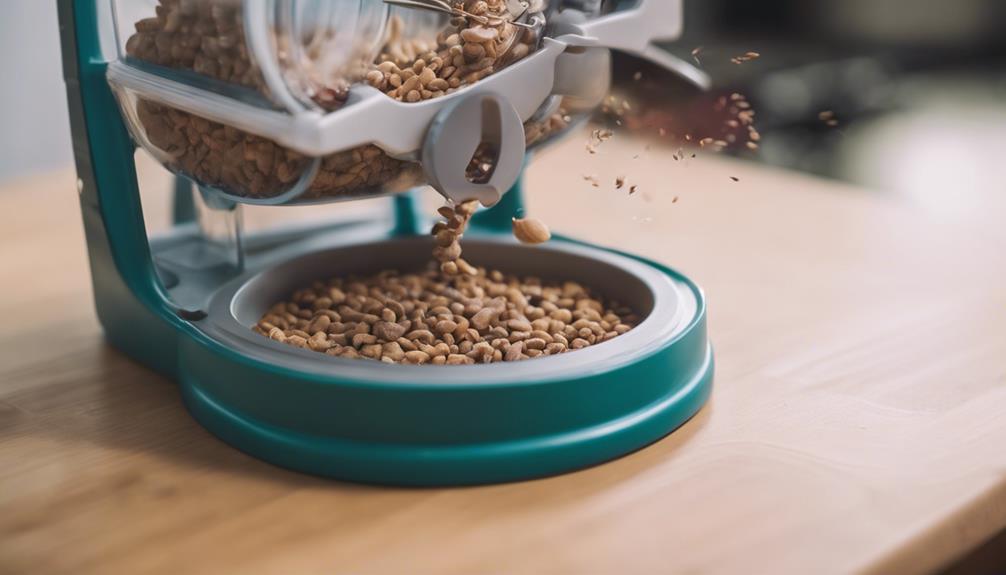
One of the fundamental principles underlying the functionality of gravity feeders is their reliance on gravitational force to replenish the food tray as cats consume their meals.
Unlike automatic feeders that rely on electronic timers, gravity feeders provide continuous food availability through a simple design.
They feature a large hole to prevent food clogging, ensuring a steady flow of kibble.
Regular cleaning is essential to prevent bacterial growth and maintain food freshness.
Benefits of Using Gravity Feeders
The practical advantages of utilizing gravity feeders for cats extend beyond their simplistic design and dependence on gravitational force to guarantee a consistent supply of food as felines consume their meals.
These automatic feeders provide continuous food access, making them ideal for multi-cat households.
They offer a cost-effective feeding solution, holding 1-3 pounds of food, but lack portion control, which may not suit cats prone to overeating or obesity.
Potential Risks of Gravity Feeders

When pondering gravity cat feeders, it's important to be mindful of potential risks associated with their use. Feeder safety concerns, such as the risk of overeating and obesity, are significant factors to take into account.
Additionally, health implications and the necessary maintenance requirements should not be disregarded to guarantee the well-being of the cat.
Feeder Safety Concerns
Concerns regarding the safety of gravity cat feeders primarily revolve around potential risks associated with continuous food availability and maintenance requirements. Side effects such as overeating and obesity due to constant access to food are major health issues.
Regular cleaning is essential to prevent bacterial contamination. Additionally, monitoring the cat's food intake and health becomes challenging with these feeders.
Health Implications
Considering the continuous dispensing nature of gravity cat feeders, the potential health risks associated with overeating and obesity in cats become a significant concern.
With the constant availability of food, cats may overeat, leading to weight gain and potential health issues.
Monitoring the amount of food a cat eats with gravity feeders is challenging, making it essential for owners to regulate their cat's intake to prevent health implications.
Maintenance Requirements
Proper maintenance of gravity cat feeders is important to prevent bacterial contamination and safeguard the health of your feline companion.
- Regularly clean the feeder tray to avoid bacterial growth.
- Monitor food levels to prevent overeating and obesity.
- Be cautious of food going stale with constant access.
- Check the feeder for malfunctions regularly.
- Supervise your cat's intake and weight closely.
Cleaning and Maintenance of Gravity Feeders

To guarantee peak functionality and hygiene of gravity cat feeders, regular cleaning and maintenance of the feeder tray are imperative. The food bowl should be cleaned daily to prevent bacterial growth and contamination. Here is a table summarizing the cleaning and maintenance steps for gravity cat feeders:
| Task | Frequency |
|---|---|
| Clean feeder tray | Daily |
| Replace food | Regularly |
| Check for mold | Weekly |
| Scrub feeder parts | Monthly |
| Disassemble for deep cleaning | Bi-monthly |
Monitoring Cat's Diet With Gravity Feeders
Monitoring a cat's dietary intake using gravity feeders poses unique challenges due to the continuous availability of food.
- Cats may overeat, leading to obesity.
- Different types of feeders can affect cats' eating habits.
- Regular weight monitoring is essential.
- Watch for changes in eating behavior.
- Consider portion control options.
Choosing the Right Gravity Feeder

When selecting a gravity feeder for your cat, it is crucial to take into account key factors such as capacity, material quality, and ease of maintenance.
Pet owners should consider the size of the feeder to guarantee it meets their cat's needs, the durability of the materials used in construction, and how easy it is to clean to maintain their cat's feeding area hygienic and safe.
Gravity Feeders Vs. Automatic Feeders
When contrasting gravity feeders to automatic feeders for cats, there are key distinctions to take into account.
Gravity feeders offer continuous food access without the need for power, making them simple and reliable.
On the other hand, automatic feeders provide more control over feeding times and portion sizes, catering to specific dietary needs and schedules.
Gravity Feeder Benefits
In comparing gravity feeders to automatic feeders, a notable distinction lies in their mechanism for providing continuous access to cat food.
- Gravity feeders are more cost-effective than automatic feeders.
- They are easy to clean and suitable for multi-cat households.
- Ideal for cats who self-regulate their food intake.
- Provide constant access to dry food throughout the day.
- Lack programmable timers for portion control.
Automatic Feeder Features
A notable contrast between gravity cat feeders and automatic feeders lies in their operational features and feeding mechanisms. Gravity feeders utilize gravity to automatically refill the food tray as the cat eats, providing continuous access to food without electronic programming.
While ideal for multi-cat households and cost-effective, they lack portion control and may not suit cats with specific dietary needs. Automatic feeders, on the other hand, offer programmable portion control but require electronic settings.
Can Gravity Cat Feeders Help Control a Tortoiseshell Cat’s Meowing?
Gravity cat feeders can help control tortoiseshell cats meow behavior by regulating their meal portions. By managing their food intake, these feeders can prevent overeating, leading to an overall reduction in the cat’s vocalizations. This can greatly benefit both the cat and its owner in managing the meowing behavior.
Gravity Feeders: Final Thoughts
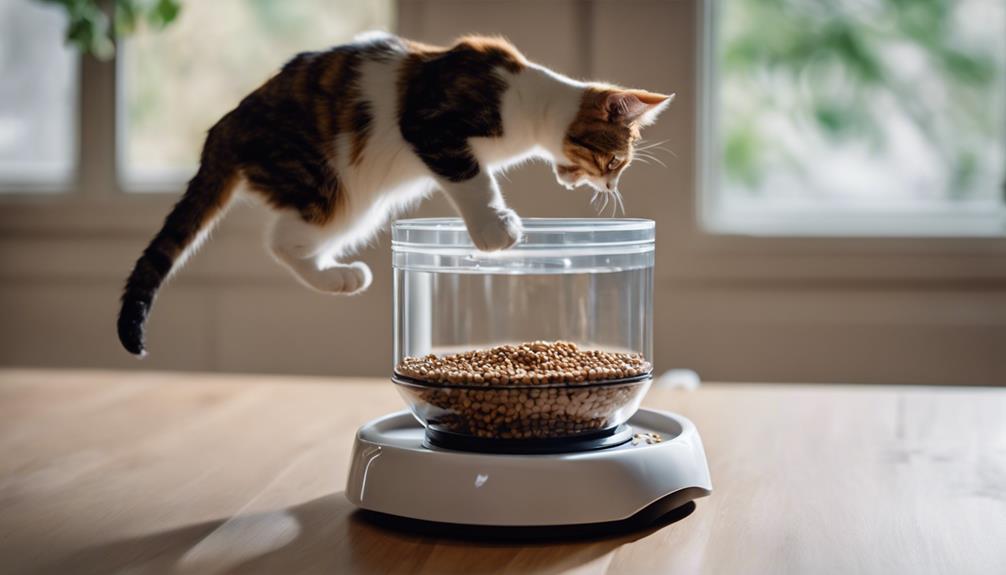
Considering the potential benefits and drawbacks, gravity feeders offer a convenient feeding solution for cat owners seeking continuous food access without the need for power sources or batteries.
- Easy to use and maintain
- Suitable for dry food
- Prevents food from sitting out for too long
- May lead to overeating if not monitored
- Not ideal for wet or raw food diets