How Far Can Cats Fall Without Hurting Themselves


Cats can fall from great heights like 2 to 32 stories without getting hurt due to their instincts. Cats twist mid-air to land on their feet, reducing the impact of the fall. Tail and flexible spines help stabilize and propel their landing. The righting reflex and coordinated movements play an essential role in their safe landings. Natural abilities and behavior enable them to survive falls from substantial heights. Understanding their unique traits and behaviors can shed more light on cats' impressive survival skills.
Factors Affecting Cats' Fall Survival

Factors influencing the survival of cats in falls are multifaceted and encompass a combination of physiological traits and external circumstances. The cat's righting reflex allows it to land on its feet, reducing injuries.
Emergency veterinary care plays an essential role in the survival of a third of cats falling from various heights.
Cats relax and distribute impact better after reaching terminal velocity during falls, increasing their chances of survival.
The Righting Reflex in Cats
Cats are equipped with a remarkable righting reflex that enables them to twist their bodies in mid-air, ensuring they land on their feet. This instinctive behavior helps them survive falls by quickly reorienting themselves.
The righting reflex allows cats to adjust their position within a fraction of a second during a descent, minimizing the risk of injuries upon landing.
Understanding Cats' Landing Techniques

When observing the intricate landing techniques of felines, one can truly appreciate the remarkable coordination and agility displayed by these graceful creatures. Cats utilize their unique righting reflex to twist mid-air and land on their feet, aided by their flexible spines and skeletal structure.
The tail acts as a stabilizer and propeller, assisting in their graceful landings. This combination of factors enables cats to land safely after falls.
Maximum Safe Falling Distance for Cats
The survivability of falls for felines is influenced by various factors, including their unique physiological adaptations and behavior.
- Cats can survive falls from great heights due to their unique abilities.
- Studies indicate cats have a high survival rate after falling from 2 to 32 stories.
- Terminal velocity during falls helps cats reduce impact severity, with higher falls resulting in less severe injuries.
Risks Associated With High Falls
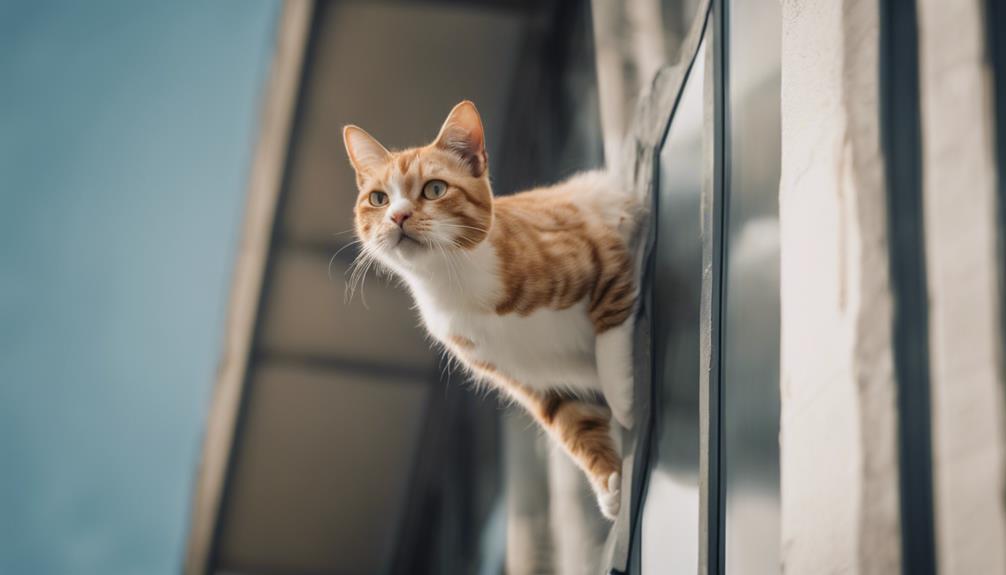
When considering the risks associated with high falls for cats, factors such as the height of the fall, the cat's self-righting ability, and its survivability come into play. The impact of falling from significant heights can lead to severe injuries, with chest trauma being a common occurrence.
Understanding how a cat's natural instinct to correct its position mid-fall and the likelihood of survival post-fall are vital aspects in evaluating the risks associated with high falls.
Height Impact on Cats
Cats face an increased risk of severe injuries when falling from lower heights, particularly in the range of 2-4 stories. When it comes to the impact of height on cats during falls, several important factors come into play:
- Falls from under 7 stories often result in more severe injuries due to impact forces.
- Cats falling from heights above 7 stories tend to distribute impact better, resulting in less focused injuries.
- Cats have a higher chance of survival in falls from greater heights, such as 5-9 stories.
Cat Self-Righting Ability
With a remarkable ability to twist and reorient themselves mid-air, cats demonstrate an impressive self-righting reflex that aids in minimizing injuries during high falls.
| Cat Self-Righting Ability | |
|---|---|
| Cats can fall | Land on their feet |
| Journal of the American | Cats that have fallen |
Cat Fall Survivability
Demonstrating a high survival rate following falls from significant heights, cats exhibit remarkable resilience in facing risks associated with high falls.
- Cats' sense of balance minimizes the severity of injuries.
- Impact distribution at terminal velocity leads to less severe injuries.
- Falls from heights like the fifth floor often result in survivable outcomes.
Strategies to Prevent Cat Injuries

To secure cat injuries, make sure windows and screens are firmly in place to prevent falls.
Discourage climbing to high places by providing alternative, safe environments for your cat.
Creating a secure outdoor enclosure and spaying or neutering your cat can also help minimize the risk of falls and injuries.
Safe Indoor Environments
Creating a safe indoor environment for your cat is vital in preventing potential injuries and accidents. To guarantee your feline friend's safety, consider the following:
- Secure windows and screens to prevent falls.
- Discourage climbing in high places to reduce the risk of injuries.
- Restrict balcony access to avoid accidents.
These measures align with guidelines from the American Veterinary Medical Association to promote safe indoor environments for cats.
Proper Window Screens
Implementing secure window screens is vital to safeguarding your cat from potential falls and injuries. In New York, properly installed screens prevent cat falls by securely holding their weight and reducing the risk of accidents.
Regular maintenance, such as checking for damage or gaps, is essential for ensuring the effectiveness of window screens. Opting for mesh screens with smaller openings can further prevent cats from escaping or falling out.
Can A Cat’s Ability to Jump High Impact Their Safety When Falling?
Yes, a house cat’s jump height limits are crucial in determining their safety when falling. Cats’ natural instinct to jump and climb can lead to dangerous situations, especially if they exceed their jumping abilities. Understanding their limits can help prevent falls and keep them safe.
Benefits of Cats' Physiological Adaptations
Demonstrating remarkable resilience in high falls, cats exhibit extraordinary survival skills attributed to their unique physiological adaptations.
- Cats' righting reflex enables them to twist and land on their feet, minimizing injuries.
- The flexibility of their spine and skeletal structure aids in surviving falls from great heights.
- Cats can reach speeds of 60 mph, helping them relax and distribute the impact of the fall.