How Long Can My Cat Stay In Their Crate


Cats should not be crated for more than 6 hours each day to guarantee their comfort and well-being. This time limit can occasionally extend to 8 hours if necessary. Following these guidelines is vital for preventing negative effects and maintaining their mental health. Gradually introducing your cat to the crate, providing essential items like food, water, and toys, and considering their emotional and physical needs are all essential for a positive crating experience. If you want to learn more about managing longer crate stays, ensuring mental stimulation, safety measures, and breaks for your cat, keep exploring the topic.
Recommended Daily Crating Time
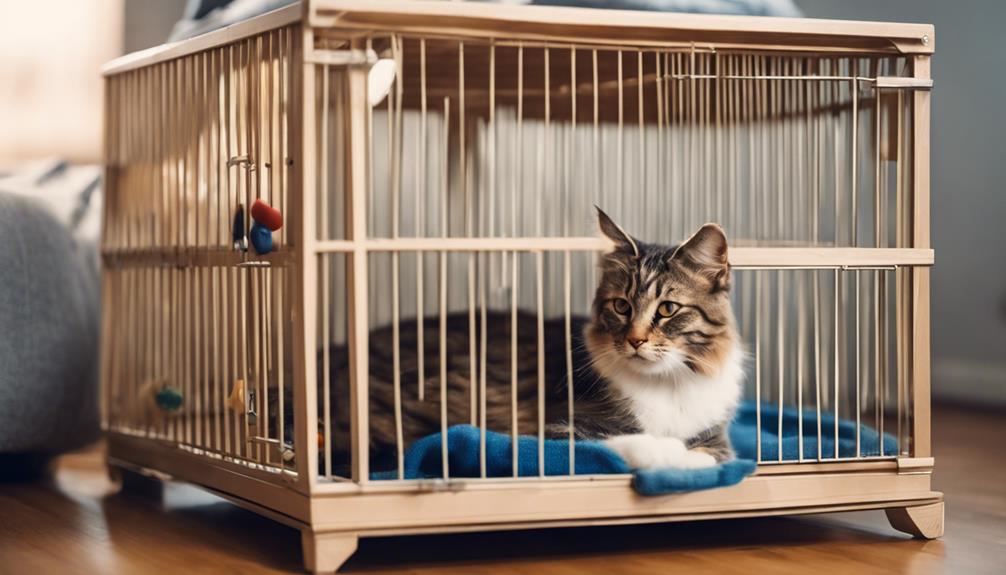
How long should cats ideally stay in their crates each day to guarantee their well-being and mental health?
Cats should not be crated for long periods, with a recommended limit of 6 hours daily to prevent negative effects.
For occasional use, the maximum time can extend to 8 hours daily.
Keeping your cat up-to-date in accordance with these guidelines guarantees their comfort and contentment while in a crate.
Importance of Gradual Introduction
Introducing a cat to a crate gradually is essential for their well-being as it allows them to adjust comfortably to this new space.
By taking it slow and being patient, you help your feline friend feel safe and secure in the crate, preventing any negative associations.
The familiarization process is key, and with time and consistency, your cat will come to see the crate as a place of comfort rather than confinement.
Slow Acclimation Process
To ensure a smooth adjustment for your cat into their crate, it is vital to implement a gradual acclimation process that focuses on slowly introducing them to this new environment. Slow acclimation helps the cat feel comfortable and secure, preventing stress and anxiety.
Start with short periods and increase the duration over time. Rushing the introduction may lead to negative associations with the crate, emphasizing the importance of patience in successful crate training.
Patience Is Key
Implementing a gradual introduction process is crucial in crate training for cats. This emphasizes the importance of patience to guarantee their comfort and security.
- Start with short periods inside
- Increase time slowly
- Avoid extended periods initially
- Monitor behavior closely
- Make sure your cat feels safe and calm
Familiarity Breeds Comfort
Building familiarity and comfort through a gradual introduction process is essential when crate training your cat. By allowing the cat to explore the crate at its own pace, you can reduce anxiety and create a positive association. Start with short periods in the crate, gradually increasing the time. Monitor your cat's behavior closely and adjust the introduction process based on their comfort level.
| Keywords | Description |
|---|---|
| Introduce | Gradually introduce the cat to the crate. |
| Familiarity | Building familiarity and comfort is vital. |
| Comfort | Make sure the cat feels comfortable in the crate. |
| Explore | Allow the cat to explore the crate at its own pace. |
| Anxiety | Reduce anxiety by creating positive associations. |
Providing Essential Crate Items
Ensuring the crate is equipped with essential items such as food, water, a litter box, a scratching post, bedding, and toys is paramount for providing a comfortable and stimulating environment for your cat.
- Food
- Water
- Litter box
- Scratching post
- Toys
Reasons for Crating Cats

Crating cats serves various essential purposes in ensuring their safety, well-being, and effective management in numerous situations. It provides a safe environment during travel, vet visits, and illness recovery.
Crating aids in preventing conflicts with other pets, controlling mating behavior, and introducing new kittens. Additionally, it offers a secure space for rest, aids in taming strays, and facilitates overnight confinement during disruptive hours for house training.
Considerations for Cat's Well-being
Taking into account the emotional and physical needs of feline companions is paramount when considering the well-being of cats in various environments.
- Cats need to be put in the crate for several hours, but not more than 6 daily.
- Access to food, water, and a litter box is essential during crate time.
- Prolonged crate stays can lead to behavioral problems.
- Monitor the cat's behavior for signs of distress.
- Adjust crate time based on the cat's comfort levels.
Managing Longer Crate Stays
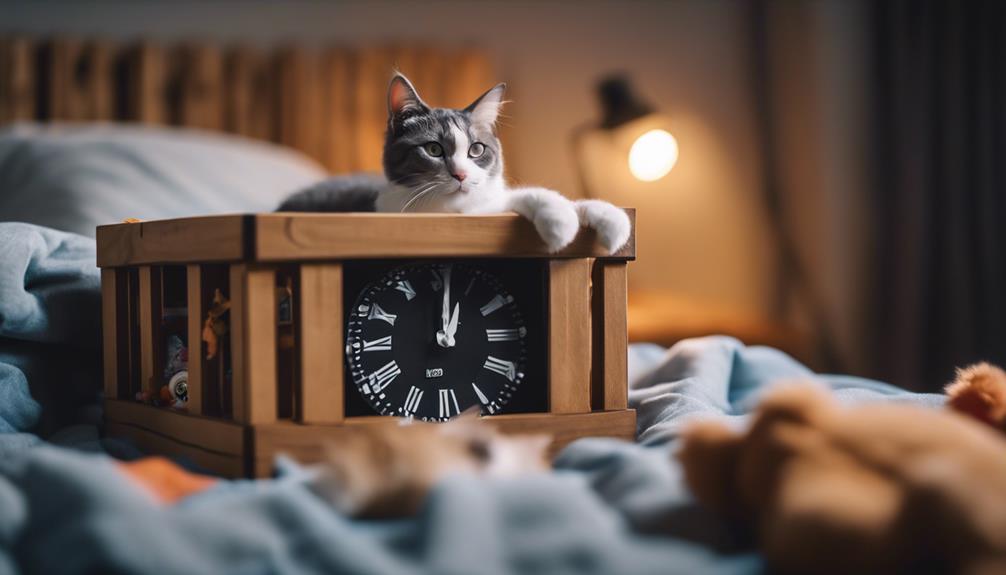
When faced with the necessity of prolonging a cat's time in a crate, careful management and thoughtful strategies become essential for maintaining the feline's well-being.
Cat owners should provide food, water, and toys in the crate for an extended stay.
Keeping a cat in a visible area and interacting with the cat can help reduce stress during long confinement periods.
Ensuring Mental Stimulation
To guarantee maximum well-being during extended stays in a crate, providing adequate mental stimulation for your cat is essential.
- Place toys, puzzle feeders, or scratching posts in the crate.
- Rotate toys regularly to keep your cat engaged.
- Use interactive toys to stimulate your cat's mind.
- Consider catnip or treats to encourage play.
- Engage in interactive play sessions outside the crate for mental stimulation.
Is it Safe to Keep My Cat in a Crate While it Has CBD in its System?
It is generally safe to keep your cat in a crate while it has CBD in its system, especially if it is for a short period. The CBD duration in cats varies, but it typically lasts for a few hours. Ensure the crate is comfortable and the cat has access to water and a litter box.
Safety Measures and Breaks
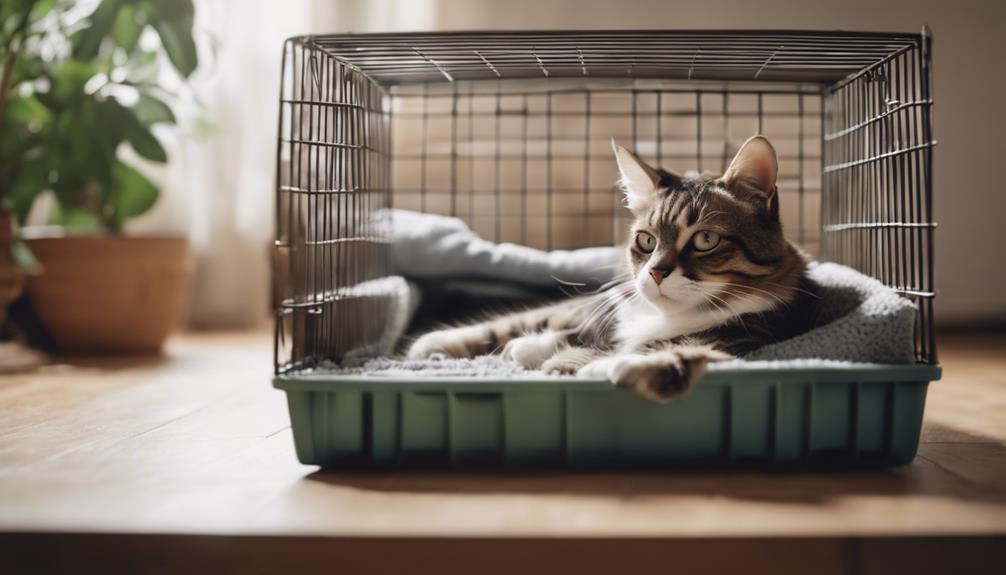
When crating your cat, it's important to take into account the size of the crate to guarantee comfort and mobility.
Regularly monitor your cat's stress levels by observing their behavior for signs of distress or discomfort.
Providing breaks for food, water, and bathroom needs is essential to maintaining your cat's well-being while in the crate.
Crate Size Considerations
Proper consideration of crate size is paramount to ensuring the safety and well-being of your cat during extended periods of confinement.
- The crate should be at least 1.5 times bigger than the cat's size for comfort and movement.
- Essential provisions like food, water, and a litter box are necessary.
- Regular breaks every 6 hours outside the crate are vital.
- Monitoring signs of distress is essential for the cat's safety.
- Comfort inside the crate maintains the cat's well-being.
Monitoring Stress Levels
Monitoring stress levels in a cat's crate involves observing signs of distress like excessive vocalization or pacing. Providing regular breaks outside the crate is vital to prevent anxiety and guarantee mental well-being.
Safety measures, such as proper ventilation and secure locks, are essential. Avoid leaving your cat in the crate for extended periods without breaks to prevent stress. Breaks allow cats to stretch, play, and relax, promoting a positive crating experience.