How Long Does It Take A Domestic Cat To Go Feral


The shift of a domestic cat to a feral state varies based on factors like age, socialization, and food availability. Young cats tend to transform faster, while socialized cats may resist going feral. Lack of human interaction accelerates the process, causing fear and avoidance behaviors. Access to food sources also plays a role, with food scarcity hastening feral behaviors. Cats' natural survival instincts, like hunting and territorial behavior, are pivotal in the shift. Adaptation to a wild environment can take months depending on circumstances. Understanding these factors sheds light on the timeline of a cat's journey to becoming feral.
Factors Affecting Feral Transition Time

The rate at which a domestic cat shifts to a feral state is influenced by various factors, including its age, level of socialization, and immediate surroundings. Young domestic cats may shift faster than older ones, while those socialized with humans tend to resist becoming feral.
Changes like abandonment or lack of human interaction can speed up the process. Some cats maintain a connection with humans and may never fully shift to a feral state.
Lack of Human Interaction Impact
The lack of human interaction with domestic cats can have a profound impact on their behavior and socialization.
Cats that do not receive adequate human contact from an early age may become fearful and avoidant of people.
This absence of socialization can make it challenging to tame or domesticate feral cats.
Human Interaction Importance
Lacking consistent human interaction can greatly contribute to the development of feral behavior in domestic cats over successive generations. Domestic cats without human contact may exhibit feral behavior within a short period, showing wild instincts.
Socialization is vital in preventing this transformation. The lack of human contact can lead to stray cats becoming feral, highlighting the importance of regular human interaction in maintaining domesticity in cats.
Socialization Effects on Cats
Insufficient human interaction can greatly impact the socialization of domestic cats, potentially leading them to exhibit feral behavior in a relatively short period. Feral kittens raised without human contact may struggle to adapt to human environments even if they are later captured and neutered.
Without proper socialization, domestic cats can quickly revert to their natural instincts, becoming more independent and displaying feral behaviors.
Access to Food Sources Influence
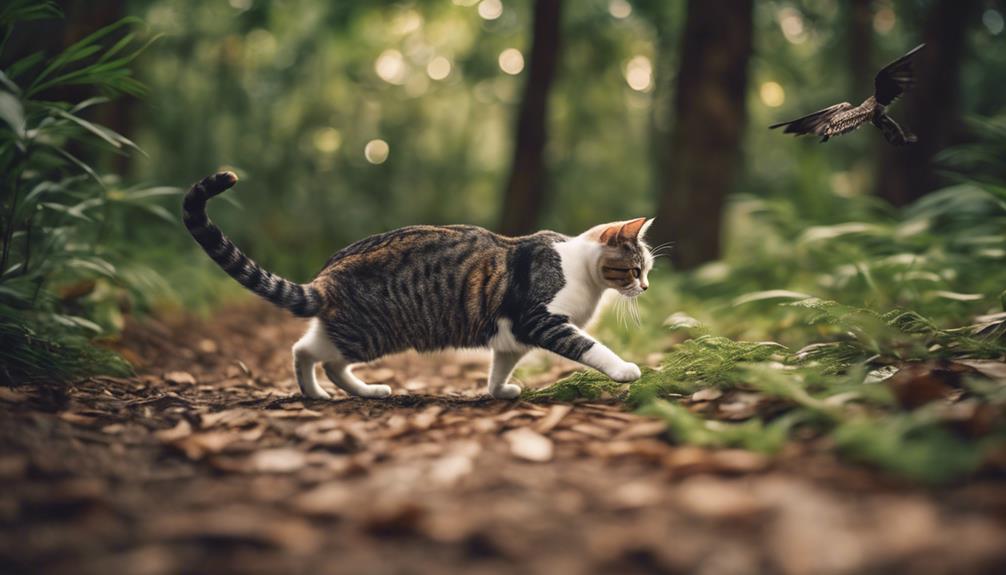
Access to food sources greatly affects the rate at which domestic cats shift to a feral state. When food is scarce, domestic cats may quickly develop feral behaviors, prioritizing hunting and survival skills over human care. This shift can occur within weeks as cats adapt to scavenging and hunting for sustenance. The table below summarizes how food sources influence the shift to a feral state in domestic cats.
| Food Sources | Feral Behaviors | Domestic Cat |
|---|---|---|
| Scarce | Increased | Adaptive |
| Abundant | Decreased | Dependent |
| Inconsistent | Accelerated | Self-sufficient |
| Regular | Delayed | Reliant |
| Varied | Varied | Varied |
Natural Survival Instincts Role
The natural survival instincts of a domestic cat are vital in its shift to feral behavior. Feral triggers, such as hunting and scavenging for food, become more pronounced as the cat adjusts to its environment.
Additionally, the development of territorial instincts plays a significant role in the cat's ability to survive and thrive in the wild.
Feral Behavior Triggers
Triggered by their natural survival instincts, domestic cats can quickly adopt feral behavior when deprived of human care and socialization. The shift from a pampered pet to a feral cat is often sparked by the need for food and shelter.
Harsh living conditions can expedite this transformation, emphasizing the importance of socialization and care in maintaining a cat's domestic nature. Feral behavior serves as a survival strategy for cats facing abandonment or neglect.
Hunting and Scavenging
In adapting to a feral lifestyle, domestic cats rely heavily on their natural hunting and scavenging instincts. These survival skills, inherent in all cats, enable them to catch prey and find food independently, aiding in their shift to a feral state.
Hunting small animals and foraging for sustenance are vital behaviors that help domestic cats exhibit feral behavior quickly, especially when faced with the necessity to fend for themselves without human care.
Territorial Instincts Development
When domestic cats are left to fend for themselves, their territorial instincts play a crucial role in guiding their adaptation to a feral lifestyle. These instincts drive domestic cats to establish territories for survival, marking boundaries and defending them against intruders.
Without human interaction, domestic cats rely on their territorial behaviors to navigate the challenges of finding food, shelter, and avoiding threats in their new feral environment.
Gradual Adaptation to Environment
Adapting gradually to their environment, domestic cats can evolve towards feral behaviors over a period of time when left to fend for themselves. Factors such as age, socialization, and survival instincts influence the pace of this transformation.
Cats abandoned or lost may adapt quicker than well-socialized indoor cats. The gradual process of becoming feral may take months, varying based on individual circumstances and outdoor survival challenges.
Increasing Independence in Feral Cats
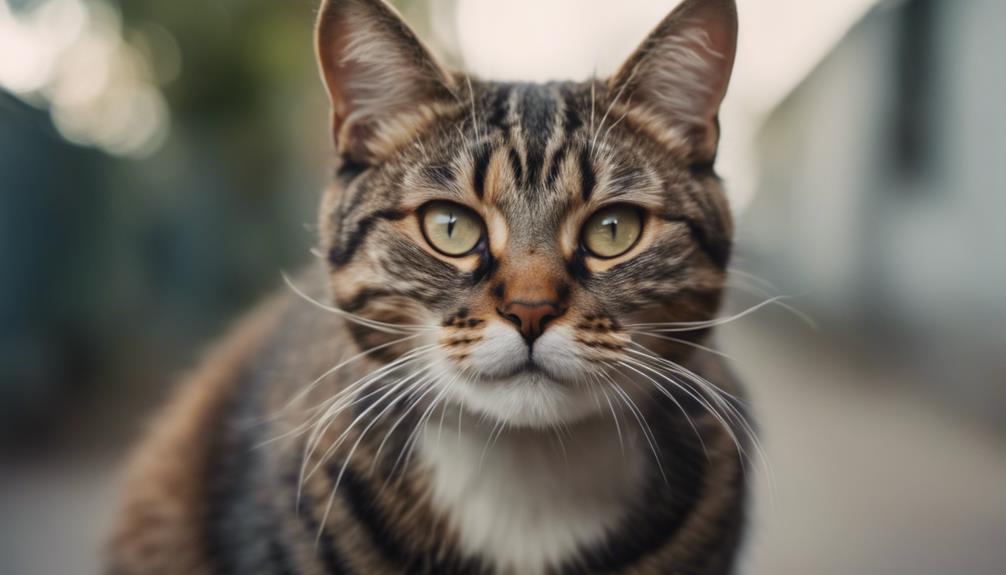
Developing self-sufficiency, feral cats progressively enhance their independence as they adapt to a life in the wild. These cats quickly acquire survival skills, shifting from dependence on humans to self-reliance. They become proficient hunters by 6-9 months old, relying less on human resources. The ability to find food and shelter influences their independence, with domestic cats reverting to a feral state within weeks when left to survive on their own.
| Independence | Survival Skills |
|---|---|
| Increases over time | Acquired through experience |
| Less reliance on humans | Proficient hunting abilities |
| Influenced by finding food and shelter | Quick development of self-sufficiency |
| Domestic cats revert to feral state quickly | Adaptation to wild living |
| Develops with age and experience | Key for feral cat survival |
Development of Feral Behaviors
Feral behaviors in domestic cats can manifest when they are left to fend for themselves in the wild, showcasing their innate survival instincts.
- Lack of physical contact with humans can accelerate feral traits.
- Adult feral cats may be challenging to tame due to their unsocialized outdoor experiences.
- The development of feral behaviors can contribute to the growth of feral cat populations in certain areas.
Does Spaying a Cat Affect Their Behavior and Potential to Go Feral?
The spaying cats timeline and process is an important decision for pet owners. Spaying can greatly affect a cat’s behavior, often making them calmer and less likely to roam or exhibit aggressive behavior. It also reduces the risk of certain health issues and can help prevent feral cat populations from growing.
Transition Timeline Variability
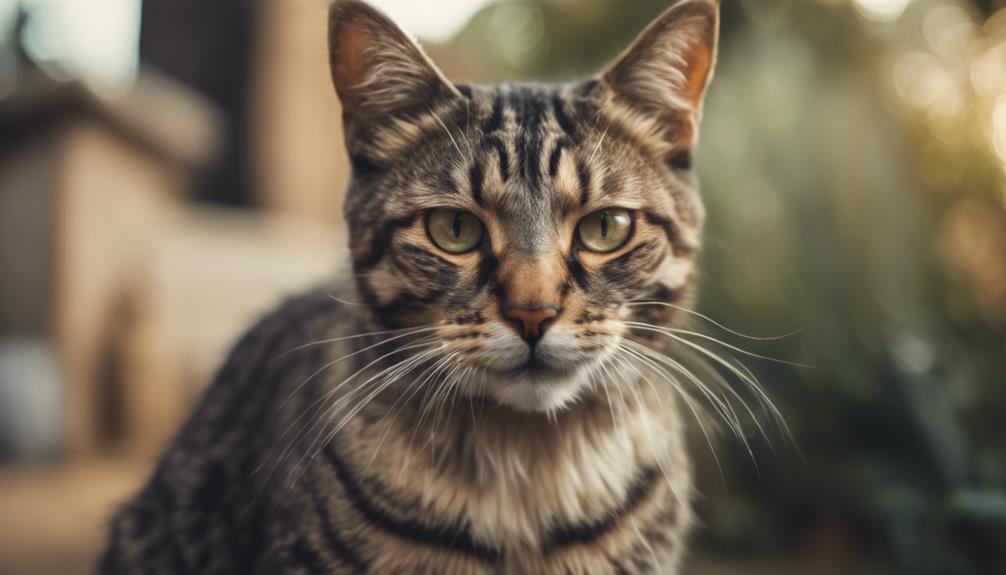
Transformation timelines for domestic cats to enter a feral state exhibit significant variability influenced by individual circumstances such as age, previous socialization, and environmental factors.
While some kittens may become stray and display feral behaviors within weeks, others, especially older domesticated cats, might take months or even years to complete the conversion.
This variability underscores the complex nature of the shift timeline from domestication to a feral existence.