How Long Should Kittens Stay With Their Mother


Kittens should stay with their mother for 8 to 12 weeks. This period is vital for socialization, helping them develop key behavioral skills. Being with their mother fosters appropriate behavior, grooming habits, and understanding of social hierarchies. Early separation can lead to issues like fearfulness and aggression. Kittens also learn important hunting and independence skills from their mother. These weeks lay the foundation for healthy adult cat behavior. For more details on the benefits of this time period for kittens' development, look into the information shared.
Importance of Socialization

Appropriate socialization under the guidance of their mother is essential for kittens to develop essential behavioral and communication skills.
Socialization with the mother cat and littermates is paramount for fostering appropriate behavior and communication in kittens.
Early separation from the mother can lead to potential behavioral issues such as fearfulness and aggression.
Through interaction with the mother, kittens learn boundaries, grooming habits, and social hierarchies, laying the foundation for well-adjusted adult cats.
Nutritional Needs of Kittens
When considering the nutritional needs of kittens, it is important to focus on essential nutrients and feeding frequency.
Kittens require a diet rich in proteins, fats, vitamins, and minerals to support their rapid growth and development.
Understanding how often to feed kittens and what nutrients are essential can help guarantee their overall health and well-being.
Essential Kitten Nutrients
In the early stages of their development, kittens require a well-balanced diet rich in essential nutrients to support their growth and overall health.
During the weaning period, which typically occurs around 4-8 weeks of age, mother's milk provides important antibodies and nutrients essential for their immune system.
If mother's milk is not available, commercial kitten milk replacer can be used to make sure they receive necessary proteins, fats, vitamins, and minerals for proper development.
Feeding Frequency for Kittens
As kittens mature beyond the weaning period, their feeding frequency plays a critical role in meeting their evolving nutritional needs. Initially fed every 2-4 hours, this frequency decreases as kittens start consuming solid kitten food.
Gradually changing from milk to wet food is crucial for proper nutrition. Monitoring weight gain and consulting with a veterinarian guarantees kittens in the litter receive adequate nutrition for best growth and health.
Learning From the Mother Cat
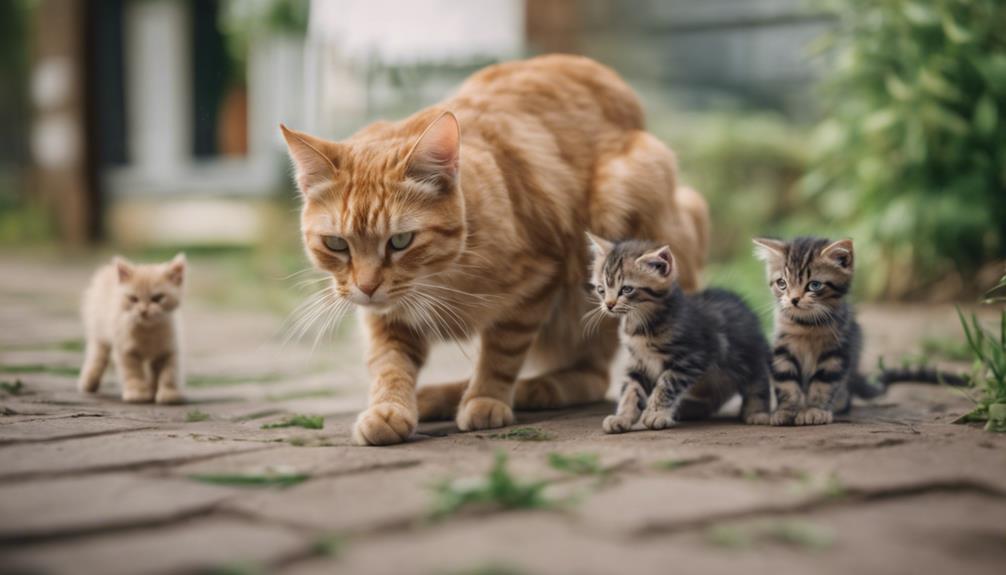
Mother cats play an essential role in teaching their kittens important skills such as hunting, grooming, and socializing. Kittens closely observe their mother's actions and learn to communicate through body language cues.
Mother's Care Importance
The guidance provided by a mother cat is instrumental in shaping the behavioral development and socialization of kittens.
| Care Provided by Mother Cat | |
|---|---|
| Grooming | |
| Teaching Hunting Skills | |
| Litter Box Training | |
| Promoting Independence |
Mimicking Mother's Actions
Observing and emulating the actions of the mother cat plays a crucial role in the behavioral and developmental learning process of kittens.
Kittens learn grooming techniques, hunting skills, and social interactions by mimicking their mothers.
This learning process also helps kittens understand communication cues and body language.
Socializing Through Observation
Learning from the mother cat's actions is vital for kittens to acquire important social skills and behaviors.
- Kittens learn appropriate grooming behaviors by observing their mother cat.
- Observing the mother cat helps kittens understand play boundaries.
- Mimicking the mother's body language and vocalizations aids kittens in effective communication.
Preventing Exhaustion in the Mother

To prevent exhaustion in the mother cat during the post-weaning period, it is essential to monitor her food intake closely and make sure she receives adequate nutrition.
After weaning kittens, the mother's health can deteriorate due to the high demands of milk production. Neglecting her food intake can lead to exhaustion and potential health issues.
Ensuring she stays healthy post-weaning is vital for her well-being and longevity.
Sibling Bonding in Kittens
Sibling bonding in kittens plays a crucial role in their social development and emotional well-being.
- Kittens form strong bonds through play, grooming, and social interactions.
- This bonding helps them learn essential social skills and behaviors.
- Playing with siblings teaches appropriate play behavior and boundaries.
Smooth Transition to New Homes

A gradual and seamless adjustment to new homes is essential for ensuring the well-being and emotional stability of kittens as they shift from their mother's care. Extended time with the mother facilitates a smooth shift, aiding in the kittens' adaptation process.
This additional period also supports their emotional stability, helping them acclimate to their new environment more effectively. Longer stays with the mother promote overall well-being and a healthier adaptation to new homes.
Adjusting to New Environments
Adjusting to new environments is a critical aspect of a kitten's development, ensuring their successful integration into unfamiliar surroundings.
- Kittens weaned too soon may face emotional and behavioral issues when acclimating to new homes.
- Proper socialization with the mother and littermates enhances kittens' adaptability to new surroundings.
- Early weaning can hinder the development of essential social and behavioral skills needed for adjusting to new environments.
Developmental Benefits of 8-12 Weeks
During the important developmental period of 8-12 weeks, kittens benefit greatly from staying with their mother to acquire essential socialization skills. Early weaning increases aggression and stereotypic behavior in kittens.
Extended time with the mother and littermates helps reduce fearfulness and aggression, leading to well-adjusted adult cats. Waiting until 12 weeks for adoption promotes healthy development and overall well-being in kittens.
Is it Safe to Spay a Cat Shortly After Giving Birth to Kittens?
Spaying cats after kittens can be safe, but it’s best to wait until the kittens are weaned, around 8 weeks old. Early spaying can increase the risk of complications and prolong the recovery process. It’s important to consult with a veterinarian to determine the best timing for spaying after a cat gives birth.
Ensuring Proper Behavioral Training
In order to guarantee proper behavioral training for kittens, it is essential to allow them to stay with their mother for at least 8-12 weeks.
- Socialization: Kittens learn important cat behaviors through interaction with their mother.
- Independence Skills: Mother cats teach vital hunting and independence skills during this period.
- Gradual Separation: Allowing gradual separation after 8-12 weeks helps kittens develop necessary social and behavioral skills.