How Many Cats Can You Own In Virginia


In Virginia, cat ownership is regulated by state laws and local ordinances. While Fairfax County permits unlimited cats, Henrico County allows up to four, and Roanoke County restricts households to six, with specific spaying or neutering requirements. Understanding varied limits across jurisdictions is critical, as is compliance to avoid penalties. Importantly, cat limits can result in fines and legal repercussions if exceeded. Ensuring responsible ownership and preventing hoarding are priorities in Virginia. Observing set limits, seeking legal advice when needed, and safeguarding feline welfare are essential for cat owners in the state.
Virginia State Laws on Cat Ownership
Virginia State Laws on Cat Ownership are thoroughly regulated by Virginia Law Code 3.2-6524, which mandates licensing for cats over 4 months old. Local ordinances may also impact cat ownership, potentially setting limits on the number of cats allowed per household.
Being mindful of these regulations is crucial as they vary between jurisdictions within Virginia, ensuring compliance with the law.
County-Specific Cat Ownership Regulations
Fairfax County in Virginia permits unlimited cats on a property without specific limits.
Henrico County allows up to four adult pets, including cats.
Waynesboro sets a maximum of five cats over 4 months old per household.
Roanoke County restricts households to six cats, with at least four being spayed or neutered.
Virginia Beach City and Chesterfield County have no defined restrictions on the number of cats allowed per household.
Maximum Cat Limits in Top Counties
When considering cat ownership in the top counties of Virginia, it is essential to understand the specific limits set forth by each jurisdiction. These restrictions vary, with Fairfax County allowing unlimited cats, while Chesterfield County restricts ownership to fewer than six felines.
Additionally, enforcement mechanisms and penalties for exceeding these limits play an important role in maintaining compliance with local regulations.
County-Specific Cat Restrictions
In various populous counties and cities of Virginia, regulations on cat ownership vary.
Some areas impose specific limits on the number of cats allowed per household. Fairfax County allows unlimited cats, while Prince William County, Virginia Beach City, and Loudoun County have no set limits. However, Chesterfield County restricts ownership to fewer than six cats.
Laws across the top populous areas in Virginia differ regarding cat ownership limits.
Enforcement of Cat Limits
Regulations governing cat ownership in various populous counties and cities of Virginia exhibit a range of restrictions.
Some areas impose specific limits on the number of cats allowed per household. Chesterfield County enforces a limit of fewer than six cats, while Waynesboro permits up to five cats over four months old.
Roanoke County allows six cats, with at least four spayed or neutered, to promote responsible pet ownership and prevent cases of animal hoarding.
Penalties for Exceeding
Exceeding the maximum cat ownership limits in top Virginia counties can lead to fines and legal repercussions, emphasizing the importance of adhering to local ordinances.
Violating cat ownership regulations, such as those in Chesterfield restricting ownership to fewer than six cats, can result in penalties.
Fairfax County allows unlimited cats, while Prince William County has no set limits, but all residents must follow the established rules to avoid legal consequences.
Understanding Animal Hoarding Laws
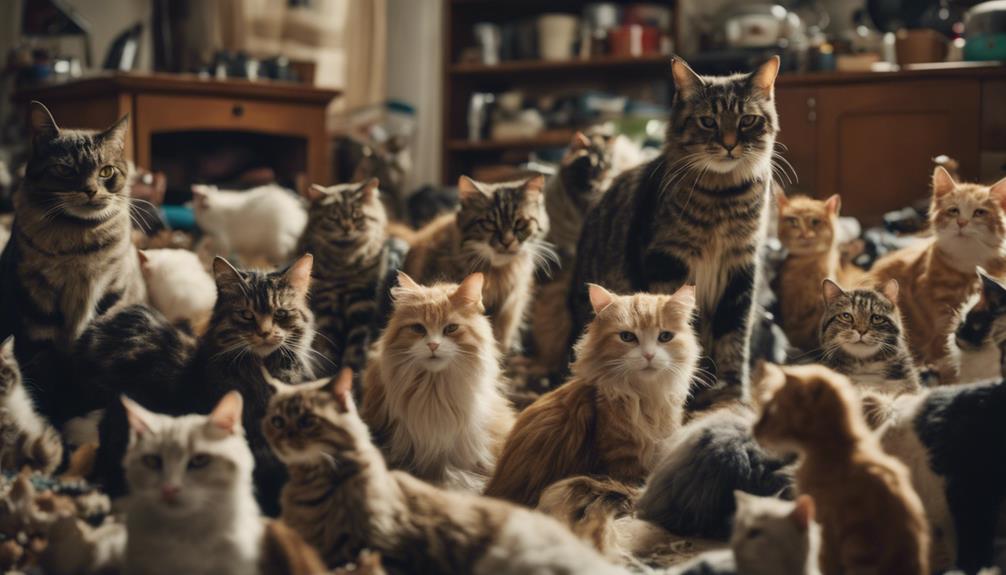
Understanding the complexities of animal hoarding legislation in Virginia requires a thorough examination of the legal framework and its implications for both caregivers and animals.
Virginia laws criminalize animal hoarding as a form of animal cruelty, with notable cases like Lisa Hokaj-Ross emphasizing the importance of companion animal limit laws.
While prosecution for hoarding is rare, it serves as an important tool in addressing severe cases of neglect and abuse.
Prosecution of Animal Hoarding in Virginia
The enforcement of animal hoarding laws in Virginia underscores the state's commitment to combatting instances of animal cruelty and neglect.
While prosecution for animal hoarding cases is uncommon, it is taken seriously by government and law enforcement.
Hoarders often fail to recognize the neglect inflicted on the animals they collect.
Virginia's laws aim to address cases of neglect and abuse, focusing on rehabilitation and prevention rather than immediate jail time.
Recent Animal Hoarding Cases
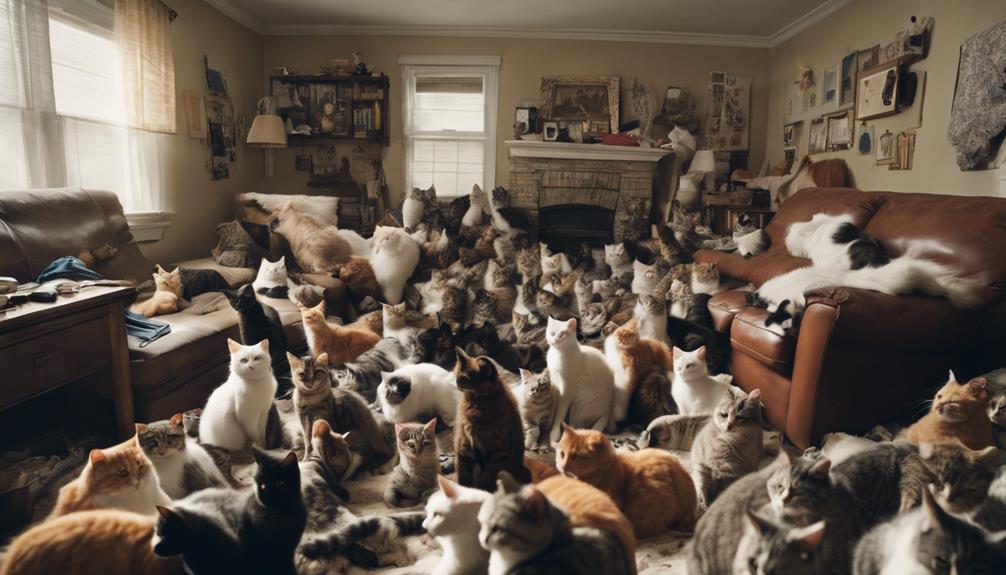
In recent animal hoarding cases within Virginia, instances of neglect and abuse have come to light, showcasing the ongoing challenges in addressing these complex situations. Laws in Virginia focus on animal welfare and aim to prevent animal hoarding.
Prosecution in such cases is rare due to the difficulty of proving neglect and intent. Loved ones' interference can complicate intervention efforts, making it challenging to address these cases effectively.
Compliance With Local Pet Ownership Laws
Ensuring compliance with local pet ownership laws is essential for cat owners in Virginia to avoid legal repercussions and uphold animal welfare standards.
- Local ordinances limit the number of cats per household.
- Chesapeake and Virginia Beach require a cattery license after owning five cats.
- Suffolk area restricts cat ownership to five cats per household.
Impact of Exceeding Cat Limits
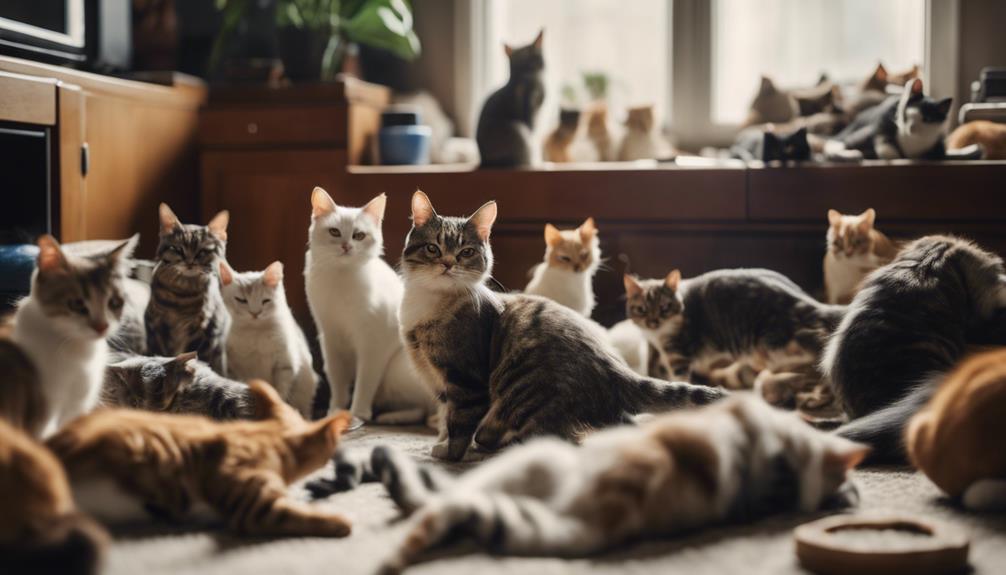
Exceeding the designated cat limits in Virginia can lead to potential fines and penalties imposed by local authorities. This can result in legal consequences due to violations of cat ownership regulations. Additionally, surpassing these limits may raise concerns about animal welfare and living conditions. It is essential to guarantee the well-being of the cats by adhering to the specified limits and providing proper care. Seeking legal advice can help navigate the repercussions effectively.
| Impact of Exceeding Cat Limits | ||
|---|---|---|
| Consequences | Description | Examples |
| Fines | Monetary penalties for surpassing cat limits | Paying fines to rectify the violation |
| Penalties | Punitive measures imposed by authorities | Community service or warnings issued |
| Animal Welfare | Concerns regarding the well-being of the cats | Ensuring proper care and living conditions |
| Legal Consequences | Repercussions due to violating cat ownership regulations | Facing legal action or court proceedings |
– What are the Legal Limits for Cat Ownership in Virginia?
In Virginia, there are no specific legal limits on how many cats one can own. However, local ordinances may impose restrictions on the number of pets allowed in a household. It’s important to check with your city or county regulations before you own multiple cats in Virginia.
Recommendations for Cat Owners in Virginia
When considering cat ownership in Virginia, it is important for individuals to adhere to the designated limits set by local ordinances to avoid potential legal ramifications and safeguard the well-being of their feline companions.
Check your county's laws to determine the maximum number of cats allowed per household.
Some areas in Virginia restrict cat ownership to a maximum of five cats.
Violating regulations can lead to legal consequences.