How Many Litter Boxes Per Cat


To guarantee good habits and cat health, aim for one litter box per cat and an extra one. Having designated spots for each cat prevents sharing issues and territorial disputes. Cats appreciate individual spaces for privacy and security, reducing stress and anxiety. Multiple boxes per cat minimize health risks, promote cleanliness, and encourage regular elimination habits. Consensus suggests two boxes per cat if space allows, accommodating cats' preferences for separate elimination locations. Consider social groupings when determining the number of boxes needed. Proper setup and maintenance of multiple litter boxes are crucial for feline well-being. Explore the benefits of individual spaces for a harmonious environment.
Importance of Multiple Litter Boxes
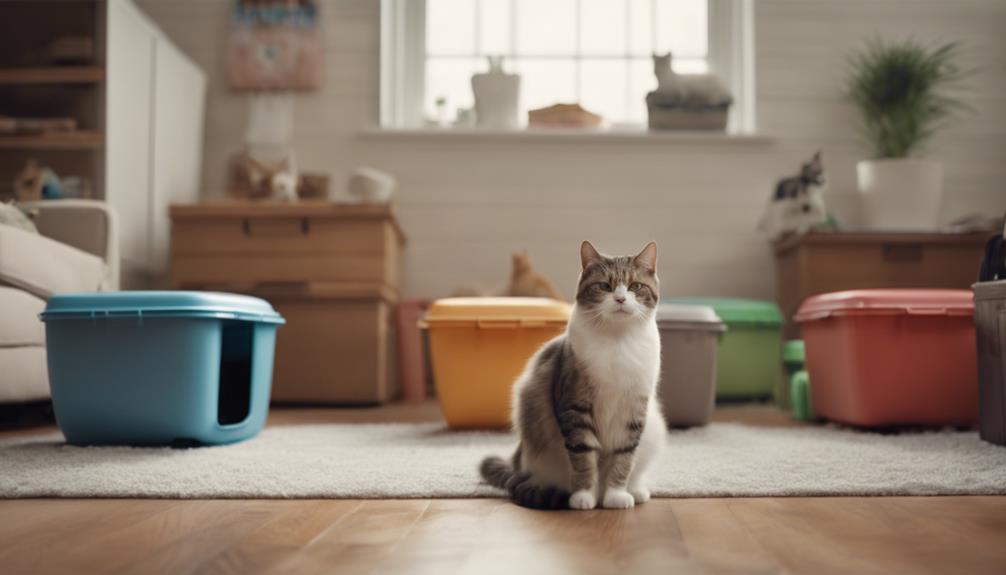
Highlighting the significance of providing multiple litter boxes for cats is crucial in fostering proper litter box habits and preventing potential issues.
Jackson Galaxy advises having one litter box per cat, plus an additional one to deter territorial marking. This practice guarantees each cat has a designated spot to use the litter box, promoting good habits and overall cat health.
Some cats may prefer their own box, emphasizing the importance of having multiple options available.
Preventing Litter Box Problems
To avert potential litter box issues and promote healthy restroom habits in cats, ensuring an adequate number of litter boxes per cat is essential.
- Cats may seek alternative places to relieve themselves if there are not enough litter boxes available.
- Warning signs like spraying or eliminating outside the box should not be ignored.
- Having fewer litter boxes than recommended may lead to sharing issues among cats.
- Providing individual litter boxes can prevent territorial disputes in multi-cat households.
- Proper litter box set-up and maintenance are vital for good litter box habits.
Benefits of Individual Spaces
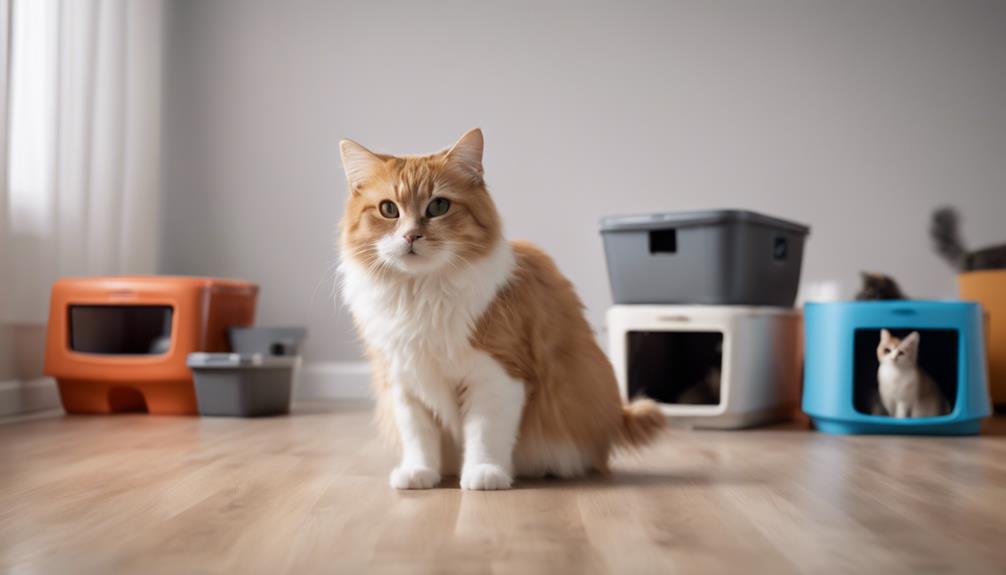
Individual spaces for cats, such as separate litter boxes, offer privacy and reduce territorial issues among felines. Providing each cat with its own designated area for elimination can help maintain a peaceful environment and prevent conflicts over shared resources.
Privacy for Cats
Cats greatly prefer having their own designated elimination spaces to guarantee privacy and reduce potential territorial conflicts with other felines.
- Cats prefer individual elimination spaces to avoid sharing with other cats.
- Providing separate litter boxes can reduce territorial disputes among cats.
- Individual litter boxes give cats privacy and a sense of security while using them.
- Having personal spaces for elimination can prevent stress and anxiety in cats.
- Ensuring each cat has its own litter box helps maintain good litter box habits and prevents behavior issues.
Reduce Territorial Issues
In multi-cat households, providing separate litter boxes for each feline can effectively reduce territorial issues and promote a harmonious environment for all pets. Cats tend to prefer having their own space for elimination to prevent conflicts, especially in cases of territorial behavior.
Impact on Feline Health
Having multiple litter boxes per cat can greatly impact feline health. The health benefits are numerous, ranging from reducing the risk of litter box aversion to preventing territorial marking behaviors.
Health Benefits
With multiple litter boxes available per cat, the risk of urinary tract infections and stress-related health issues can be greatly minimized, promoting ideal feline health.
- Providing extra litter boxes prevents overcrowding and guarantees cleanliness.
- Cats benefit from designated spaces, reducing stress-related problems.
- Regular elimination habits are encouraged, aiding overall health.
- Strategic placement helps cats with mobility issues.
- Individual boxes can deter territorial marking behaviors.
Behavioral Implications
Insufficient access to adequate litter boxes can greatly impact a cat's behavioral patterns and overall feline health. Cats may exhibit territorial marking behaviors and develop urinary tract issues if the number of litter boxes is insufficient.
This can lead to stress, anxiety, and conflicts among cats. Consulting a cat behaviorist and ensuring each cat has its designated litter box can help prevent health issues and maintain a harmonious environment for all feline companions.
Factors for Determining Quantity
To determine the appropriate quantity of litter boxes for a multi-cat household, consider the number of cats residing in the space along with their individual preferences and behaviors.
- The consensus is one litter box per cat, plus one extra.
- Some experts suggest two litter boxes per cat if space allows.
- Multiple boxes can prevent territorial disputes among cats.
- Cats prefer separate locations for urination and defecation.
- Small dwellings can use social groupings to determine box quantity.
Ideal Number of Boxes
To guarantee that each cat has a comfortable and designated spot for elimination, it is recommended to provide one litter box per cat along with an additional box.
This practice not only prevents sharing issues but also promotes good litter box habits and reduces the likelihood of territorial disputes among cats.
Box Per Cat
For optimal litter box usage, behaviorists recommend providing one litter box per cat along with an additional box.
- Multiple litter boxes prevent sharing issues and territorial disputes.
- Cats prefer separate locations for urination and defecation.
- Extra boxes guarantee each cat has suitable access.
- Consensus is one box per cat plus an extra promotes good habits.
Multiple Boxes Benefits
Ensuring each cat has access to an adequate number of litter boxes is essential for promoting good litter box habits and preventing territorial issues among feline companions.
Jackson Galaxy recommends having one litter box per cat, plus an additional one for best litter box usage.
Providing multiple litter boxes reduces sharing issues, prevents territory marking, and helps maintain good litter box habits, ensuring your cats' overall health and well-being.
Placement Considerations
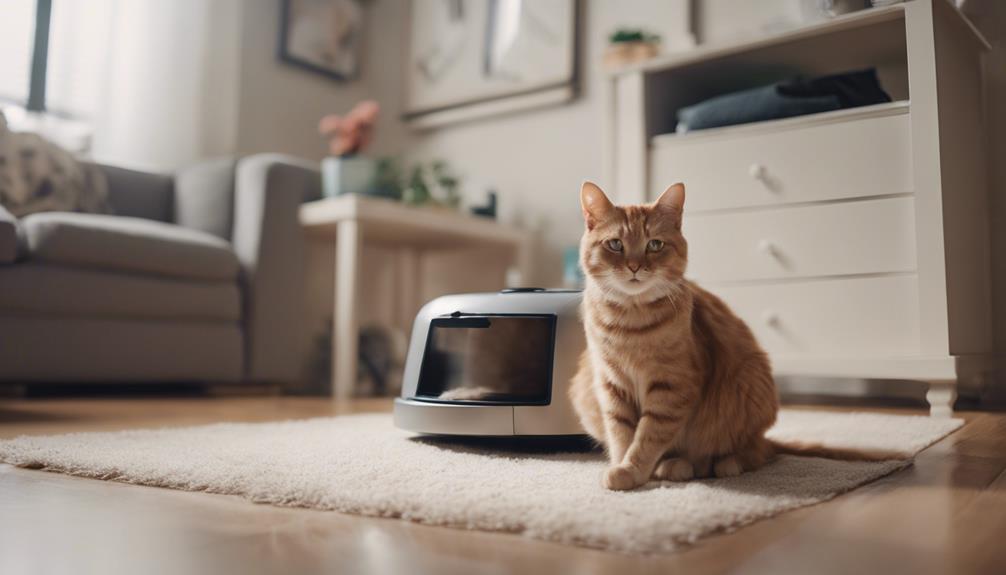
Consider placing litter boxes in quiet, secluded areas away from heavy foot traffic to guarantee cats feel comfortable using them.
- Provide separate boxes for territorial cats
- Centralize an extra box for easy access
- Avoid lining up boxes against walls
- Make sure each cat has its designated box
- Promote ownership and reduce sharing-related issues
Managing Multiple Litter Boxes
When managing multiple litter boxes for multiple cats, ensuring each feline has its designated box can help maintain cleanliness and prevent behavioral issues. Cats often prefer having their own space to urinate and defecate, reducing the chances of territorial disputes. Providing one litter box per cat, with an additional box, guarantees each cat has access to a suitable place to relieve themselves comfortably.
| Litter Box Management | Benefits |
|---|---|
| One box per cat | Reduces territorial issues |
| Extra box | Promotes good habits |
| Individual spaces | Prevents sharing disputes |
Common Issues and Solutions
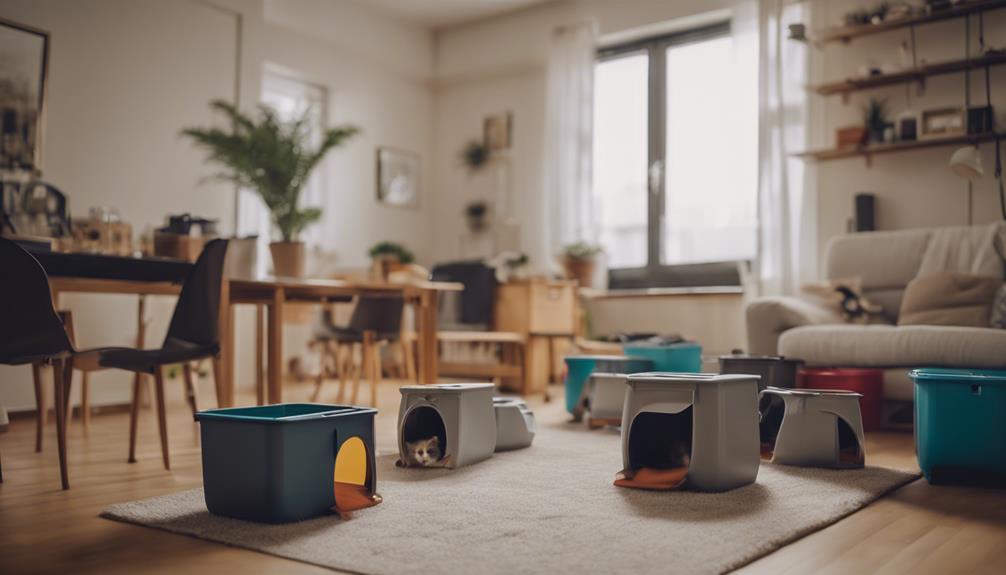
To address common litter box issues effectively, it is essential to understand the underlying reasons for feline behavior changes and implement appropriate solutions.
- Territorial Marking: Cats may spray if they feel overcrowded.
- Uncovered Waste: Indicates dissatisfaction with sharing a litter box.
- Behavioral Changes: Can signal the need for more litter boxes.
- Additional Boxes: Prevent territorial disputes and provide suitable elimination spots.
- Proper Addressing: Maintains good litter box habits and prevents accidents.
Is a Maine Coon’s Purring Behavior Related to Litter Box Usage?
The Maine Coon purring levels are not necessarily related to litter box usage. While a happy and content Maine Coon may exhibit higher purring levels, their litter box habits are more dependent on factors like cleanliness, location, and overall health. It’s important to address any changes in litter box behavior with a vet.
Ensuring Litter Box Success
In optimizing feline litter box habits, meticulous attention to litter box maintenance and selection plays a pivotal role. Guarantee there are enough litter boxes for two cats, with 2-3 inches of litter inside.
Keep the litter box clean, scoop multiple times a day, and clean weekly. Choose a box size that is at least 1.5 times the length of your cat for comfort.
Place the litter box in a quiet, accessible area to encourage regular use.