How Much Do Male Cats Purr


Male cats can purr at frequencies ranging from 25 to 150 Hertz. Purring varies based on emotional states, individual traits, and surroundings. It serves as a communication tool reflecting contentment, distress, or desire for attention. The intensity of purring changes with personality traits and environment, with louder purrs denoting contentment and softer purrs indicating stress. Monitoring purring habits can provide insights into a male cat's well-being and emotional needs. Understanding male cats' purring behavior helps interpret their emotions and enhance interactions. Learn more about the fascinating world of male cats' purring habits and what they signify.
Factors Influencing Male Cats' Purring
Factors influencing male cats' purring frequencies can be attributed to a variety of internal and external stimuli. Male cats may adjust their purring frequency based on their emotional state, seeking attention or expressing contentment.
Changes in their environment and social interactions can also impact how much they purr. Monitoring a male cat's purring habits can provide insights into their well-being and overall health.
Purring Frequency in Male Cats
Male cats exhibit a wide range of purring frequencies, typically falling between 25 to 150 Hertz, a range also seen in female cats. Unlike other behaviors, purring habits in male cats are not strictly linked to their gender but are more influenced by individual traits and external factors.
Understanding the variations in purring frequency can offer insights into a male cat's well-being and emotional state.
Male Cat Purring Behavior
In the domain of feline communication, purring frequency in male cats serves as a notable indicator of their emotional state and interactions with their environment. Male cats purr when happy, relaxed, or seeking attention. Purring frequencies range from 25 to 150 Hertz, with variations among individuals.
This form of communication expresses emotions such as contentment or hunger. Changes in purring behavior may signify underlying health issues or stress.
Causes of Cat Purring
The frequency of purring in male cats serves as a multifaceted form of communication, reflecting their emotional well-being and interactions with their surroundings.
Male cats may purr more when expressing contentment or happiness, using purring as a bonding mechanism with their owners or other pets.
Stressful or unfamiliar situations can lead to decreased purring in male cats as they adjust to their environment and cope with their feelings.
Emotional States and Purring in Males
Emotional states in male cats can be effectively communicated through their distinctive purring behavior. Male cats purr to express a range of emotions, including contentment, hunger, or distress. Understanding their purring patterns helps decipher their needs accurately. Below is a simple table illustrating some common emotional states male cats may convey through their purring:
| Emotional State | Description |
|---|---|
| Contentment | Purring softly and steadily when relaxed or happy. |
| Hunger | Purring more urgently or loudly when seeking food. |
| Distress | Purring inconsistently or in short bursts when anxious. |
| Affection | Purring while kneading or rubbing against their owners. |
Male Cats' Purring Intensity
Male cats' purring intensity serves as a key indicator of their emotional state and communication abilities. This intensity can vary based on individual personality traits and environmental factors.
Some male cats may purr loudly when content, while others do so softly. During times of stress or illness, the purring frequency in male cats may increase.
Understanding a male cat's purring intensity can provide insight into their well-being and emotional needs.
Communication Through Male Cat Purrs
Purring serves as a fundamental method for male cats to convey their emotions and needs.
- Male cats use purring to communicate with other cats and humans.
- Purring indicates contentment, relaxation, or a desire for attention.
- The frequency and intensity of purring can vary based on individual personality and environment.
Male Cats' Purring for Attention
Establishing a strong bond with their owners, male cats often utilize purring as a means to seek attention and communicate their needs effectively.
Purring can serve as a way for male cats to express their desire for interaction and affection from their human companions.
The frequency of purring in male cats may vary depending on their individual personalities and the specific situations they find themselves in.
Understanding Male Cats' Purring Behavior
Male cats, much like their female counterparts, use purring as a form of communication. This behavior can signal a range of emotions, from contentment to stress, requiring owners to pay close attention to their cats' needs.
Understanding the nuances of male cats' purring patterns and frequencies is essential for strengthening the human-feline bond and ensuring the cat's well-being.
Purring and Communication
When observing male cats, one can discern a rich tapestry of emotions and needs expressed through their characteristic purring behavior.
Purring and Communication:
- Cats purring is a way to communicate other emotions besides contentment.
- Emotions and needs like happiness, hunger, or discomfort can be conveyed through purring.
- Understanding a male cat's purring can offer insights into their emotional state and desires.
Purring Frequency Differences
Feline vocalizations, particularly purring frequencies, provide valuable insight into the nuanced communication of male cats. Male cats typically purr within the 25 to 150 Hertz range, akin to female cats.
Variations exist in individual purring habits among male cats, with some exhibiting higher frequencies than others. Changes in purring frequency in male cats could indicate underlying health concerns or stress, highlighting the importance of understanding their communication cues.
Health and Healing Aspects of Male Cats' Purrs
Purring vibrations produced by male cats have been found to potentially play a significant role in promoting health and aiding in the process of healing and tissue repair.
Health and Healing Aspects of Male Cats' Purrs:
- Male cats' purring vibrations range from 25 to 150 Hertz, aiding in tissue repair.
- Purring corresponds to therapeutic frequencies for healing purposes.
- It helps male cats maintain bone strength and overall well-being.
Responding to Male Cats' Purring
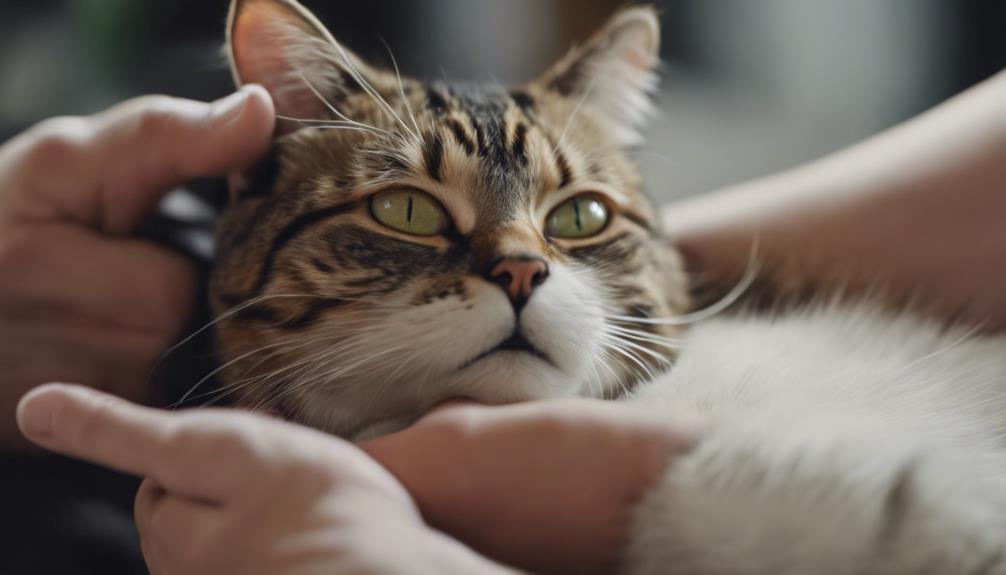
When examining male cats' purring and its potential implications for their well-being, it is important to explore how owners can effectively respond to these vocalizations.
Male cats purr to express contentment, relaxation, or a need for attention. Changes in a male cat's purring behavior might indicate underlying issues such as illness or stress.
Understanding these cues can help owners provide appropriate care and seek veterinary attention when necessary.
Does a Male Cat’s Purring Have any Relation to its Weight?
Male cat weight guidelines can affect their purring. Overweight cats may have difficulty purring due to the extra pressure on their airway. It’s important to monitor your male cat’s weight to ensure they stay healthy and happy. Follow cat weight guidelines to keep your furry friend in purrfect condition.
Male Cats' Purring Patterns
Male cats' purring patterns are influenced by a variety of factors, including their individual personalities and environmental stimuli.
Some male cats may purr more frequently than others based on their personalities.
Purring habits can vary depending on the environment and interactions with humans.
Male cats may purr to communicate needs, emotions, or seek attention.
Changes in purring frequency or intensity may signal underlying health issues.