How To Check Cats Heart Rate


To check your cat's heart rate, find a quiet moment to gently locate its femoral pulse behind the front left leg. Place your finger lightly on the inner thigh or left chest to feel the throbbing pulse. Count the beats for 15 seconds then multiply by four. A normal heart rate for a cat falls between 140-220 beats per minute. Detect any potential health concerns with irregular or high heart rates, which may require a vet's evaluation. Monitoring your feline's heart rate is crucial for its overall well-being and health assessment. Familiarize yourself with these steps for a healthier, happier cat.
Understanding Cat Heart Rate

Understanding Cat Heart Rate is essential for pet owners to monitor their feline companions' cardiovascular health effectively. Cats typically have a normal heart rate ranging from 140 to 220 beats per minute.
Checking their heart rate involves counting beats for 15 seconds and multiplying by four. This simple method helps in detecting potential health issues, especially if the heart rate remains consistently high or irregular, warranting a vet visit for evaluation.
Importance of Monitoring Heart Rate
Monitoring the heart rate of your cat is essential for maintaining their overall health and detecting any potential issues early on.
- Early detection of abnormalities
- Ensuring timely treatment
- Tracking changes in health status
Regular monitoring can help identify irregularities like consistently high or irregular rates, prompting a vet visit for further evaluation. Gentle handling during checks is essential to prevent stress-induced heart rate elevation.
Locating Cat's Pulse
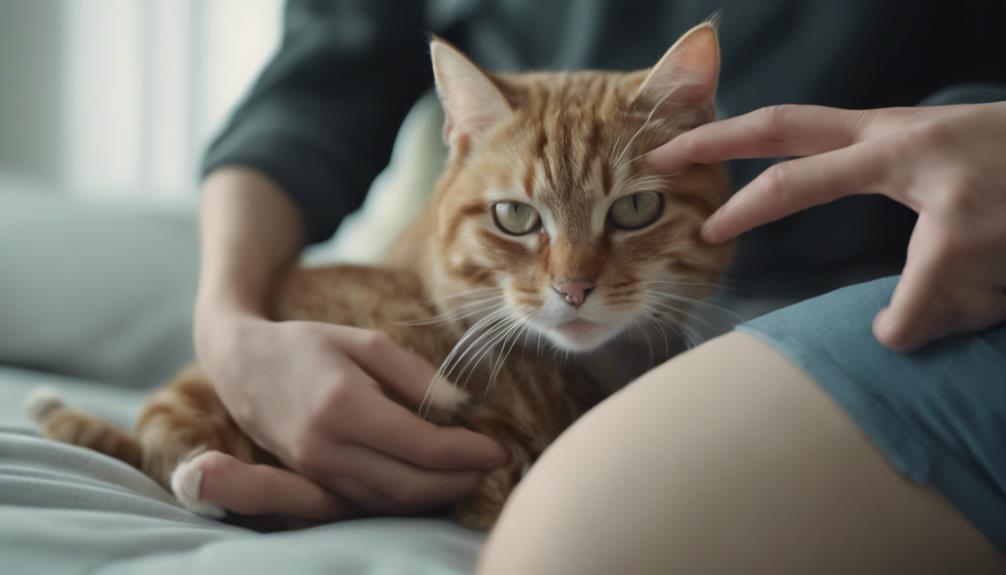
To accurately locate a cat's pulse, it is essential to find the femoral pulse positioned behind the front left leg.
By gently placing a finger on the inner thigh or left side of the chest, the rhythmic throbbing of the pulse can be detected.
This method allows for an accurate count of beats per minute, aiding in the determination of the cat's heart rate.
Find Femoral Pulse
To accurately locate a cat's pulse to check its heart rate, you can find the femoral pulse by gently placing your fingers on the inside of the hind leg where it meets the body. Feel for a small, steady pulsation under the skin, which indicates the femoral artery. This pulse point is reliable and easily accessible for monitoring a cat's heart rate.
Locate Heart Area
When locating a cat's pulse, gently place your fingers on the inner thigh or left side of the chest to feel for the pulsating sensation under the skin. This area is where you can feel the pulse most prominently. By feeling the pulse, you can count the beats per minute to determine the heart rate. Remember, the pulse can also be felt in the hind legs.
| Location | Method | Importance |
|---|---|---|
| Inner thigh | Gently press down | Easy to access |
| Chest area | Light touch | Detect heart rate |
| Hind legs | Soft pressure | Alternate location |
Counting Beats per Minute
To accurately measure a cat's heart rate, counting beats per minute is essential. This method involves timing the number of heartbeats within a minute to determine the rate.
Understanding the normal range for a cat's heart rate is vital for interpreting the results accurately.
Rate Measurement Techniques
To measure a cat's heart rate accurately, place your fingers on the left side of the cat's chest or inner thigh to locate the pulse. Count the beats per minute (BPM) by timing the pulse for 15 seconds and multiplying by 4. A healthy adult cat's resting heart rate typically falls between 120 and 160 beats per minute.
Regular checkups are essential to monitor your cat's heart health effectively over time.
Normal Range Interpretation
Within the feline population, an adult cat's resting heart rate typically ranges between 120 and 160 beats per minute, serving as an important indicator of cardiovascular health. Monitoring your cat's heart rate can help assess their well-being, with variations possibly signaling underlying issues.
Consistent observation and noting any deviations from the normal range are essential in maintaining healthy cats. Regular veterinary check-ups promote early detection and appropriate management of potential heart-related concerns.
Factors Affecting Heart Rate Accuracy
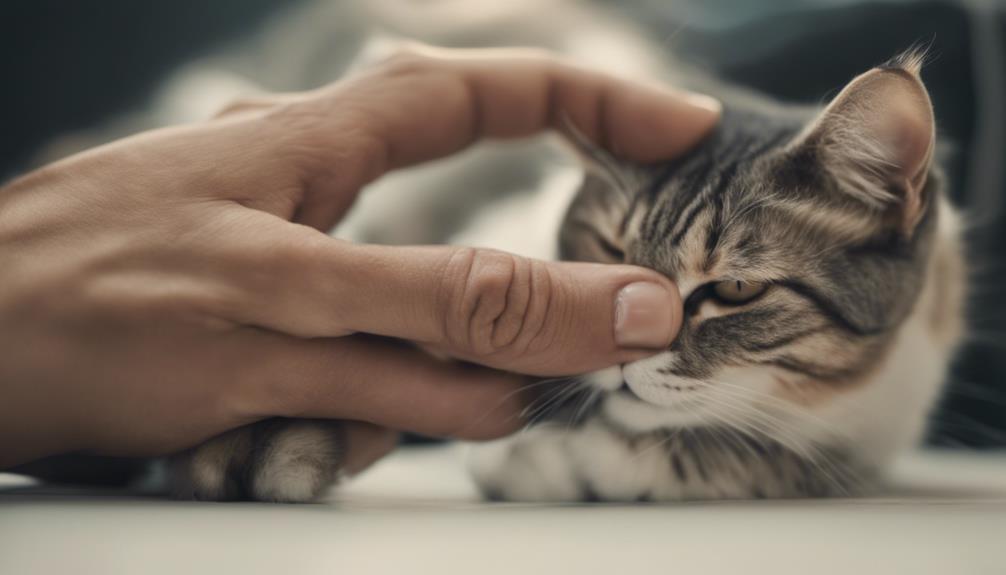
Factors such as the size, age, breed, stress levels, anxiety, and recent activity of a cat can greatly impact the accuracy of measuring its heart rate.
Proper technique and gentle touch are essential.
Consistency in monitoring for variations.
A calm environment is necessary for accurate readings.
Normal Heart Rate Range for Cats
Understanding the normal heart rate range for cats is fundamental in monitoring their overall health and well-being. Cats typically have a heart rate between 140 to 220 beats per minute.
Factors like relaxation or stress can influence heart rate fluctuations. Pet owners should be aware of these ranges and monitor their cat's heart rate regularly.
Consistently high or irregular heart rates may indicate underlying health issues and require veterinary attention.
Monitoring Heart Rate for Health

Monitoring your cat's heart rate regularly is essential for maintaining their health. By keeping track of their heart rate, you can detect any abnormalities early on and seek veterinary help promptly.
Understanding the techniques for measuring heart rate accurately will empower you to take better care of your feline companion.
Importance of Monitoring
Regular vigilance over your cat's heart rate is essential for safeguarding its well-being and promptly addressing potential health concerns.
- Monitoring your cat's heart rate can reveal faster heart rate, indicating possible issues.
- Checking your cat's heart rate in beats per minute regularly is vital.
- Detecting abnormalities in heart rate early can help prevent serious health problems.
Techniques for Measurement
One effective method for evaluating a cat's heart rate is by employing techniques such as utilizing a stethoscope, feeling the pulse manually, or employing an electrocardiogram (ECG).
Monitoring heart rate, typically measured in beats per minute, is important for evaluating vital signs and detecting early signs of potential health issues.
Regular checks help guarantee overall cat well-being, with advanced tools like Holter ECG monitors offering precise heart rate readings for cats with suspected heart conditions.
Detecting Abnormalities Early
Detecting abnormalities early in a cat's heart rate is essential for identifying potential health issues promptly. Regular monitoring of the heart rate can help in early detection of abnormalities such as:
- Irregularities in rhythm
- Unusually fast or slow heart rates
- Sudden changes in respiratory patterns
These abnormalities, if caught early, can indicate underlying conditions that require veterinary attention for proper diagnosis and treatment.
Seeking Veterinary Attention Promptly

In cases where a cat's heart rate falls consistently outside the normal range of 140-220 beats per minute, seeking prompt veterinary attention is imperative.
Any sudden changes or irregularities in heart rate should be addressed swiftly by a veterinarian.
Immediate emergency care is necessary if a cat's pulse weakens or disappears.
Timely veterinary intervention can help diagnose and treat underlying health issues associated with abnormal heart rates in cats.
Can Monitoring My Cat’s Heart Rate Help Me Be A Better Cat Owner?
Monitoring your cat’s heart rate can provide valuable insight into their overall health. By keeping track of their heart rate, you can detect any irregularities early on and seek veterinary care as needed. This proactive approach can ultimately help you become a more responsible and informed cat owner. Remember these tips for cat owners.
Maintaining Regular Heart Rate Records
To effectively monitor your cat's heart rate over time, it is essential to maintain regular records of their pulse at consistent daily intervals.
- Record your cat's heart rate at the same time daily for consistency.
- Use a watch or clock to count the beats per minute accurately.
- Regular monitoring helps in detecting any changes or abnormalities early.