How To Clean A Cat Brush


To clean a cat brush, start by removing excess hair using a toothpick or the brush mechanism. Then apply a soapy solution, soaking the bristles or teeth to break down oils and dirt. Rinse thoroughly with clean water to eliminate debris, ensuring no residue is left. Use lukewarm water to maintain the brush's integrity. Dry by shaking off water, squeezing bristles, and air-drying on a towel to prevent mold. Sanitize with a water and bleach solution, then store in a dry area. Maintaining your cat brush regularly promotes hygiene and grooming effectiveness.
Removing Excess Hair
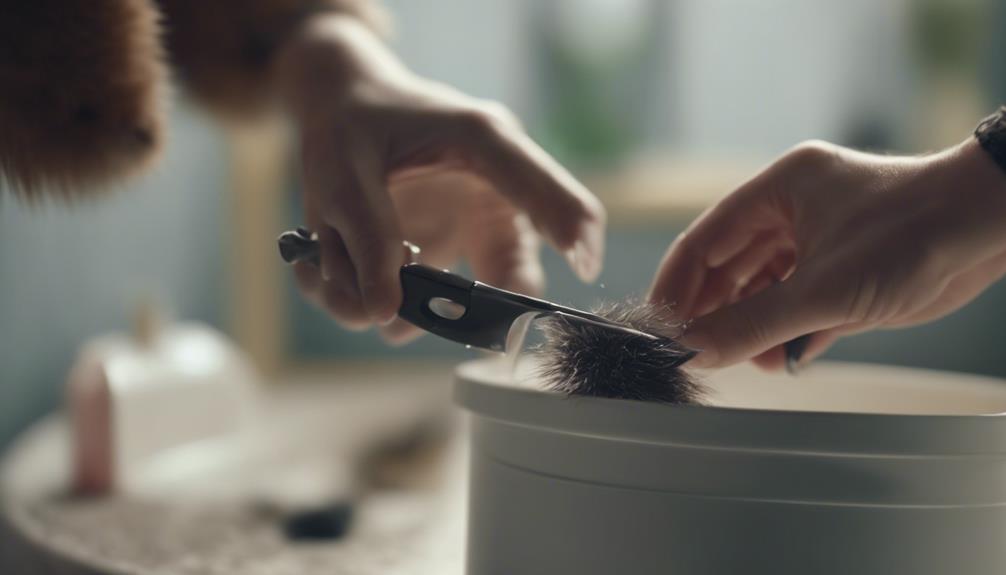
To effectively remove excess hair from a cat brush, consider utilizing a toothpick for bristle brushes or taking advantage of the pushing mechanism in slicker brushes. These grooming tools are designed to capture fur efficiently.
Regularly cleaning the bristles or comb is essential for proper pet grooming. Water, disinfecting sprays with antibacterial properties aid in the cleaning process, ensuring a hygienic tool for your cat's grooming needs.
Applying Soapy Solution
When cleaning a cat brush, effectively apply a soapy solution by thoroughly submerging the brush bristles or comb teeth into the solution. Guarantee not to soak any fabric pads to prevent mold growth.
Let the brush sit in the soapy solution for 5-30 minutes to break down oils, dirt, and debris. This process aids in cleaning dirt, hair, and dander trapped in the bristles or teeth for a hygienic pet brush.
Rinsing Thoroughly
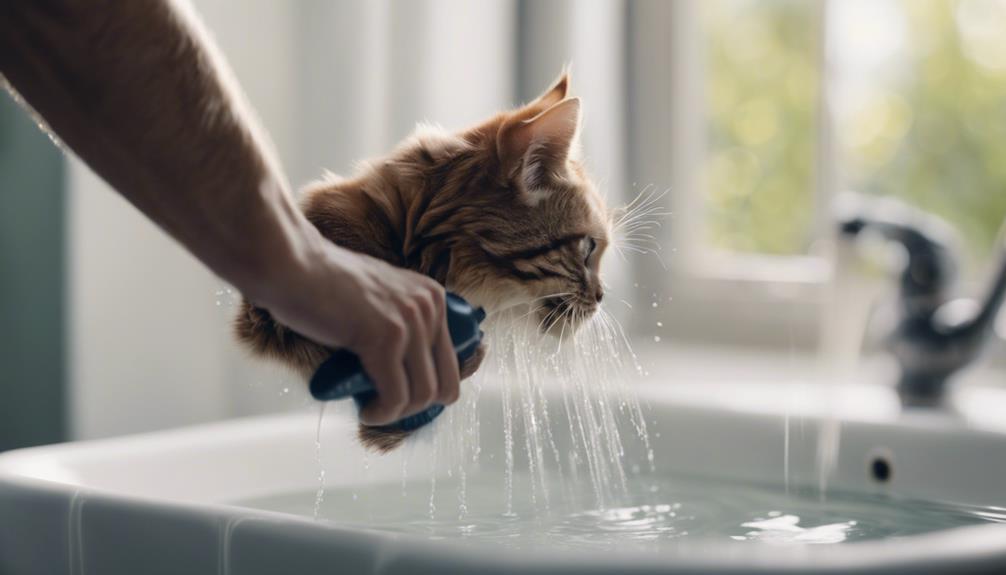
After soaking the cat brush in the cleaning solution, it is essential to rinse it thoroughly with clean water.
This step helps eliminate any lingering dirt, hair, or dander that may remain on the brush.
Thorough rinsing guarantees the brush is clean and free from any residue that could potentially irritate your cat's skin.
Water Temperature for Rinsing
What is the ideal water temperature for thoroughly rinsing a cat brush during the cleaning process?
To maintain the integrity of the brush bristles or comb teeth and avoid skin irritation, it is recommended to use lukewarm water. Lukewarm water helps remove any excess pet shampoo, dirt, dander, and oils effectively without damaging the brush.
This step is essential in ensuring a clean brush that distributes natural oils during grooming, making it the final step in the cleaning process.
Drying the Brush
To facilitate the drying process after thoroughly rinsing the cat brush, it is advisable to shake off any excess water to prevent water accumulation.
Gently squeezing the bristles can help remove additional water and aid in the drying process.
Ensuring all soap residue is washed away during rinsing with clean water is essential to prevent skin irritation and maintain the cleanliness and hygiene of the brush.
Disinfecting the Brush
Sanitizing the cat brush is a crucial step in maintaining excellent hygiene for your feline's grooming tools. Disinfecting the brush helps prevent the spread of germs and bacteria.
To keep your cat's coat warm and clean using a slicker brush, consider utilizing a water and 10% bleach solution. This guarantees thorough sanitization of the bristles or comb teeth, which distribute natural oils throughout the coat.
Allowing to Air Dry

Properly dried cat brushes are essential for maintaining their cleanliness and effectiveness in grooming your feline companion.
After cleaning the brush bristles or comb with warm water and picking out visible hairs and dirt, place them bristle side down on a dry towel or hang them to air dry.
This method prevents water accumulation, reduces mold growth, and guarantees your furry friend's coat stays shiny. Thorough air drying is vital for hygiene and brush longevity.
Can I Use the Same Cleaning Method for Cat Brushes and Cat Toys?
Yes, you can safely clean cat toys and cat brushes using the same method. Gently wash cat toys and brushes with mild soap and water, then rinse thoroughly. Make sure to read the care instructions for any specific cleaning recommendations. Keeping these items clean helps to maintain your cat’s health and hygiene.
Storage Tips
When it comes to storing cat brushes, it is essential to keep them out of your cat's reach to prevent any damage. Additionally, storing brushes in a warm, dry area can help prevent mold growth and maintain their quality.
Consider using closed containers or hanging hooks to safeguard brushes from dust and dirt accumulation.
Proper Brush Storage
To maintain the quality and effectiveness of your cat brushes, it is crucial to store them in a warm, dry area away from your cat's reach. Consider using a designated storage container or bag to keep brushes organized and clean.
Store brushes separately from other grooming tools to prevent cross-contamination. Regularly inspect stored brushes for any signs of wear or damage to guarantee they remain effective.
Cleaning Frequency Recommendations
For best maintenance of your cat brushes, it is advisable to adhere to appropriate cleaning frequency recommendations.
Particularly considering factors such as the number of cats in your household and whether your cat spends time outdoors.
Regular brush cleaning is essential to meet your pet's grooming needs and keep their coat healthy.
In multi-cat households or for long-haired cats, more frequent cleaning may be necessary to remove dead skin and dirt, making the grooming process even easier.
Location Considerations
Placing cat brushes in a designated storage area away from your cat's access guarantees their protection and cleanliness. To prevent mold growth, store them in a warm, dry location.
Consider using storage containers or bags to keep brushes organized and easily accessible for grooming sessions. Rotate brushes regularly for equal wear.
Keeping brushes away from pets' skin and coat will safeguard they remain free of residual hair and contaminants.