How To Dispose Of Used Cat Litter


Proper disposal of used cat litter is vital for hygiene. Scoop litter daily and double bag it securely. Opt for biodegradable litter for eco-friendliness. Place the bags in an outdoor trash can promptly to prevent odors. Never dump litter outdoors to avoid contamination. Following these steps guarantees a clean environment for your cat and household.
Proper Disposal Methods for Cat Litter
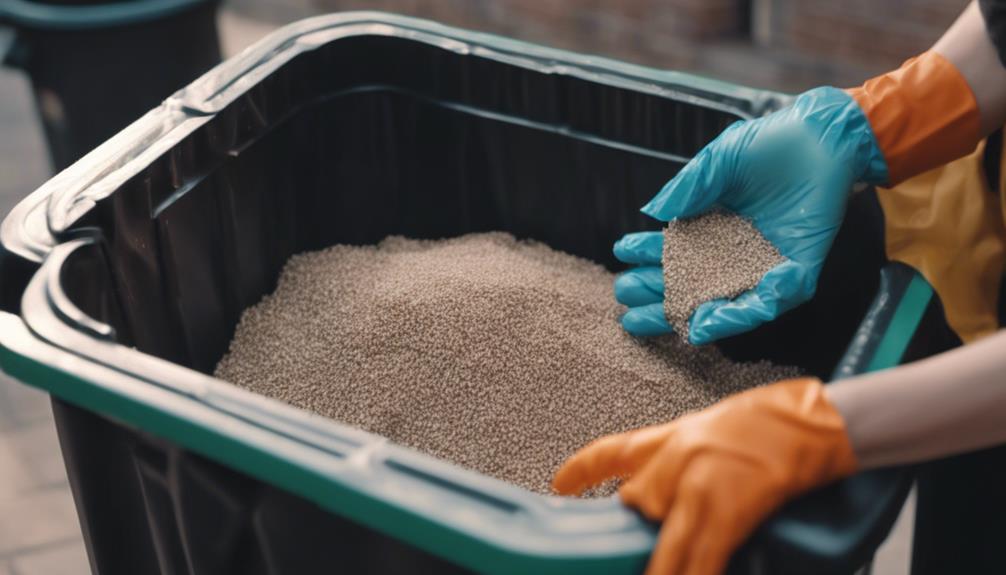
When it comes to disposing of used cat litter, following proper methods is crucial to minimize odors and environmental impact.
Always scoop litter daily and double bag it to contain odors. Use biodegradable cat litter for eco-friendly disposal.
Place double-bagged scooped litter in an outside trash can with a tight lid to guarantee it is properly disposed of.
Never dump used cat litter outside to prevent contamination of soil and water sources.
Trash Disposal Guidelines for Cat Litter
Proper disposal of used cat litter is essential to maintain cleanliness and prevent environmental contamination.
- Scoop litter daily and dispose in a trash bag to prevent odor and maintain cleanliness.
- Double bag scooped litter to prevent leakage and contain any potential mess.
- Place the double-bagged litter in an outside trash can with a tight lid to prevent animals from accessing it.
- Avoid letting scooped litter sit in a trash can for extended periods to prevent foul odors.
- Never dump used cat litter outside to prevent contamination of the environment.
Eco-Friendly Options for Cat Litter Disposal

For a more environmentally conscious approach to disposing of cat litter, consider exploring eco-friendly options that utilize biodegradable materials.
Biodegradable cat litters, made from natural substances like corn, pine, and sawdust, help reduce environmental impact. These options are safer for both the environment and your cat's health.
When disposing of cat waste, opt for plant-based products that can be composted, offering a sustainable solution for waste management.
Sustainable Cat Litter Disposal Practices
Sustainable cat litter disposal practices encompass eco-friendly methods, recycling cat litter, and composting used litter. These approaches aim to reduce waste, minimize environmental impact, and promote a more sustainable way of managing cat litter disposal.
Eco-Friendly Disposal Methods
When considering the disposal of used cat litter in an environmentally conscious manner, opting for biodegradable options made from natural materials can greatly reduce the ecological footprint of this pet care routine.
- Use biodegradable bags for waste disposal.
- Compost cat litter in a dedicated compost pile.
- Choose environmentally friendly cat litter made from recycled paper, wood shavings, corn, pine, or sawdust.
- Support eco-friendly practices by selecting plant-based products.
- Biodegradable cat litter, despite being pricier, offers sustainability benefits.
Recycling Cat Litter
Despite the eco-friendly benefits of using biodegradable cat litter, it is important to note that recycling cat litter is not a recommended practice due to potential health risks associated with pathogens and toxins found in cat feces, such as Toxoplasma gondii.
To guarantee safety, double bag used cat litter and dispose of it in the trash rather than attempting to recycle it, as municipal waste plants may not be equipped to handle it safely.
Composting Used Litter
Composting used cat litter, especially when using biodegradable litters made from natural materials like corn, pine, or recycled paper, can be a sustainable method for disposing of cat waste responsibly.
- Cat feces may contain harmful pathogens like Toxoplasma, requiring cautious composting.
- Use specialized bins or in-ground setups to prevent water contamination.
- Outdoor, in-ground composting suits multi-cat households for effective waste management.
- Avoid composting near water sources to prevent bacterial and parasitic spread.
Safe Methods for Disposing Cat Litter
To guarantee proper disposal of used cat litter, it is important to scoop the litter daily and securely double bag it before placing it in an outside trash can with a tight lid.
| Step | Details | Tips |
|---|---|---|
| Scoop litter daily | Prevents odor and leakage | Maintain cleanliness |
| Double bag litter | Avoid contamination and guarantee proper disposal | Minimize odor and pathogens |
| Outside trash can | Tight lid containment for potential pathogens | Prevent environmental harm |
Best Practices for Cat Waste Disposal
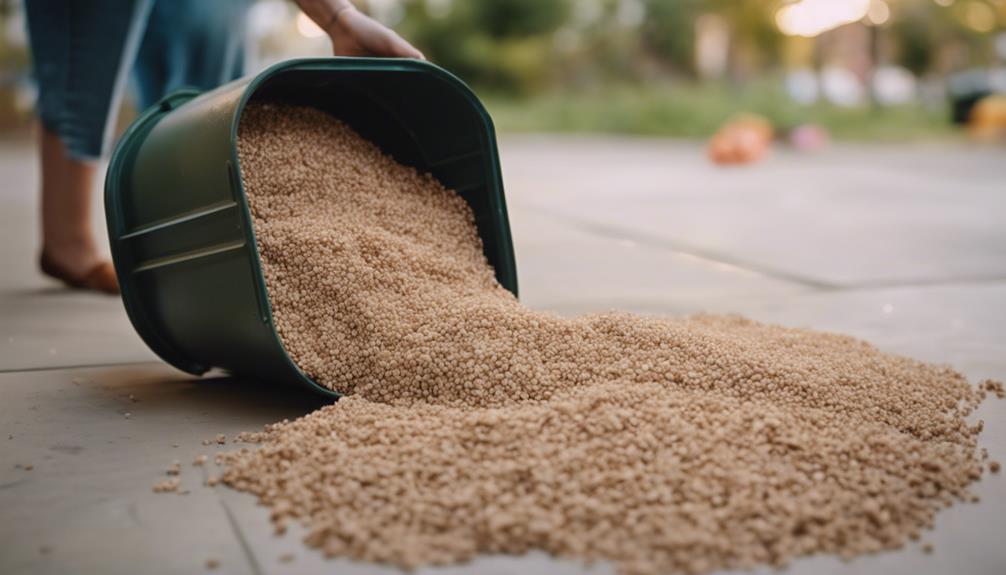
Implementing proper best practices for cat waste disposal is essential to maintain cleanliness and prevent environmental harm.
- Scoop litter daily and double bag it before disposing in an outdoor trash can with a secure lid.
- Avoid flushing cat litter down the toilet.
- Compost biodegradable litter cautiously in flower gardens.
- Never dump used cat litter outside to prevent harm to wildlife.
- Use biodegradable bags for landfill disposal to minimize environmental impact.
Responsible Cat Litter Disposal Techniques
Properly managing the disposal of used cat litter is necessary to uphold sanitation standards and protect the environment.
To responsibly dispose of cat litter, scoop it daily and double bag it to prevent leakage and environmental contamination.
Place the double-bagged cat litter in an outside trash can with a tight lid to minimize exposure to harmful pathogens.
Never dump used cat litter outside to prevent soil and water contamination.
Efficient Ways to Discard Cat Litter
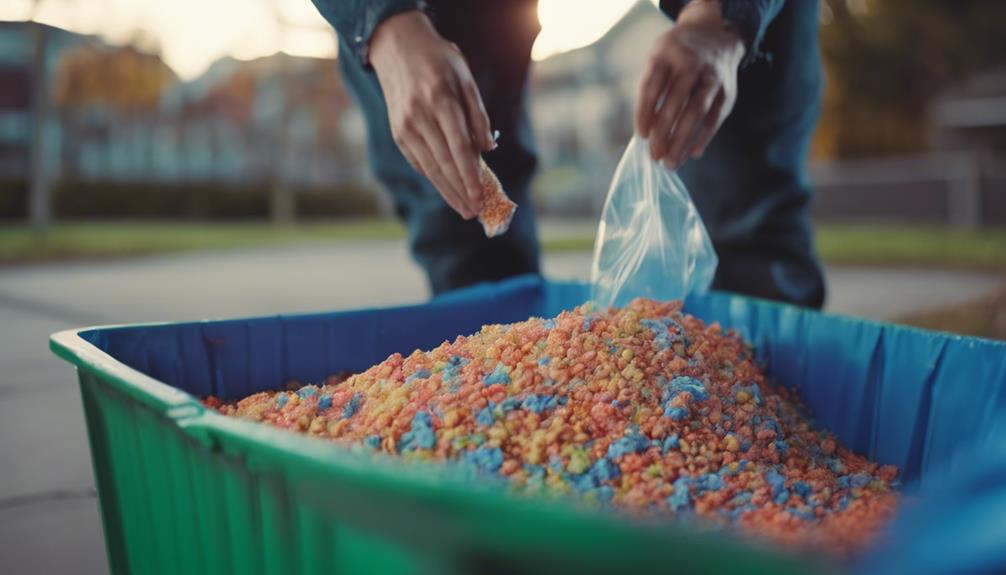
For efficient and hygienic disposal of used cat litter, adopt a routine of scooping and bagging waste daily.
- Double-bag cat litter to prevent odor and leakage.
- Dispose in an outside trash can with a secure lid.
- Avoid flushing litter to prevent harmful pathogens in water.
- Never dump outside to protect the environment and wildlife.
- Proper disposal is essential for environmental safety.
Is it safe to dispose of used cat litter in the same way after cleaning the litter mat?
After cleaning the clean cat litter mat, it is safe to dispose of used cat litter in the same way. The mat helps to trap the waste and reduces odor, making it easier and more hygienic to clean and dispose of the litter.
Environmentally Conscious Cat Litter Disposal
When contemplating environmentally conscious cat litter disposal, it is crucial to opt for biodegradable options made from natural materials like recycled paper or pine. These eco-friendly choices not only benefit the environment but also promote sustainability.
Proper disposal methods, such as avoiding flushing litter down the toilet and using compostable bags, further contribute to minimizing the impact on ecosystems.
Eco-Friendly Litter Options
Consider environmentally conscious cat litter disposal by opting for biodegradable options made from natural materials such as recycled paper, wood shavings, corn, pine, and sawdust.
- Recycled paper
- Wood shavings
- Corn
- Pine
- Sawdust
Choosing these eco-friendly cat litter options can help reduce the environmental impact associated with traditional clay-based litters while promoting sustainability and minimizing waste.
Proper Disposal Methods
Properly disposing of used cat litter is vital to safeguarding the environment and preventing potential harm to aquatic life and human health.
When discarding cat litter waste, it is essential to double bag the scooped litter to contain odors and prevent leakage in a trash bag.
Avoid leaving scooped litter in a trash can to prevent unpleasant odors.
Never dump used cat litter outside to prevent environmental contamination.