How To Feed A Cat With A Cone


Feeding a cat with a cone involves elevating food dishes for easier access. Choose shallow bowls to prevent spills. Hand-feeding can assist in your cat's adjustment. Consider different cone styles for comfort. Guarantee the cone doesn't obstruct eating. Soft cones offer added comfort. Adjustable cones can be beneficial. Inflatable collars provide a comfortable fit. Opt for small, frequent meals. Monitor your cat's eating behavior for any issues. For more insights on feeding techniques and specialized equipment for cone-wearing cats, further information is available to optimize your cat's feeding experience.
Elevating the Food Dishes
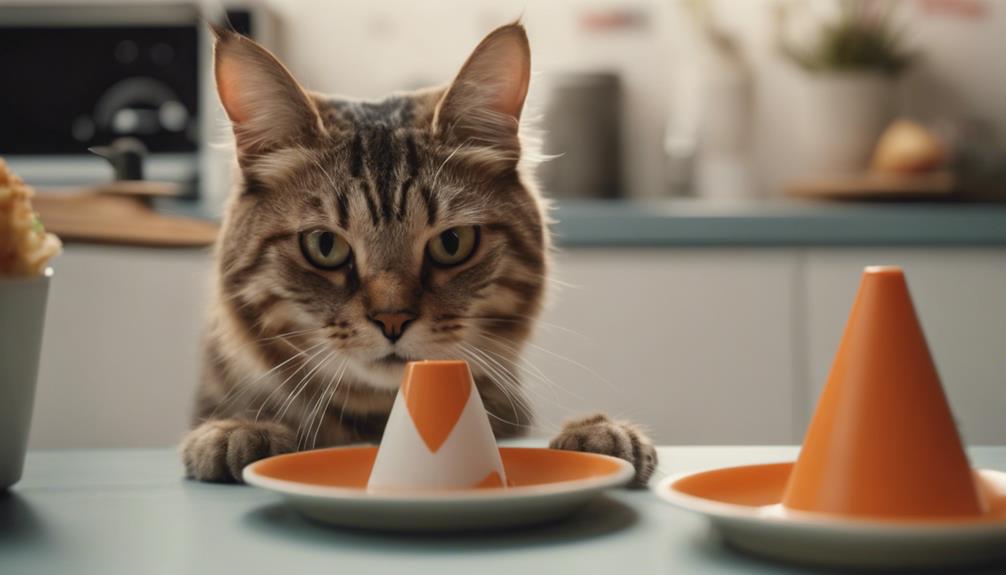
When catering to a cat with a cone, it's crucial to make adjustments to ensure they can eat comfortably. Elevating the food dishes by 2-4 inches off the ground facilitates easy access to meals for the feline, reducing the struggle of reaching their food. Additionally, hand-feeding can be beneficial in helping the cat adapt to eating with the cone on. These measures are essential for the well-being of your cat during this challenging period.
Choosing the Right Bowl Shape
When considering the right bowl shape for feeding a cat with a cone, it's important to keep in mind the size of the bowl.
The bowl should be large enough to accommodate the cone comfortably while allowing the cat to access its food easily.
Ensuring the cat's comfort during mealtime is vital for its well-being and overall eating experience.
Bowl Size Matters
Selecting the right bowl shape is crucial when feeding a cat with a cone to guarantee maximum comfort and accessibility for the feline.
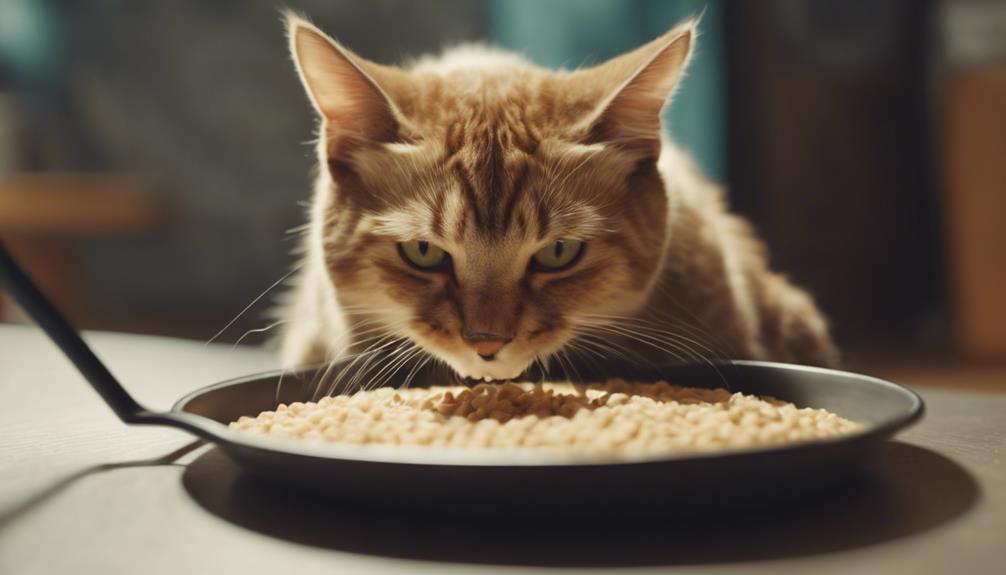
Opting for a flat plate or saucer instead of a traditional bowl can help the cat eat more easily despite the cone's hindrance.
While this choice may lead to a messier eating experience, it guarantees that the cat can access its food comfortably, aiding in a smoother mealtime process.
Consider Cat's Comfort
For ideal comfort and accessibility for a cat wearing a cone, choosing a flat plate or saucer over a traditional bowl is recommended.
Flat plates make it easier for the cat to reach its food while wearing the cone of shame. The flat surface allows the cat to fit two fingers between the cone and the plate, facilitating eating.
Using a plate can help the cat adjust to eating with the cone on.
Hand-Feeding Techniques
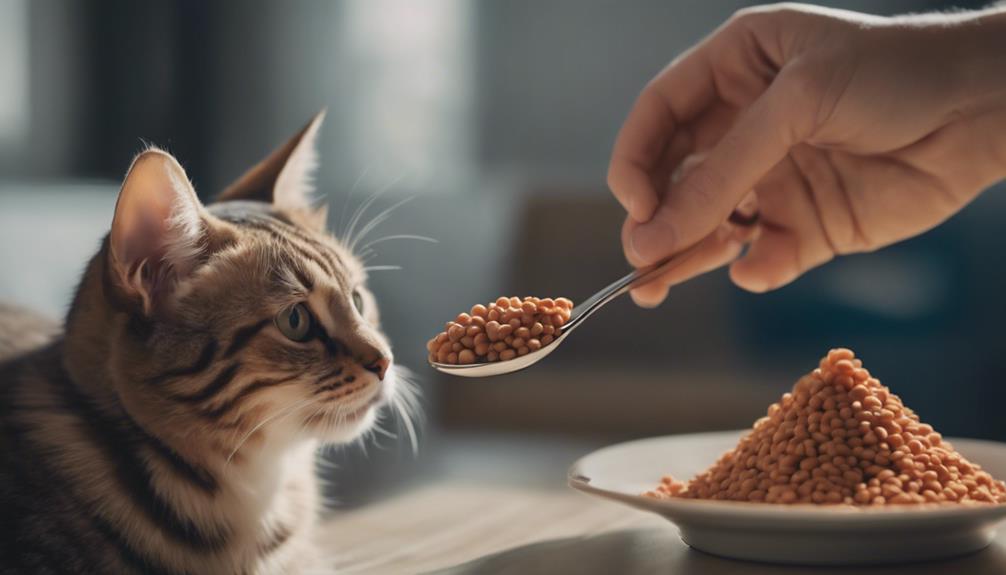
Implementing hand-feeding techniques is a practical approach to assist cats with cones in adjusting their eating habits by directly offering food from your hand. This method allows you to control the feeding process, ensuring your cat receives the necessary nutrition.
While it may be messy initially, hand-feeding can encourage eating with the cone on. Patience and gentleness are essential to making this experience positive for your cat, helping maintain its appetite and proper nutrition during recovery.
Exploring Different Cone Styles
When considering cone styles for your cat, it's important to think about the material used, the size of the cone, and the design variations available.
Soft cloth or paper collars provide comfort, while inner tube-style or shorter plastic cones offer alternatives.
Consulting with your vet guarantees the cone fits properly and prevents your cat from accessing any stitches or injuries.
Cone Material Options
Exploring various cone material options allows cat owners to tailor their pet's recovery experience for best comfort and functionality.
- Soft fabric cones like the Alfie Pet Soft Recovery Collar provide comfort and flexibility for cats.
- Inflatable donut-style collars are lightweight and can be paired with recovery suits for added protection.
- Inner tube style or shorter plastic cones offer alternative options for cats uncomfortable with traditional cones.
- Seek advice from a vet before changing cone styles to guarantee the cat's safety and comfort.
Cone Size Considerations
Considering the comfort and mobility of your cat during recovery, selecting the appropriate cone size is essential for ensuring proper coverage and functionality. Consult your vet for advice on sizing. Soft cloth or paper E-collars provide a more comfortable fit. Inner tube style or shorter plastic cones can enhance mobility. Make sure the cone reaches your cat's nose. Leave space for breathing and swallowing comfortably.
| Cone Size Considerations | ||
|---|---|---|
| Consult vet for sizing advice | Use soft cloth or paper E-collars for comfort | Consider inner tube or shorter plastic cones for mobility |
Cone Design Varieties
Among the various cone design varieties available for cats, selecting the most appropriate style is crucial for guaranteeing both comfort and functionality during the recovery period.
- Soft cloth or paper E-collar options provide comfort for cats while wearing cones.
- Inner tube-style or shorter plastic cones can be alternatives to traditional cones for cats.
- Consulting a vet before changing cone styles is vital to ensure the cat's safety.
- Different cone styles may impact the cat's ability to access food, water, and groom itself.
Cone Removal During Mealtimes
During mealtimes, it is important to carefully remove the cone from the cat under veterinary supervision to guarantee comfortable eating.
| Cone Type | Need to Remove | Feeding a Cat | Supervise |
|---|---|---|---|
| Elizabethan Collar | Yes | Yes | Constant monitoring |
Removing the cone allows the cat to eat without hindrance, but close supervision ensures the cat continues to heal properly.
Safety Measures for Cone-Wearing Cats
When caring for a cat wearing a cone, it is important to implement safety measures to prevent accidents and guarantee the cat's well-being.
This includes closely supervising the cat during activities, blocking off tight spaces to avoid entrapment, and regularly checking the cone fit for any signs of discomfort.
Cone Removal Precautions
Upon removing the cone from your cat, vigilant supervision is crucial to prevent them from licking or interfering with any surgical stitches.
- Keep the cat in a quiet environment.
- Confirm the area is free from hazards.
- Monitor for any signs of discomfort.
- Have the cone ready for immediate replacement.
Eating Area Adjustment
To guarantee the comfort and safety of cone-wearing cats during mealtimes, adjustments to their eating area are essential. Elevate food dishes by 2 to 4 inches for easier access.
Consider a hand-feeding approach if regular bowls are challenging. Soft cones can aid in eating and drinking.
Using an adjustable cone can enhance overall comfort and ease of eating for cone-wearing cats.
Feeding Schedule Modification
In ensuring the well-being of cone-wearing cats, it is imperative to adjust their feeding schedules to maintain a consistent and balanced diet.
- Monitor food intake closely to prevent weight loss or dehydration.
- Offer smaller, more frequent meals throughout the day to accommodate cone restrictions.
- Use elevated feeding dishes to help cats access food comfortably with the cone on.
- Consult with a vet for specific feeding recommendations tailored to your cat's needs while wearing a cone.
Soft Cone Options for Comfort

Soft cone options, such as the Alfie Pet Soft Recovery Collar, offer enhanced comfort for cats in need of post-operative care.
Inflatable donut-style collars provide a lighter alternative, and when paired with recovery suits, they offer added protection and comfort.
These comfortable cones, like the Well & Good Inflatable Collar, can help minimize stress during the recovery period.
Cats wearing soft cones may find it easier to eat, groom, and move around compared to traditional plastic cones.
Adjustable Cone Benefits
Adjustable cones offer tailored comfort and flexibility for cats recovering from surgery or medical procedures.
- Customize fit for cats of various sizes and shapes.
- Guarantee maximum comfort and prevent rubbing.
- Allow adjustments as the cat's condition changes.
- Flexible accommodation for different neck sizes.
Inflatable Collar Considerations
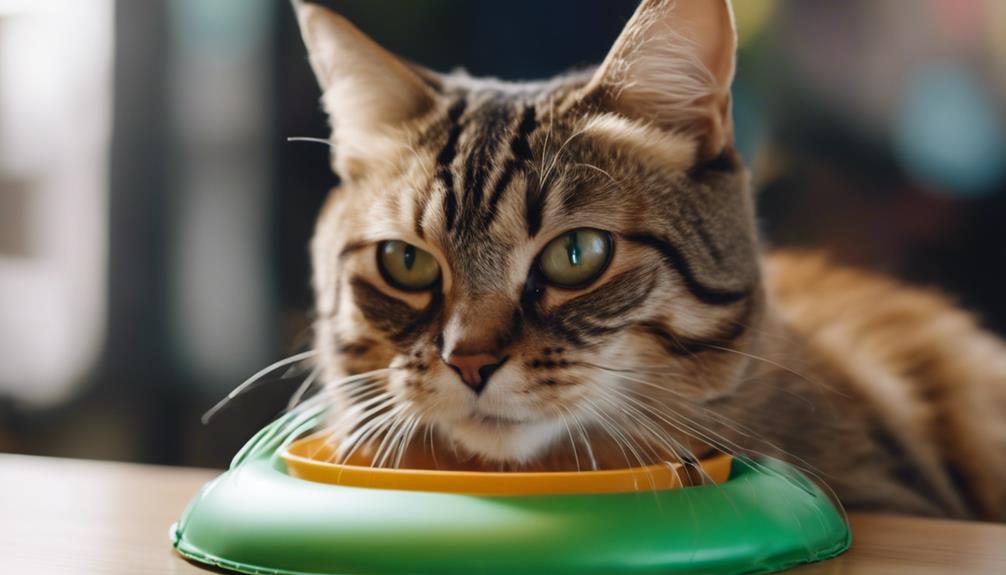
Considering the comfort and ease of wear for cats during their recovery period, inflatable collars offer benefits over traditional hard cones. These collars are lighter, more comfortable, and allow better peripheral vision and hearing for the cat, while still preventing access to surgery sites. Some inflatable collars feature adjustable straps for a customized fit, ensuring a smoother recovery period. They come in various sizes to guarantee a proper fit.
| Feature | Benefits |
|---|---|
| Lightweight | Increased comfort |
| Adjustable Straps | Customized fit |
| Better Vision | Enhanced peripheral vision and hearing |
Can I Use the Same Technique to Feed a Cat with a Cone as I Would to Bottle Feed a Kitten?
Yes, the same technique can be used to feed a cat with a cone as you would to bottle feed a kitten. It’s important to follow a proper bottle feeding kittens tutorial to ensure the cat’s nutritional needs are met while wearing the cone.
Shallow Feeding Dishes for Cats
To facilitate easier access to food for cats wearing cones, utilizing shallow feeding dishes can greatly enhance their mealtime experience.
- Shallow feeding dishes prevent spills and help cats with cones eat comfortably.
- These dishes guarantee the cone doesn't interfere with eating.
- Elevating food dishes aids in smoother mealtimes for cats wearing cones.
- Shallow designs reduce the risk of food being pushed out of reach.