How To Find Lost Cat With Microchip


To locate a lost cat with a microchip: Verify the microchip is registered and details are current. Reach out to the microchip registry with the cat's unique ID. Alert local authorities, shelters, and welfare organizations promptly. Utilize online platforms like Petco Love Lost and universal databases. Create effective lost-pet flyers with clear photos and contact information. For further steps in maximizing search efforts and understanding the role of microchips, explore the importance of updates, online registries, and persistence. These strategies increase the likelihood of reuniting with a missing cat, providing valuable guidance in such situations.
Microchip Registration and Update

Registering and updating the microchip information of your cat is a crucial step in enhancing the chances of a successful reunion in case they get lost.
By ensuring accurate registration, you improve the likelihood of a pet recovery service locating your lost cat.
Microchips act as permanent identification tags, not GPS trackers, making registration essential for finding your beloved pet in distressing situations.
Regular updates and enrollment in recovery services further strengthen this process.
Contacting Microchip Registry
Upon realizing that your cat is missing, promptly reach out to the microchip registry to report the situation. Here are some key steps to follow:
- Provide the unique ID number of your cat's microchip for tracking.
- Confirm your contact information is updated in the registry.
- The registry can assist in alerting local authorities and shelters.
- Regularly check for updates on found cats matching your pet's information.
Notifying Local Authorities
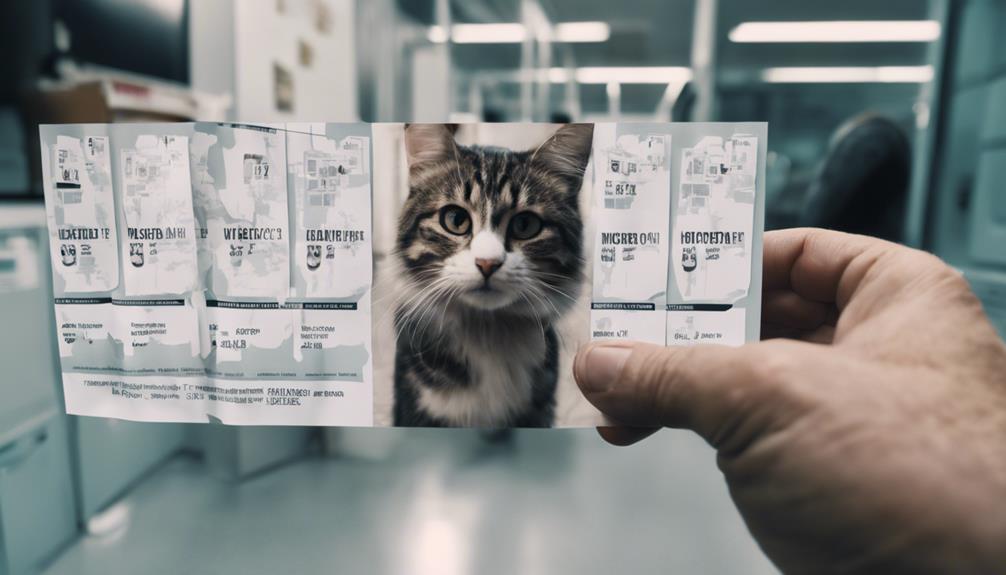
Local authorities should be promptly notified of the loss of your microchipped cat to increase the chances of a safe return. Contact local animal shelters, animal control agencies, and nearby animal welfare organizations.
Keep your contact information updated with the microchip company. Register your pet's microchip to help in locating missing cats.
It is important to make sure that your microchip is registered and your details are current for a higher likelihood of your cat being found.
Utilizing Online Platforms
To enhance your chances of finding your lost cat, consider utilizing online platforms such as Petco Love Lost for thorough lost and found pet searches.
Registering your cat's microchip information on universal databases can aid in better tracking and identification.
Additionally, ensuring that your contact details are up to date on online pet registries can facilitate quick reunification in case your cat is found.
Online Pet Registration
Registering your cat's microchip details online is a vital step in guaranteeing swift identification and reunion in case your beloved pet goes missing.
- Online pet registration allows you to enter your cat's microchip details into a universal registry for quick identification.
- Registering online helps shelters and vets access your contact information if your cat is found.
- Make sure your registration includes up-to-date contact details for a quick reunion.
- Use online platforms to promptly update your cat's information, enhancing the chances of locating your lost pet.
Lost Pet Alert
Utilizing online platforms for lost pet alerts, particularly those tailored for pets with microchips, can greatly enhance the chances of locating and reuniting with your missing cat.
Create a lost pet profile on dedicated websites, stay active on social media, contact local animal shelters with your cat's microchip details, offer a reward, and double-check your contact information is up to date for a more effective search.
Microchip Database Search
Considering the importance of microchip databases in reuniting lost cats with their owners, delving into the online platforms available for conducting searches proves to be a vital step in the search process.
- Online platforms allow for efficient tracking using the unique ID number.
- These databases store pet identification information for quick access to contact details.
- Registering in a universal database enhances the chances of locating a lost cat.
- Keeping microchip details updated is essential for effective tracking.
Creating Lost-Pet Flyers
When creating lost-pet flyers, it is vital to focus on effective design that includes a clear, recent photo of the cat and a bold 'Lost Cat' heading.
Including key contact information such as your phone number or email is essential for potential sightings or information.
Describing your cat accurately and using bright colors and readable fonts can help make the flyer noticeable within the community.
Effective Flyer Design
Lost Cat Alert!
Have you seen this cat?
Contact: 555-555-5555
Name: Whiskers
Last Seen: Elm Street
Description: Gray tabby with white paws and a distinctive black spot on its tail.
Let's work together to bring Whiskers back home! Thank you for your help.
Key Contact Information
To effectively create a lost-pet flyer that maximizes the chances of finding your missing cat, it is crucial to prominently display key contact information for potential sightings or updates. Include your phone number, email, and the unique ID number of your cat's microchip on the flyer.
This information aids in quick identification and guarantees that anyone who finds your lost cat can easily reach out to you for a reunion.
Implementing GPS Tracker Technology

The integration of GPS tracker technology into pet care has revolutionized the way pet owners can monitor and track their beloved companions.
- GPS trackers provide real-time location information for pets equipped with the device.
- These trackers use GPS technology to track pets remotely, enhancing their safety.
- Features like geofencing and activity tracking help monitor and safeguard pets effectively.
- GPS trackers can be attached to a pet's collar or harness for easy monitoring and tracking.
Microchip Vs GPS Tracker
When comparing microchips to GPS trackers for pets, it is essential to understand their distinct functions and benefits in enhancing pet safety.
Microchips provide permanent ID for easy identification, while GPS trackers offer real-time location tracking.
Microchips help with immediate identification if a cat is lost, whereas GPS trackers assist in tracking the pet remotely.
Combining both enhances pet safety and increases the chances of finding a lost cat.
Can a microchip help in finding a lost cat?
Yes, a microchip can be incredibly helpful in finding a lost cat. Along with traditional lost cat finding tips like putting up posters and checking local shelters, a microchip can greatly increase the chances of a lost cat being reunited with its owner.
Persistence in Search Efforts

In the quest to locate a lost cat equipped with a microchip, maintaining unwavering persistence in search efforts is paramount.
- Continuously check local animal shelters and control agencies for updates on found cats with microchips.
- Verify accurate and up-to-date microchip information for effective identification.
- Spread the word through social media and community alerts.
- Contact neighbors, distribute clear flyers, and offer a reward to enhance search efforts.